When the brief needs bottles, glasses and timing to match
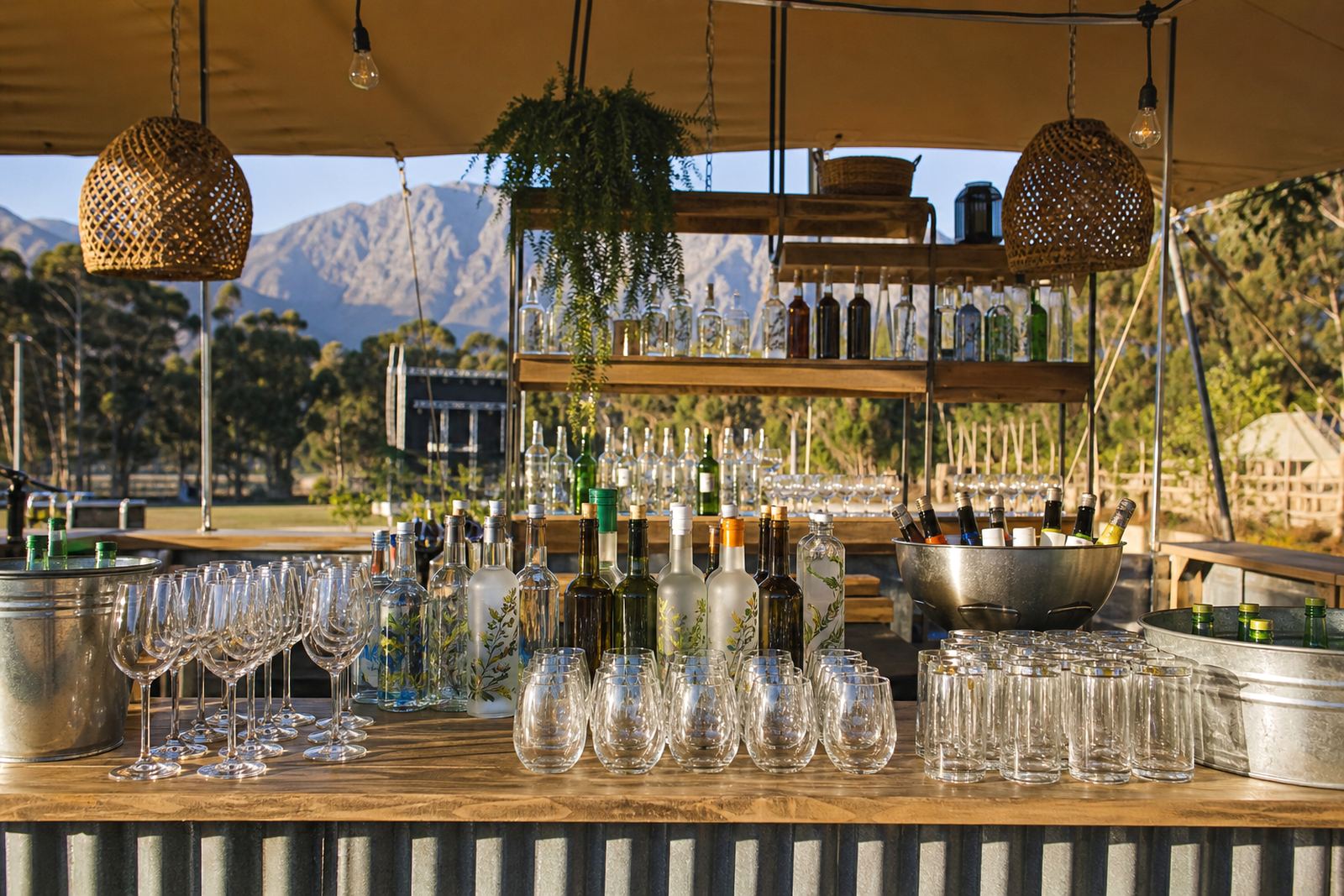
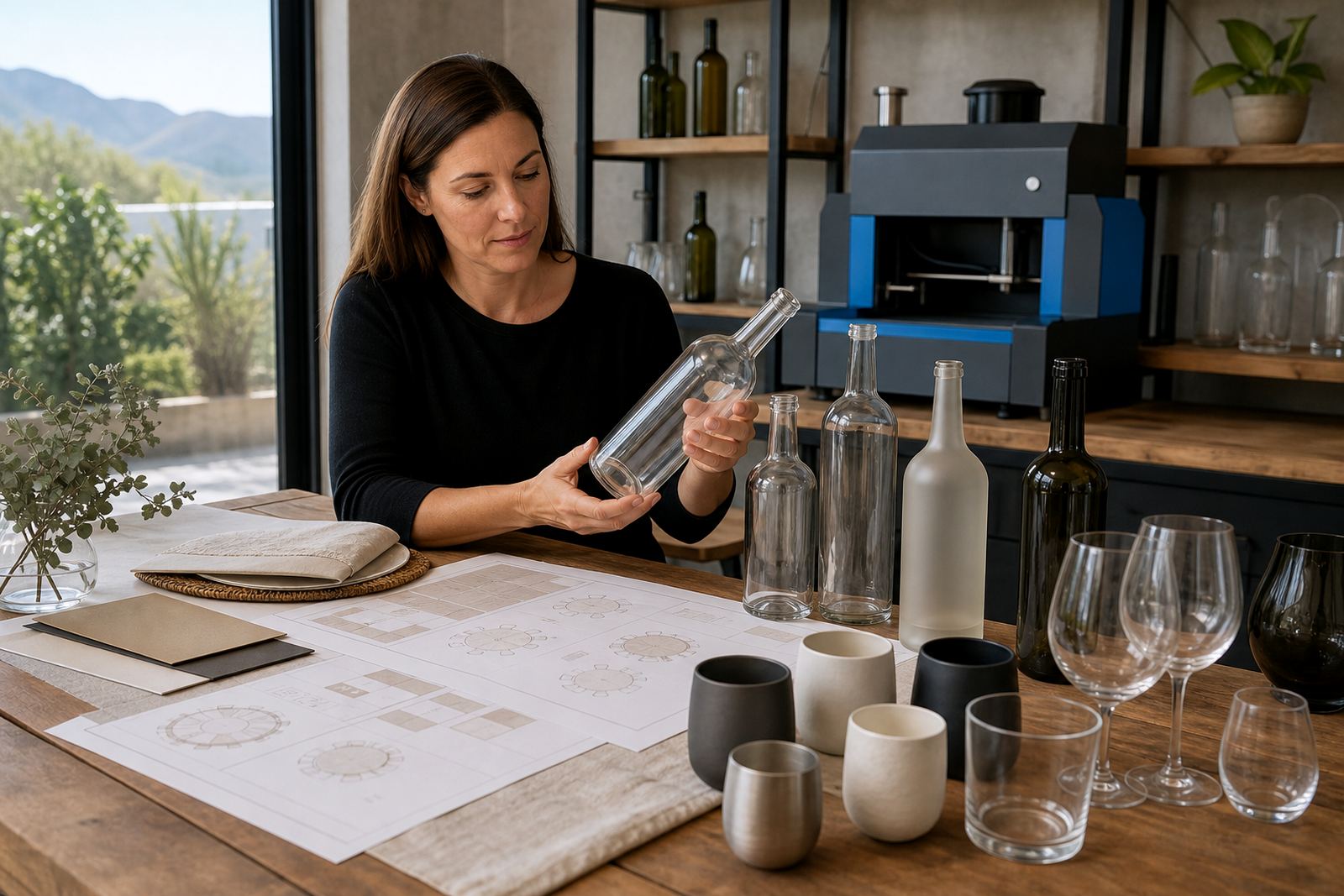
Event work usually arrives with a hard date, a mixed guest list and a long list of touchpoints. A welcome bottle, a table water bottle, a tasting pour, a glass on the bar and a takeaway gift all need to sit in the same visual family. That means the decoration method, bottle shape and artwork size need to be matched to the use, not only to the logo.
For organisers in Paarl, Cape Town, Stellenbosch, Franschhoek, Johannesburg or Durban, the order may need to travel far and still arrive ready for pack-out. We look at the bottle or glass first, then the label area, print area and pack style. Clear artwork at the start prevents cropped text, thin lines disappearing into curved glass and colours landing differently on clear and frosted items.
- Wine bottles for launches and hosted tastings
- Gin bottles for tasting tables and gift sets
- Water bottles for guest tables and conference bars
- Stemmed or stemless drinkware for coordinated service
- Short-run pieces for one function or a small event series
Decoration methods that suit different glass and bottle shapes
Different items call for different decoration methods. UV direct print works well on many bottles and drinkware items when a clean, sharp print area is needed and the shape allows stable handling. Screen printing suits solid areas, repeated runs and simple artwork where the ink build gives the design good presence. Ceramic enamel is used where a harder wearing finish is needed on suitable glass items. Labels still matter when the artwork is detailed, when several variants are needed, or when the bottle shape is not ideal for direct print.
For event use, the choice often comes down to handling and appearance. A heavily detailed crest may be better on a label. A single colour logo on a wine bottle can often be handled directly. White ink layers help on darker glass and on tinted surfaces where the artwork must stay legible. We also check whether the print should sit high, low or centred so the bottle looks neat on a table, in a tray or inside a gift box.
- UV direct print for sharper small-batch branding
- Screen printing for repeat runs and bold logo blocks
- Ceramic enamel for a more durable fired finish on suitable items
- Labels for multi-language details, complex layouts or variable versions
- White ink layers for darker glass and stronger contrast
A practical layout for tables, bars and gift packs
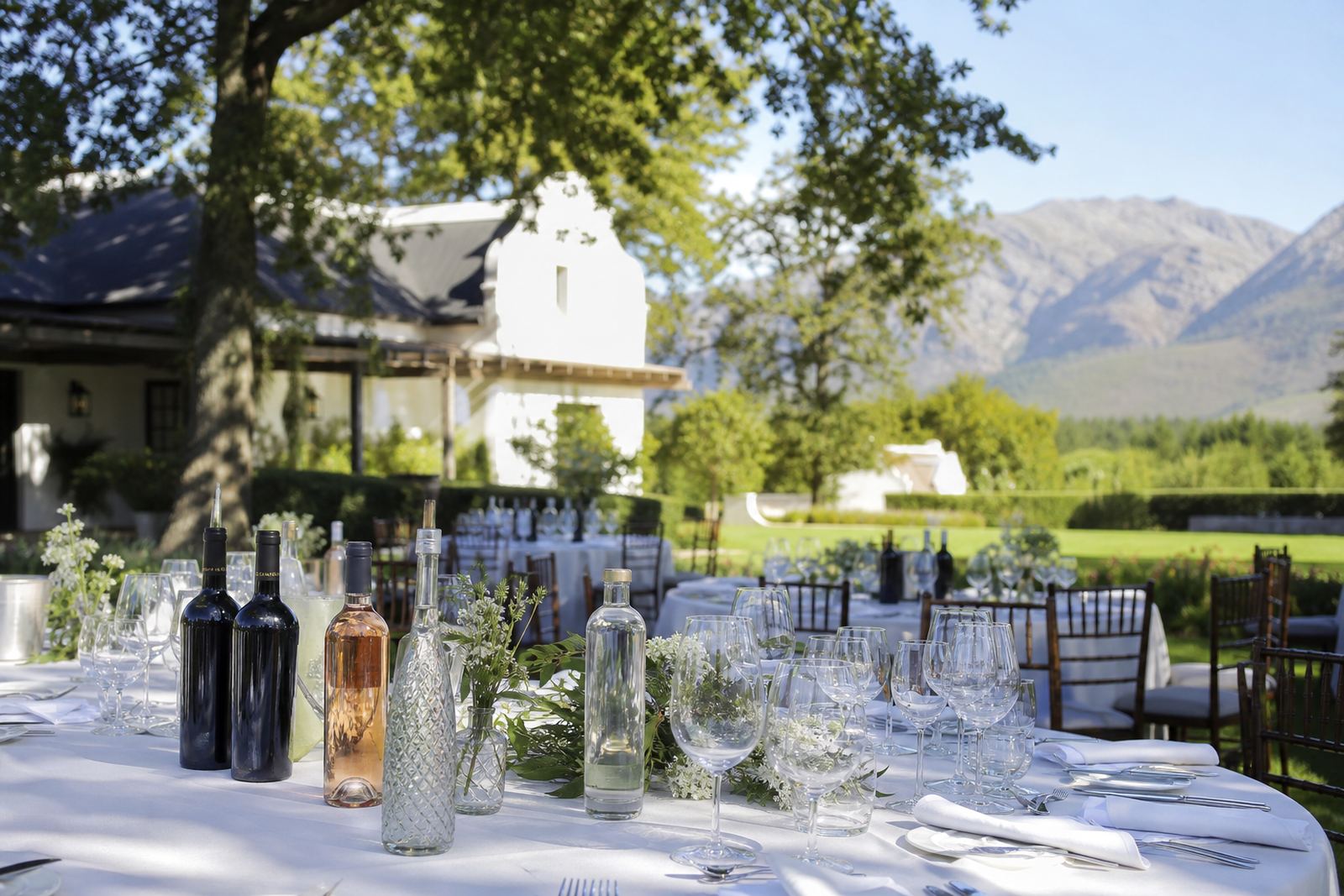
Good event branding is less about filling every inch and more about placing the design where people actually see it. On a seated dinner, the front-facing panel matters more than a wraparound print that disappears behind the stem. On a bar, the neck, shoulder and main body area all read differently under lighting. For bottled water used at conference tables, a narrow label or tidy direct print keeps the item looking clean instead of crowded.
Artwork planning starts with the bottle or glass dimensions. A curved surface can pull text out of line if the artwork is drawn too wide. Fine serif lettering may look neat on screen but lose clarity once printed onto glass. We usually guide the artwork to keep logos simple, spacing generous and key text away from edges or seams. Where a set includes bottles and drinkware, matching one colour family often gives a better result than forcing every item to look identical.
- Keep small text short and readable from table distance
- Allow breathing room near shoulders, necks and curves
- Use one main logo version across the full set
- Match bottle and glass sizes to the pack or table plan
- Check how the items sit under warm indoor lighting
Proofs, mock-ups and the small details that save a function
Before a run goes ahead, the artwork should be checked against the actual item. That includes logo placement, colour use, white underprint where needed and the visible print area. A proof is useful when the same design must work across different glass shapes, because the same artwork can behave very differently on a straight-sided bottle and on a rounded gin bottle.
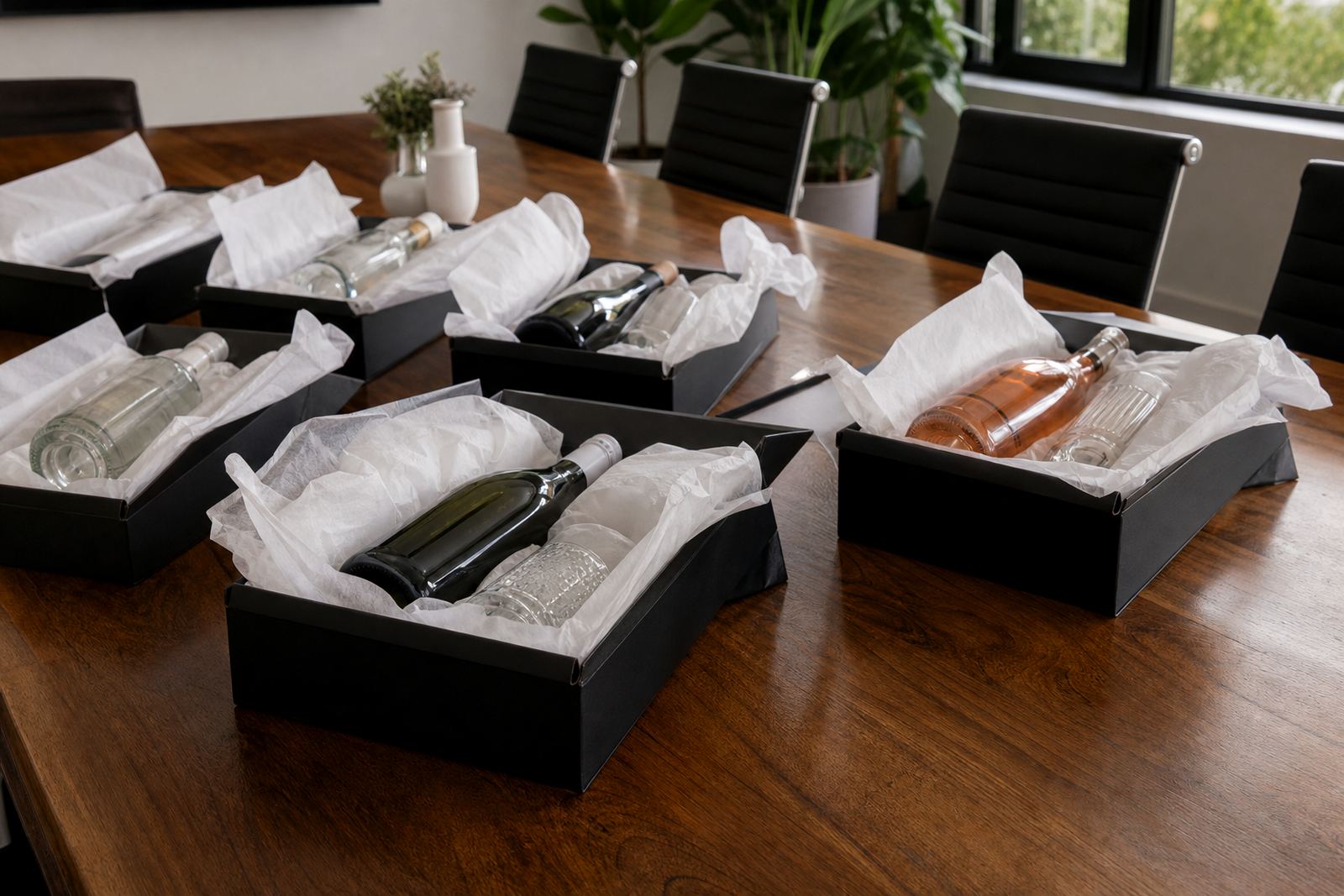
Mock-up visuals help organisers judge whether the branding feels balanced on the table, at the bar or inside the gift box. They also show where a design might be too crowded, too low or too wide for the chosen item. If the event uses several drinks or several bottle sizes, proof approvals should cover each variation rather than one general version only. That keeps the pack sequence neat and the final setup easier to manage.
Common mistakes that create extra work at pack-out
The biggest problems tend to come from artwork and planning, not from the function itself. A logo supplied in low resolution can blur on print. A label drawn for a flat bottle may lift at the edges on a curved one. Dark glass without white ink can make the artwork sink into the background. Another issue is ordering one item at the last minute and forgetting that the full set needs to look related.
For organisers, it also helps to think about packing and handling. Glass items need sensible pack counts, protective wrapping and a clear delivery plan. If the drinks are going into hampers or place settings, the bottle height and diameter must fit the box or tray. A strong event order is usually the one that respects the item shape, the print process and the people who will handle it on the day.
- Low-resolution artwork that softens during print prep
- Designs that are too wide for curved glass
- Colour choices that disappear on dark or tinted bottles
- Mixed item sizes with no shared layout plan
- Packing that does not suit the final presentation
Budget ranges for short-run event branding in Rand
For event organisers, budget often depends on item type, decoration method, artwork complexity and the number of variations. Short runs usually cost more per unit than larger runs because setup and proofing are shared across fewer pieces. Labels can be the most flexible route for small mixed batches, while direct print methods are often better suited to cleaner follow-up runs on the same bottle or glass.
As a working guide, simple branded labels on bottled drinks may sit in the lower Rand range for small event quantities, while direct print on glassware or bottles usually moves into a higher range because of setup and handling. A coordinated set that includes several item types will price differently from a single-item order. For practical planning, many organisers set aside a modest budget for a small gift run and a larger budget when the branding must cover multiple table settings, welcome gifts and bar items in one go.
Artwork changes, multiple colours, white ink layers and urgent pack requirements can add to the total. It helps to decide early whether the event needs one hero item or a full set of coordinated pieces. That choice usually shapes the budget more than anything else.