When the bottles need to suit the room
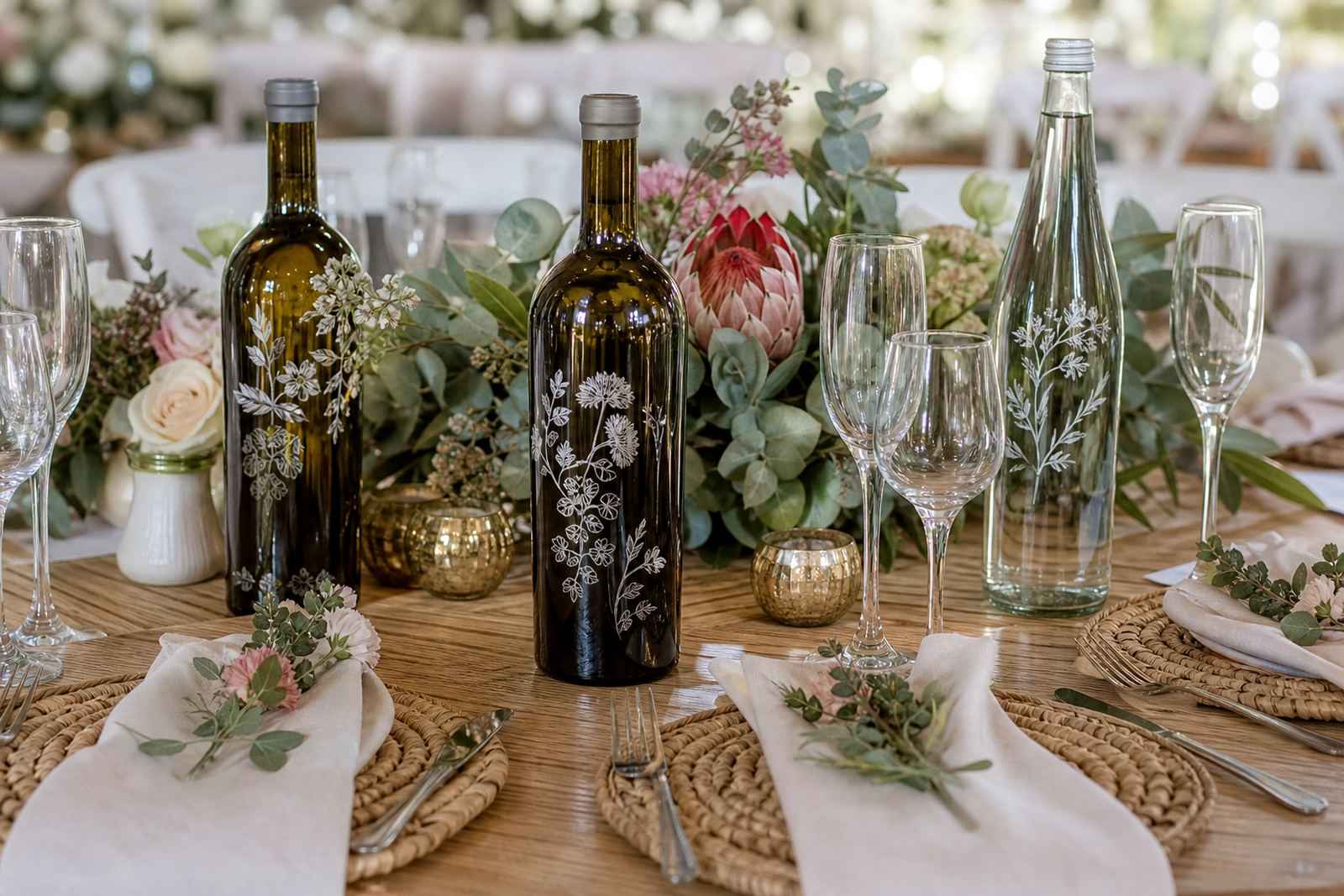
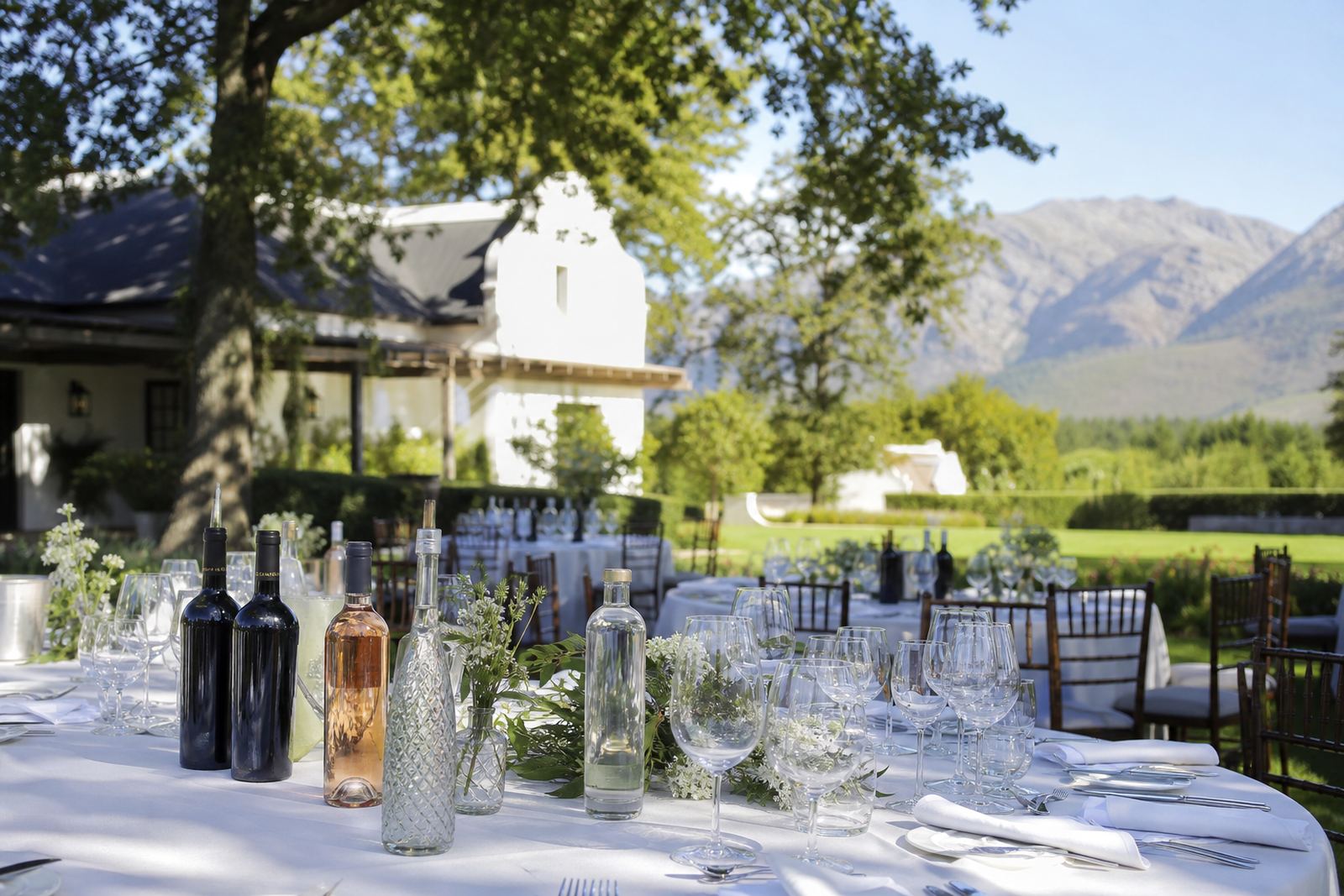
Estate events often bring together a few different bottle types in one setting. Wine bottles may sit on the tasting table, gin bottles may be used for a welcome drink or display, and water bottles often move through the venue as part of the guest service. The printing has to work across those uses without clashing with linen, glassware or the venue’s own colour palette.
For a Paarl venue or a Cape Winelands estate, the most practical brief is usually a short run with a clear print area and a clean finish. Bottles that will stand on bars, tables or gift trays need artwork that reads from a short distance, while still holding detail where people pick them up and look closely. It helps when the logo, event date or estate name sits in the right place from the start.
Bottle types and drinkware that are usually in play
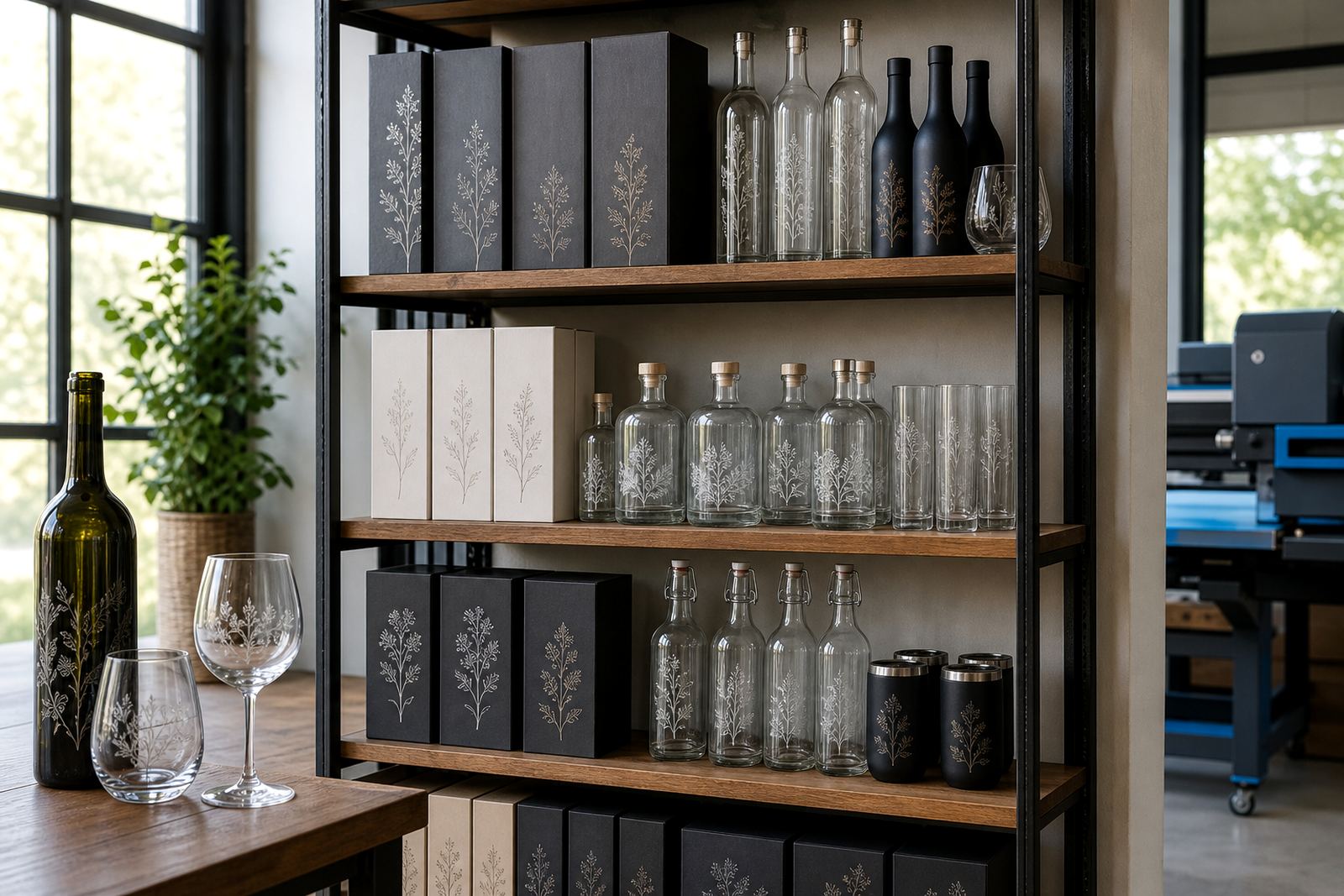
Estate events can involve different container shapes, and each one needs its own print plan. Straight-sided wine bottles give a generous surface for labels or direct print. Smaller gin bottles often need tighter artwork placement, especially where the shoulder curves quickly. Water bottles and stemless drinkware need a lighter touch so the branding does not crowd the piece.
- Wine bottles in green, clear or amber glass
- Gin bottles with taller panels or narrow fronts
- Still or sparkling water bottles for table settings
- Glass tumblers, tasting glasses and stemless drinkware
- Occasional gift bottles for guest packs or prize tables
Clear glass gives strong contrast when white ink is used under colour. Dark glass usually benefits from a planned white base or a label that carries the artwork better. Ceramic enamel suits fired glass styles where a durable, wrapped finish is needed, while labels are often the most flexible option for mixed bottle shapes or multi-version event runs.
Print methods that fit short runs and event timing
UV direct print works well where a crisp, full-colour image is needed on glass or some coated drinkware surfaces. Screen printing suits simpler artwork, solid colour logos and larger repeated runs. Ceramic enamel is useful for a more permanent finish on selected glass items. Labels can handle detailed artwork, event names and variable bottle content when different flavours or formats sit in the same order.
The right method depends on the bottle material, the decoration area and how the bottles will be handled after printing. If the bottles are going to be packed into gift bags, stacked for transport or displayed under estate lighting, the finish needs to stay legible and neat from more than one angle. White ink layers can lift colour on dark glass, but they must be planned early so the artwork does not lose its balance.
Artwork proofing and layout decisions that save trouble
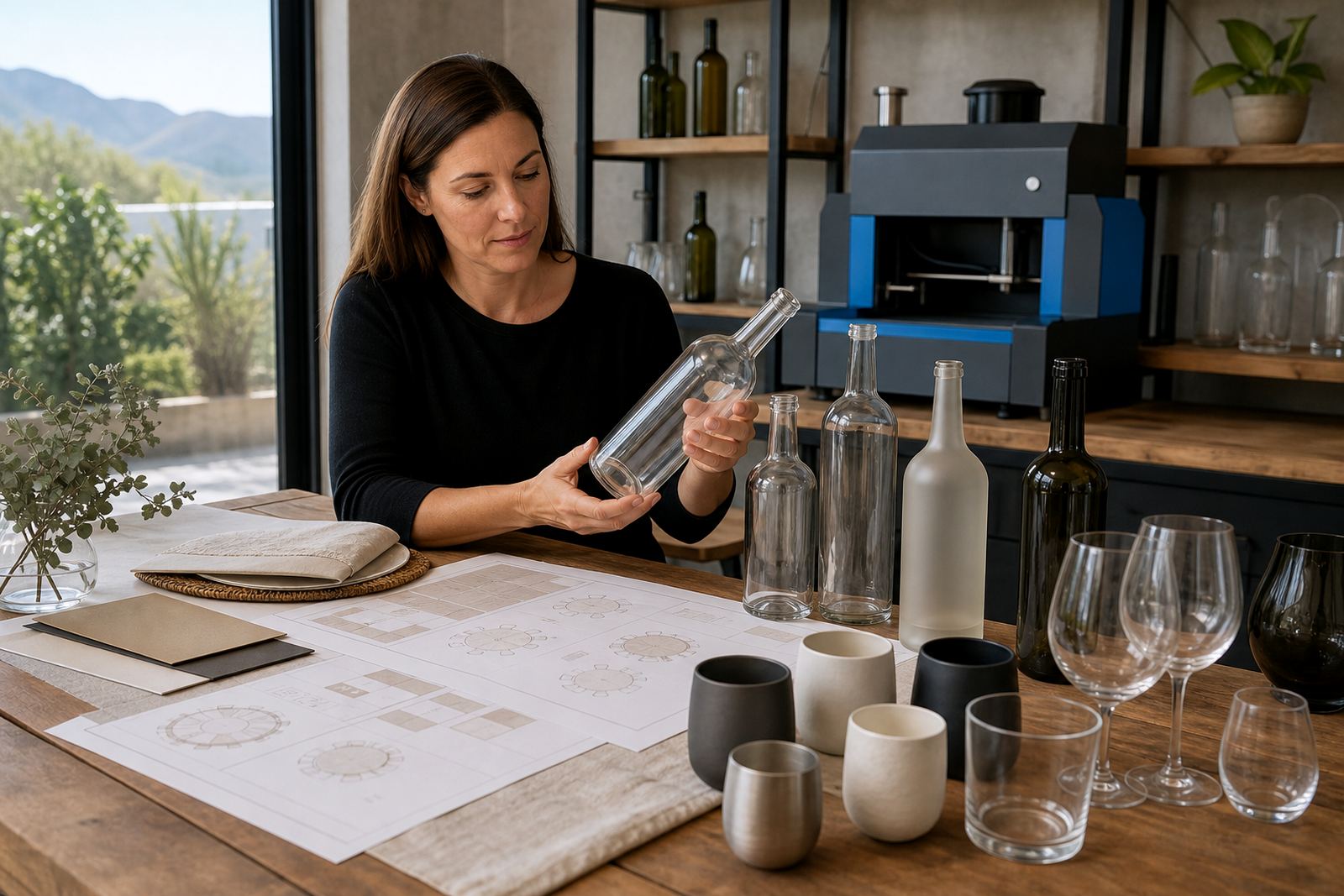
Estate event artwork often arrives with a logo, a date, a venue name and sometimes a guest message. That is enough to begin the layout, but not enough to place it safely on the bottle. Proofs matter because curve, shoulder height and label size all change how the artwork reads once it is on glass. A good proof also shows the print area, the colour direction and any white ink layer that may be needed.
Artwork checks usually pick up a few common issues before print starts:
- Fonts that get too thin on small bottle panels
- Logos placed too high on a curved shoulder
- Colour that disappears on green or amber glass
- Text that is fine on screen but too small in print
- Labels that are cut too tight for the bottle shape
Print area planning is especially useful where one event uses more than one bottle size. A 750 ml wine bottle, a 500 ml gin bottle and a water bottle will not take the same artwork position. The job runs cleaner when those differences are set out before production, not after the first proof has already been approved.
Typical minimum runs and budget bands in Rand
Short-run estate event work is usually priced around the method, bottle type and number of artwork versions. Minimum runs differ between direct print, labels and decorated drinkware, and the smallest practical order depends on how much setup the job needs. When there are several bottle shapes in one event, the run can be split across products without losing consistency, but each split still carries its own setup work.
As a broad guide, small event orders often sit in these bands:
- Labels for compact event runs: from about R1,500 to R4,500
- UV print or screen print on selected bottles: from about R3,500 to R12,000
- Mixed bottle and drinkware sets for larger estates: from about R8,000 upwards
The final figure depends on surface area, the number of colours, whether white ink is needed, and whether the order includes packing briefs or separate gift pack sorting. Tight lead planning can also affect the cost where the artwork changes late, because the proofing and set-up work grows with each revision.
Common mistakes on estate event orders
The most common problem is artwork that looks good on a flat mock-up but fails on the bottle. Curved glass changes the appearance of type and symbols, especially on narrow necks or shoulders. Another regular mistake is choosing a decoration method before the bottle shape has been checked. A label may suit one bottle and look awkward on another, while a direct print may need more careful colour handling than expected.
Event organisers also run into trouble when different departments brief the job separately. The venue, the caterer and the gifting team may all want a different version if the pack is not locked early. That can leave the order with mixed wording, mismatched colours or bottles that no longer line up with the table plan. A single artwork file and one agreed proof set keep the event looking considered rather than patched together.
What the estate team usually wants in hand
For estate events in Paarl, Stellenbosch, Franschhoek and further afield, the best brief usually includes the bottle type, the artwork file, the intended use and the number of pieces for each version. It also helps to note whether the bottles will be displayed, poured from, packed as gifts or sent out after the event. That information changes the print plan more than people often expect.
Delivery can be arranged across South Africa, with regular movement for Cape Town, Johannesburg and Durban orders as well. When the event has to cover venue styling, tasting service and guest gifts in one motion, bottle branding works best when the method, layout and packing details are settled together. That keeps the finished pieces aligned with the estate setting and the way the bottles will actually be used.