Seasonal shelves, smaller cartons, less dead stock
Gift shops usually need a mix that moves with the calendar. A winter tasting hamper, festive table gift, tourism souvenir or corporate thank-you set all ask for different bottle sizes and different decoration methods. Short runs suit that pattern because you can keep the range tight, then shift artwork or pack style without carrying boxes of slow stock.
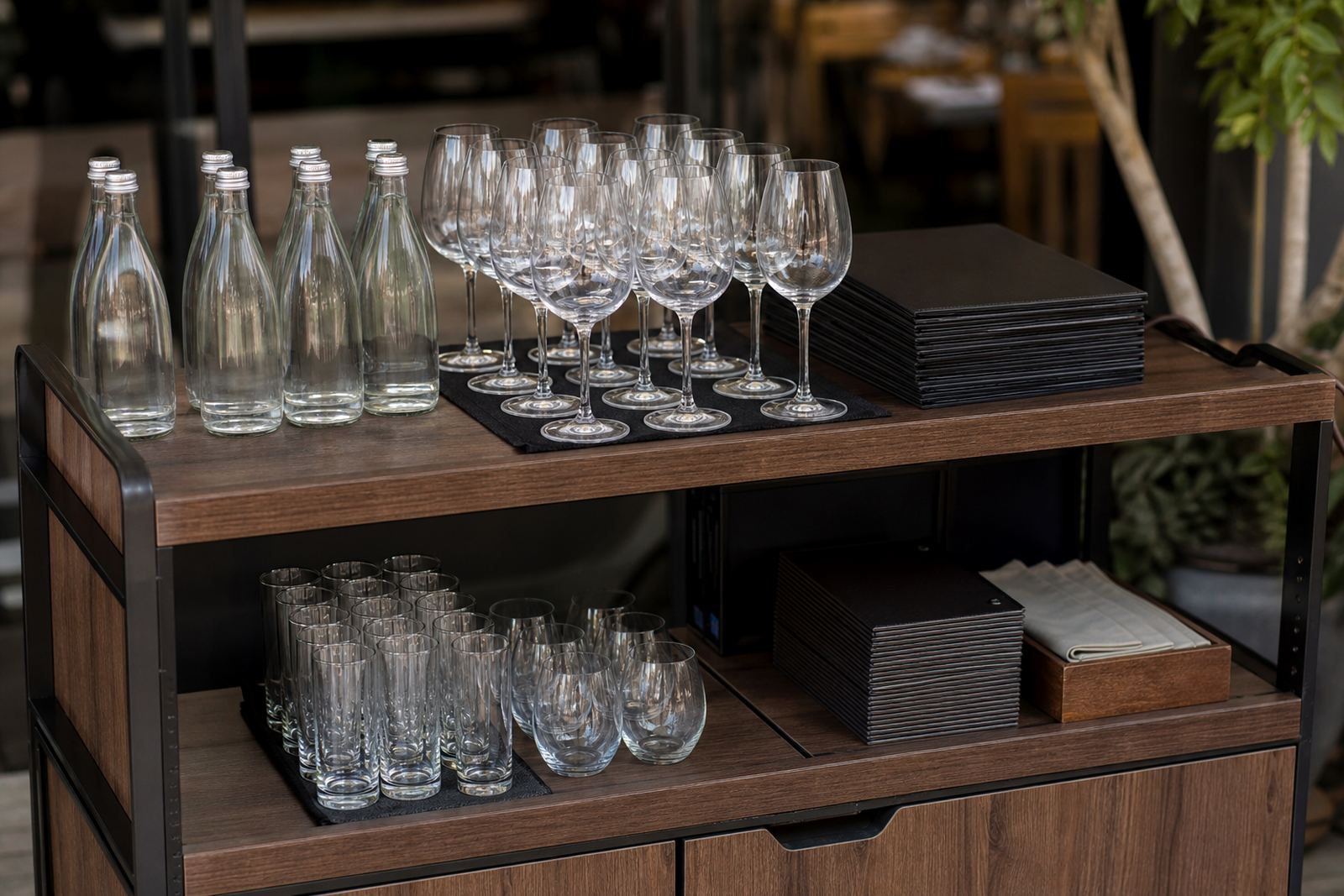
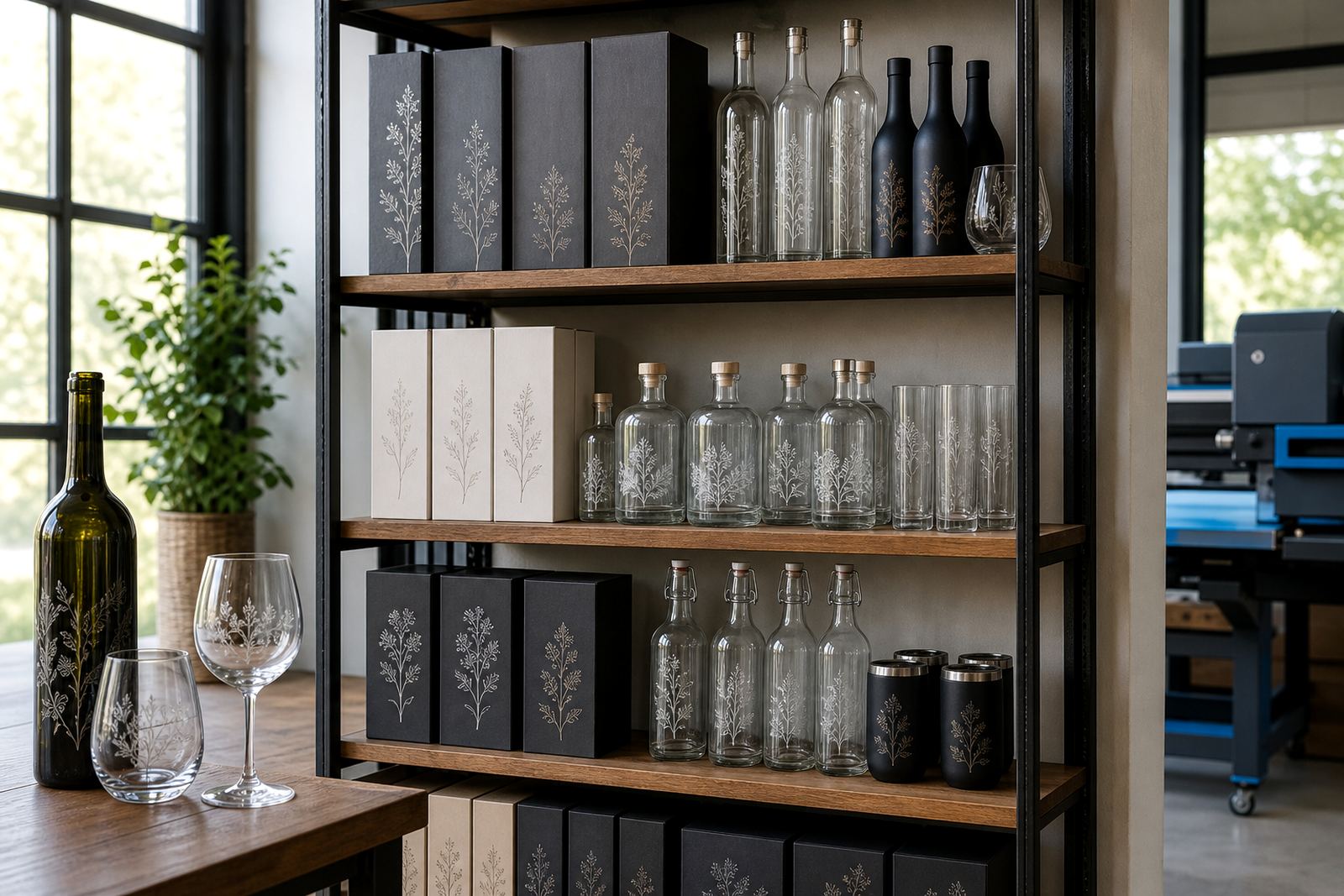
For shelves and counter displays, compact shapes help. Slim wine bottles, 250 ml and 330 ml drinkware pieces, small water bottles and neat glass sets are easier to pack in cartons that stand upright and travel well. Clear labels, white ink details and clean print areas matter when the item has to look good under shop lights and in a wrapped gift box.
- Short runs work well for seasonal promotions and mixed gift packs.
- Compact bottle shapes reduce breakage in storage and transport.
- Printed items can be set up for shelf display, hampers or event gifting.
Bottle and glass lines that suit a gift counter
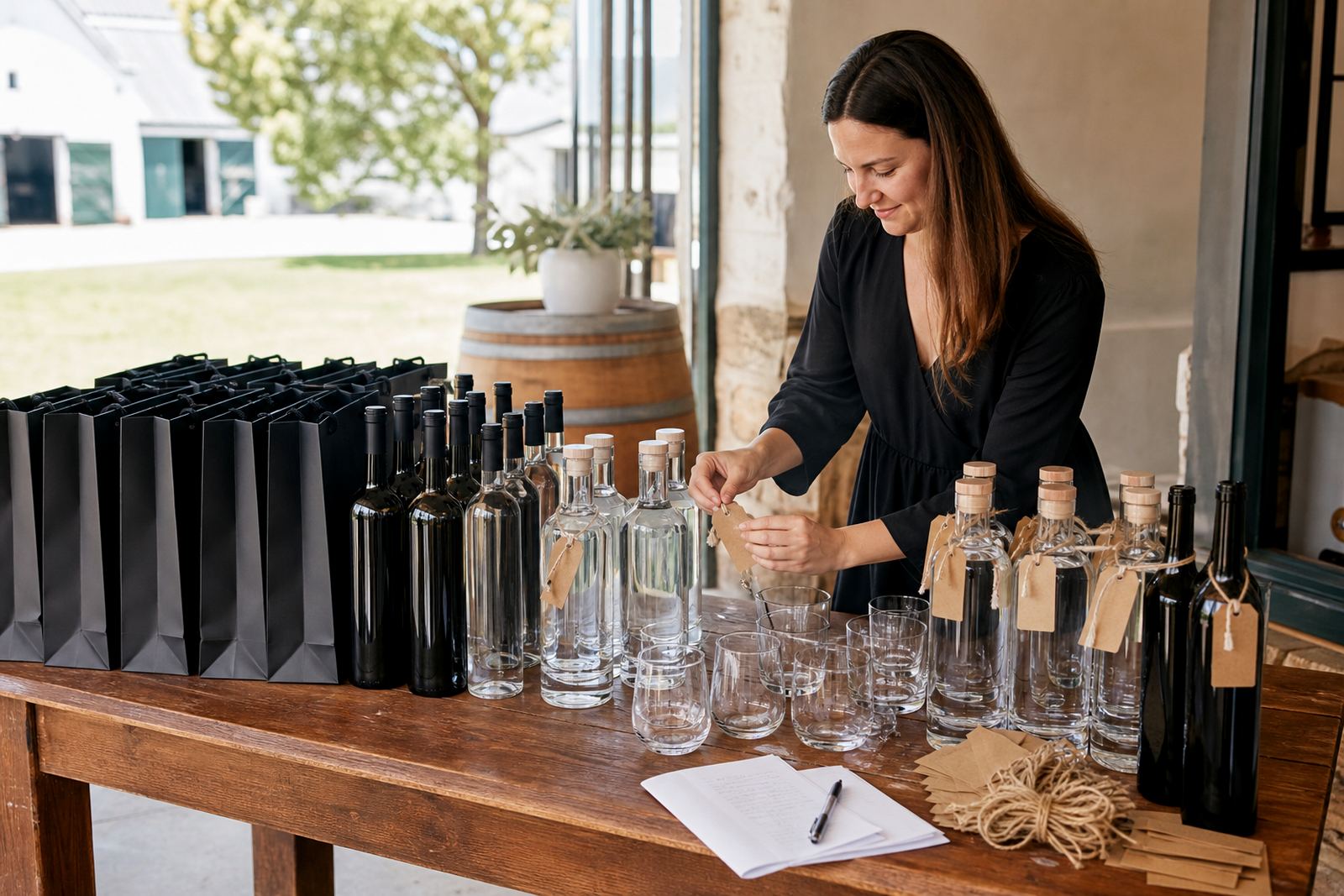
The usual set includes glass wine bottles, gin bottles, still water bottles and selected drinkware such as tumblers, stemless glasses, shot glasses and small tasting glasses. Some gift shops choose one hero item with a matching glass, while others order three or four related products printed in the same artwork style.
The right decoration option is chosen according to the bottle surface and the type of finish you need. UV direct print gives a crisp image on glass or coated surfaces, screen printing suits stronger blocks of colour, ceramic enamel works where a fired finish is needed, and labels help when the artwork changes often or the pack needs more flexibility. For bottles with darker glass, white ink layers can lift logos and text so they stay readable.
- Glass bottles suit still wine, gin and water ranges.
- Drinkware can be matched to bottle artwork for gift sets.
- Labels allow quick changes for different seasons or promotions.
Artwork that survives close viewing
Gift stock sits close to the customer, so artwork needs to read cleanly at arm’s length and in a box. Fine detail, thin type and pale colours can disappear on curved glass or darker surfaces. A proof helps test logo size, placement, line weight and colour balance before the run is released.
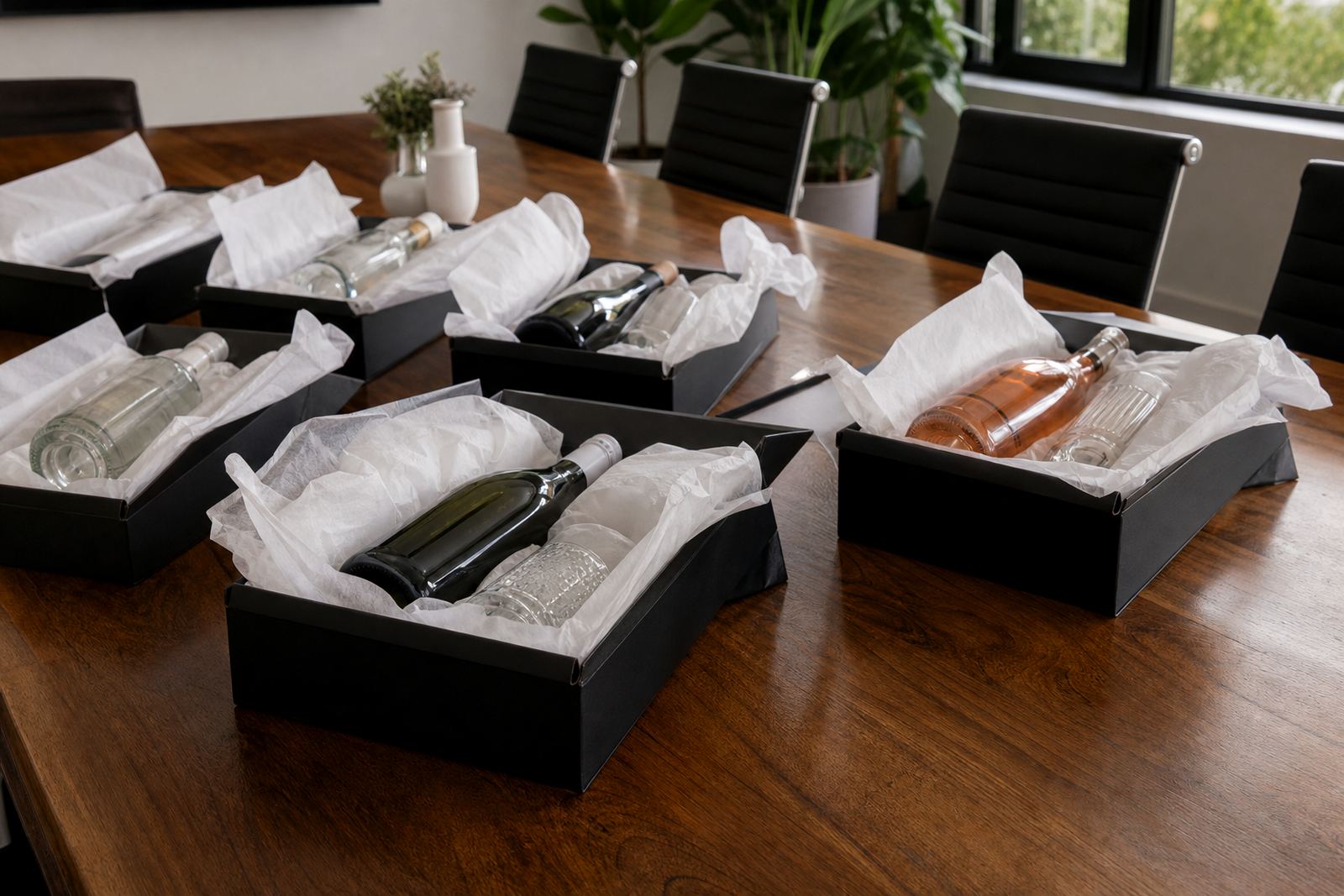
Artwork setup often needs a few practical checks. Curves may distort a logo, a neck label may crowd the shoulder, and a full wrap can clash with closure styles or carton windows. Print area planning keeps the decoration within a clean viewing field, while mock-up visuals help show how the bottle or glass will sit in a hamper, shelf tray or presentation box.
- Keep text short when the print area is narrow.
- Ask for a proof where the bottle shape changes the layout.
- Size the artwork for how far away shoppers will view it in the shop.
Planning the pack before the print starts
Gift ranges go wrong when the decoration is approved before the pack is thought through. A bottle may fit the artwork, then fail to sit properly in a box insert or hamper tray. The carton footprint, wrap material, label position and closure height all affect the finished result. For shops in Paarl, Stellenbosch, Franschhoek and Cape Town, packing often has to work for both display and courier travel.
Minimum run advice matters here. Short runs can work for a handful of styles, but the print method and setup still need enough quantity to make sense. When the order is split across several bottle sizes or glass types, it helps to group the items by artwork family so the run stays efficient. Packing briefs also help when fragile glass has to travel to Johannesburg, Durban or coastal areas where handling and humidity can affect outer cartons.
- Confirm carton size before final artwork placement.
- Group similar items to keep the pack consistent.
- Use packing notes for fragile sets and mixed cartons.
Common slip-ups in gift ranges
A frequent mistake is choosing a label or print style that looks good on screen but not on glass. Another is using too many words on a small bottle, which makes the range look crowded. Gift buyers also underorder the same artwork in a second size, then struggle to build a full shelf story across the season.
Colour drift is another point to watch. Deep reds, metallics and pale greys can shift on transparent glass or through different decoration methods, so proof approvals should cover the actual surface, not just the artwork file. If the range includes both wine bottles and drinkware, the print area must be checked separately for each item because the curve and scale change the way the logo sits.
- Do not rely on a flat artwork view only.
- Keep wording tight on smaller glass items.
- Approve each size, not just one sample layout.
Rand ranges for a short-run gift order
Budget usually follows decoration method, item count and setup detail. Plain labels on a small run often sit in a lower bracket than direct print on curved glass, while ceramic enamel and multi-colour screen print need more preparation. A simple gift shop order may start around R3 500 to R8 000 for a small label-led run, while mixed bottle and drinkware sets with artwork checks and several print positions can move into the R10 000 to R25 000 range. Larger seasonal packs can go higher once carton work, multiple sizes and extra proofing are included.
The most useful way to compare options is by line. One hero bottle with one matching glass is easier to control than five scattered items. If the shop range changes often, labels can keep the stock flexible. If the product line stays fixed for a season, direct print may suit better. The right budget is the one that protects shelf presentation without pushing the pack beyond what the counter can carry.
- Labels usually suit changing seasonal artwork.
- Direct print suits stronger shelf impact on fixed ranges.
- Mixed packs need separate cost checks for each item type.