Where wedding bottles usually sit in the plan
Most wedding briefs start with a few practical uses: favours for guests, bottles on reception tables, welcome drinks at the entrance, and branded water or mixers for the bar area. The right format depends on what the bottle needs to do on the day and how long it must stay neat in transport, cold rooms or ice buckets.
Short runs are common for weddings because numbers shift as the guest list changes. A smaller order can cover a family function, while larger quantities suit full venue service or multiple table settings. Bottles can be decorated one by one or grouped by role, which helps keep the layout tidy and the print costs under control.
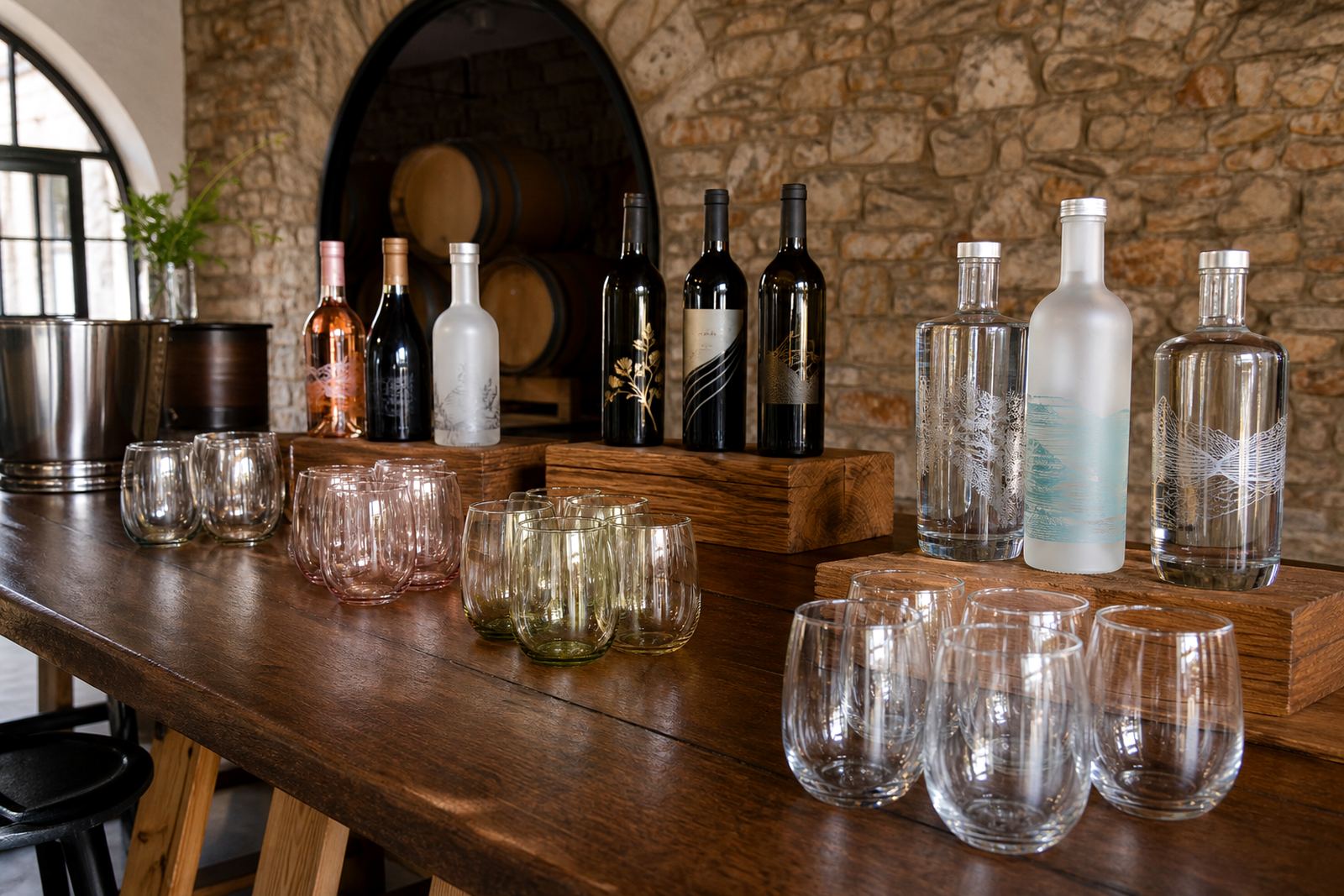
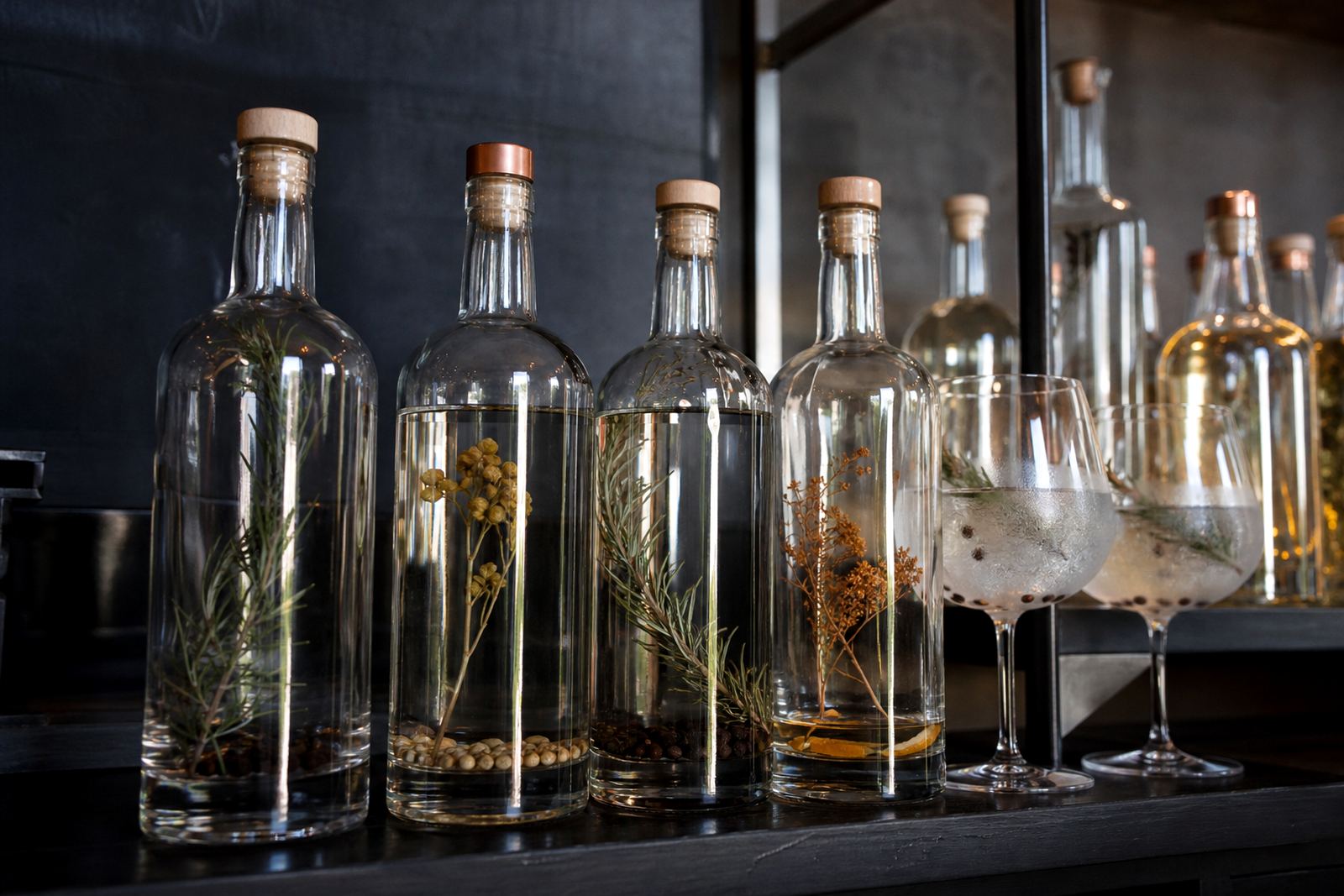
Glass, water bottles, gin bottles and wine bottles all behave differently on press. Curved shoulders, heavy bases and narrow necks affect artwork placement, so the print area has to be planned around the actual shape rather than a flat mock-up.
Bottle types and decoration methods that suit weddings
For wedding work, the most common formats are clear and frosted glass bottles, wine bottles, gin bottles, still and sparkling water bottles, and selected drinkware such as tumblers or stemless glasses. A glass bottle with a smooth panel gives more room for fine lettering, while a slimmer bottle calls for a cleaner mark and less detail.
Decoration methods are chosen for the bottle, the artwork and the feel of the event. UV direct print suits short runs with sharp logos, names and dates. Screen printing works well when a solid colour needs strong coverage. Ceramic enamel is used where a durable fired finish is needed on suitable glass. Labels are useful when the artwork has more text, small illustrations or several colours that must stay clear on uneven surfaces.
- UV direct print for personalised names, dates and crisp artwork
- Screen printing for bolder marks on glass or drinkware
- Ceramic enamel for fired decoration on suitable bottles
- Labels for full artwork, detail heavy layouts or variable text
Artwork, names and proofing before the run
Wedding artwork usually includes initials, the couple name, date, venue, table names or a short message. The best layouts stay readable from a short distance and do not fight with the bottle shape. Small text can disappear fast on tinted glass or across a curved surface, so spacing and type size need careful handling.
Proofs matter because wedding artwork often has many moving parts. A proof shows the print position, sizing, colour treatment and any white ink layer needed beneath the design. Mock-up visuals are useful when you want to see how the bottle will look on a table or next to other items in the set.
Artwork checks usually cover spelling, date formats, logo placement, bottle size and the area that can actually be printed. For mixed orders, labels and direct print can be combined so the main logo stays consistent while names or table references change from piece to piece.
Layout advice for tables, bars and welcome stations
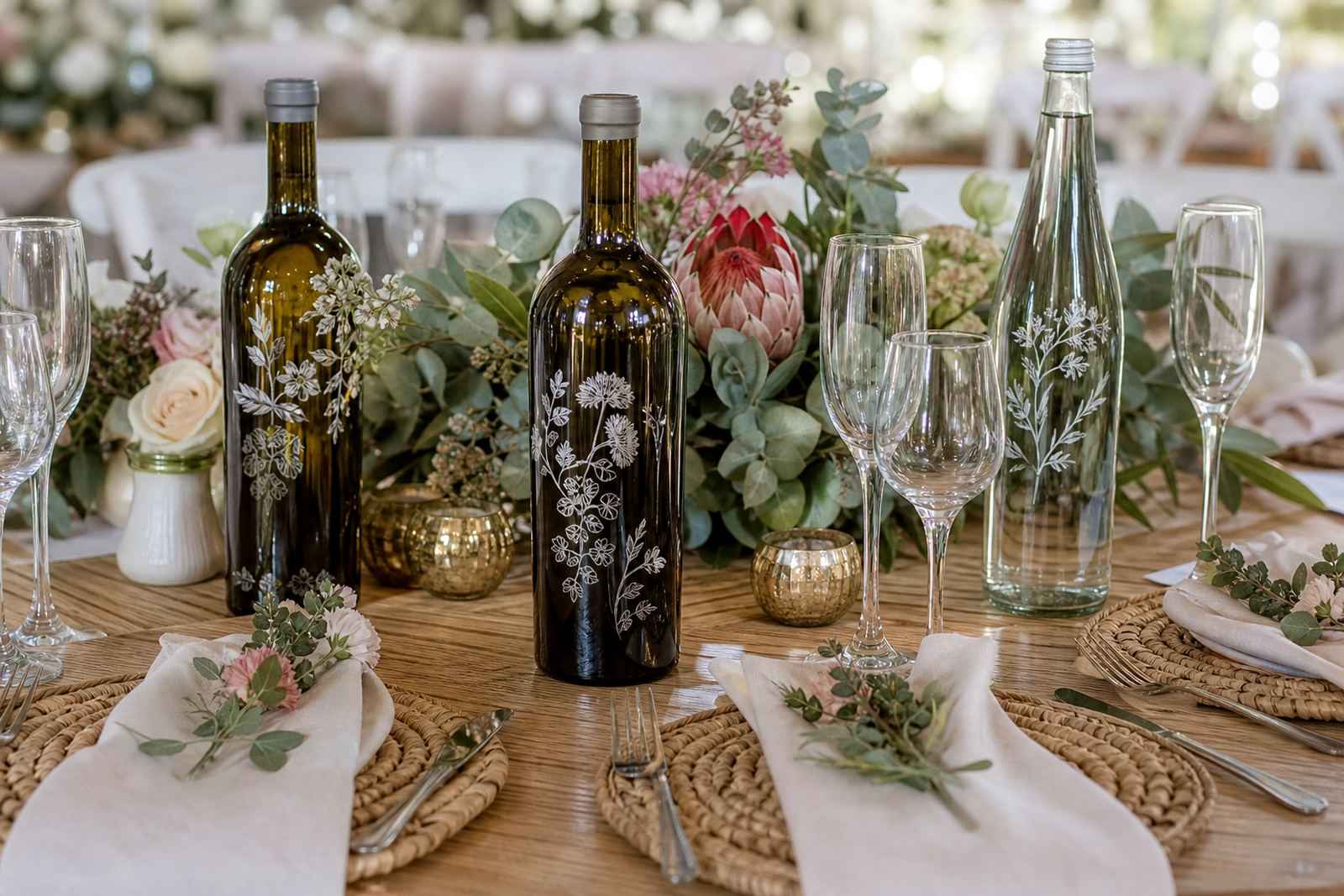
Weddings often look best when the bottle branding is coordinated instead of repeated everywhere. A welcome bottle can carry more detail, while table bottles need a quieter layout so guests can still read the menu cards and place settings. Bar bottles can be simpler again, especially where staff need to identify them at a glance.
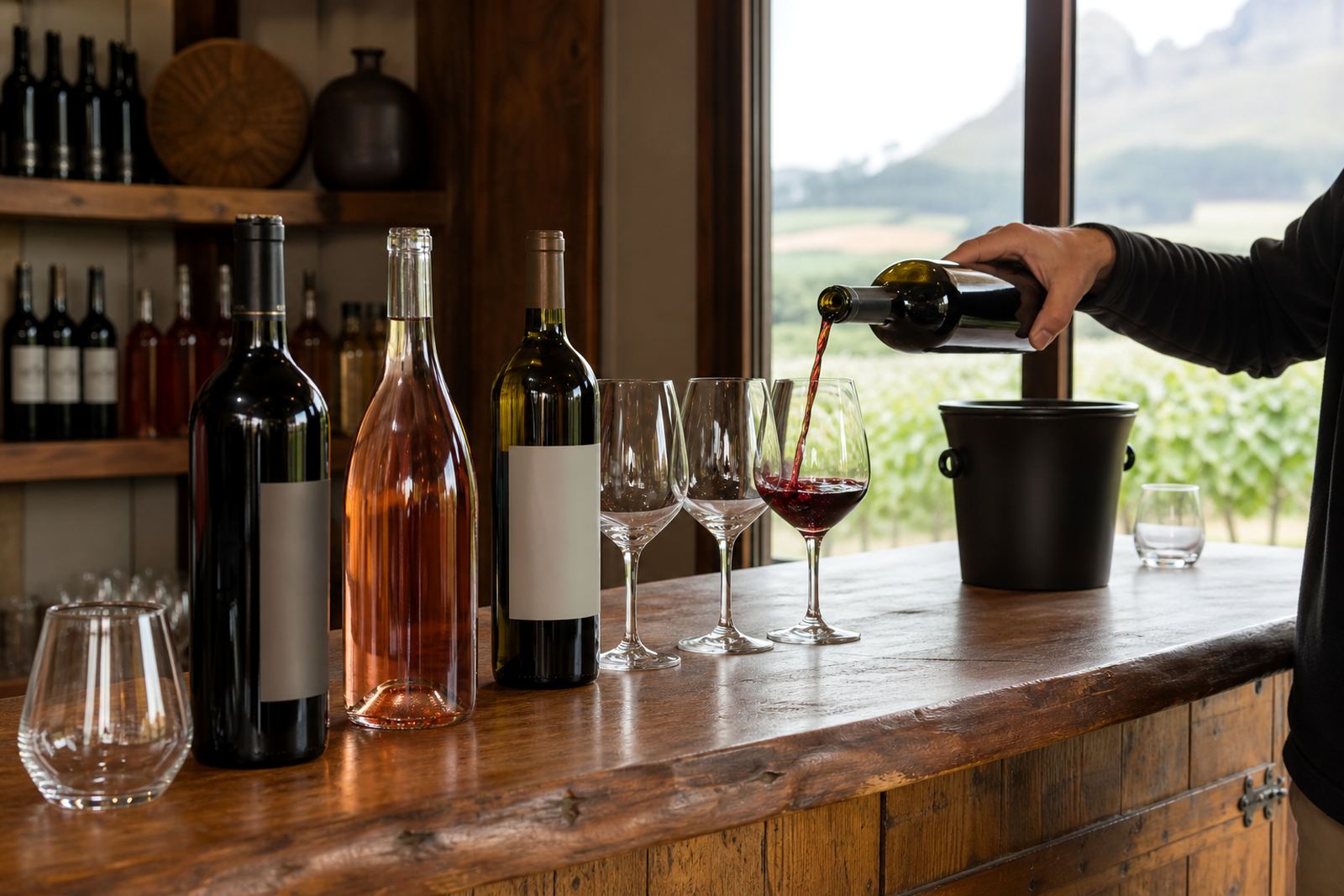
On wine tables, a front facing label or centred UV mark usually works well. For gin and water service, a narrower print area can keep the bottle clean and prevent the design from wrapping too far around the curve. If the bottles will sit in ice or cold water, the finish should be checked for moisture handling and handling marks during service.
Set the order around the actual table count, not the guest estimate alone. Extra bottles are often needed for broken pieces, late seating changes or display units at the entrance. Packing should keep the bottles grouped by area so the venue team can place them without sorting through mixed cartons.
- Keep table bottles readable from across the room
- Allow extra stock for broken units and late changes
- Separate welcome, table and bar packs for easier setup
- Check whether cold service affects the finish or label glue
Common mistakes on wedding bottle jobs
A frequent mistake on wedding bottle jobs is cramming too much content into a limited print area. Long wording, fine lines and crowded artwork can make a good bottle look busy once it is curved around glass. Another problem is using colours that depend on a light background when the bottle itself is dark or tinted.
Artwork that has not been checked properly can also create trouble. Names may sit too close to the neck, dates may be too small, or the label may need a different trim line for the bottle shape. When multiple bottle types are included in one order, each item needs its own layout check instead of one design being stretched across all of them.
For wedding work in coastal towns, storage and handling matter too. Humidity can affect labels, carton condition and packing if the stock is left in the wrong place. A clean proof and sensible packing brief save a lot of rework on the day.
Budget ranges in rand for short wedding runs
Wedding bottle branding usually works in short runs, so pricing depends on method, quantity, artwork complexity and how many bottle types are involved. A single style with one colour mark is generally more economical than mixed packaging with several names, table references or decorated drinkware pieces.
As a rough working range, simple label jobs for small wedding quantities can sit from about R1 500 to R4 500, depending on bottle count and finish. Direct print or screen print jobs on glass often start higher, especially where set-up is involved and a proofed artwork step is needed. Mixed runs with wine bottles, gin bottles and water bottles can move into the R5 000 to R15 000 range, while larger or more detailed event packs may sit above that.
The best budget questions are practical ones: how many pieces are needed, which bottle shapes are being used, and whether the same artwork has to work across all of them. Those answers usually determine whether labels, UV print, screen print or a mixed method gives the neatest result.