How the proof stage is set up
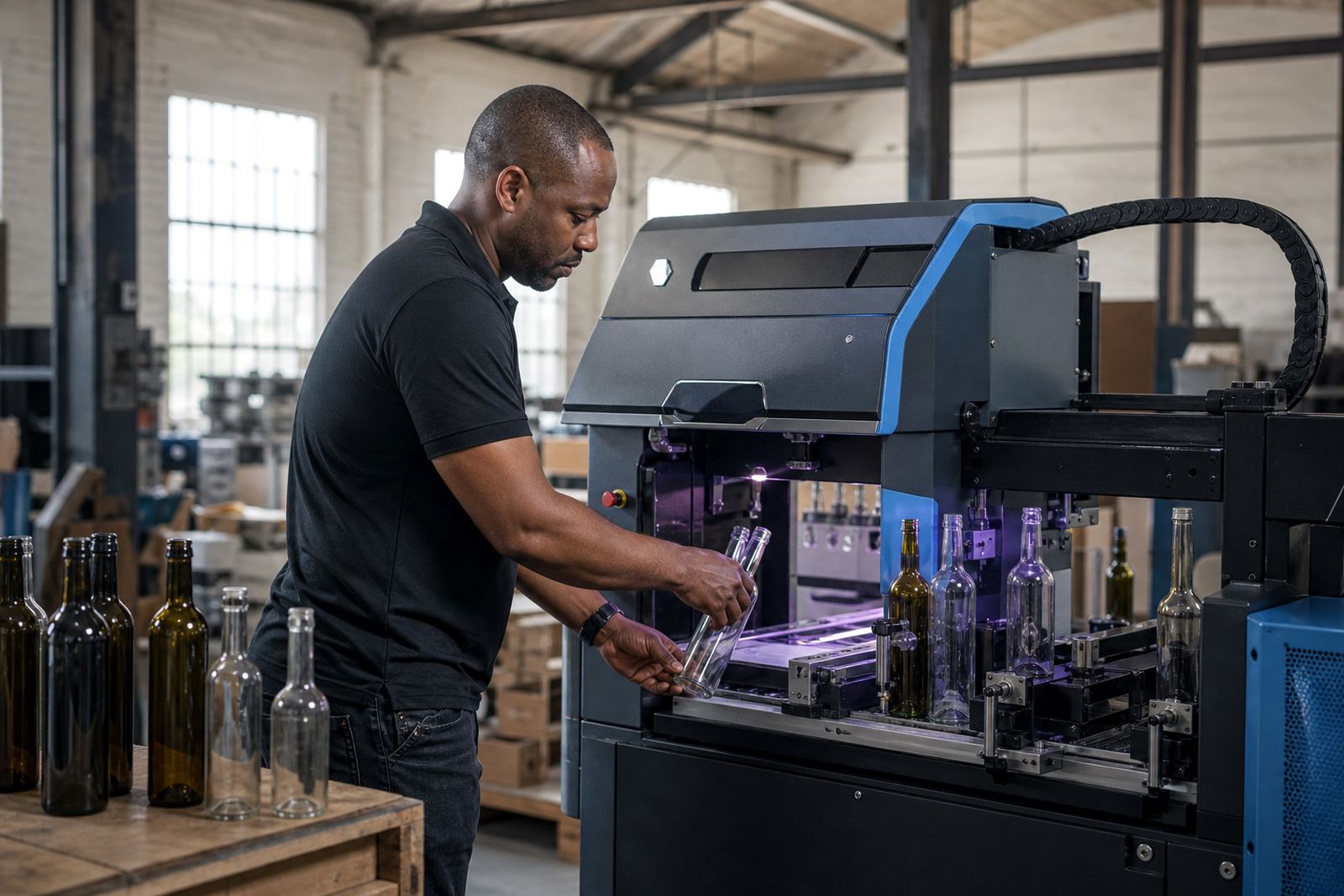
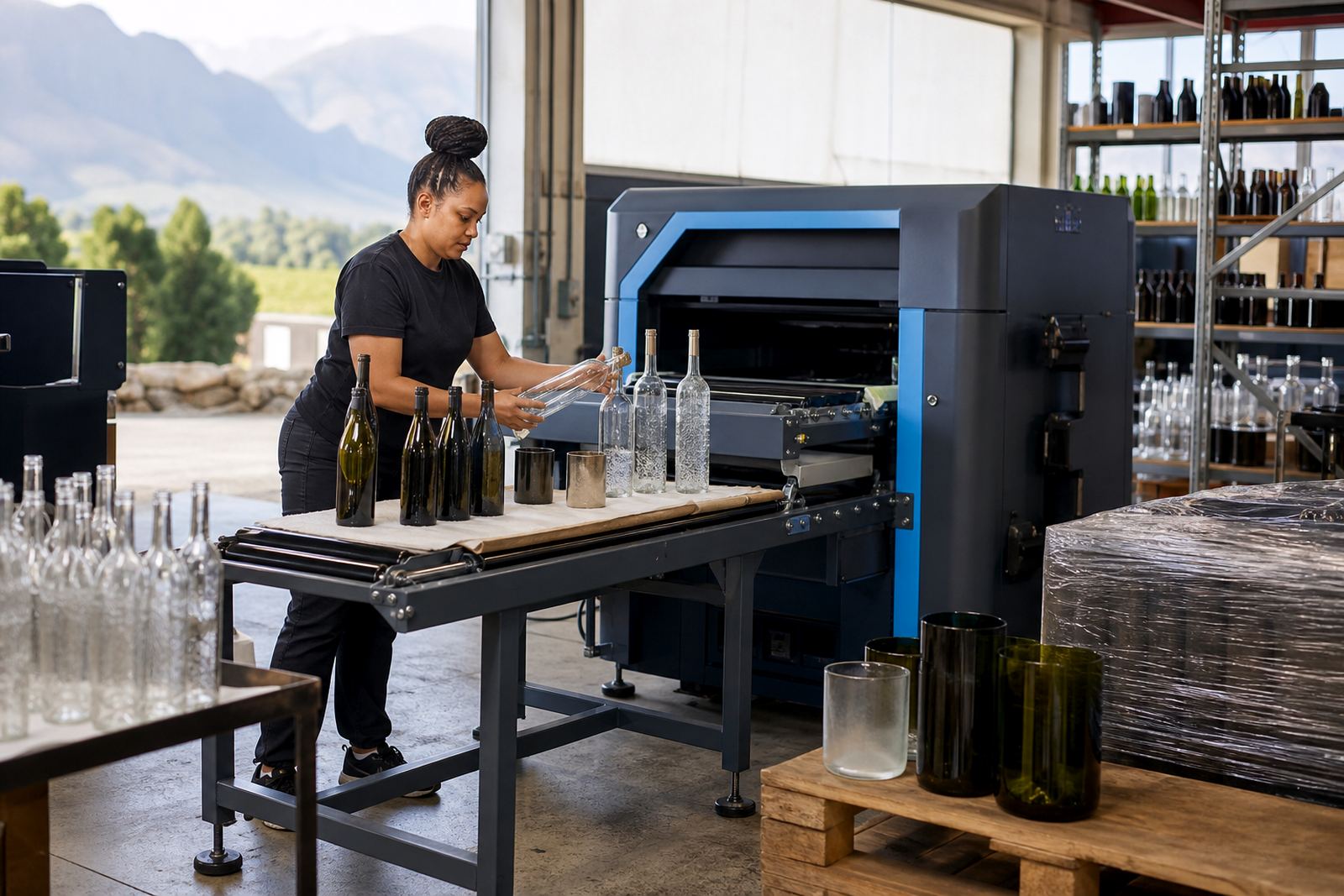
Every proof starts with the item, the decoration method and the artwork file. A wine bottle, gin bottle, water bottle or drinkware piece all behaves differently on press, so the first check is about fit, curvature and surface finish rather than the picture on its own. That is where the print area planning comes in, and it matters just as much as the artwork itself.
For short runs, the proof usually shows what will print, where it will sit and which parts need a white base, colour tweak or label adjustment. On glass, the print often needs a cleaner edge near shoulders, necks or joins, and that is easier to catch on a proof than on the finished run.
Artwork checks that happen before anything prints
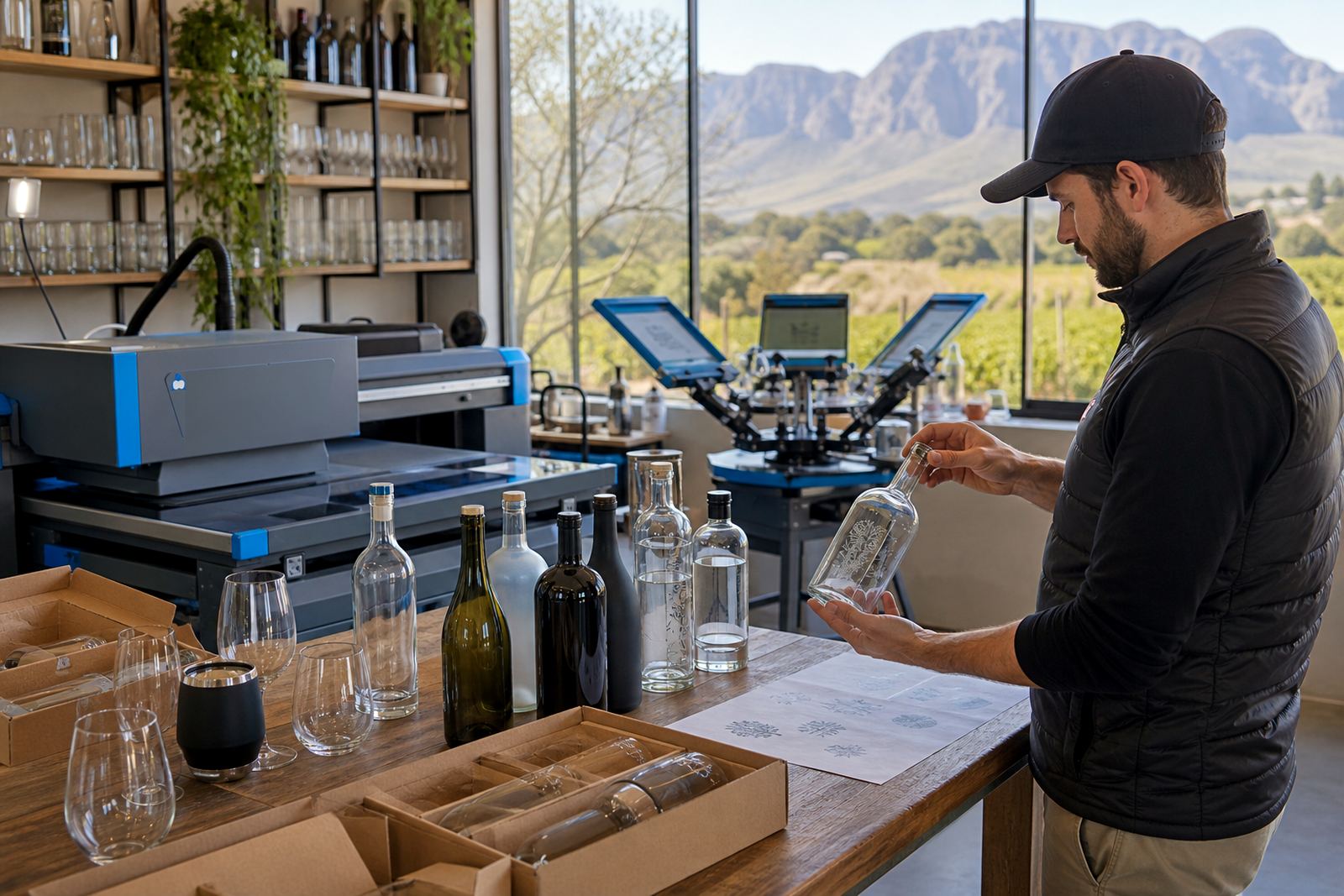
The artwork coordinator checks files for size, bleed, spacing and the way fine details will read on the bottle or cup. Small text, logos with thin lines and shaded areas can all need a tweak before they are safe for production. A proof is not just a picture, it is a working check on how the job will hold up on the actual shape.
- Text is checked for legibility at the final print size
- Logos are aligned to the chosen print area
- Colours are reviewed against the chosen method
- White ink layers are added where glass needs backing
- Label artwork is checked for wrap and seam position
Matching the proof to the print method
UV direct print, screen printing, ceramic enamel and labels all need different proof notes. UV print is useful for colour detail and short runs on glass and drinkware. Screen printing suits stronger, flatter colour blocks. Ceramic enamel is handled differently again, with the finish and cure method affecting the final look. Labels need layout checks, panel sizing and a close eye on edges where moisture or handling may affect the result.
That means the proof is method-specific. A design that works as a label may not suit direct print on a curved bottle, and a design that looks clean in a mock-up may need a white layer or simpler linework to stay readable on clear glass.
What the proof usually shows
Most proof packs include a mock-up visual, placement notes and any changes needed before production. When the job is for corporate gifting, a tasting event or a seasonal release, the proof also helps line up the bottle style with the packing brief so cartons, trays or mixed packs are prepared correctly. That matters when the run is short and there is little room for a mismatch between bottle size and artwork.
- Front and back placement on the bottle or glass
- Logo size and spacing around the print area
- Label position for round or flat surfaces
- Any required white ink underprint
- Notes for packing, sorting or mixed item sets
Approval before production starts
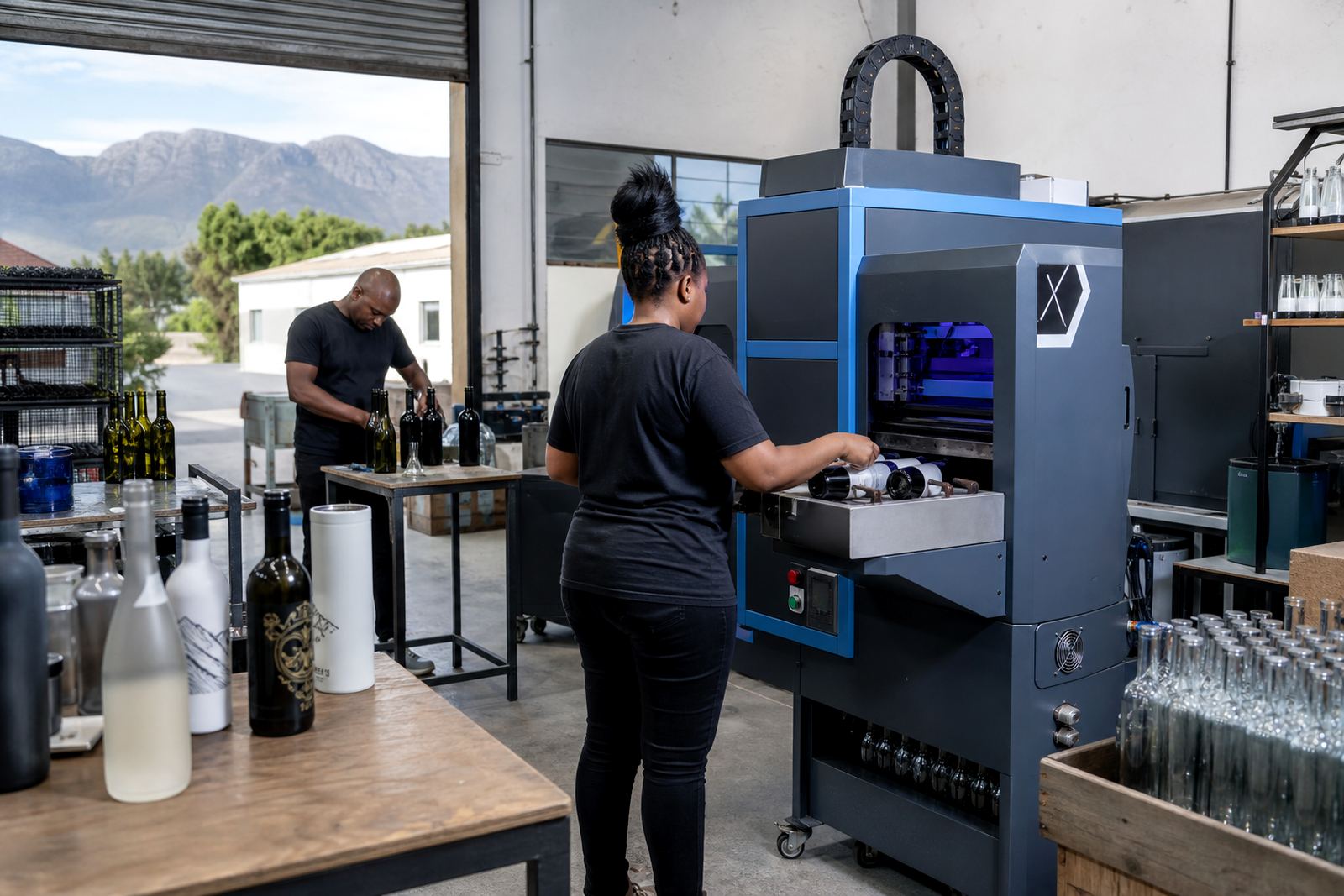
Nothing moves into print until the proof is approved. If a change is needed, it is marked up and checked again so the final version matches the brief. That step keeps the run clear for the print technician, the logistics lead and the packing team, especially when a job includes several bottle sizes or a mix of glass and drinkware.
Short-run work needs tidy sign-off. Once approved, the production plan can move through print prep, curing or finishing, then packing for delivery into Paarl, Cape Town, Stellenbosch, Franschhoek, Johannesburg or Durban.
Minimum runs and short-run planning
Short runs often need different proof thinking from large-volume print. A minimum run can affect how many proofs are shown, how artwork is nested and whether labels are the better route for a small batch. For wineries, distilleries and event organisers, that helps keep the artwork practical without forcing a full-scale setup that does not suit the order size.
If a run includes several bottle types, the proof stage may separate them so each size is checked on its own. That gives a cleaner view of how a wine bottle, gin bottle or water bottle will look once printed, rather than forcing one artwork file to do every job without adjustment.
What the team looks at before release
Before release, the proof is reviewed across production, artwork and logistics so the order is complete and packed to the right brief. In practice, that means checking the file, the print method, the bottle count and the destination before anything goes into the press room. It is a plain process, but it saves trouble later when the order is being packed for a cellar door, an event venue or a corporate handover.
- Correct item count for the short run
- Approved artwork version only
- Decoration method matched to the substrate
- Packing brief matched to the delivery address
- Any special handling notes recorded before dispatch