Packing that protects print and glass
Printed bottles travel best when the pack matches the finish. Glass bottles, ceramic drinkware and coated tumblers need firm cartons, clean dividers and enough movement control so corners do not rub against fresh print or label edges. If a run includes mixed sizes, the cartons should be grouped by shape rather than stacked loosely, because that keeps pressure off the necks and shoulders.
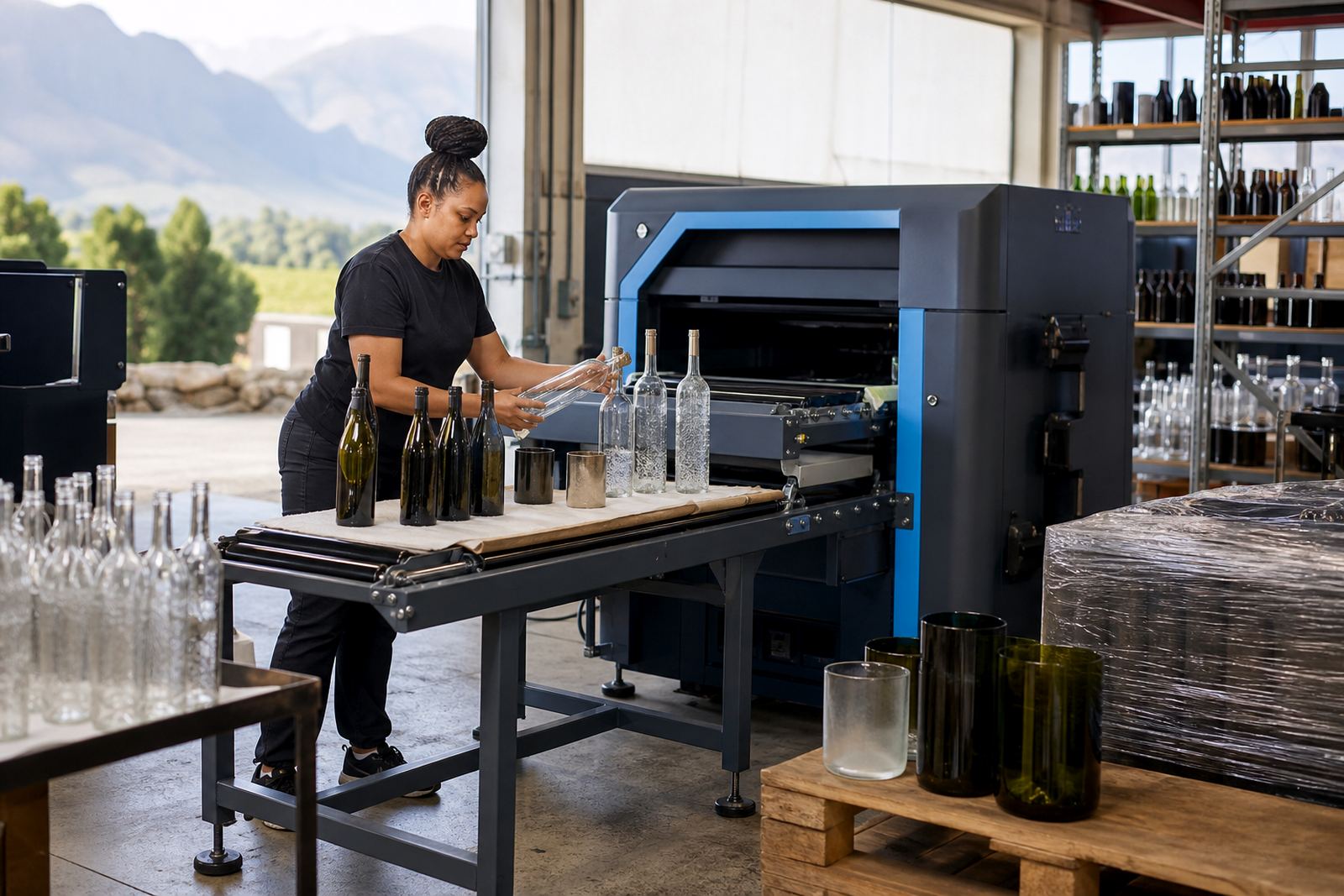
For wine bottles, gin bottles and water bottles, outer cartons should be closed firmly and marked for upright handling where needed. Labels should be fully dry before packing, while direct print and ceramic enamel need careful curing and handling before the cartons are sealed. The packing brief should also note whether the run is for retail, gifting or event tables, because that affects how each pack is arranged.
Before transport, the artwork and finish need a final look
Delivery planning starts well before the van leaves Paarl. The artwork proof should match the print area, bottle shape and chosen method, whether that is UV direct print, screen printing, ceramic enamel or a label finish. White ink layers, colour builds and small text all need to be checked against the real surface, especially on tinted glass or curved bottles.
For short runs, a signed proof matters just as much as the packing list. It shows the approved position, size and colour placement, which helps avoid a mix-up when several product lines are moving in the same order. If the run includes bottle sleeves, gift cartons or separate drinkware packs, those items should be listed clearly so nothing gets left out of the delivery plan.
Regional delivery notes from the Cape Winelands
Our base in Paarl works well for Western Cape routes and for consolidated loads heading further afield. Cape Town, Stellenbosch, Franschhoek, Somerset West and Constantia often suit direct regional drop-offs, while Johannesburg and Durban usually need tighter packing and more careful route planning. Each area has its own handling needs, from narrow cellar access to office parks with strict receiving bays.
- Paarl and nearby Winelands stops suit shorter local runs and split deliveries.
- Cape Town and surrounds often need timed drop-offs for offices, venues or distribution points.
- Johannesburg and Durban orders are usually packed for longer transport legs and clearer carton labelling.
- Franschhoek and Constantia deliveries may need special care for tight access and event venues.
Where a site has rules for receiving times, vehicle access or goods lifts, that should be included in the packing brief. A clean address, floor number and contact person on site help the handover move without confusion.
Minimum runs and mixed product lines
Short runs work best when the quantities are clear from the start. A minimum run for printed bottles or drinkware depends on the method, bottle type and colour count, and the packing plan should reflect that from the first carton. If the order includes several SKU lines, it is safer to separate the cartons by line than to mix everything into one bulk load.
One carton may hold a single bottle style for a winery tasting release, while another may carry matching gin bottles and branded glasses for an event. That sort of split keeps receiving teams organised and makes stock counts easier on arrival. It also reduces the risk of label damage or print scuffing when cartons are opened for checking.
How to prepare a clean delivery brief
A good delivery brief does not need long notes, just the practical facts that matter on the day. The team should know the product type, quantity, carton count, address, delivery area and any special handling on site. If the run includes proof approvals, the approved version should be matched to the packed stock so nobody has to guess which line is going where.
- State the bottle or drinkware type, including size and finish.
- List the decoration method, such as UV direct print, screen print, ceramic enamel or labels.
- Note whether the order is for tasting rooms, gifting, retail or events.
- Include carton count, floor access and any delivery restrictions.
- Mark fragile packs clearly when glass or decorated drinkware is involved.
That kind of brief keeps the handover practical and makes receiving easier when the order lands at a cellar, warehouse or event venue.
Where the support team fits in
Delivery help here covers the practical side of the job, from artwork checks and print area planning to packing briefs and proof approvals. Willem Februarie oversees the wider operation, while Leanne Gamieldien handles production flow, Sibusiso Adonis manages print work, Anika Louw checks artwork details, Morne September handles logistics and Zanele Padayachee keeps client services organised. The result is a delivery plan shaped around the actual bottles, the print method and the route they need to travel.
For wineries, distilleries, corporate gifting and events, that matters because each job leaves the packing table differently. Some orders move as branded presentation packs, others as bulk cartons for later filling or table setup. Either way, the delivery notes should match the finish, the quantity and the destination so the printed stock arrives ready for the next step.