Bottle types we print, and what works best on each
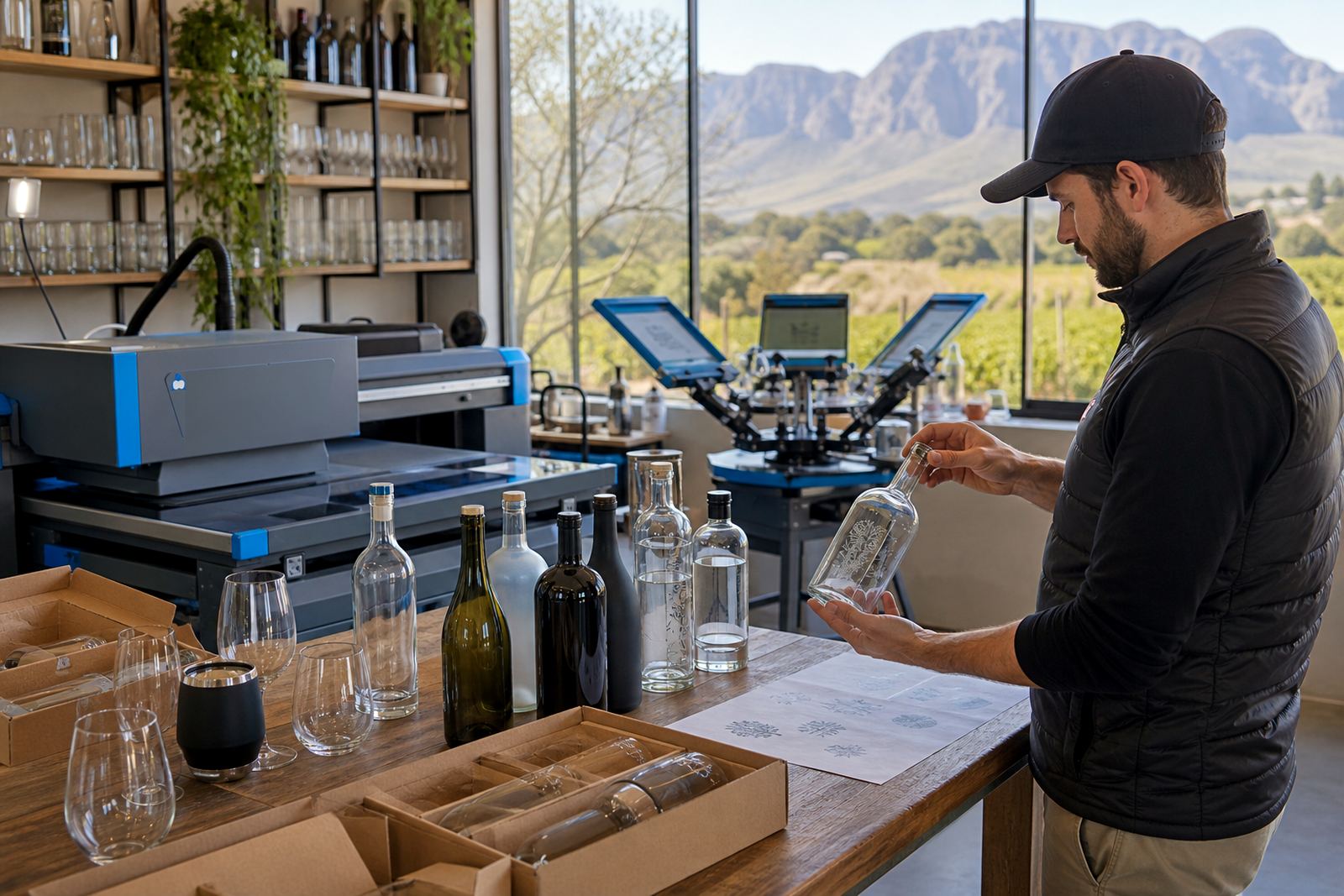
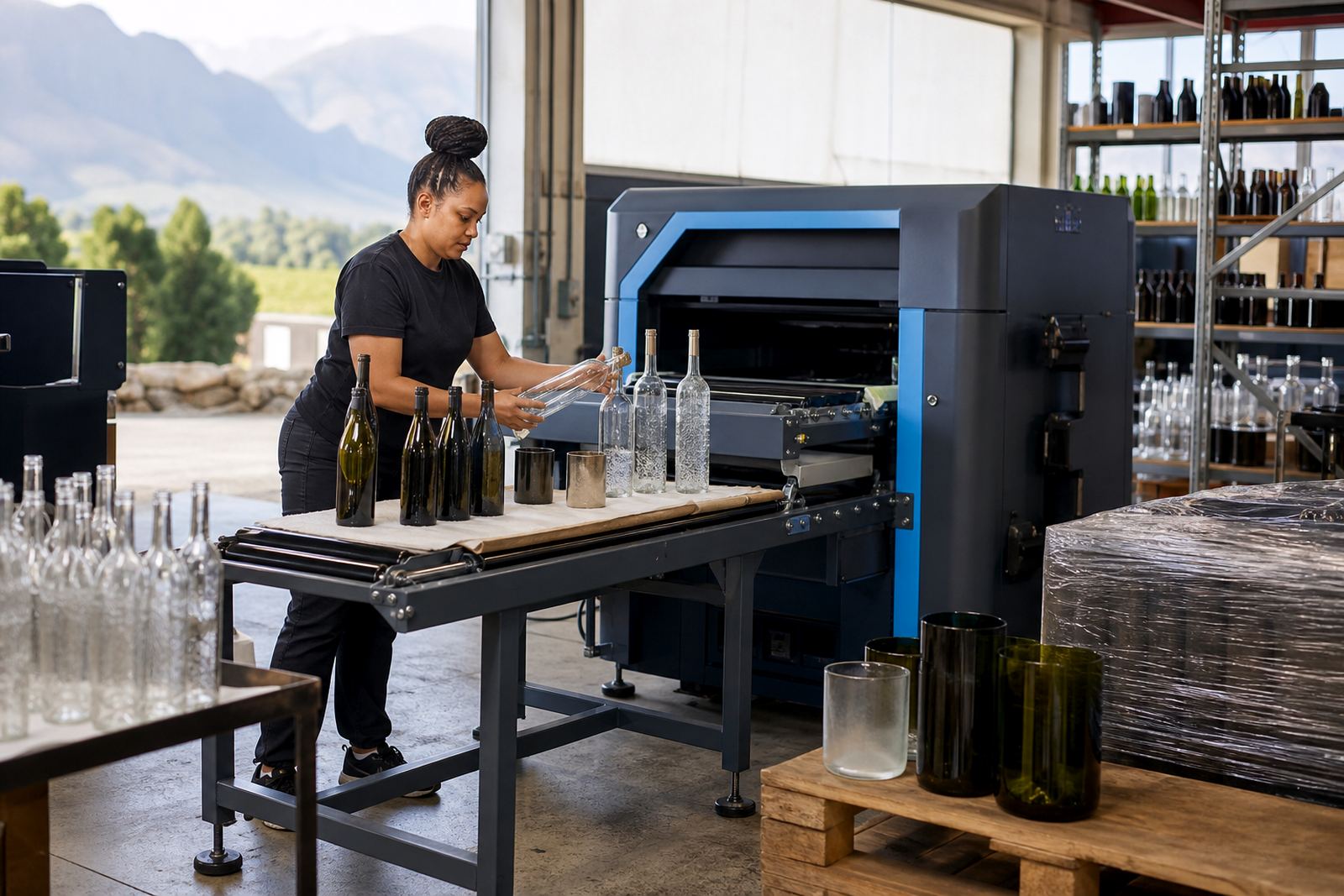
We print on glass bottles and drinkware used for wine, gin, water, mixers and gifting. Clear glass, flint glass, frosted glass and some coloured glass items can all work well, but the shape, neck size and print area matter. Straight-sided bottles are easier for clean artwork placement, while curved shoulders and narrow panels need tighter planning.
For drinkware, the same checks apply to glasses, tumblers and promotional items with stable print surfaces. A bottle with a strong taper may still be suitable, but the artwork often needs to be resized so text stays legible and the logo does not wrap too far around the curve.
- Glass finish affects colour, contrast and coverage.
- Curved bottles need careful panel sizing.
- Drinkware is checked for usable print area before layout work starts.
Decoration methods and where each one fits
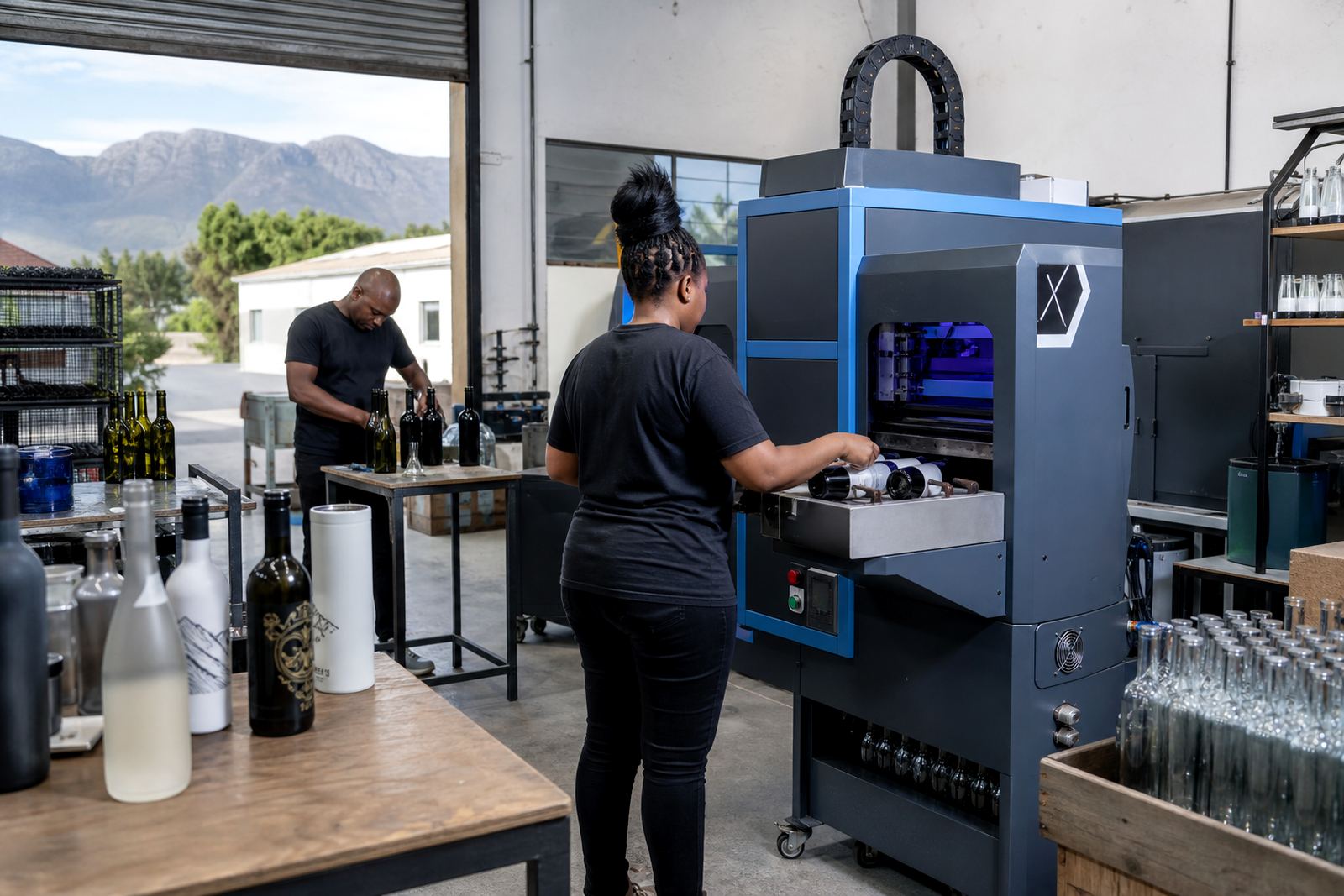
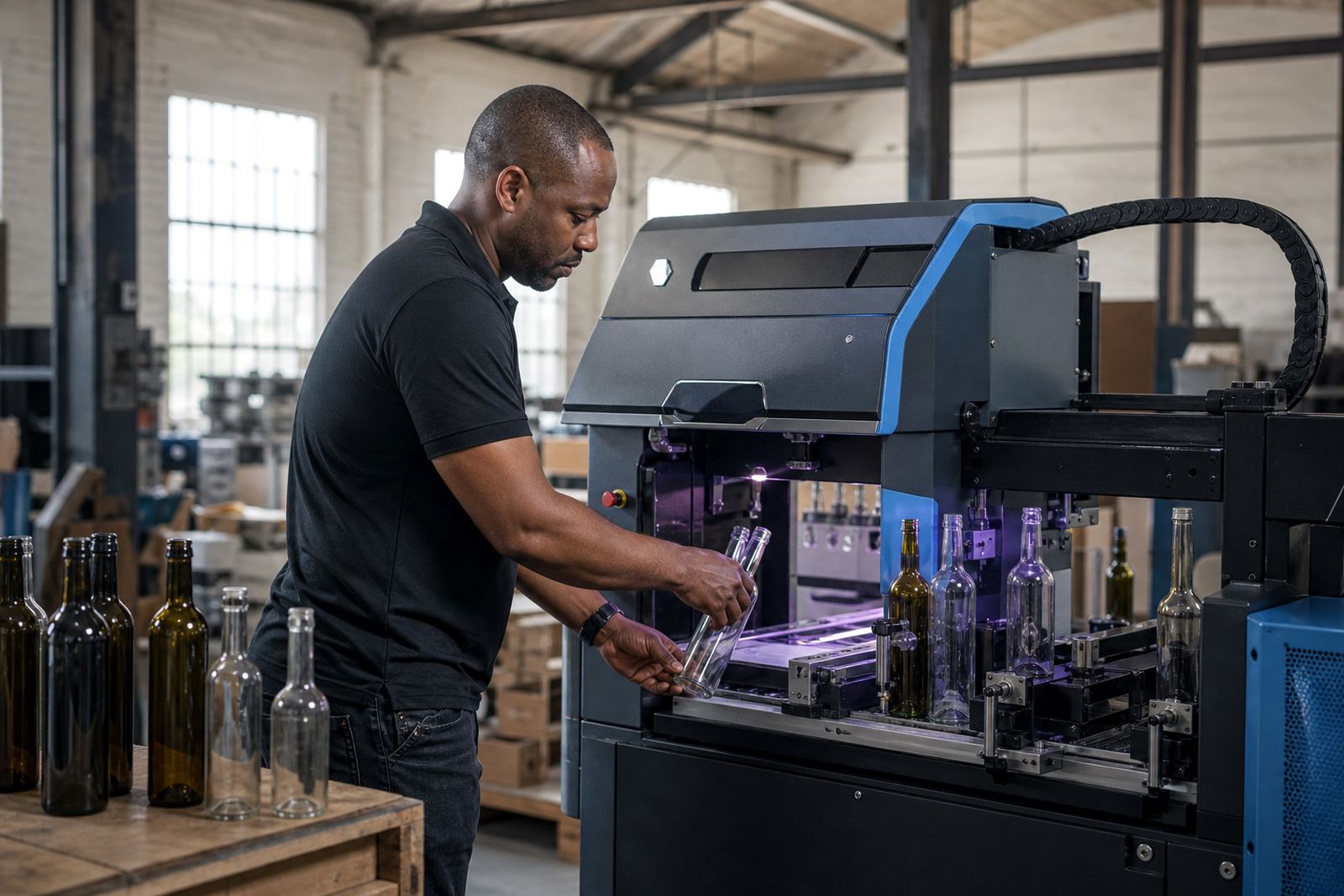
Different decoration methods suit different runs and finishes. UV direct print is often used for crisp detail and short runs where multiple colours are needed. Screen printing suits solid colour work, repeating logos and cleaner spot colour results. Ceramic enamel decoration is chosen where a harder-wearing finish is required on suitable glass, especially for premium presentation pieces.
Labels are useful when the artwork carries a lot of detail, variable wording or a longer list of product information. They can also work well where the bottle shape makes direct print less practical. The method is chosen around the bottle, the artwork and the end use, not just the look on screen.
- UV direct print for detailed artwork and short runs.
- Screen printing for solid colours and repeat graphics.
- Ceramic enamel for selected glass items with a durable finish.
- Labels for flexible layouts and longer text content.
What happens with artwork before a run starts
Artwork is checked as a standard step before production. We look at logo placement, line weight, small text, contrast and any colour changes needed for the chosen print method. If the artwork needs adjustment, it is set up for the bottle shape and the print area rather than left in a generic layout.
Proofs are issued before every run so the layout can be checked on the actual item. That is where spelling, positioning, bottle orientation and label size are confirmed. If a white ink layer is needed under colour on dark glass, it is planned at this stage too.
- Artwork is checked for scale and legibility.
- Proofs show the layout before production starts.
- White ink layers are planned where the artwork needs stronger opacity.
Minimum runs for short-order printing
Short runs are often the point of the exercise for wineries, distilleries and event teams, but every method has its own minimum. Some jobs suit smaller quantities with labels or UV direct print, while screen printing and ceramic enamel can need higher quantities to make the setup practical. The exact minimum depends on the bottle, decoration method and number of colours in the artwork.
It is worth planning for the final quantity you need, not the roughest estimate. If a launch pack needs a small batch for tasting rooms and a separate batch for gifting, those details affect the run structure. A clear count also helps with packing, labelling and transport.
- Method and artwork complexity affect the minimum run.
- Short runs are possible, but setup still needs planning.
- Final quantities are best confirmed before artwork is locked in.
Colour, white ink and print area decisions
Many clients underestimate how important colour guidance is. A pale logo on dark glass may need a white ink base, while strong brand colours can look different on frosted or tinted bottles. Metallic-looking artwork, fine gradients and very light text all need a practical check before approval.
Print area planning is just as important. Neck labels, shoulder wraps and body panels each behave differently, and not every bottle carries the same usable space. If the bottle is being used for corporate gifting or event pouring, the front panel may need to stay clean and readable from a distance.
- White ink can improve visibility on dark glass.
- Colour shifts can happen on frosted or tinted surfaces.
- Print area planning keeps logos in the right part of the bottle.
Packing, delivery and how orders are handled in South Africa
Orders are packed with the print method and bottle type in mind, because decorated glass needs proper handling from the press room to the delivery vehicle. Extra care is taken with mixed packs, fragile necks and grouped cartons for larger consignments. Where needed, the packing brief covers counts per carton, separation between styles and the order of items for dispatch.
We deliver across South Africa, including Cape Town, Stellenbosch, Franschhoek, Johannesburg and Durban, as well as Paarl and surrounding Winelands areas. That matters for wineries and event organisers working to tight venue dates, because the packing and route plan have to suit the destination, not only the production run.
- Packing briefs can note carton counts and item separation.
- Delivery runs are planned for the destination and bottle style.
- Mixed orders need clear labelling before dispatch.