Start with the bottle or tumbler shape
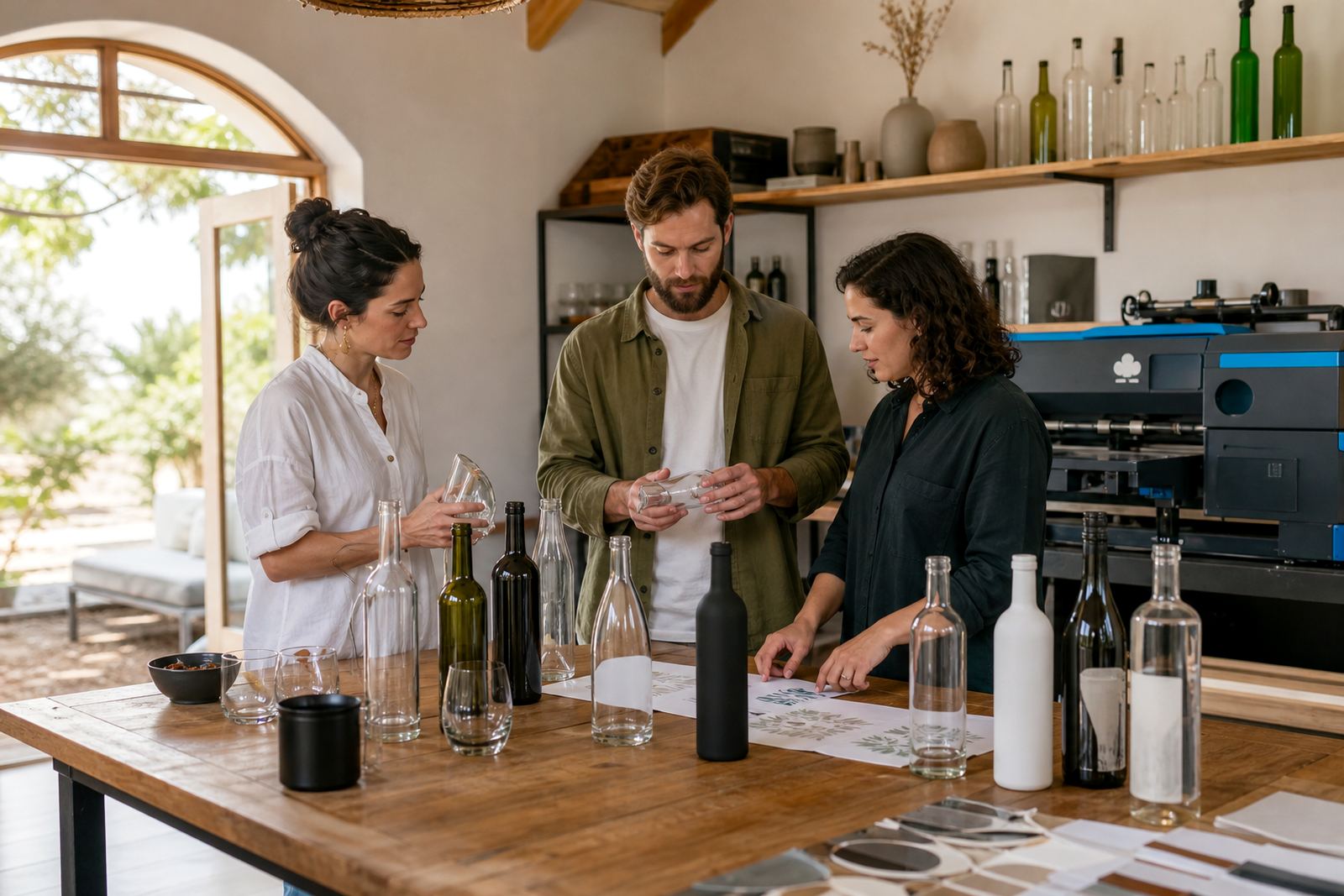
The first check is the format itself. Wine bottles, gin bottles, water bottles and drinkware all behave differently on press, especially when the print needs to sit neatly around shoulders, curves or a narrow panel. Clear glass shows colour differently to amber or frosted glass, while stainless steel drinkware needs a different approach to plain glass.
We look at label space, the panel height, the neck, the shoulder and the base line before anything goes into production. A straight sided bottle gives more room for a wraparound label or larger artwork, while a tapered bottle may need a smaller print zone. That planning avoids artwork landing too close to a seam or a curved section that can distort the final look.
- Wine bottles for tasting, retail or gifting
- Gin bottles with taller label zones and shoulder detail
- Water bottles for events and hospitality use
- Glass or coated drinkware for branded service pieces
Match the decoration method to the job
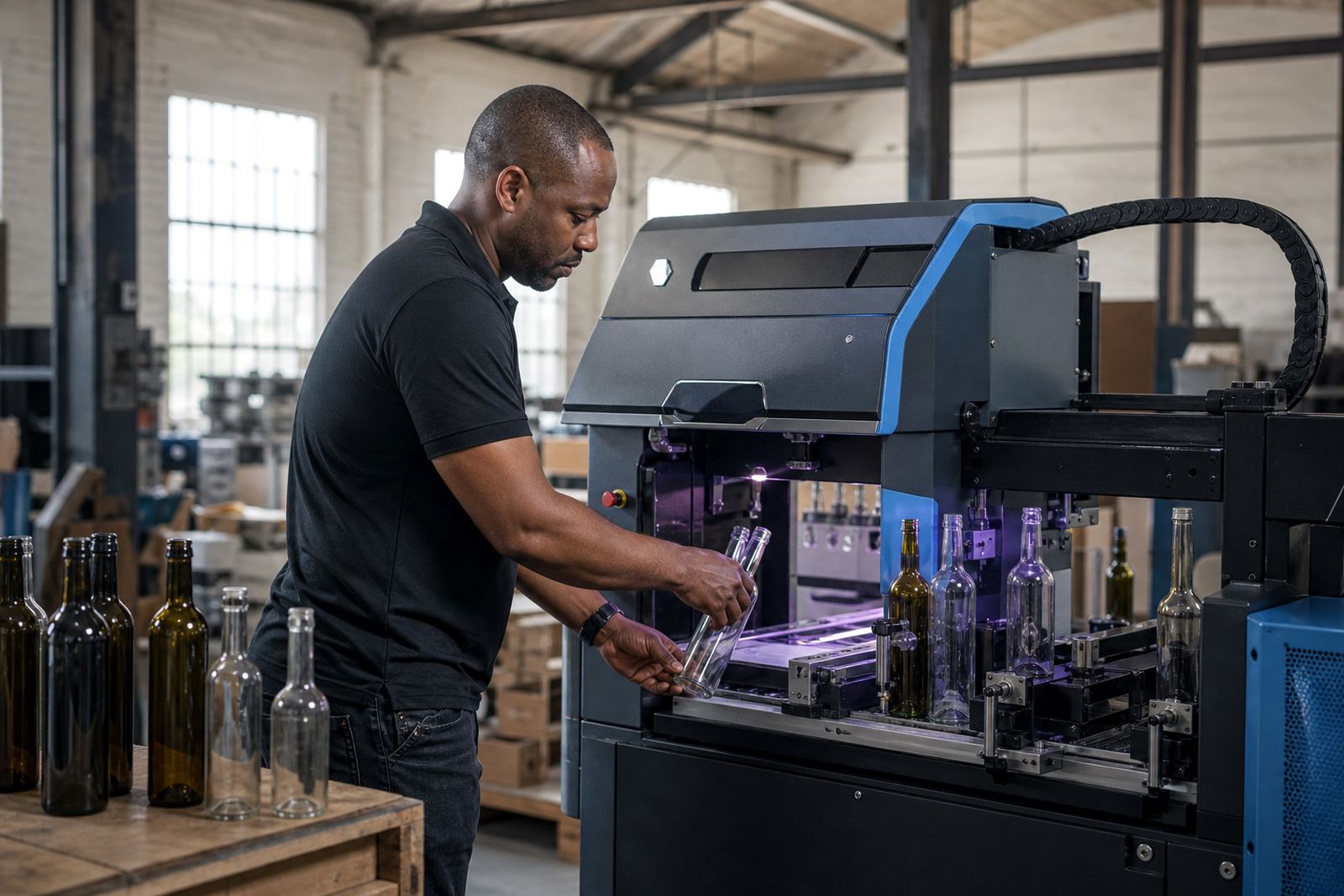
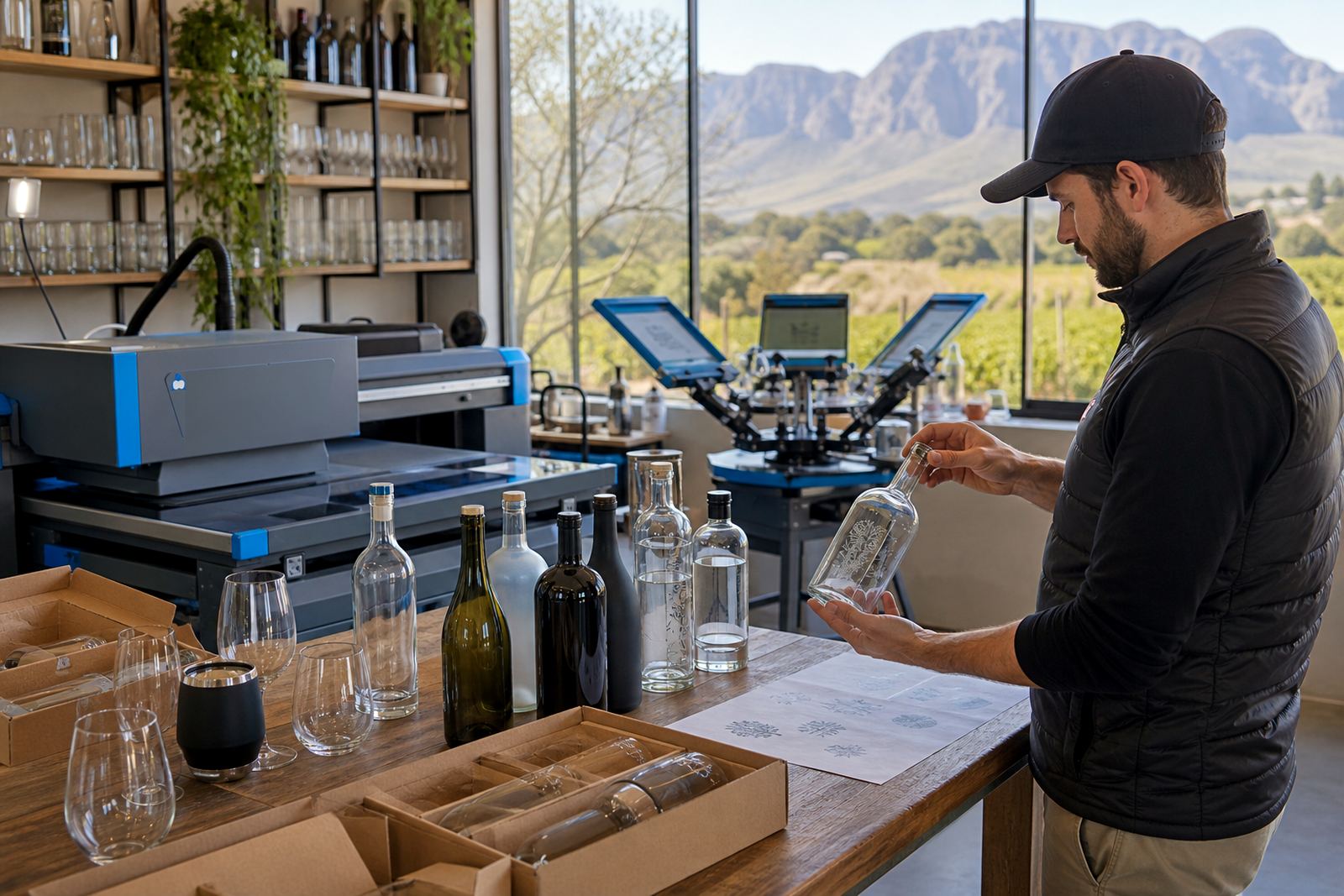
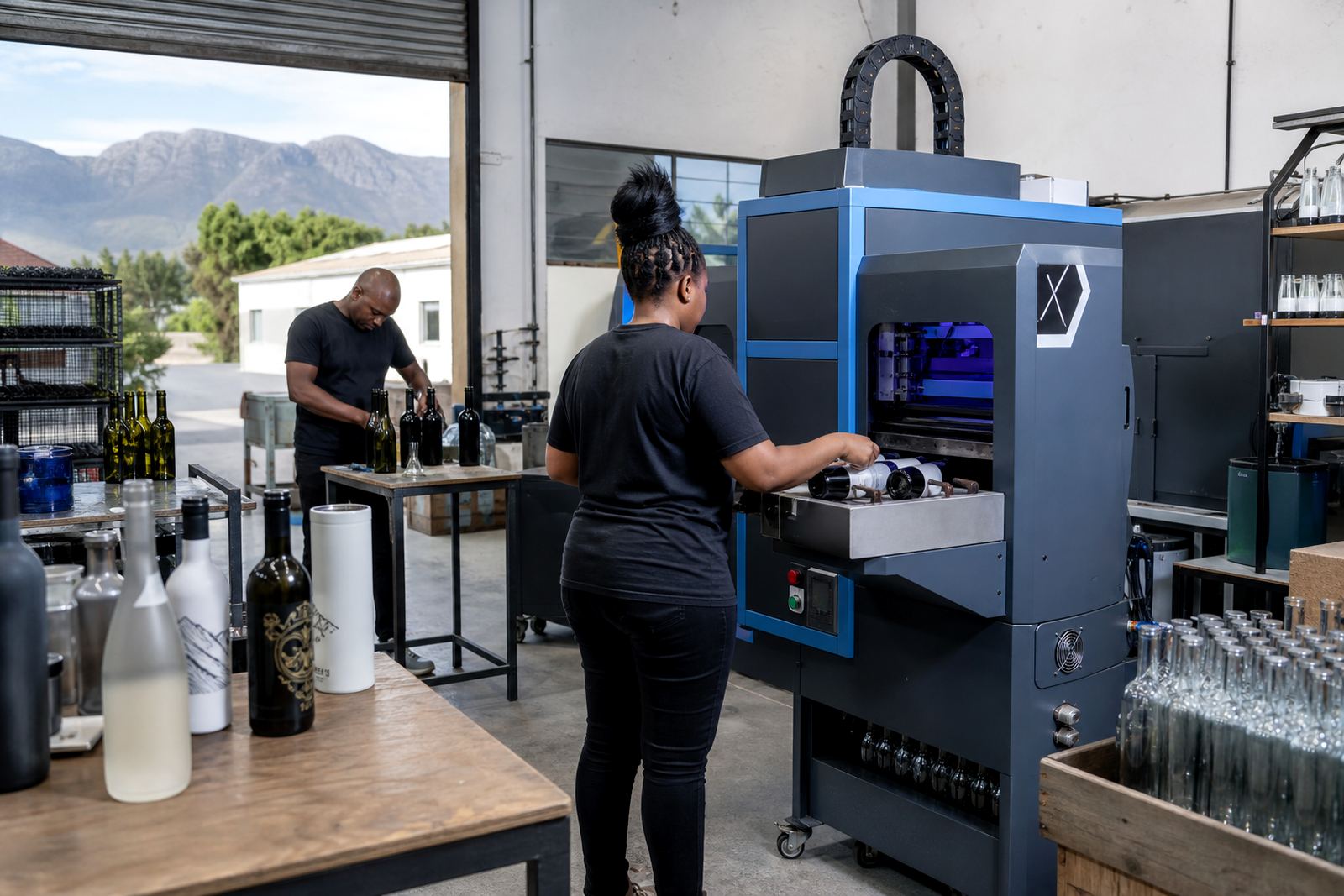
Different runs suit different methods. UV direct print works well where sharp detail, short runs and fast artwork changeovers matter. Screen printing suits solid colour areas and a repeatable finish on many bottle shapes. Ceramic enamel is the better route when a fired glass finish is needed, especially for drinkware or bottles that need a harder wearing mark. Labels help where full artwork, ingredients or longer text need to fit cleanly.
We help weigh up appearance, durability and the surface of the item. White ink layers are useful on darker glass or tinted bottles, because they hold colour and improve legibility. Some runs need more than one method, such as a printed label paired with a direct print mark. The decision is usually made from the artwork, the substrate and the practical job on the shelf or table.
- UV direct print for short runs and detailed artwork
- Screen printing for clean blocks of colour
- Ceramic enamel for a harder fired finish
- Labels where text, compliance copy or full artwork is needed
Artwork checks before plates or print files move forward
Artwork support starts with checking the file against the bottle or glass size. We look at safe zones, line weights, font size, image clarity and colour choice, then mark up anything that may lose detail on a curved surface. If the print area is tight, the artwork may need resizing or a simpler layout so the main elements stay legible.
That part saves trouble later. A logo that looks fine on a screen can sit awkwardly on a bottle shoulder, or a thin line can vanish once it wraps around glass. We prepare the file for the chosen method, not just for the artwork itself, and that includes label artwork setup where the trim line, bleed and fold points matter.
- Artwork checks for scale and clarity
- Label artwork setup with trim and bleed notes
- Colour guidance for glass and drinkware surfaces
- White ink planning where needed
Proofs and mock-ups before a run starts
Every run is checked through proofs before production moves ahead. A proof shows placement, scale, colour direction and the print area on the chosen bottle or drinkware item. Where needed, a mock-up visual helps show how the finished piece may sit on a real product rather than only on a flat screen image.
Proofs are useful when a design needs to move from one bottle size to another, or when the same artwork has to work across wine bottles, gin bottles and water bottles. If the print area changes, the proof reflects that. That way the final approval is based on the actual item and print method, not on guesswork.
- Proof approvals for each run
- Mock-up visuals for placement and scale
- Print area planning for curved surfaces
- Method specific prep for UV, screen or ceramic enamel
Minimum run guidance for short production orders
Short runs are part of what this support covers. Minimum quantities depend on the method, the item type and the amount of setup involved. A label run may suit a smaller batch than a ceramic enamel job, while a simple single colour screen print may call for a different minimum from a detailed UV direct print.
Minimum run advice is best handled alongside the artwork and the bottle choice, because a changed format can alter the setup. For a winery, distillery, event organiser or gifting brief, the aim is to balance quantity, presentation and practical packing. If the order includes more than one bottle size, each line may need its own setup notes and proof.
- Minimums vary by method and item
- Short runs can suit events and gifting
- Different bottle sizes may need separate setup
- Packing briefs help with mixed orders
Packing and delivery notes for South African routes
Once the run is approved, packing needs proper attention. Bottles and drinkware travel best when packed for the weight, shape and fragility of the items inside the cartons. That matters on routes from Paarl to Cape Town, Stellenbosch, Franschhoek, Somerset West and Constantia, and also on longer deliveries to Johannesburg or Durban.
We keep the packing brief practical, with carton counts, label notes and handling points where needed. If an order includes glassware, a mixed set of bottles or items with different print areas, the packing notes help the receiving team sort it properly on arrival. This is especially useful where stock needs to be split for events, tasting rooms or gifting packs.
- Delivery support across South Africa
- Carton and pack notes for mixed orders
- Handling notes for glass and drinkware
- Route planning for Cape Town, Johannesburg and Durban