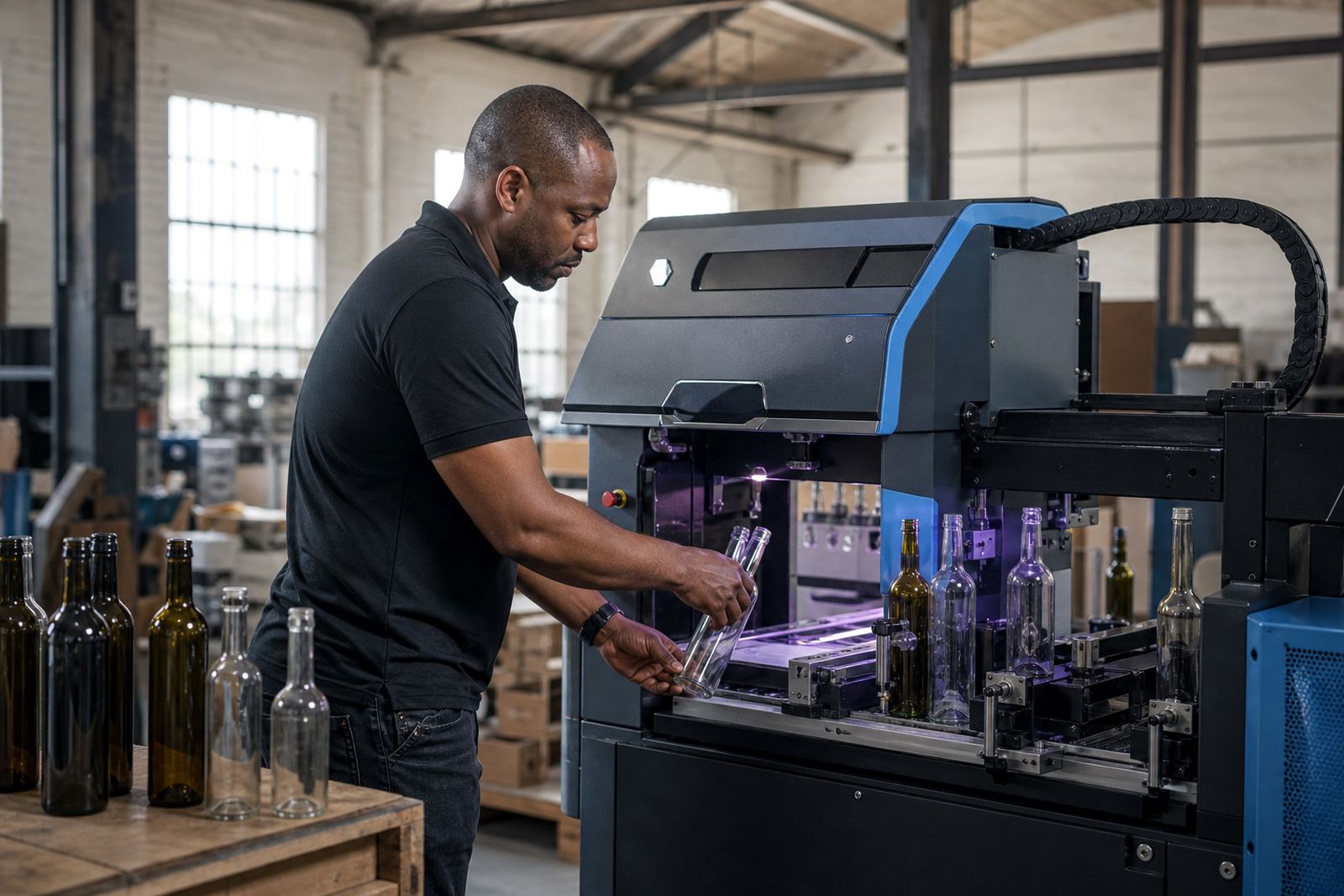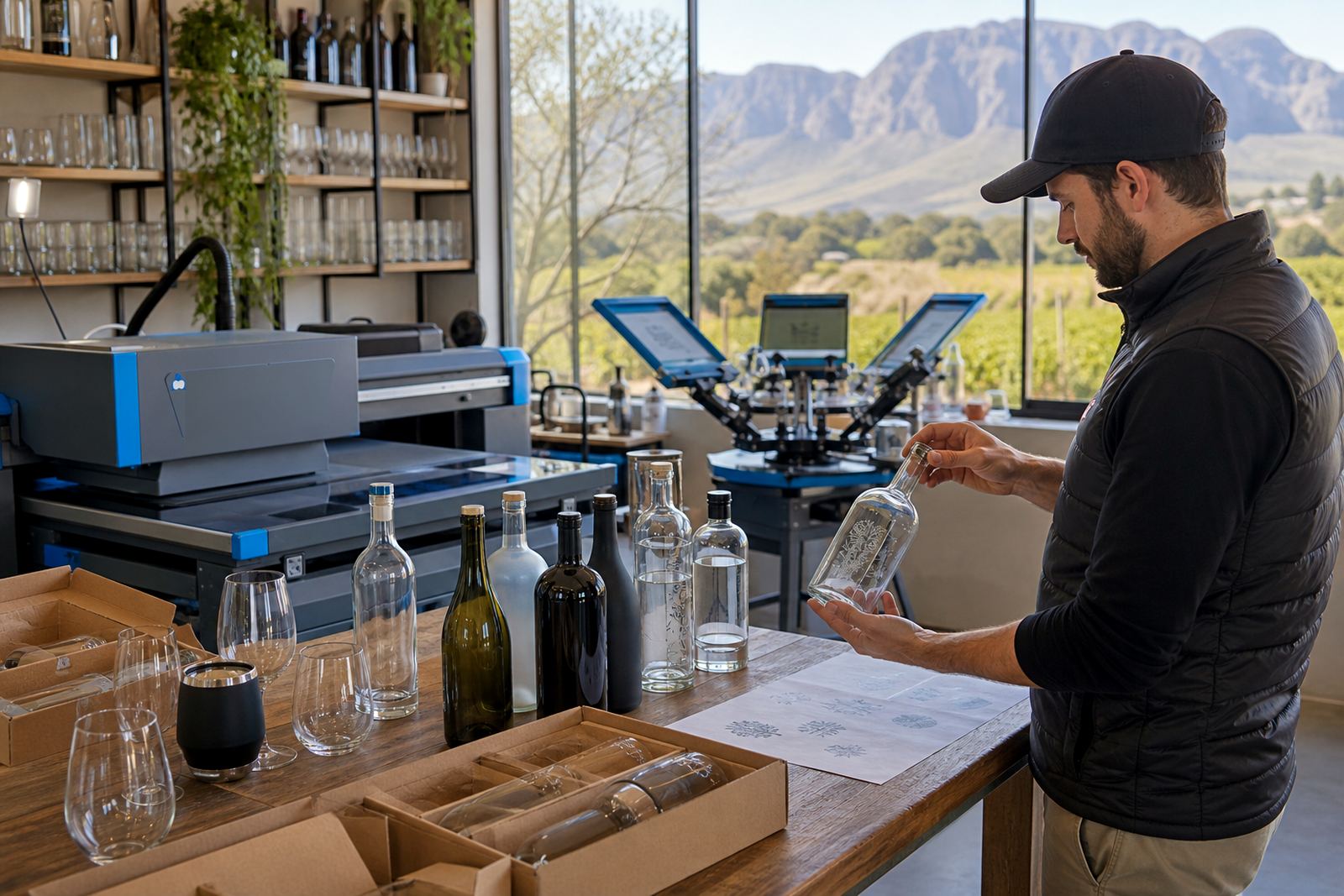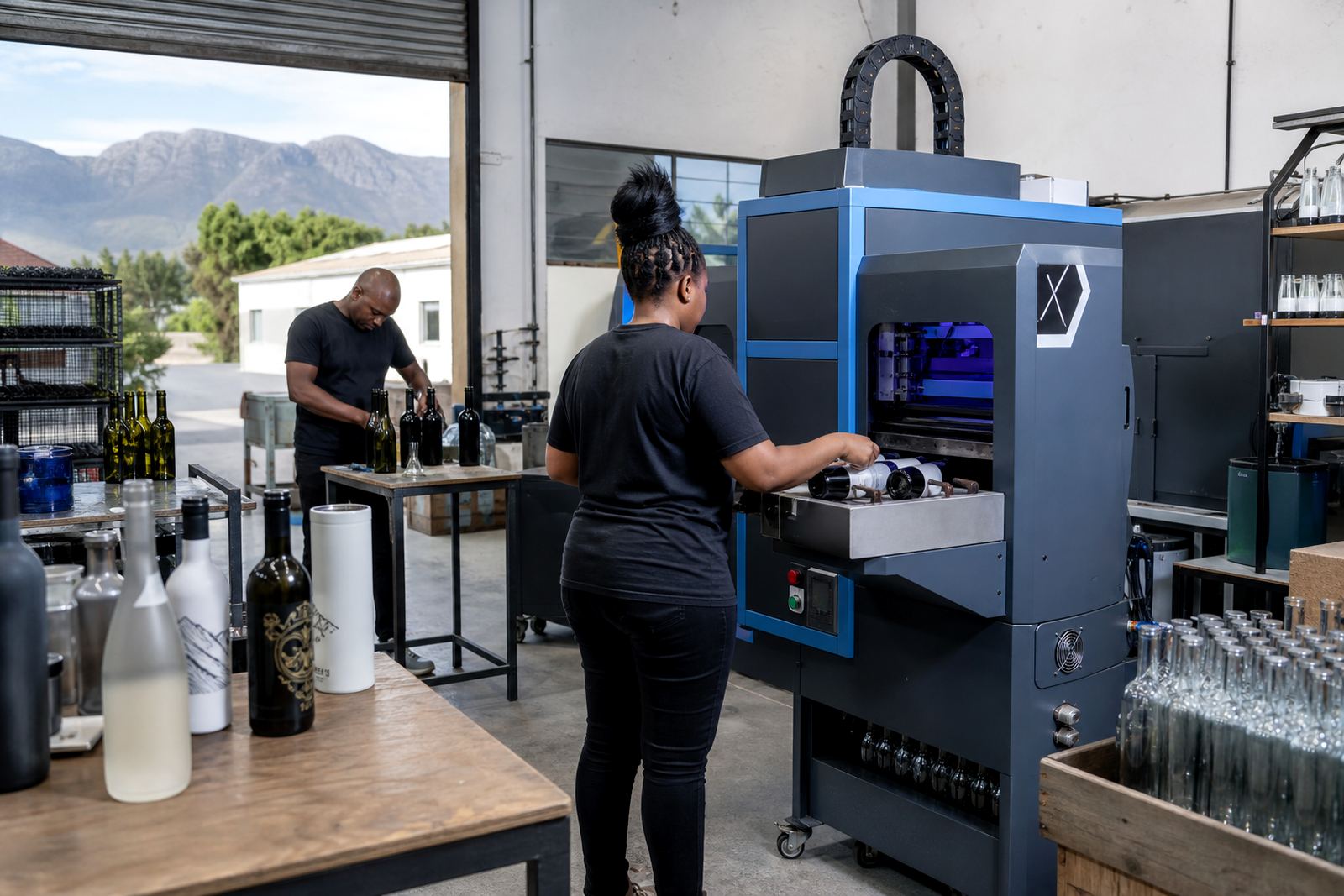
Unpack the cartons before they sit in a hot store room
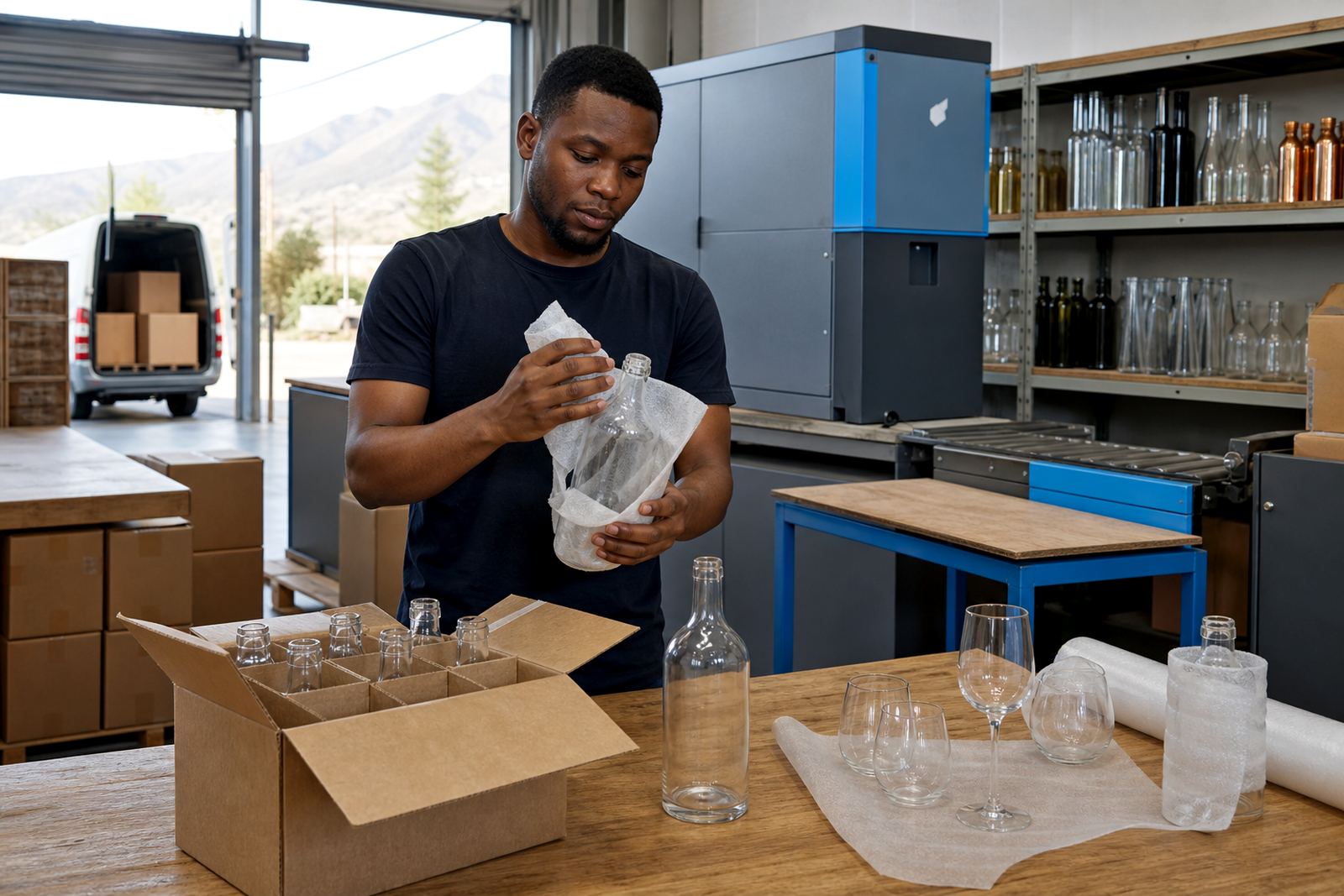
Open cartons on a clean table and check the outer boxes for dents, crush marks or moisture. In Paarl, Stellenbosch and Franschhoek, a closed store room can warm up quickly, and heat plus humidity can soften labels or make cartons sweat. Lift each bottle by the body, not by the neck, and keep hands dry so the print surface does not pick up fingerprints or dust.
Move packed cartons away from direct sun, damp concrete floors and leaking irrigation lines. If the delivery includes mixed glassware, sort the items by type first so stemware, tumblers and bottles are not stacked in the wrong way.
- Cut tape carefully so blades do not score printed surfaces.
- Set damaged cartons aside before the stock is put away.
- Keep printed items in their separators until needed for packing or display.
How to treat UV print, screen print and ceramic enamel
Different decoration methods take different levels of handling. UV direct print is strong on glass and coated drinkware, but hard knocks can chip the edge of the print if the item is scraped against metal shelving or another bottle. Screen print and ceramic enamel are more durable for repeated handling, yet they still need proper curing and careful stacking. Labels need the most protection from moisture and abrasion, especially on chilled bottles or items used in ice buckets.
When a run includes white ink layers or layered artwork, avoid rubbing the printed area during unpacking. Let the decoration settle properly before the items are packed for an event or placed on shelves.
- Do not drag printed bottles across each other.
- Avoid rubber bands or tight wrapping over print zones.
- Keep label edges dry when bottles are moved into cold storage.
Washing and cleaning without lifting the decoration
For glassware used in tasting rooms, hospitality service or gifting, hand washing is still the safest routine unless the job was specified as dishwasher safe. Wash with warm water, a gentle cleaner, and a non-abrasive cloth or sponge. Scouring pads, steel wool and harsh chemicals can dull print, lift labels or mark the glass surface. If a bottle is reused for display, rinse it soon after use so residue does not dry onto the decoration.
Wipe from the plain glass toward the printed area with light pressure. This lowers the risk of catching a label edge or scratching the finish on a neck or shoulder. Dry items upright on a clean rack, not piled in a crate while still wet.
Cold rooms, ice buckets and coastal air need different habits
Branded bottles and drinkware can live in very different conditions across South Africa. A cellar room in the Cape Winelands is not the same as a humid venue in Durban or a coastal venue near Cape Town. Cold rooms create condensation, and wet surfaces can weaken paper labels or soften adhesive if the bottles sit in melt water for too long.
For events, keep decorated bottles out of melting ice where possible. If chilled presentation is part of the brief, dry the outside before moving the stock from the fridge to the table. In coastal areas, air that carries salt and moisture can leave marks on cartons and metal shelving, so sealed storage helps.
Storage that keeps the next batch presentable
Store printed bottles and glassware upright in clean cartons or on shelving with stable support. Heavy items should never sit on top of decorated glasses, and labels should not press against rough cardboard. Where a venue stores stock for longer periods, keep the room dry and away from cleaning chemicals, fuel, paint and food oils that can transfer odours or stains.
For mixed orders, separate wine bottles, gin bottles and water bottles from stemware and tumblers. It makes stock control easier and reduces the chance of one item type scratching another.
- Store the cartons on a pallet or a shelf rather than straight on the concrete.
- Leave space around boxes so air can move.
- Rotate older stock first when there are several event drops.
When a replacement check makes sense
If a box arrives cracked, a label has lifted, or a printed area has been rubbed in transit, set that item aside and inspect the rest of the carton. Small marks are easier to manage early than after the stock has been unpacked into a busy cellar or event store. Send clear details with the print method, item type and carton count for the affected delivery, using the enquiry form.
For follow-up bottle runs, keep the approved proof, artwork notes and packing brief close at hand. That record helps the next production run, especially when the same bottle profile or glass finish needs a fresh label or print position.