A glass is not a flat label with legs
Wine glasses ask for different thinking from bottle decoration. The print area moves with the curve of the bowl, and the hand often sits close to the image during service. That means logos, text and line work need to be scaled for viewing distance, glass curvature and the way the stem is handled at tasting tables or in gifting packs.
For short runs, the best result usually comes from planning the artwork around the actual glass type first. A tall stemmed glass, a rounded bowl and a sturdy tumbler each take decoration in a different way. The same artwork can look neat on one shape and feel crowded on another, so the first check is always proportion, not just the logo file.
Methods that suit wine glasses in real production
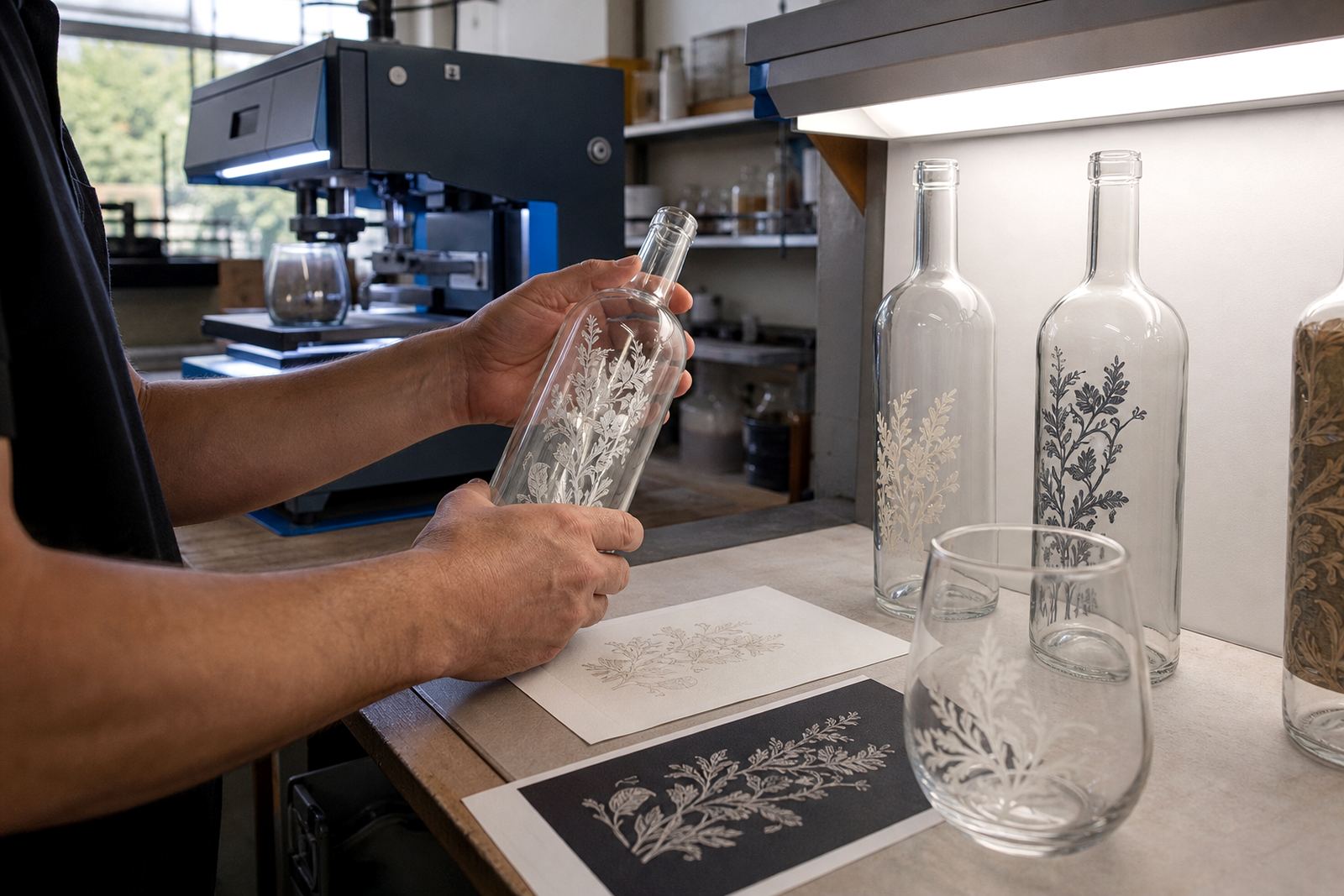
Different decoration methods suit different glassware and finish levels. UV direct print is useful for detailed artwork and smaller runs where crisp colour matters. Screen printing works well for solid blocks, single colours and bottle runs that need a consistent look. Ceramic enamel decoration is chosen when the glass must cope with frequent washing and a more durable fired finish is needed. Labels can be the right option for temporary promotions, variable artwork or mixed glass sizes.
- UV direct print for sharp detail and short runs
- Screen printing for strong logos and simple spot colours
- Ceramic enamel for hard-wearing decorated glassware
- Labels for flexible artwork or event-specific work
The method is matched to the use case, the glass surface and the number of units needed. A tasting room glass and a corporate gift pack do not need the same treatment, even if the logo stays the same.
Bowl curvature, stem handling and the parts people notice
Wine glass artwork has to survive the way a glass is lifted, held and rinsed. Hands wrap around the stem, the bowl catches light, and the print has to read from a side angle rather than straight on. That is why artwork placed too low can disappear in the hand, while artwork placed too high can look cramped near the rim.
Stem handling also affects placement on paired glass sets. If the artwork sits where fingers naturally rest, it can wear unevenly or feel awkward in service. On curved bowls, thin lettering may distort if it is forced too far around the curve. A cleaner result comes from keeping the design within a sensible print area and allowing room at the edges.
Artwork checks before the run is approved
Artwork checks are part of avoiding problems on glass. A logo that looks clear on screen may need changes to line weight, spacing or white ink backing once we print it on glass. If the print includes pale colours, clear glass or tinted glass, the backing and opacity need attention before production starts.
- Logo size relative to the bowl shape
- Line thickness for print clarity
- White ink layers where colour needs support
- Text spacing on curved surfaces
- Positioning for right handed and left handed service
Mock-up visuals and proof approvals help settle those details before any glass moves into production. That step matters most when the order includes mixed shapes, gift sets or a strict brand layout.
Minimum runs that suit short campaigns and careful stock control
Short runs make sense when the job is tied to a launch, wedding, tasting event or a corporate gift order. They also help when a venue wants to test a design before moving into a larger repeat. Minimum runs vary by method and artwork complexity, so it is worth planning the decoration around the quantity rather than forcing a large production style onto a smaller brief.
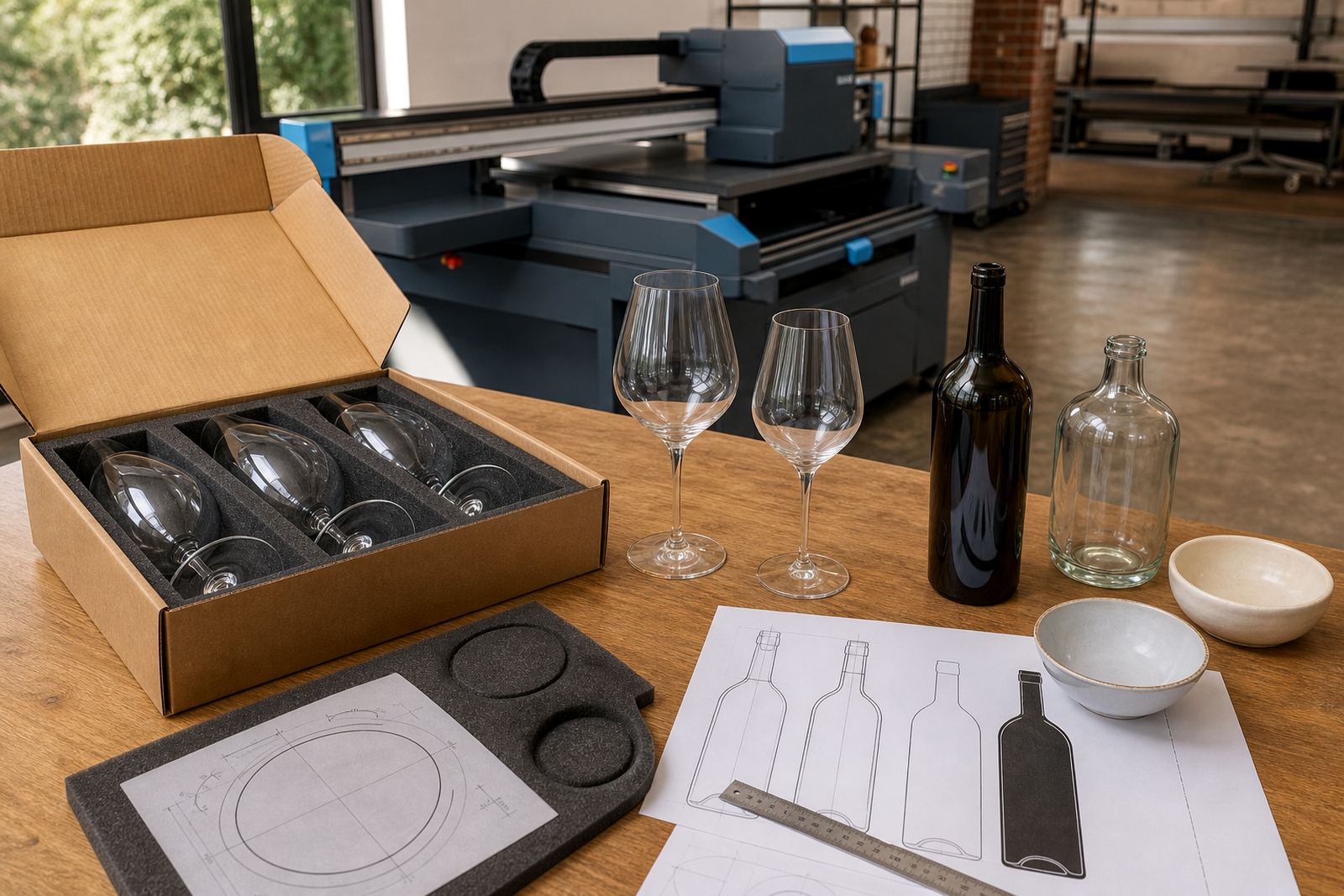
For glassware, the packing plan matters too. Glass has to move through printing, drying, inspection and packing without scuffing the decorated area. A sensible run size helps keep the process tidy and the final cartons easier to handle on delivery in Paarl, Stellenbosch, Franschhoek, Cape Town, Johannesburg or Durban.
Paarl tasting room glass range
A local wine tasting room might want stemmed glasses for tastings, a few larger goblets for private functions, and branded water glasses for the table. The artwork can stay consistent across all three, but the print area changes from one shape to the next. In that sort of brief, the cleanest route is to check each glass type separately and approve each layout before production starts.
That approach keeps the branding steady while the decoration method shifts where needed. A logo on a narrow stemmed glass may use a tighter one-colour print, while the same logo on a broader tumbler can carry a little more detail. The result is a set that feels planned rather than forced together from the same file.
Packing, delivery and glass that arrives ready to use
Decorated glassware needs packing that respects the finish. The print should not be rubbing against another glass in transit, and the cartons need enough separation to keep bowl surfaces from marking each other. For delivery across South Africa, the packing brief is just as important as the print brief.
For wineries, distilleries and event organisers, the final check is often practical: are the glasses clear, even, correctly marked and ready for the table or the gift bag. When the artwork, method and pack format are aligned, the job holds together from first proof to final box.