Where tumbler print earns its keep
Tumblers work well where the drinkware must do more than hold a drink. A straight-sided glass can carry a logo, line art, a tasting note, or a simple event mark without feeling crowded. In hospitality, that matters because the glass sits in hand, on tables, and on trays all day. At gifting level, it matters because the tumbler needs to look neat from a metre away and still hold up close.
For wineries, distilleries and event organisers around Paarl, Stellenbosch and Franschhoek, tumblers are often used for tasting rooms, corporate hampers, launch events and staff gifting. The print area can be planned to suit the shape of the vessel, so a small mark on one side or a wraparound layout can be set out properly before production starts.
Short runs are useful when artwork changes between events or when stock needs to stay tight. A batch of 24, 48 or 100 pieces can make more sense than a large print run when the brief is tied to a launch, a season, or a client pack with a fixed quantity.
Print methods that suit glass and coated drinkware
Different tumbler finishes ask for different decoration methods. Clear glass, frosted glass and some coated drinkware can all take decoration, but the print method needs to match the surface and the expected handling. The right choice also depends on whether the artwork is one colour, has fine detail, or needs a solid white base under the artwork.
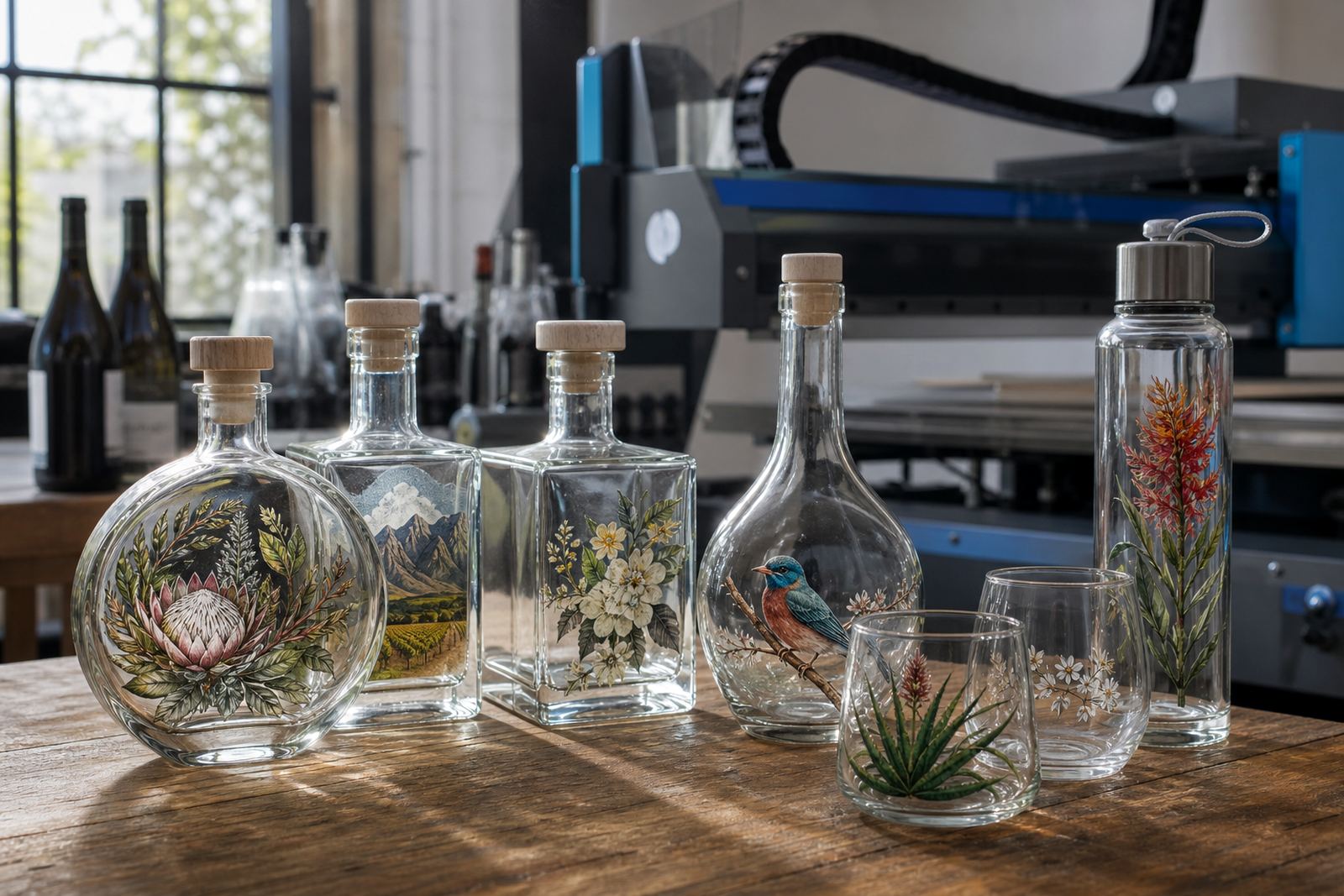
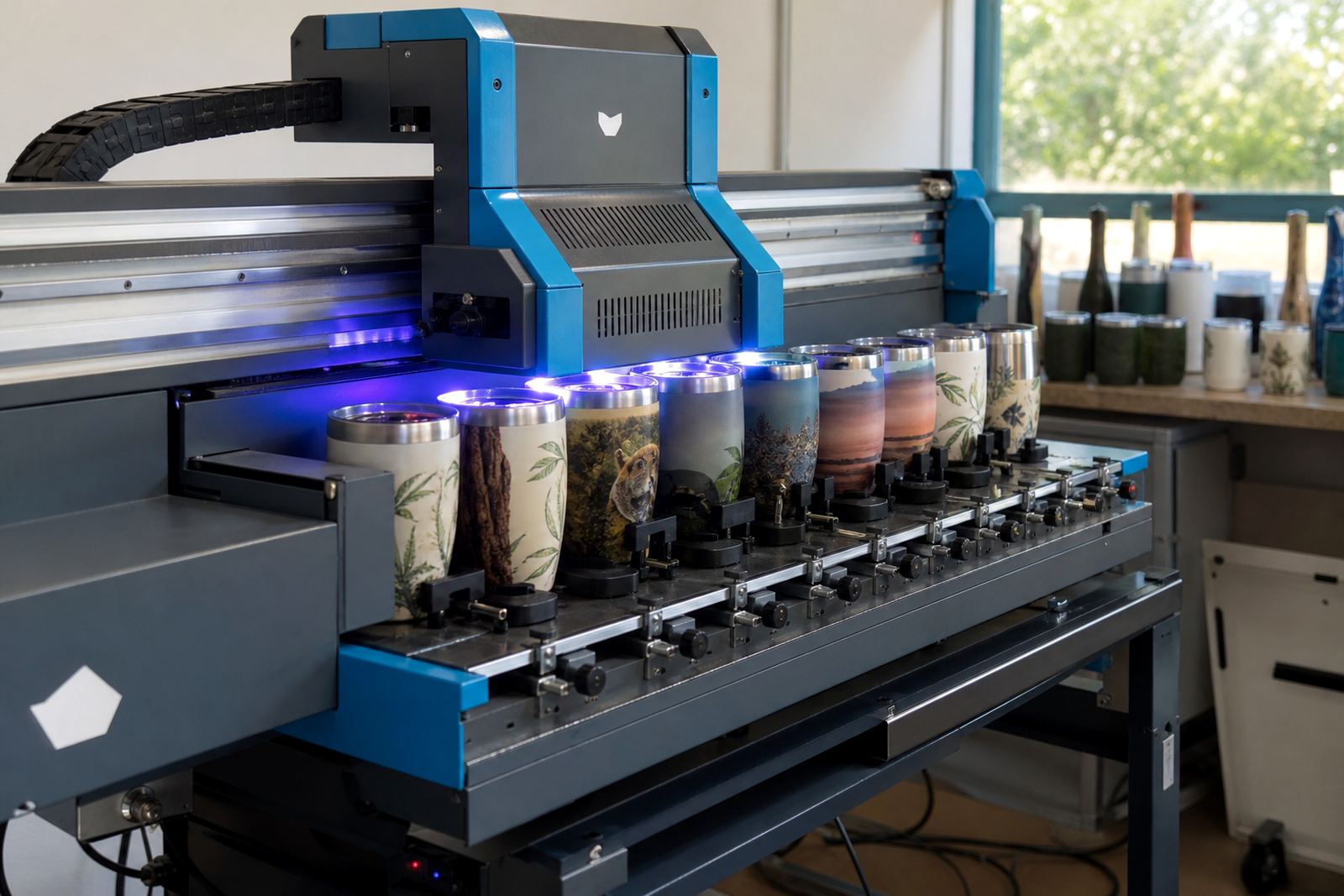
UV direct print suits crisp branding on selected tumbler surfaces and can handle detail well when the artwork is prepared correctly. Screen printing is often a strong option for simple logos, flat colours and repeat runs. Ceramic enamel is more common when a fired finish is needed on glassware and the brief calls for durability under regular use. Labels are useful where the artwork needs more flexibility, special shapes, or variable information.
- UV direct print for detailed logos and short runs
- Screen printing suited to bold branding in one or two colours
- Ceramic enamel for a fired finish on suitable glass
- Labels for flexible layouts, sets and variable messages
Artwork that looks clean on curved glass
A tumbler can expose weak artwork very quickly. Thin lines may disappear on a curved surface, dark colours can lose clarity on tinted glass, and small text needs enough breathing room to stay readable. That is why artwork checks matter before a run is approved. The file may need adjustments to line weight, spacing or colour build so the final print sits properly on the glass.
White ink layers are often part of the conversation when the glass is dark, tinted or clear but busy in tone. A white underbase can help the print stay visible and keep colour honest. Proofs are essential here, because the layout on a flat file can look different once it wraps around a real tumbler shape. A mock-up helps with size, placement and the balance between branding and the blank space that keeps the piece looking tidy.
For corporate gifting and event packs, label artwork setup also matters. Names, dates, table numbers or campaign wording may need to be arranged so the set feels planned rather than rushed. Small changes to the proof can save a lot of trouble later, especially where multiple tumbler types are being packed together.
Glass types, finishes and the feel in hand
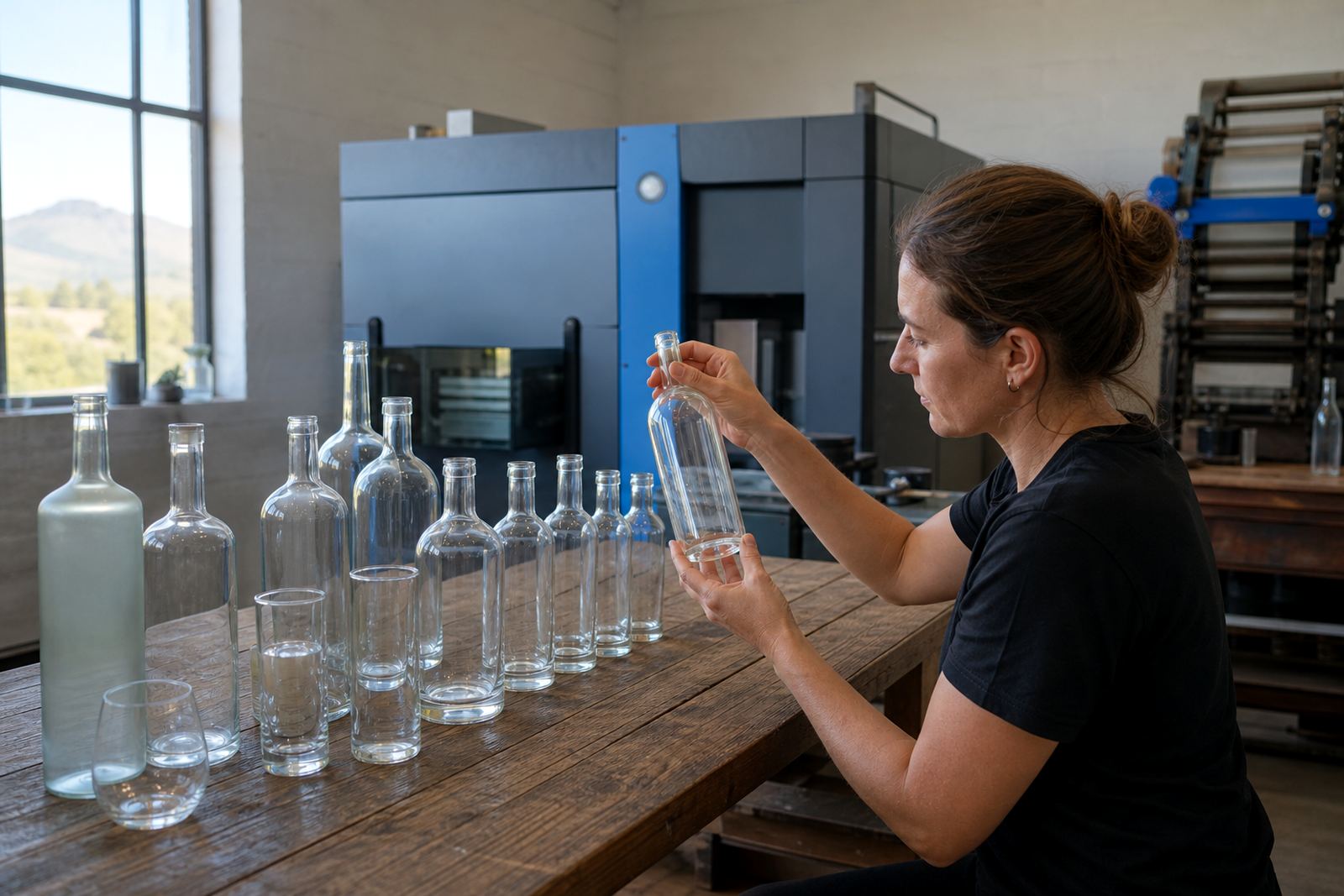
Tumblers are not all the same, and the print outcome changes with the vessel. Straight-sided water tumblers are often easier to print than heavily tapered shapes. Short whisky-style tumblers, stemless wine glasses and tall water glasses all carry different proportions, so the print area should be mapped to the curve and wall thickness before the first sample is approved.
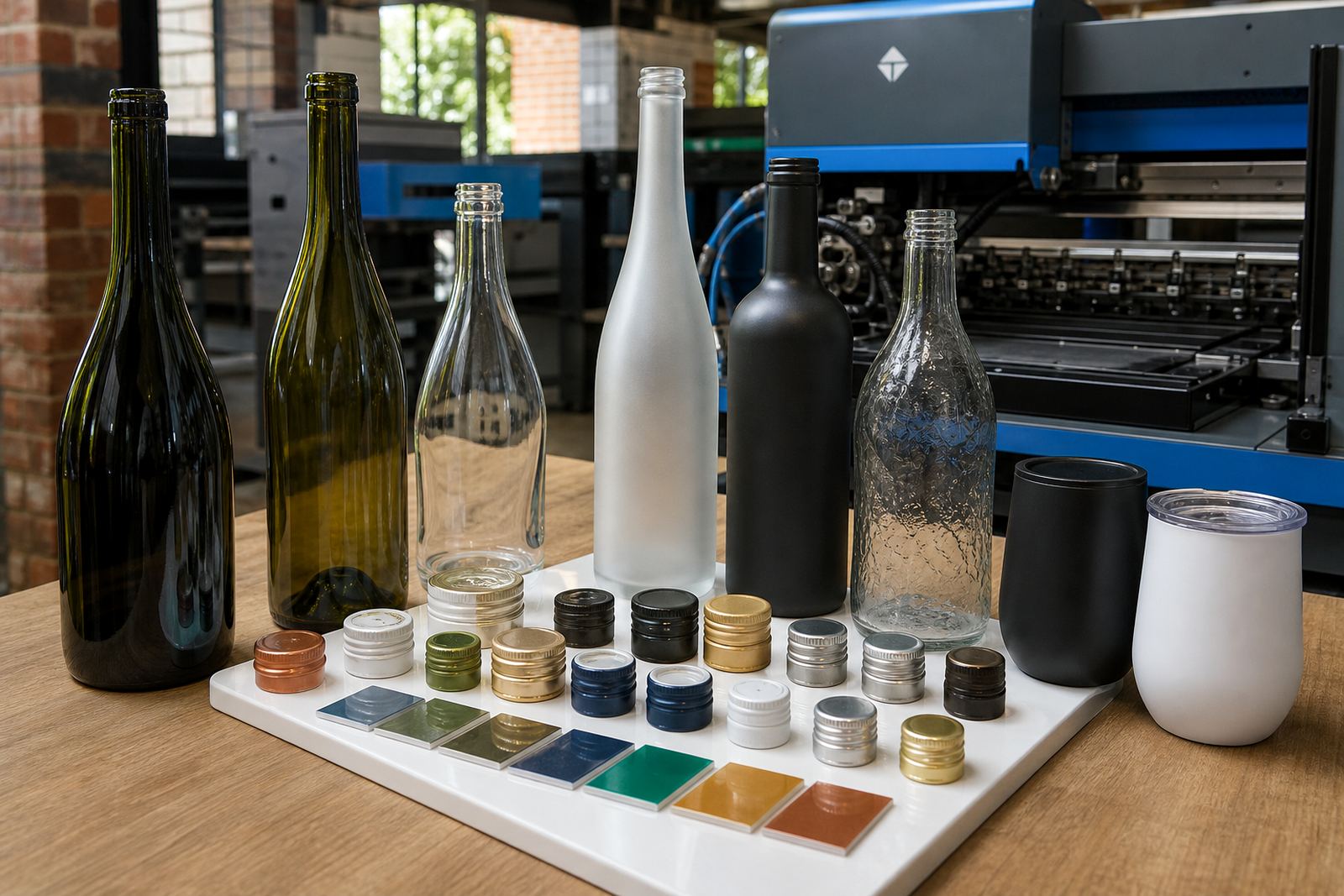
Clear glass gives a crisp, familiar look. Frosted glass softens the result and can work well for premium gifting. Some coated drinkware pieces need careful prep so the ink or label sits correctly and does not lift at the edges. For venues on the coast, especially around Cape Town and Durban, packaging and storage also matter because humidity can affect how glass and labels are handled during transit and unpacking.
- Clear glass for a sharper branded finish
- Frosted glass for a softer premium appearance
- Stemless wine glasses for hospitality and gifting
- Tall water tumblers for meetings and events
- Short glass tumblers for bars, tastings and hamper sets
Paarl tumbler orders across several towns
A local event organiser in the Cape Winelands may need tumblers for a weekend function, with part of the order staying in Paarl and the rest moving to Cape Town, Stellenbosch and Franschhoek. The practical job is not just printing the logo. It is planning the print area, checking the artwork against the actual vessel, deciding whether a white layer is needed, and packing the cartons so the pieces travel well.
That same order may include a few extra sets for Johannesburg or Durban, where the delivery route is longer and packing needs to be tighter. A short run makes sense when the event list is specific and the client does not want unused stock left over after the last table has been cleared. If the tumblers are going into corporate gifting, the artwork may need a cleaner mark and a more restrained layout than a tasting-room set.
Willem Februarie oversees the day-to-day production flow, while Leanne Gamieldien manages the print side and Anika Louw handles artwork coordination. Morne September looks after logistics, so the packing brief matches the route and the number of cartons leaving Paarl. That practical chain matters on drinkware jobs, because a small change in the proof or packing order can affect the final result.
Minimum runs, proof approvals and packing notes
Short-run tumbler printing usually works best when the brief is clear from the start. Minimum runs depend on the print method, the artwork and the tumbler type, so it helps to decide whether the job is a simple one-colour mark, a label-based layout, or a more detailed print with a white base. Proof approval should always happen before the job moves into production, because the proof shows the position, size and colour balance as it will be handled on the run.
That proof stage is also where packing notes are useful. If the order is split across gift boxes, mixed carton counts or several delivery points, the cartons should be marked in a way that keeps unpacking tidy. On the contact form, the useful details are the tumbler type, quantity, artwork file, preferred method if known, and where the order needs to go.
- Confirm the tumbler shape and finish
- Check whether white ink is needed
- Approve the proof before production starts
- Note if the order travels to more than one town
- Include packing instructions for gifting or event use