Small Glass, Small Margin for Error
A shot glass gives you very little space to work with, so the artwork has to earn its place. Fine script, thin borders and crowded badges can close up on a curved surface, especially once the glass is filled, handled and washed.
Simple logos, short wording and a strong block of colour usually hold best. On clear glass, a print that depends on pale tints can disappear from certain angles, while bold dark ink or a white underlayer keeps the mark readable. The shape of the glass matters too, because a tapered body changes how the artwork wraps round the surface.
- Make the main logo big enough to read from an arm’s length away.
- Use one or two colours where possible.
- Avoid extra detail that will blur on curved glass.
- Leave space for the lip, base and curve of the glass.
Print Methods That Suit Short Runs
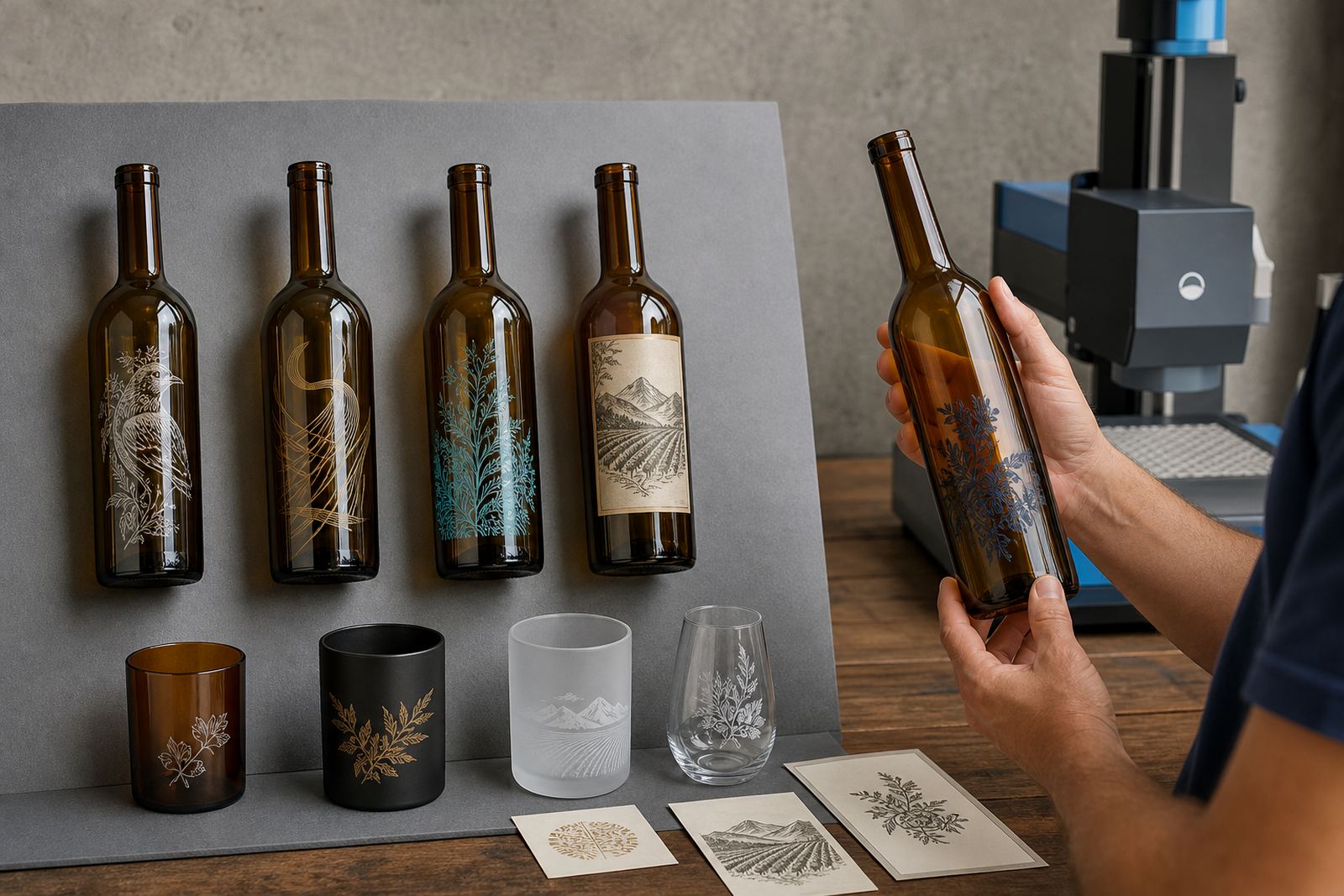
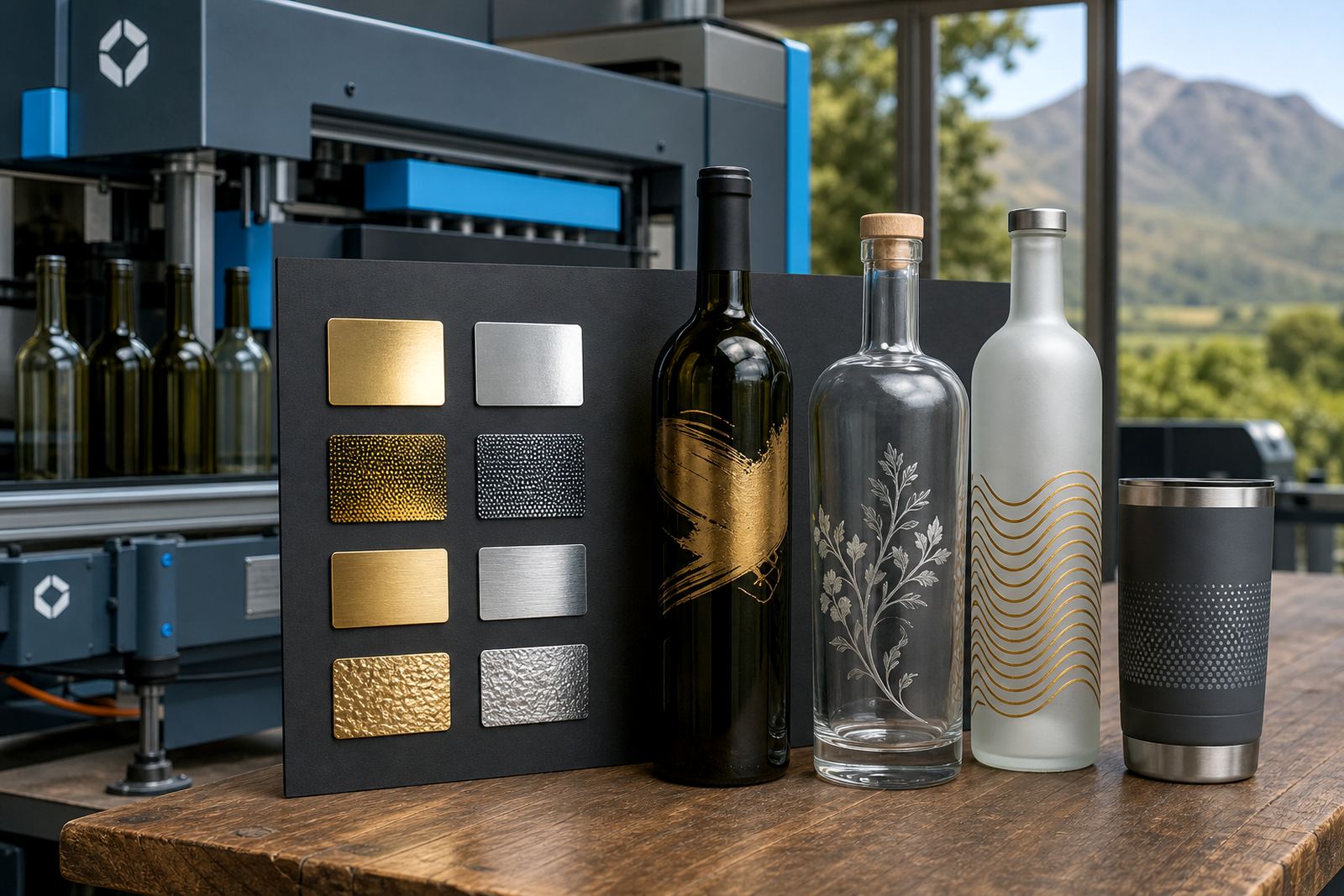
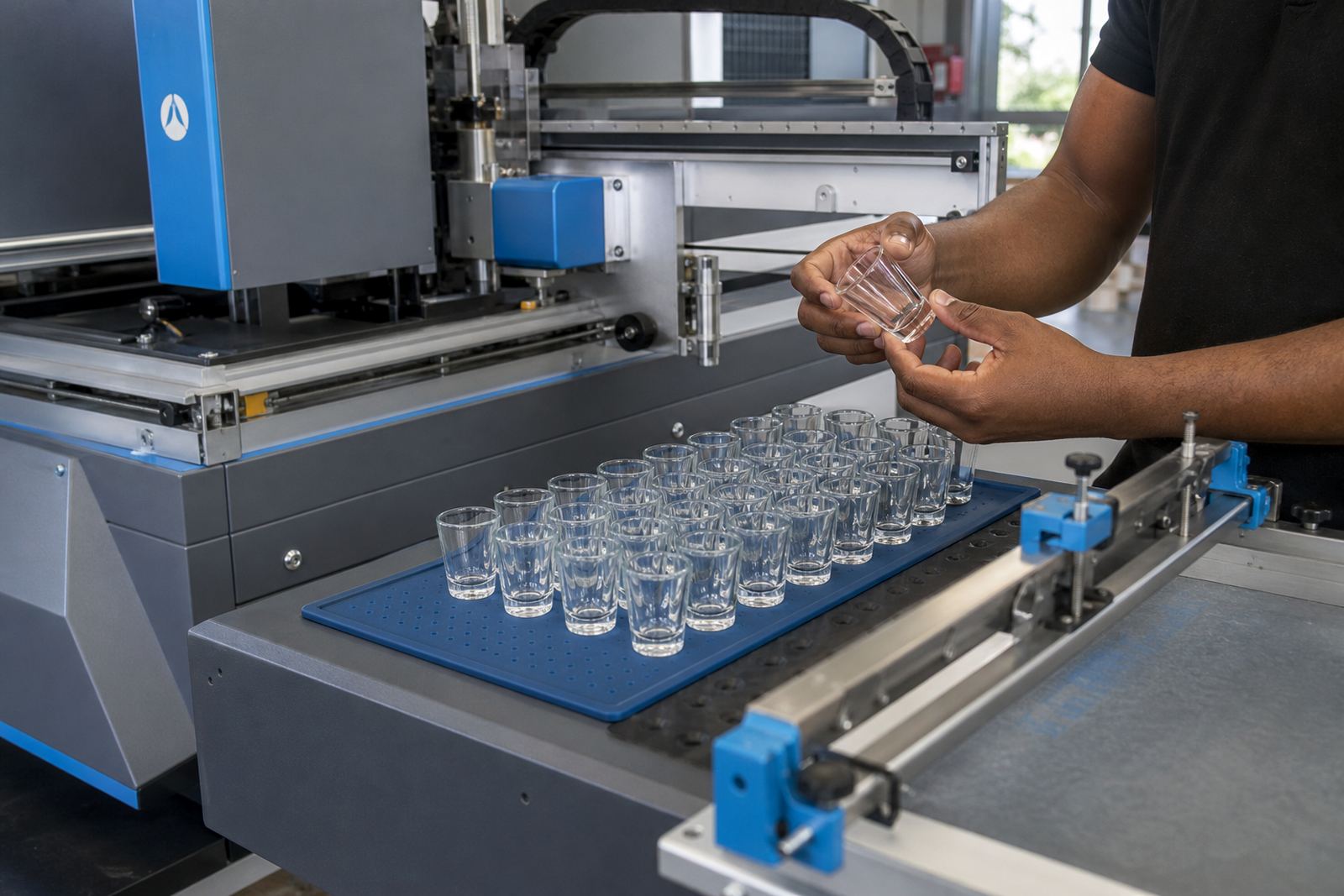
For shot glasses, the right method depends on the look you want, the glass type and the run size. UV direct print works well for crisp artwork and short production runs where colour detail matters. Screen printing suits simpler logos and flatter colour areas, especially when a repeatable finish is needed across many pieces. Ceramic enamel ink is used where a tougher fired finish is required on suitable glassware, while labels can help when the design needs more text or a multi-step branding layout.
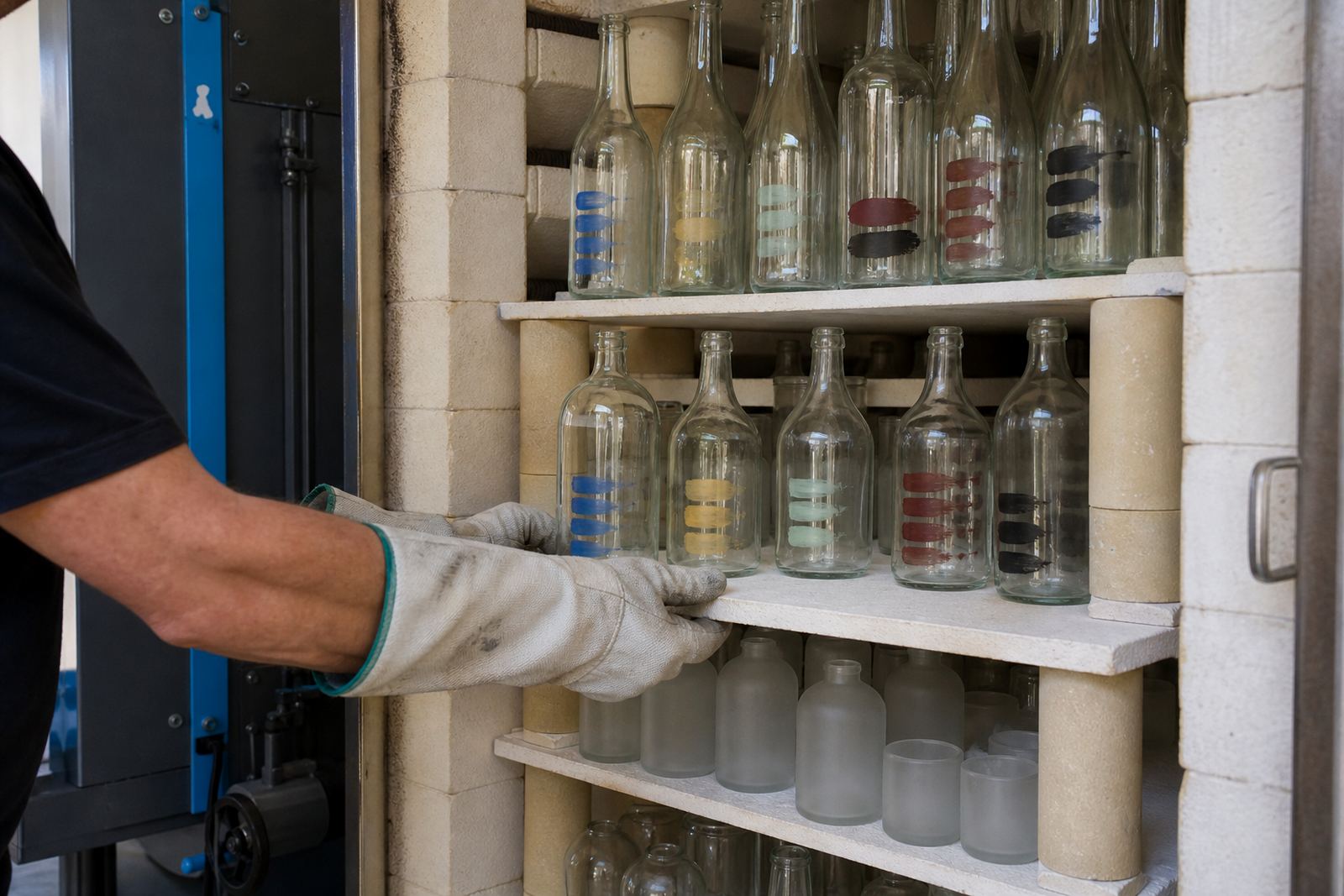
Each method has its own limits. UV direct print handles detail neatly, but the artwork still needs enough contrast. Screen printing prefers firm shapes and fewer colours. Ceramic enamel needs the right curing process and a compatible glass body. Labels give flexibility, though they change the feel of the piece and need clean placement to avoid lifting at the edges.
- UV direct print for fine detail and short runs.
- Screen printing for clean single-colour or two-colour marks.
- Ceramic enamel for a more durable fired finish.
- Labels when the brief needs extra text or product information.
Glass Shapes That Print More Cleanly
Not every shot glass behaves the same on the print line. Straight-sided tasting glasses usually give the cleanest print area because the surface is easier to register. Tapered bar shot glasses can still work well, but the artwork has to follow the angle of the wall so the logo does not stretch or drift. Heavy base shot glasses need extra care around the lower print zone, since the base can interrupt the available space.
For events, drinkware that stacks neatly and handles service well is often the better choice. A thicker glass can feel more solid in the hand, while a finer glass is better suited to premium tasting sets. If the brief includes gin tastings, welcome packs or corporate gifting, it helps to match the glass style to the setting rather than forcing one artwork across every item.
Artwork Proofs Save Reprints and Guesswork
Shot glass branding should never go straight from a rough idea to production. A proof shows the artwork at the actual print size, with colour placement, spacing and any white ink layers mapped out before the run begins. That step matters because a logo that looks balanced on a screen can feel crowded once it is reduced to fit a small glass.
Artwork help is most useful when the source file is not print-ready or when the mark was built for labels, not glass. Font weight, line thickness and the spacing around small text all need checking. If the brief includes a crest, monogram or event date, the proof should make it clear how much can stay legible at a small scale.
- Check the artwork at true size, not only on a monitor.
- Confirm colour order and any white underprint.
- Review text size on the curved print area.
- Approvals should happen only after the layout looks right on the glass.
Minimum Runs and Packing for Local Events
Short runs are common for tastings, launches and private functions, especially when the glasses are for a specific event with no ongoing retail line. Minimum run advice helps match the decoration method to the number of pieces needed, without pushing a job into a process that only makes sense on larger volumes. The print method, artwork set-up and packing brief should all be considered together, because the final pack has to suit both transport and service.
In the Cape Winelands, a small batch for a cellar door tasting might need careful packing so the glasses arrive clean and ready for display. A corporate gift order going to Johannesburg may need tighter boxing and clearer label notes. For Durban deliveries, packaging must account for handling in transit and the kind of venue receiving the order. The point is not just printing the glass, but getting it to the right table in good order.
A Paarl Job That Had to Read Clearly
A recent local brief asked for shot glasses for a winelands event where the artwork had to stay sharp on a small surface. The client wanted a simple mark, a line of text and enough contrast to show up against clear glass. The first proof showed that the original lettering was too fine, so the text was opened up, the logo was slightly enlarged and a white layer was added where the glass needed more lift.
That kind of adjustment is common with small drinkware. The idea does not have to change much, but the artwork has to respect the print area and the curve of the glass. Once the proof was approved, the run moved forward with the packing notes set for event use and transport from Paarl to the venue. Small pieces often look easy on paper, yet they need more discipline than larger bottles.