Where screen printing on glass earns its place
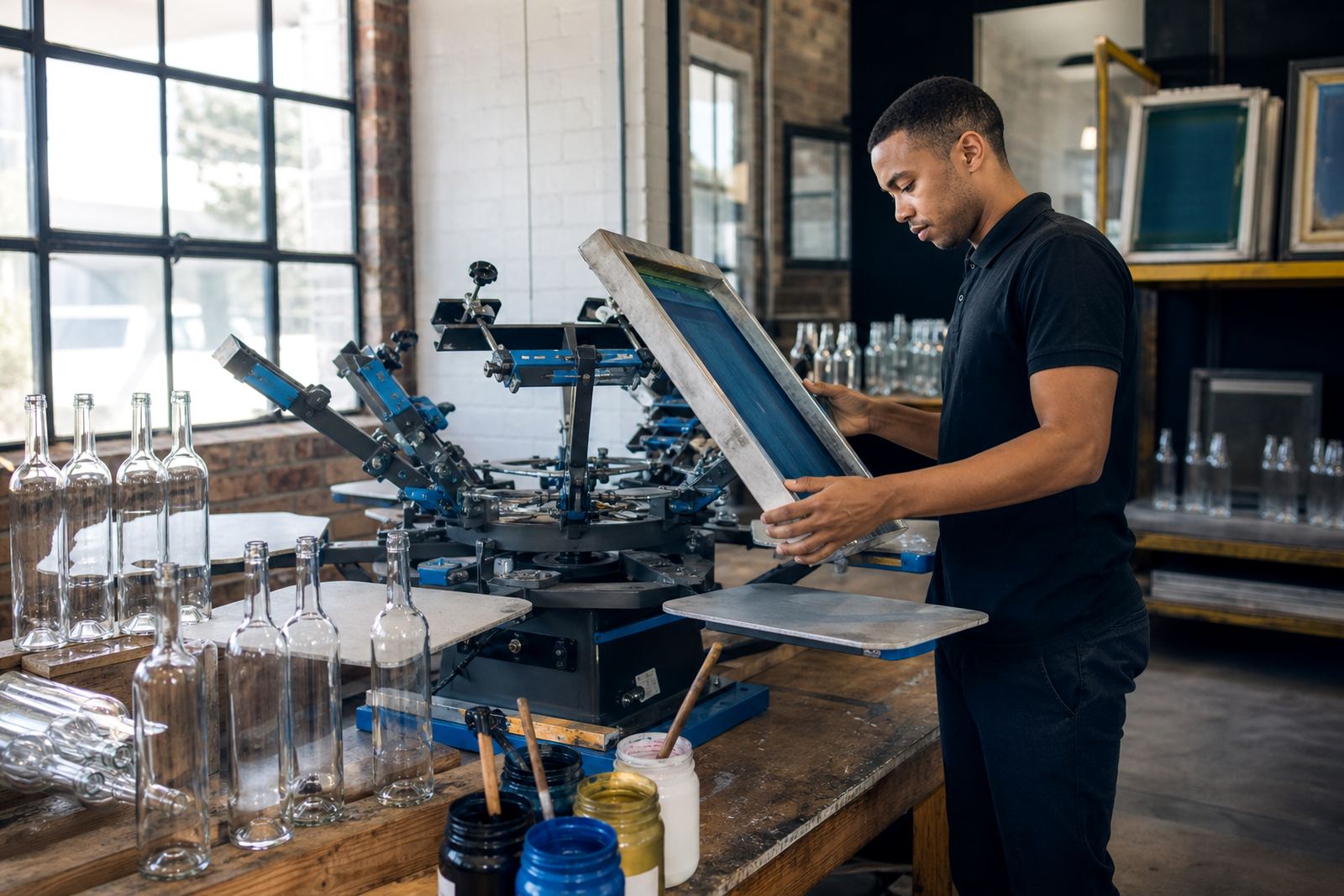
Screen printing works well when the artwork is not trying to do too much. A crisp logo, a short line of text, a simple crest or a single colour mark can sit neatly on wine bottles, gin bottles, water bottles and glasses. On clear or tinted glass, the ink lays down in a solid layer, which gives the print a clean look that stands up well on shelf, at tastings and on event tables.
In Paarl and across the Cape Winelands, the method is often used where the bottle itself forms part of the presentation. The print sits directly on the glass and reads as built into the finished bottle or glass. That matters when the pack has to feel tidy, especially for gift sets, cellar door sales and branded drinkware for functions.
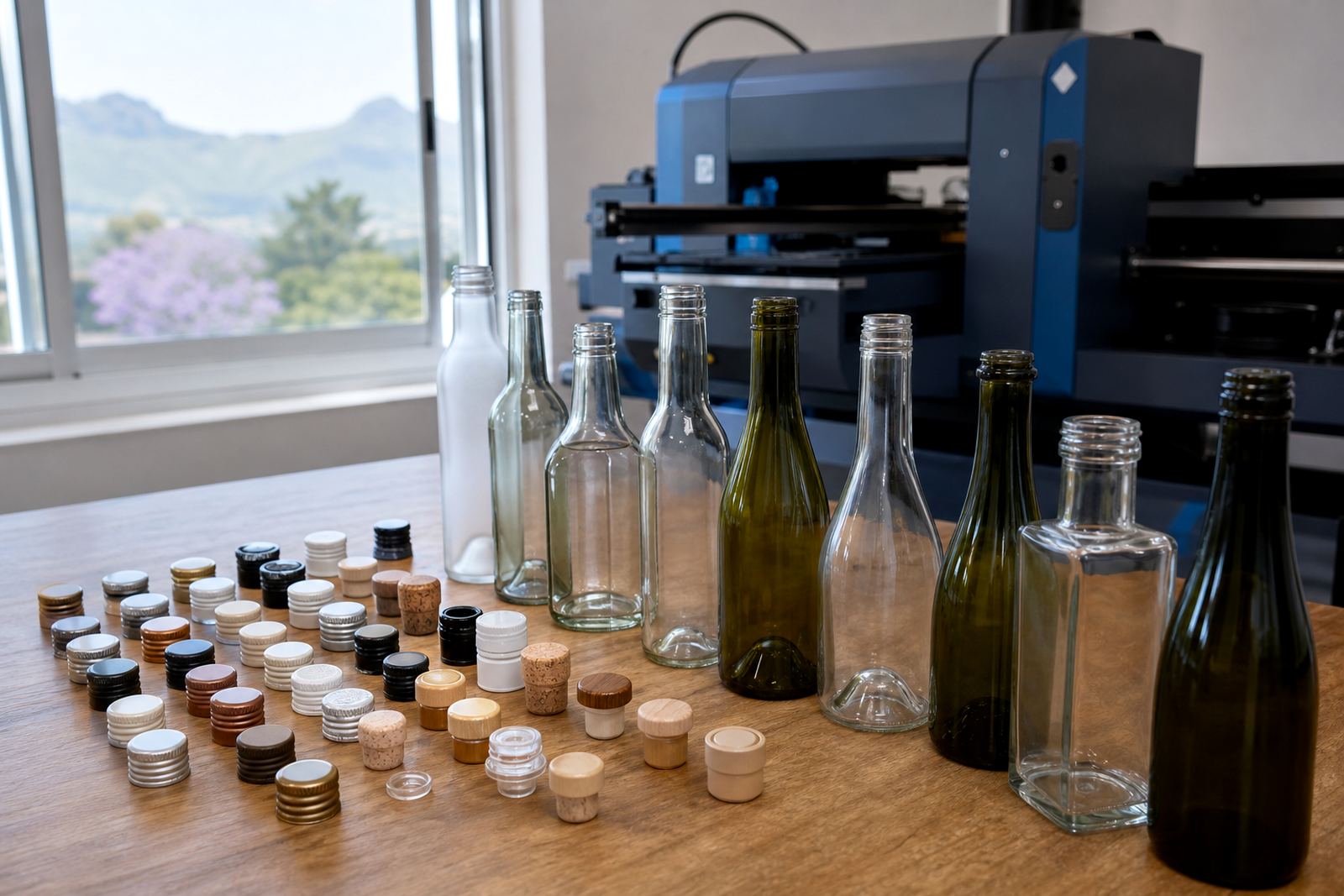
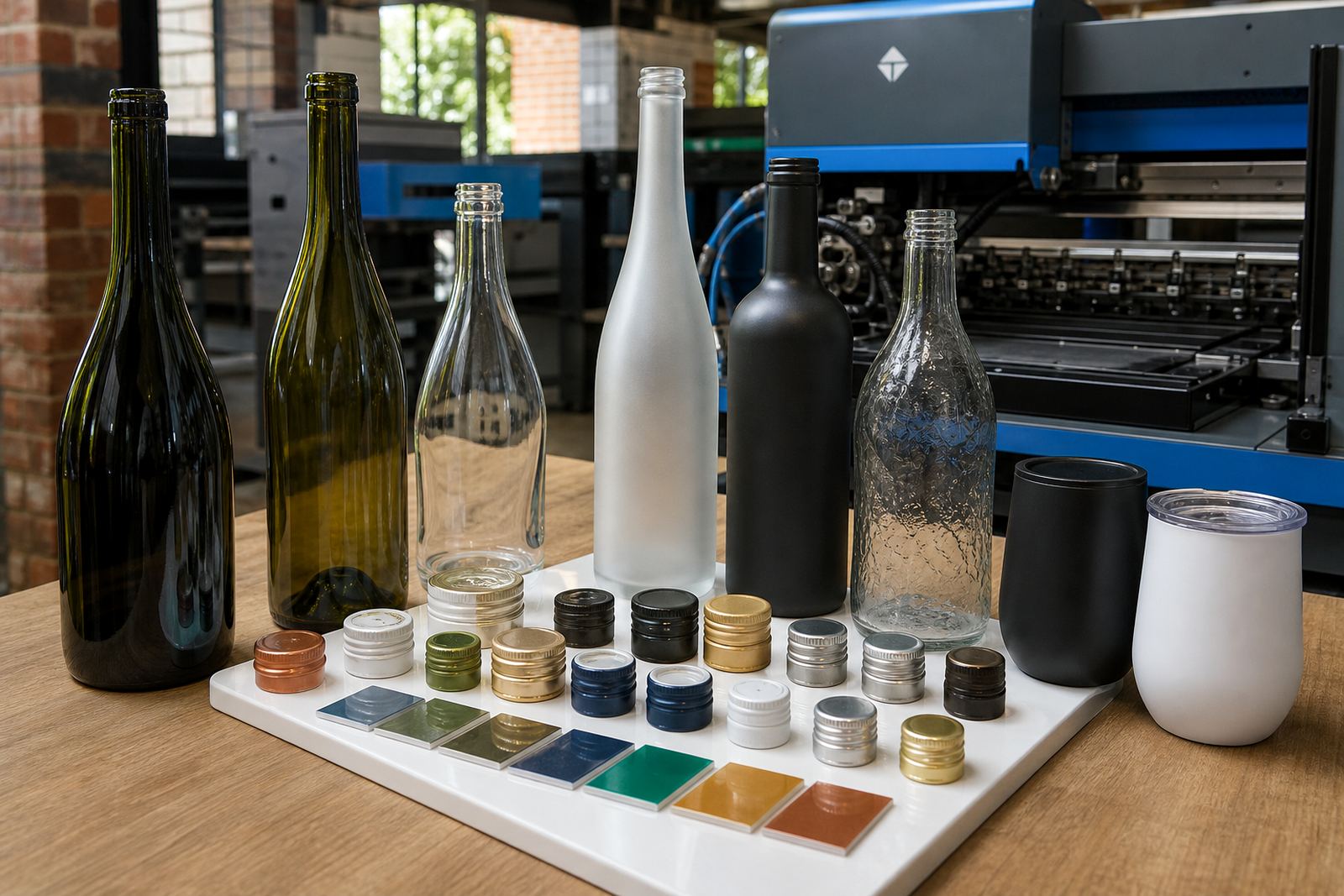
Glass shapes that suit the process best
Screen printing is usually the right fit for glassware with enough stable print area and a fairly predictable curve. Straight-sided bottles are the easiest, but many wine and gin bottles can be handled with careful setup. Tumblers, water glasses and stemless drinkware also print well when the decoration panel is planned properly.
- Still wine bottles with broad label areas or shoulder space
- Gin bottles with clean front panels and less surface movement
- Glass water bottles for hospitality, boardroom use or gifting
- Tumblers, beer glasses and stemless wine glasses for events
Curved glass changes how artwork lands. A wide logo may need to be reduced, while fine text may need spacing adjusted so it stays legible once the bottle is filled or viewed at an angle. Planning at that stage is as important as the printing itself.
Ink layers, colour and finish on glass
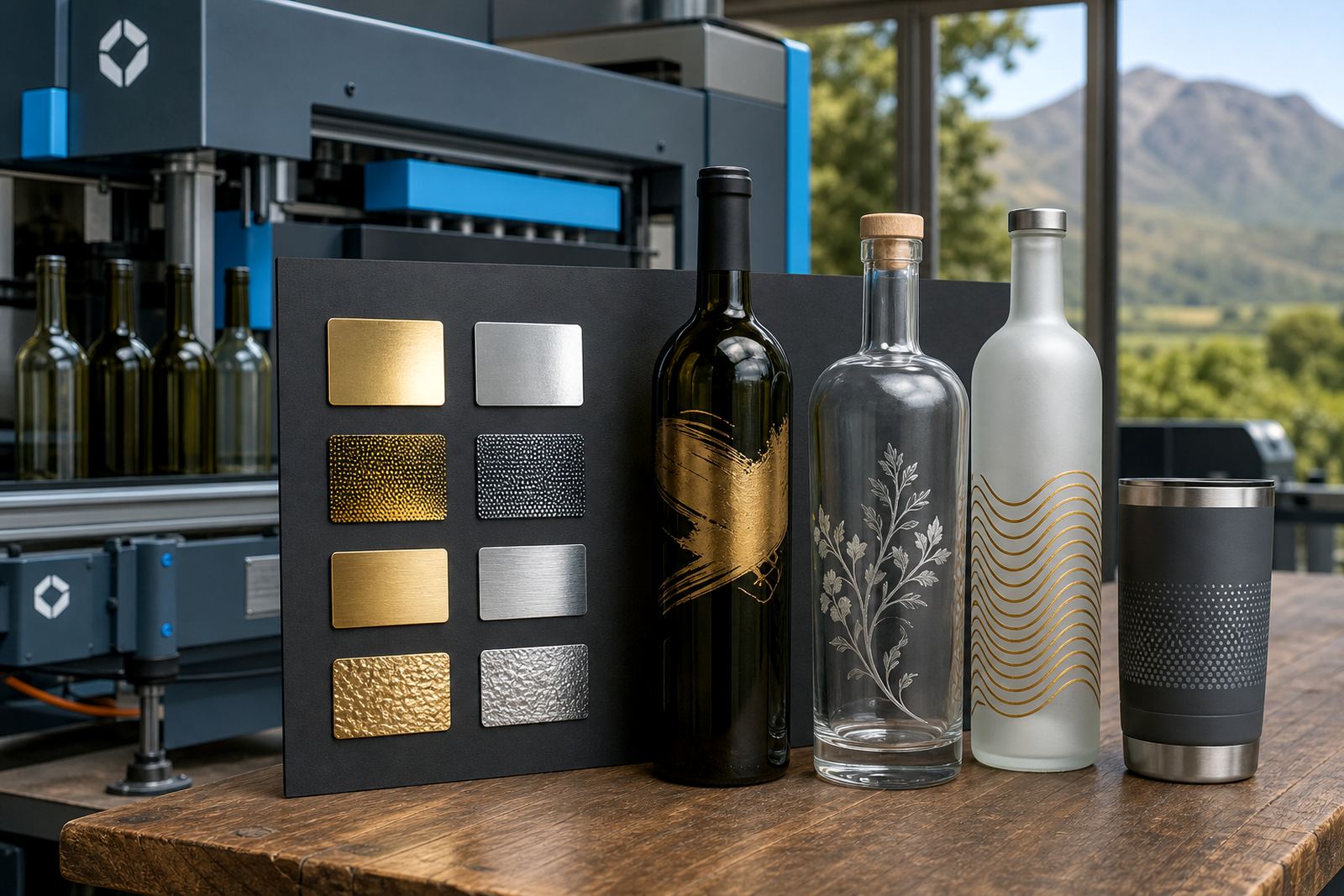
One reason screen printing stays popular is the colour strength it can achieve on glass. Opaque inks give strong coverage, while white ink layers can be used under lighter colours or on dark glass to improve legibility. On clear bottles, the final look can be sharp and direct, with very little visual noise around the mark.
The finish depends on the artwork, the glass colour and the print system selected. Some jobs call for a solid single colour. Others need a two colour build with white beneath a coloured top layer. Ceramic enamel options can be used where a more durable fired finish is required, while labels may suit artwork that needs fine detail, more copy or variable content.
- Solid colours for bold brand marks and short text
- White underbase for darker glass or translucent inks
- Matte or glossy finish choices depending on the artwork
- Ceramic enamel for a longer lasting fired decoration
Artwork setup before ink touches the bottle
Screen printing depends on clean artwork and correct placement. A logo that looks fine on a flat page can shift awkwardly once it meets a curved bottle. The print area must be checked against the glass shape, shoulder line, neck taper and any moulded detail. That is where artwork checks, print area planning and mock-up visuals save trouble later.
Before a run, the artwork is usually prepared for the exact print position, with colour guidance where needed and proof approvals before production starts. If the job needs fine registration or a white ink layer, the file must be set up with that in mind. Small changes at this stage are easier than trying to force a design onto the glass after the screen is ready.
- Confirm the decoration panel on the actual bottle shape
- Check logo size, text height and spacing for curve distortion
- Prepare separate layers if white ink is part of the build
- Approve the proof before the print run goes ahead
Short runs and minimum quantities that make sense
Short runs are common in this trade, especially for winery launches, distillery tastings, corporate gifts and event service packs. Screen printing is not just for large volume work. Smaller runs can be planned when the design is straightforward and the bottle choice is fixed. The key is matching the decoration method to the run size and the artwork complexity.
Minimum runs vary by bottle shape, number of colours and whether the job needs extra setup for white ink or special placement. A single colour mark on a standard glass bottle is usually simpler than a multi-stage design on a curved bottle. When the brief is tight, it helps to keep the artwork clear and the print area consistent across the batch.
For Cape Town launches, Stellenbosch cellar door ranges, Franschhoek tasting-room pieces and Johannesburg or Durban event stock, the same rule applies. The less the artwork has to fight the shape of the bottle, the cleaner the print usually looks.
Paarl event bottles and glasses
A local event organiser in the Winelands may want branded water bottles and stemless glasses for a two-day function, with the same logo used across both items. Screen printing can handle that well if the logo stays simple and the glass is selected with the print area in mind. The bottles are packed for delivery, then used as part of the table setting and guest gifting without extra decoration work on site.
For a winery or distillery in the region, the practical concerns are usually the same: the print must hold its colour, sit neatly on the curve and look consistent from one piece to the next. Packing also matters. Glass needs careful handling, and the delivery brief should match the route, whether that goes to Paarl, Somerset West, Constantia or further afield to Cape Town, Johannesburg or Durban.
- Keep the artwork simple enough for repeated placement
- Select glass that gives the print a clean viewing panel
- Use proof visuals to confirm positioning before production
- Plan packing so printed glass travels without unnecessary breakage