Why the run size changes from one job to the next
Bottle jobs do not all work to one fixed minimum. A short run for a corporate gift pack may call for labels, while a winery launch on glass bottles may suit direct print only when the artwork is ready for that setup. The minimum moves with the method because every process needs its own tooling, screens, files and test checks.
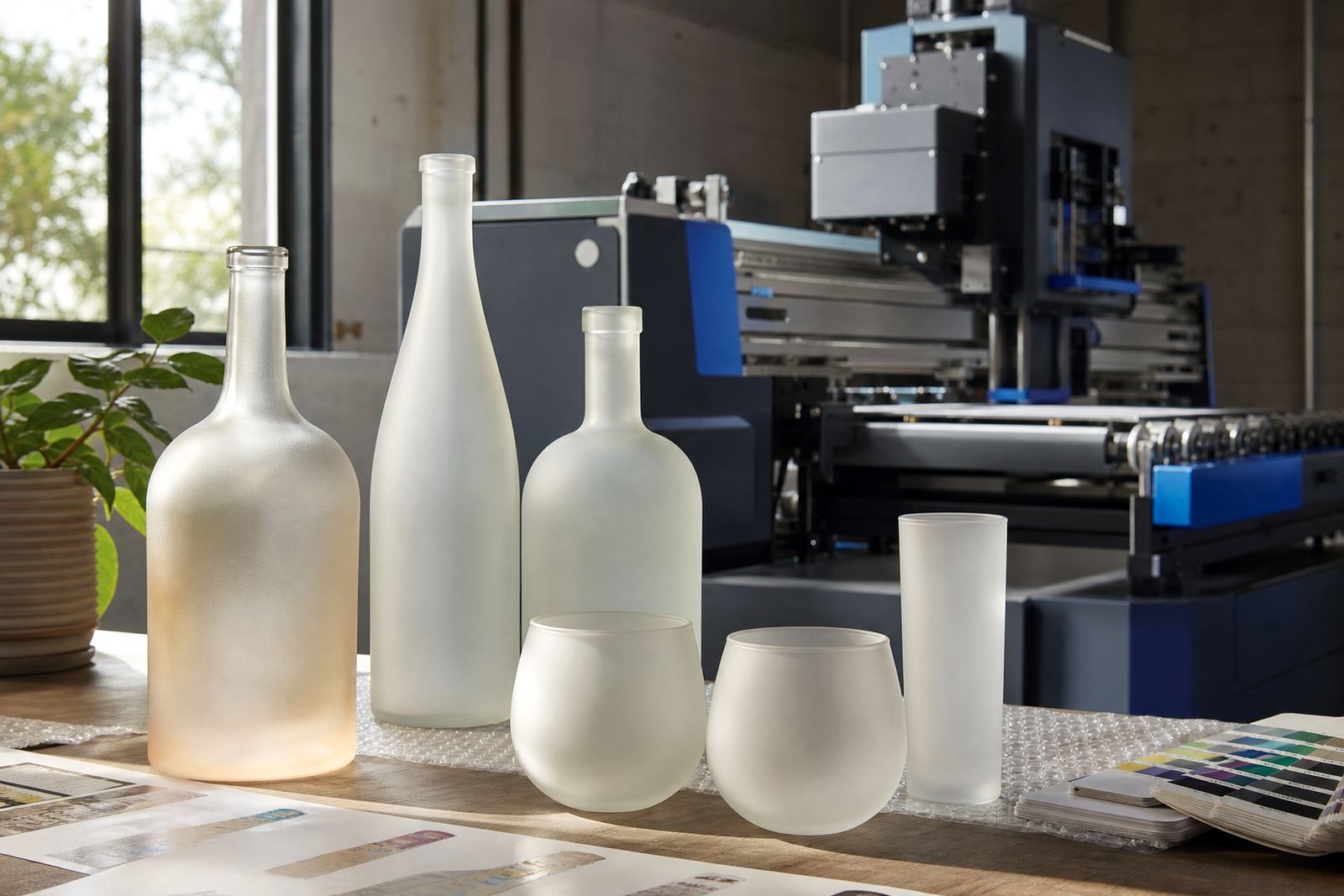
That is why quantity planning should begin with the finish in mind. If the bottle has a frosted surface, a coloured glass body or a narrow neck, the print area and the decoration method may shape the order size more than the artwork itself. On glass and drinkware, a clean result depends on how well the image sits on the surface and how much handling is needed before packing.
For Paarl clients supplying wine, gin and water bottles, the useful question is not only how many items are needed, but which method suits that quantity best. A run of 24 gift bottles may lean toward labels or direct UV print, while a larger release with repeat artwork can justify screen printing or ceramic enamel work for a more durable finish.
The methods that affect minimums on bottle work
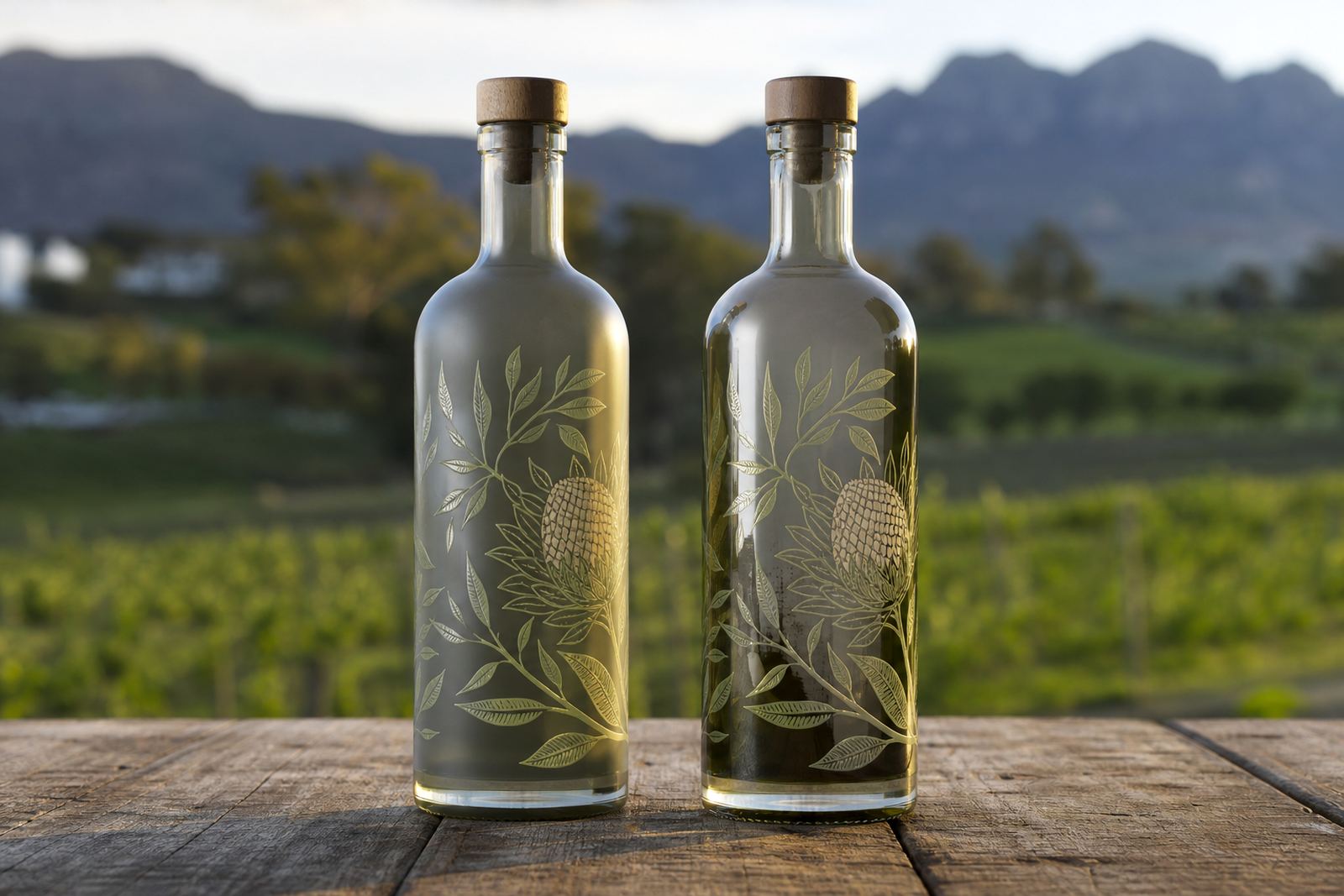
Each decoration method carries its own setup pattern, and that changes the minimum run. UV direct print is useful for short, sharp artwork on glass and some drinkware, while screen printing suits larger repeated areas and can be a better fit when the design stays the same across a batch. Ceramic enamel needs careful preparation and firing, so its minimum tends to sit differently to the other methods.
- UV direct print works well for bold logos, colour blocks and short runs on glass bottles.
- Screen printing suits repeated artwork and is often used where a steadier finish is needed.
- Ceramic enamel gives a fired finish for glass and selected drinkware, with more setup before production.
- Labels can suit mixed bottle shapes, variable pack sizes and smaller promotional quantities.
White ink layers can matter too, especially on amber or dark bottles where colour needs a solid base. Without that underlayer, a logo can lose strength on the glass. That extra step affects the proof, the print plan and the run size, so it is better to decide it early rather than adjust mid-job.
Artwork proofing before numbers are fixed
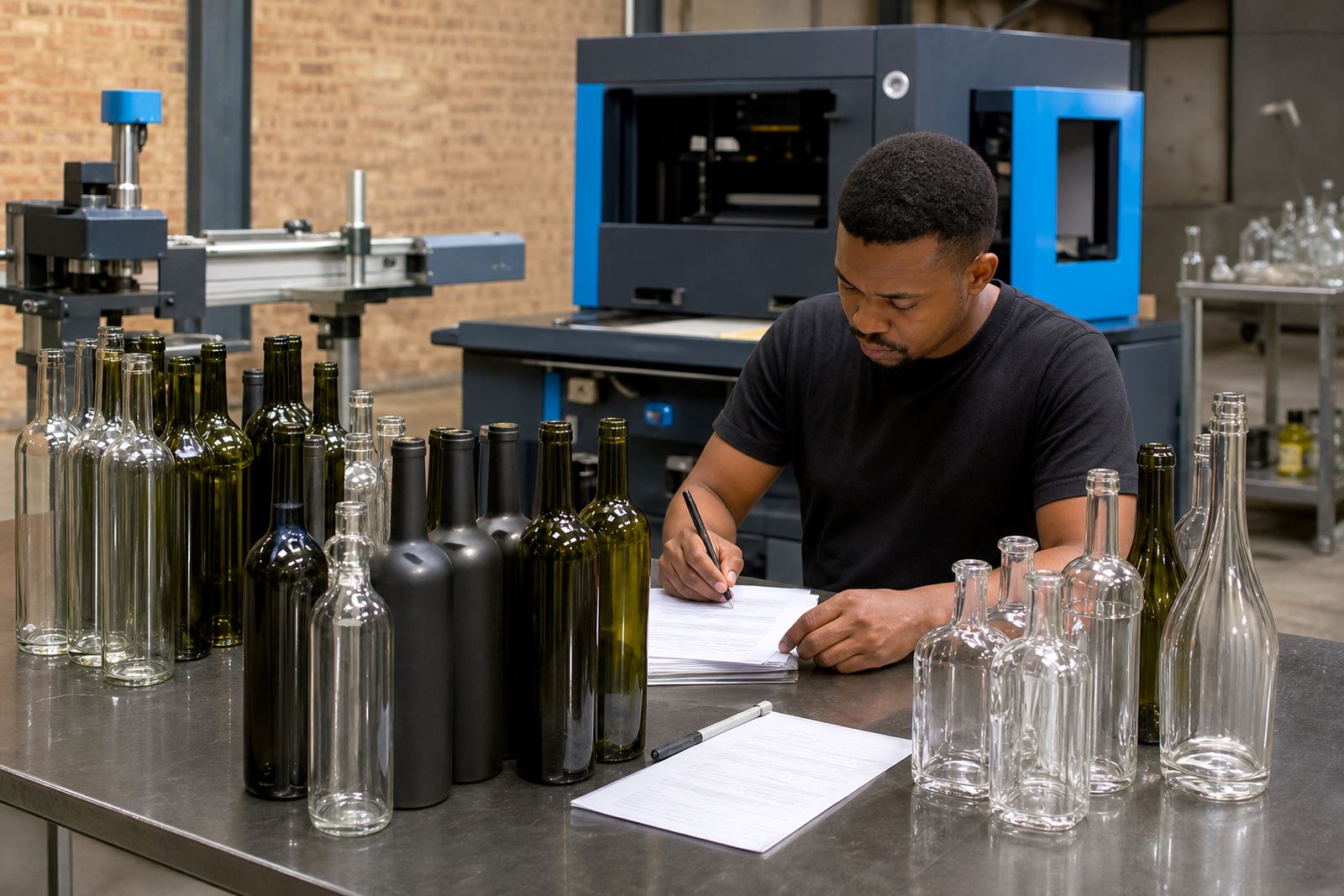
Minimum runs are easier to set once the artwork is properly checked. A proof shows how the logo fits the bottle, where the print area sits, and whether fine text still reads cleanly at full size. It also shows whether the label outline, wrap position or direct print position needs a shift before production starts.
Artwork checks are especially useful for mixed orders. A winery may want 60 wine bottles for tasting rooms, while the same project also needs gin bottles and branded tumblers for a function. One artwork can work across all three, but the layout may need separate proofs for each item type because the curves, surfaces and print zones are not identical.
When the proof is signed off, the run size is set with fewer surprises. That matters on shorter orders, where every item has more weight in the final pack. Even a small typo on a label or a logo set too high on a curved bottle can mean rework, so we approve proofs before fixing the minimum run size.
Short run planning for Paarl and the Cape Winelands
In the Cape Winelands, many bottle orders are time-linked to launches, tastings, seasonal gifting and event packs. A Paarl cellar may need a tight batch for a blend release, while a Franschhoek or Stellenbosch event organiser may need mixed bottle sizes with the same visual theme. The run size then follows the deadline, the bottle shape and the decoration method, not the other way round.
A local example makes the point. A short run of 48 glass water bottles for a Somerset West conference can work neatly with labels or UV print, while a smaller gin gift set for Constantia may need ceramic enamel only if the finish and budget suit it. In both cases, the minimum is shaped by the bottle type, the number of colours and the amount of setup needed before the first piece prints.
- Standard glass bottles are often easier to plan in grouped quantities.
- Curved drinkware may need a different print area and a separate proof.
- Mixed bottle sizes can raise setup time even when the artwork stays the same.
- Transport to Cape Town, Johannesburg or Durban should be packed with the print finish in mind.
When labels make a smaller run more practical
Labels often suit smaller quantities where the shape of the bottle changes from one item to the next. They are helpful when artwork needs more detail, when colour matching must sit neatly on a clear or tinted bottle, or when the order includes several drinkware formats. For gift packs and event stock, labels can also keep the run flexible when the final pack list is still moving.
That said, labels are not a catch-all answer. On condensation-prone bottles, especially in humid coastal conditions, the adhesive and finish need to be selected with care. A label may be the right route for a shorter run, but the paper or film, the bottle surface and the storage conditions all matter. If the pack will travel to Durban or sit in chilled display conditions, the finish must be chosen with that in mind.
For a smaller order, labels can keep the minimum approachable. They also allow more variation between batches, which helps when different bottle shapes must sit in one order and the artwork must still read clearly from a distance.
A useful way to plan the order quantity
The best planning starts with the bottle count, then moves to the print method, then to the artwork check. That order helps avoid a mismatch between what the client wants and what the surface can carry cleanly. It also keeps the packing brief realistic, especially where mixed cartons or separate delivery points are involved.
Before finalising the quantity, it helps to settle a few practical points:
- Which bottle or drinkware shape is being printed.
- Whether the artwork needs white ink, colour separation or a label layout.
- How many colours sit in the design and whether they repeat cleanly.
- Whether the order is for gift packs, retail stock or an event handout.
- Whether the finish must suit display, chilling or regular handling.
Once those points are clear, the minimum run is easier to judge and the production path becomes steadier. That is usually where short runs stop feeling uncertain and start looking workable for the job at hand.
What a client gets from the minimum run discussion
A proper minimum run discussion gives more than a quantity. It shows which bottle decoration method fits the artwork, where the print area sits, what the proof must confirm and whether the order should be split across labels and direct print. It also keeps the batch size tied to real production limits, which is the only sensible way to work with short runs.
For wineries, distilleries and event teams in South Africa, that matters because bottle orders often move through more than one use case. A branded bottle may need to stand on a tasting table, travel in a courier box, or sit inside a hamper with glassware beside it. The right minimum run is the one that fits the method, the surface and the packing plan all at once.
When the quantity is set with that in mind, the finished batch looks planned rather than forced. That is especially useful when the order is small, the artwork carries fine detail, and the bottles are going to more than one town.