When the bottle itself should carry the artwork
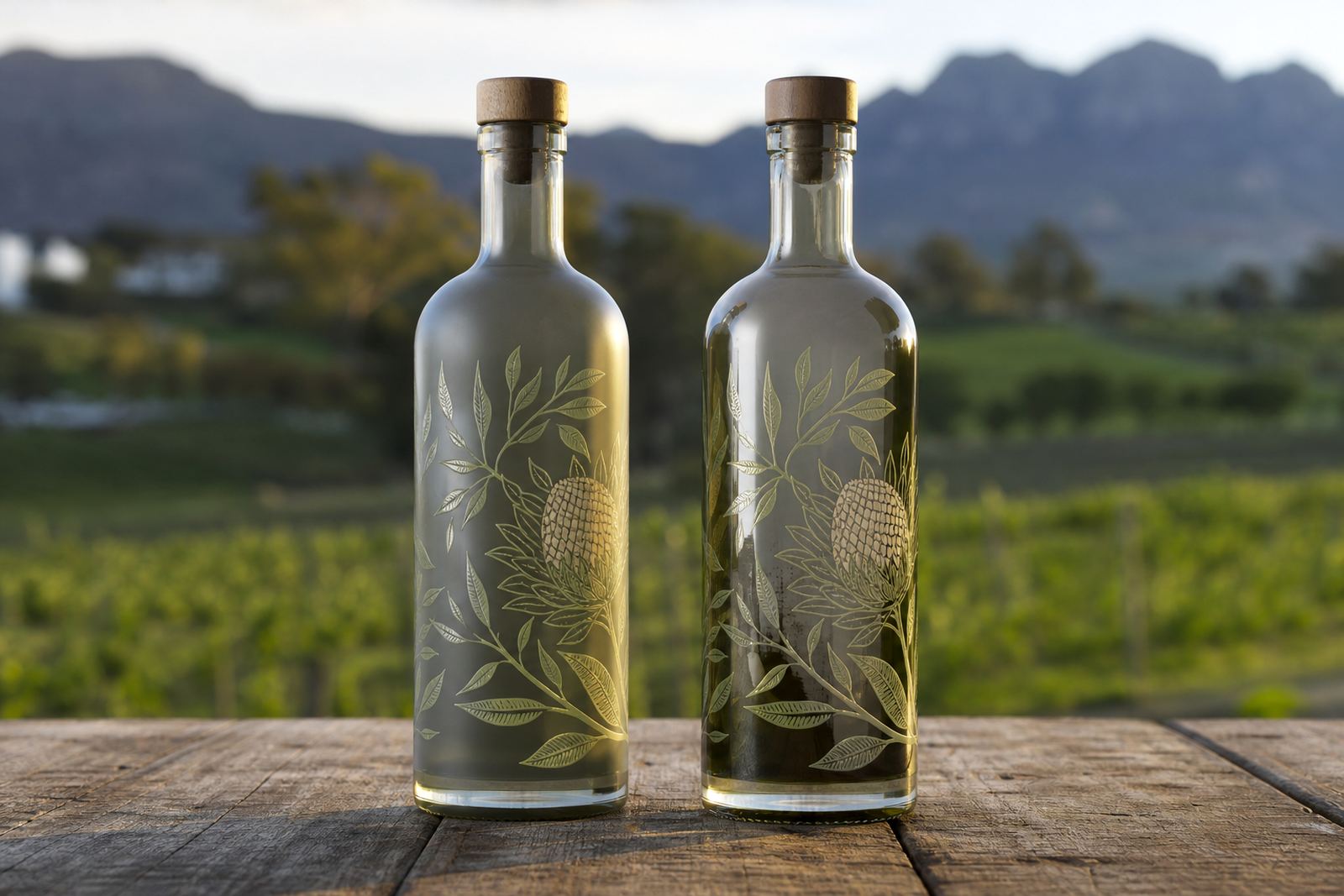
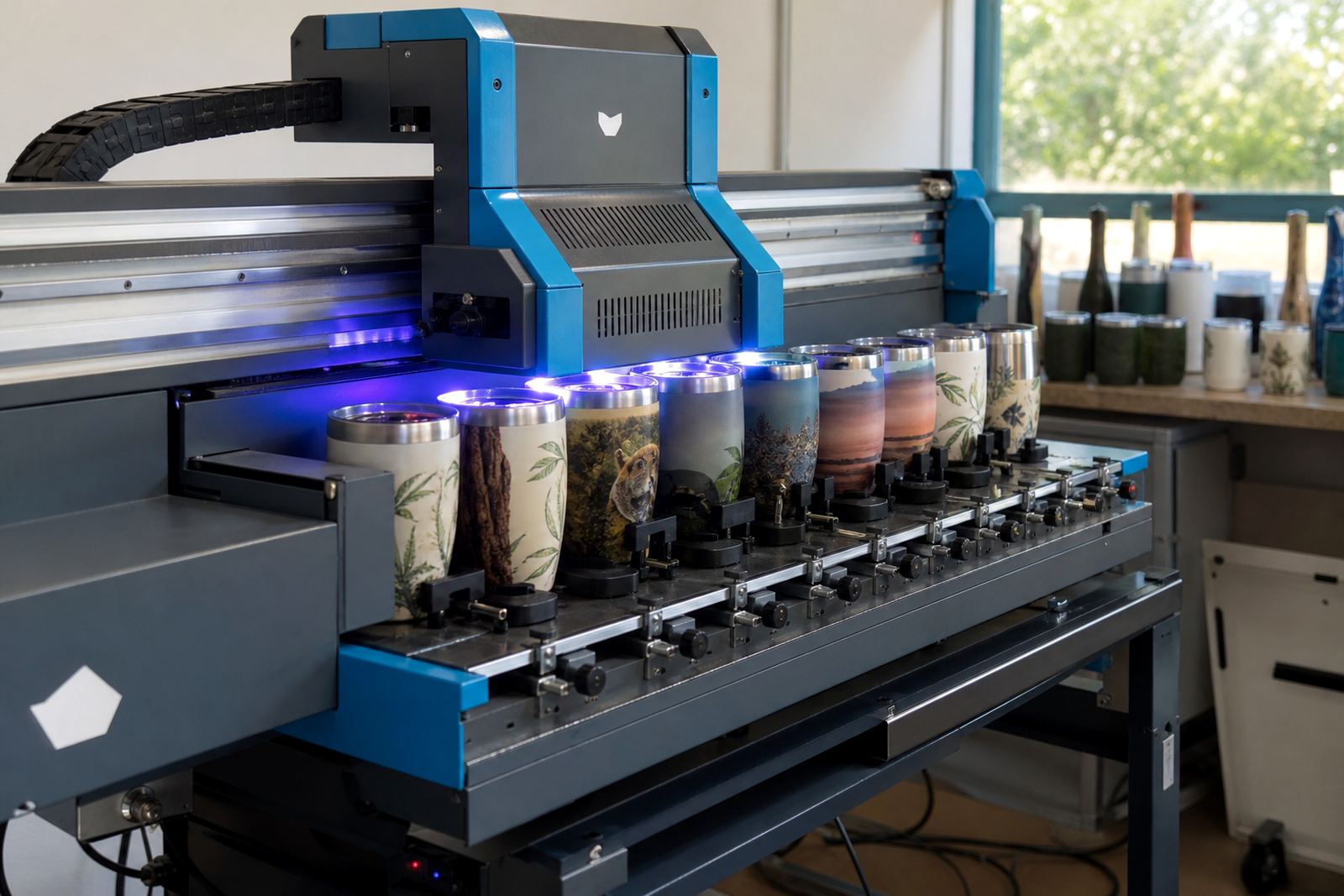
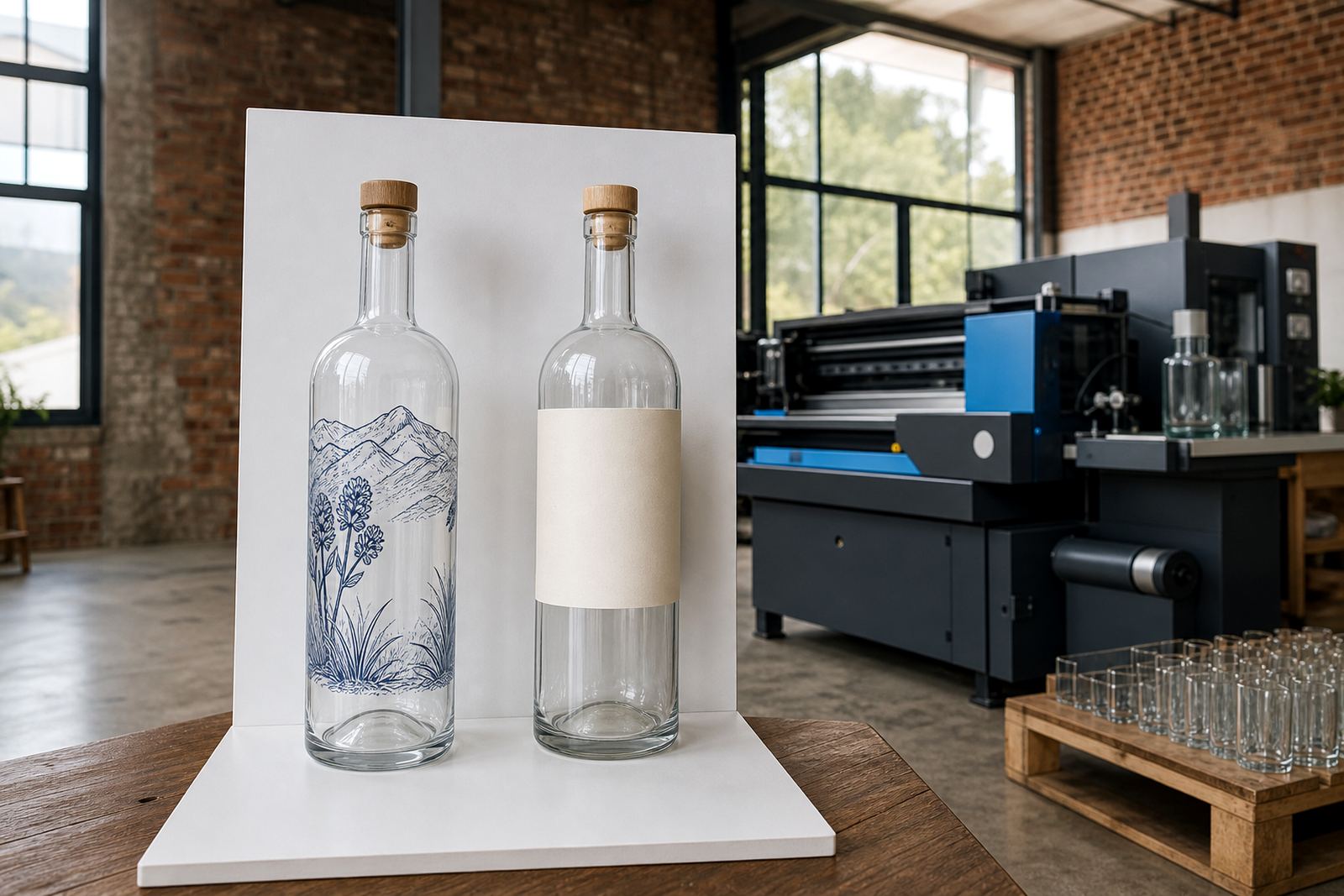
Direct print works well when the bottle surface is part of the presentation. UV direct print places artwork straight onto glass or coated drinkware, which helps when the shape is clean and the branding needs a fixed position. Screen printing suits solid colour blocks and tidy logos, while ceramic enamel is used where the decoration must stand up to harsher handling or repeated washing.
On wine bottles and gin bottles, direct print is often chosen for a cleaner look across the shoulder or front panel. Clear bottles, frosted glass, coloured glass and some drinkware shapes can all be printed, though the shape has to allow for stable registration and workable print areas. Curves, neck tapers and heavy embossing can limit the print space, so the bottle itself becomes part of the decision.
Where labels solve the practical problem
Labels are the safer answer when the artwork has many colours, a fine text block or more than one panel of information. They also help when the glass shape is awkward, the surface is textured, or the run is too short to justify the setup required for direct print. A label can carry a detailed wine style, a gin botanical story or event branding without forcing the artwork into a tight print zone.
For short runs, labels often keep the job flexible. They can be used on glass bottles, jars, tumblers and selected drinkware, with finishes that range from neat matte to gloss. A label also gives space for variable details, which suits corporate gifting or event bottles where names, dates or small batches change from one order to the next.
- Good for detailed artwork and fine text
- Useful on unusual bottle shapes
- Works well for short runs and changing content
- Can carry compliance text where needed
What the shape of the bottle changes
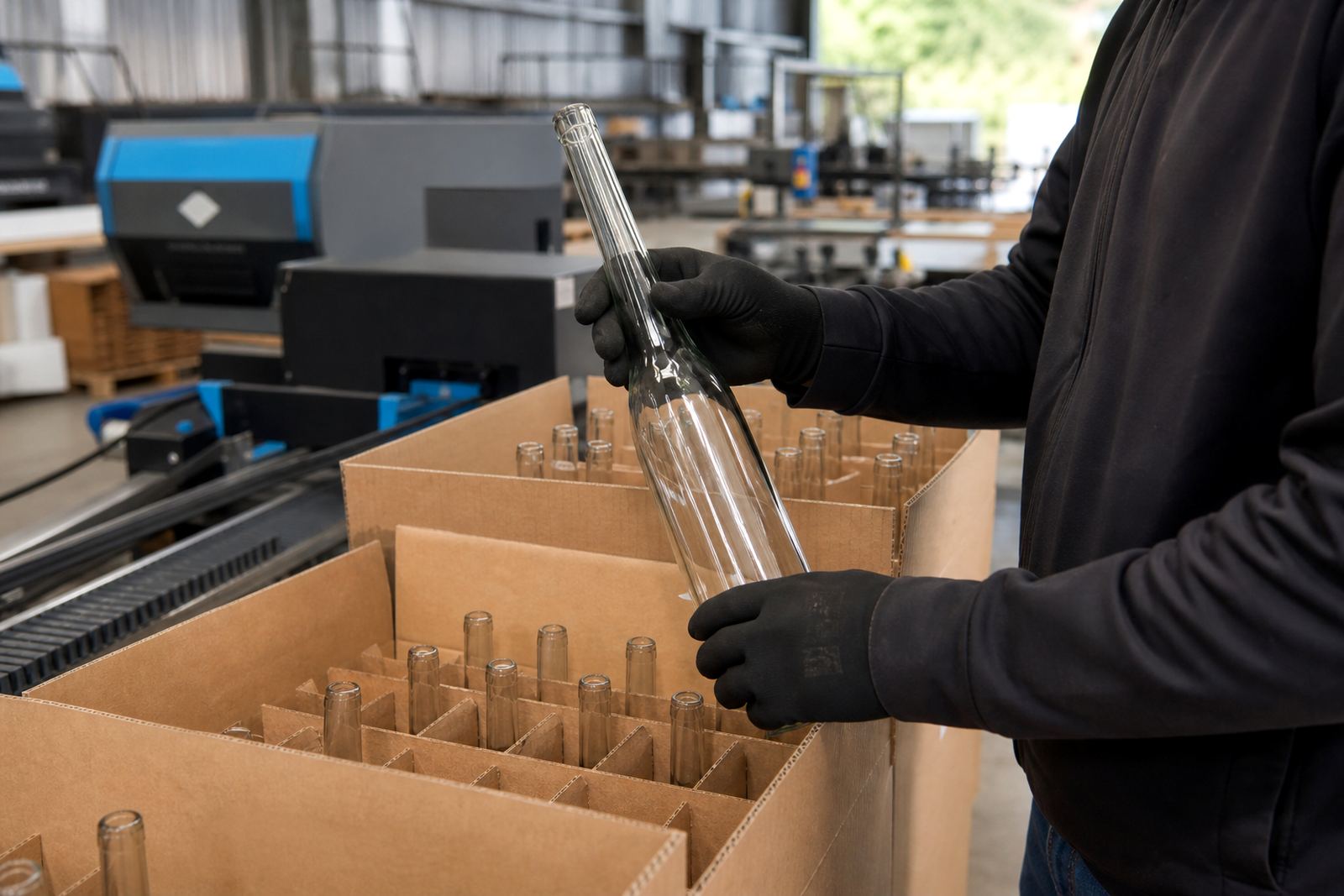
Shape matters more than many people expect. A straight sided bottle gives a printer more control, while a curved wine bottle or a slim gin bottle can narrow the usable area. Shoulder height, neck length and the diameter of the body all affect how far artwork can travel without distortion. Even the base ring can interrupt a label if the artwork is pushed too low.
For drinkware, the usable print area is usually smaller than the full outer surface. Glass tumblers, stemless wine glasses and water bottles each ask for a different layout. We check where the hand holds the item, where the curve starts and whether the decoration should sit front and centre or wrap around the body.
- Straight panels suit direct print better
- Curves reduce the safe artwork area
- Glass thickness changes colour appearance
- Drinkware needs careful placement near handles or rims
Artwork proofing before anything goes to print
Proofs matter because bottle decoration leaves little room for guessing. A proof shows placement, artwork scale, colour treatment and any white ink layers needed on dark glass or tinted surfaces. It also shows where a label will sit relative to seams, curves and bottle features so the final result matches the plan before the run starts.
Artwork checks are useful when a client brings in a logo that was designed for paper, not glass. Thin lines can disappear, small type can crowd the curve, and pale colours may need a white base to stay readable. Proofs give time to sort those points out before the bottles are printed or labelled, which saves waste and keeps the run tidy.
Minimum runs and when short batches make sense
Minimum runs depend on the method and the bottle type. Direct print methods usually ask for more setup than labels, so they suit a planned batch of bottles rather than a one-off sample. Labels are often more workable for smaller quantities, especially when the artwork changes between batches or when the order includes mixed bottle types.
That is where a practical conversation helps. A winery may want a small release of gift bottles, a distillery may need branded glassware for a launch, and an event organiser may need a limited set of water bottles for a venue in Franschhoek or Stellenbosch. The right method changes with the run size, not just the design.
- Short runs often favour labels
- Direct print suits repeat batches
- Artwork changes can affect setup costs
- Mixed products may need separate artwork planning
Paarl gin bottle print choice
Picture a Cape Winelands order for a small branded gin release. The glass bottle has a curved shoulder, a narrow front panel and a metallic cap. If the design is a simple logo with one colour and a bold product name, direct print can work well and keep the bottle looking clean. If the artwork includes tasting notes, a botanicals panel and a back label with compliance details, labels are usually the better fit.
For a water bottle used at a conference in Cape Town, labels may be the practical answer because names, session titles or venue details can be added without changing the bottle itself. For a gift set going to Johannesburg or Durban, a printed wine bottle with a matching drinkware item may need two methods in the same job, each chosen for the surface in front of it.
Choosing the method without overcomplicating the job
The strongest answer usually comes from three questions: how detailed is the artwork, what does the bottle look like, and how many pieces are being made. If the design is spare and the glass has a clean panel, direct print can look sharp and permanent. If the layout is detailed, the surface is irregular or the batch is small, labels often give better control.
That is the point of artwork help, print area planning and proof approvals. The goal is not to push every job into the same method, but to match the decoration to the bottle and the run. In practice, that gives wineries, distilleries and event teams a neater result, less guesswork and a finish that suits the product on the table.