Brief from the Durban floor team
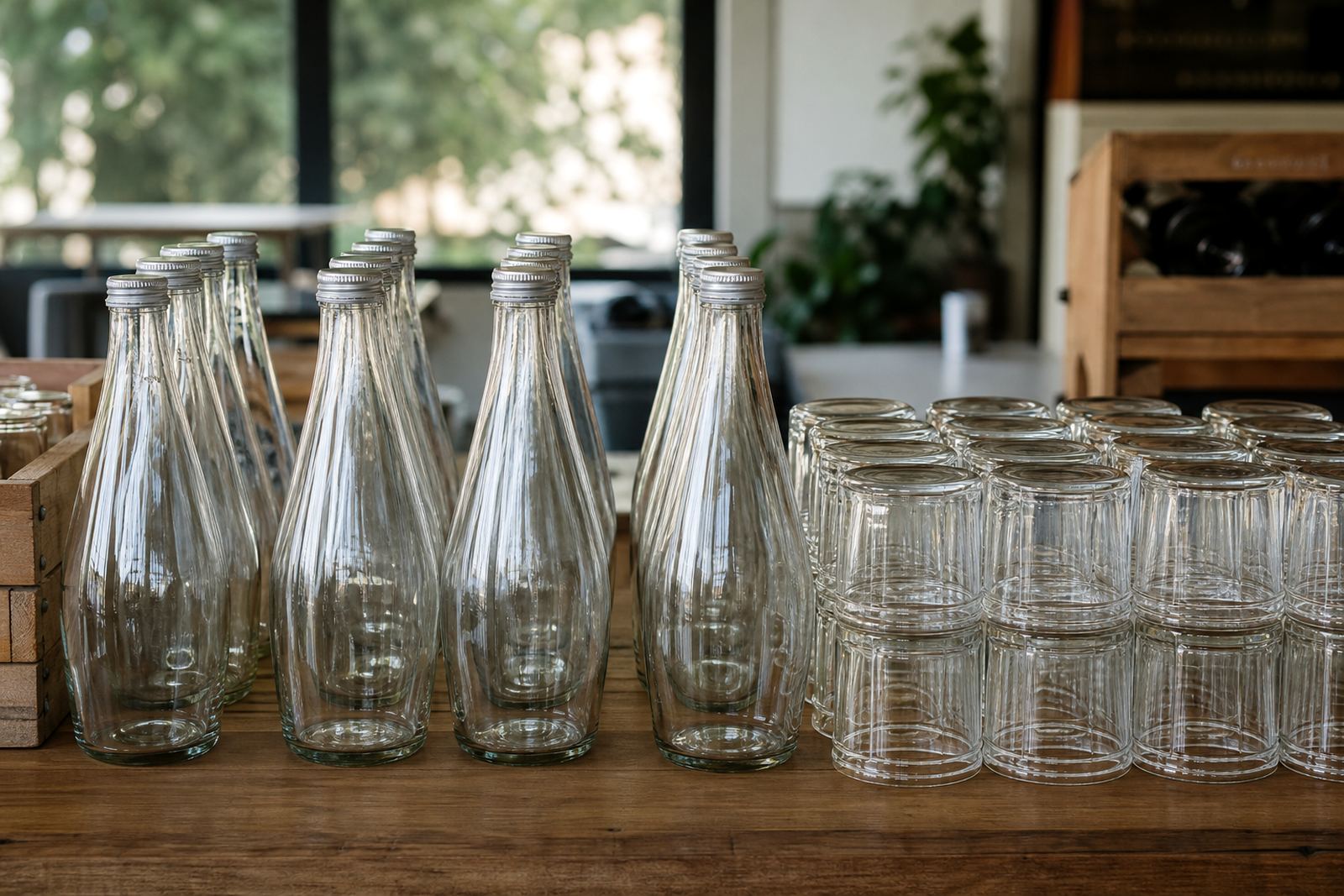
The order came from a Durban hotel operation that wanted branded water bottles for guest rooms, breakfast tables and conference service. The brief leaned practical: keep the branding clean, use a format that suits hospitality staff, and make sure the bottles still looked tidy after chilling, handling and movement between service areas.
The hotel was working with mixed bottle sizes and more than one use case, so the artwork had to be flexible. We set up the print area for the main logo mark, room-specific wording and a small version for secondary bottles. The team also wanted a finish that would sit neatly on clear glass without overpowering the table setting.
- Town: Durban
- Use case: room service, table service and meeting areas
- Decoration plan: labels plus direct print options
- Artwork stage: proofed before print release
Decoration methods that suited the order
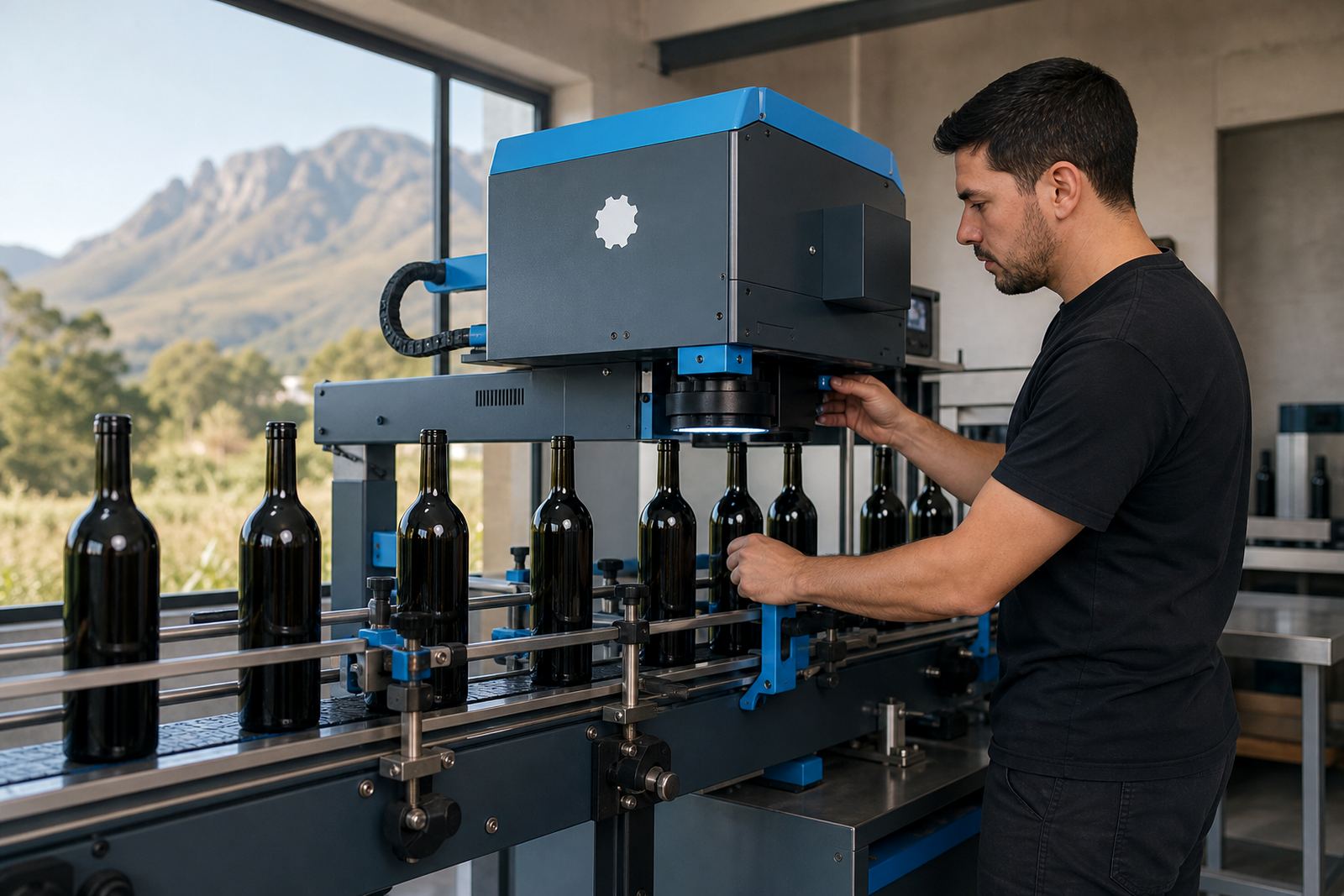
For this run we worked through the decoration methods that are commonly used on hospitality bottles and drinkware. UV direct print is useful when a crisp logo, small text and strong colour hold are needed on glass or coated items. Screen printing suits repeat runs where the same artwork sits on a clean, solid print area. Ceramic enamel is a good option for drinkware that needs a fired finish. Labels remain useful when the hotel wants flexible artwork, batch changes or short promotional wording.
Because the order mixed water bottles and service drinkware, the finish had to stay practical across different surfaces. Some items took a label build, while others were prepared for direct decoration where the substrate allowed it. We also checked white ink layers for the clearer sections of the artwork, especially where the glass tone could affect contrast.
- Glass bottles: clear and coloured options
- Drinkware: tumblers, mugs and hospitality glasses
- Print options: UV direct print, screen print, ceramic enamel and labels
- Artwork support: white ink layers and colour guidance
Artwork checks before the presses moved
The artwork stage carried the most back-and-forth on the file side. Hospitality branding can look simple on screen, then turn awkward once it lands on a curved bottle or a narrow print zone. We checked logo placement, label height, text size and the spacing around the mark so the final items would read properly on a tray or table without looking crowded.
Proofs were issued before release, including mock-up visuals for the main bottle format. The client needed confidence that the logo would sit at the right height on the bottle shoulder and that the label edge would not fight with the curve of the glass. Small adjustments were made to the layout, especially around the safe print area and the line thickness in the secondary wording.
- Print area planning for curved glass
- Label artwork setup for multiple bottle sizes
- Proof approvals before production
- Mock-up visuals for room and table service use
Short-run production in a hospitality rhythm
The run was built as a short series rather than a large blanket order, which suited the hotel’s service mix and storage space. That meant the minimum run advice mattered, because the team wanted enough stock for a service cycle without tying up too much room in back-of-house storage. The bottles were prepared in matched batches so the print, labels and packing notes stayed consistent from one carton to the next.
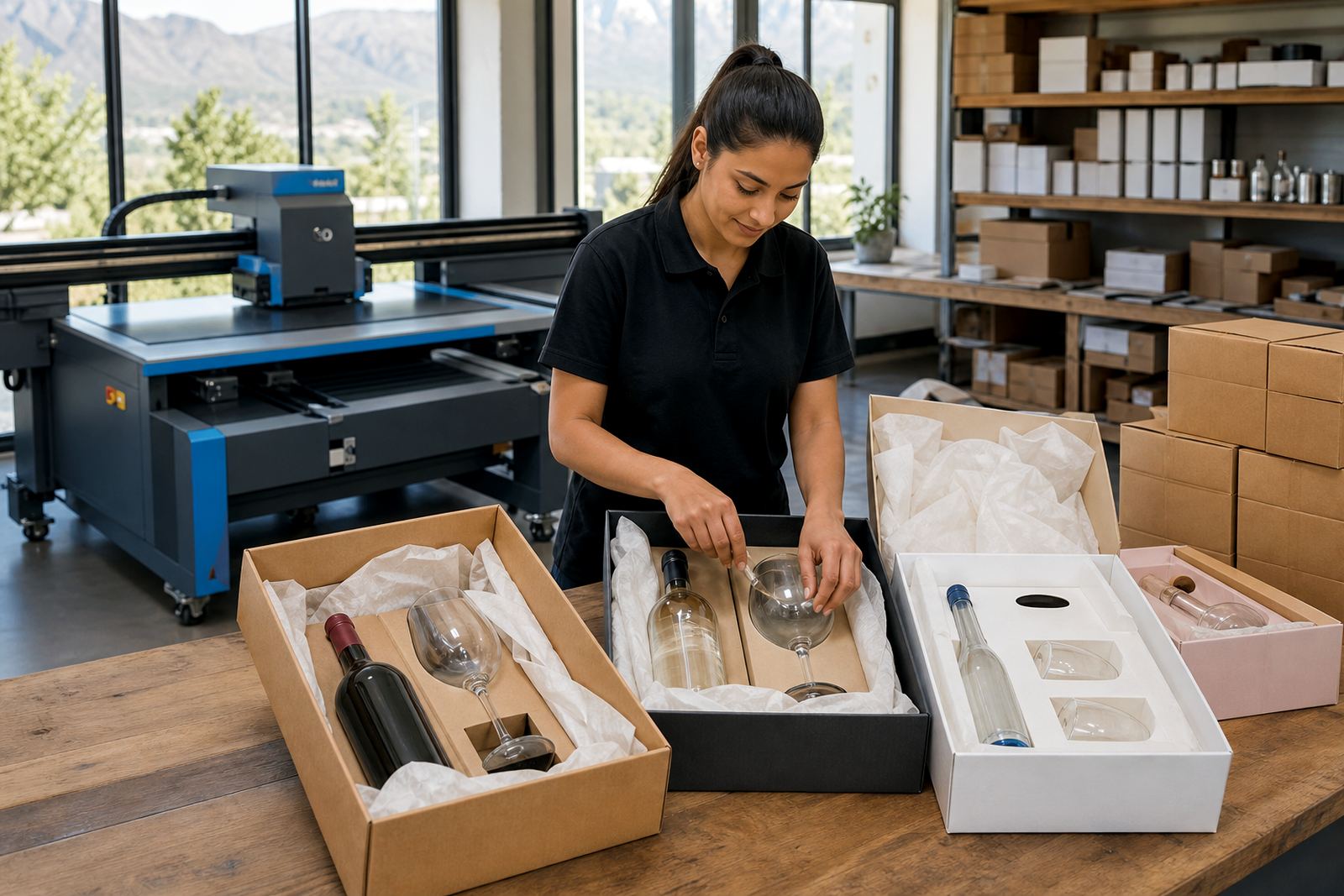
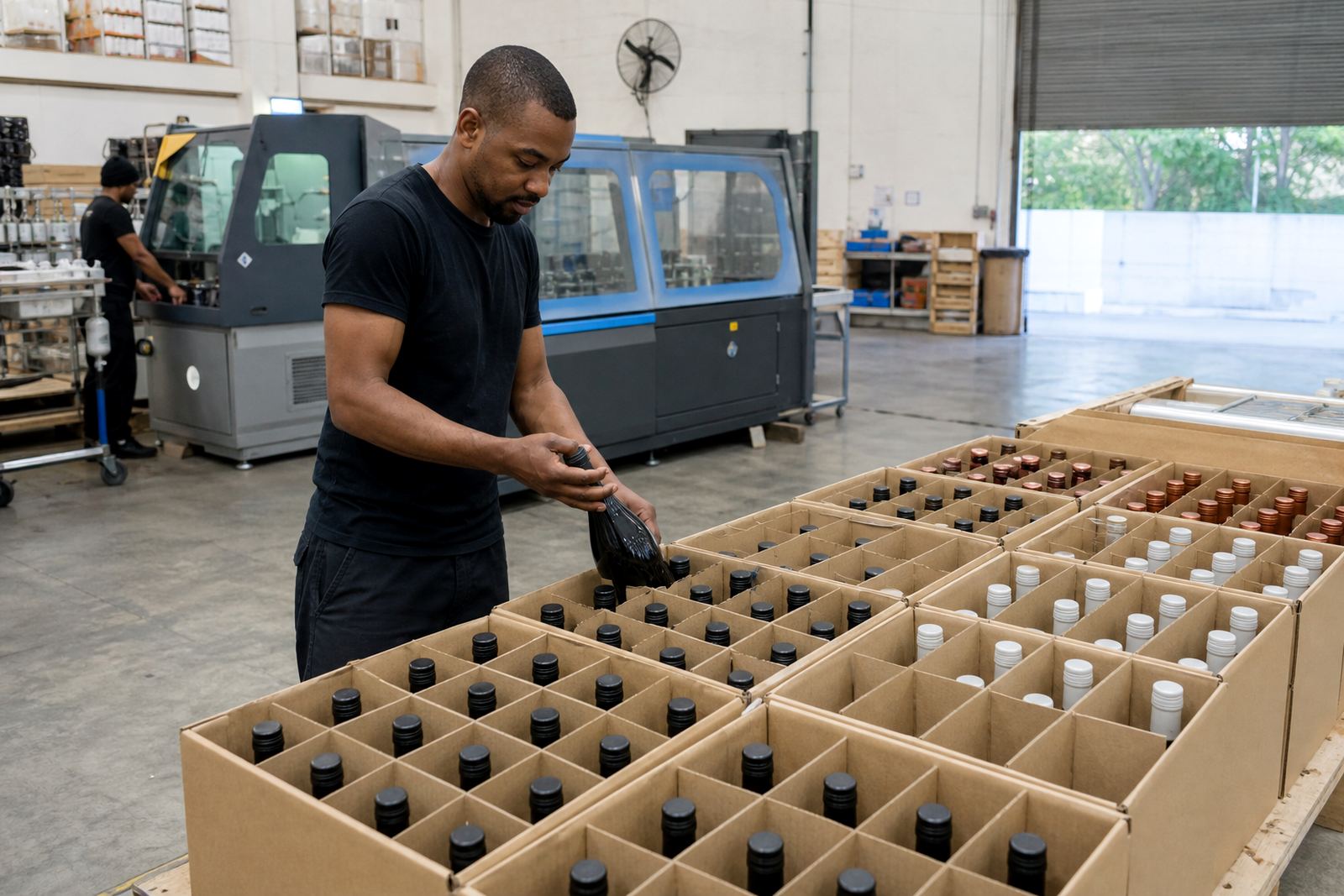
We packed the order for practical handling rather than display only. Cartons were labelled by format and the bottles were separated for room use, dining use and back-up stock. That made it easier for hospitality staff to move items into service without sorting through mixed packs on a busy floor.
- Short runs suited to hospitality rotation
- Batch packing for room and table service
- Minimum run advice given on the bottle mix
- Packing brief followed for easier issue on site
Durban handling and delivery details
Durban brings its own practical points, especially where hospitality stock is moved through guest-facing areas and stored near cool rooms or service counters. Moisture, fridge condensation and repeated handling all affect how a print or label holds up. For that reason we kept the finishing notes tight and the packing method clean, with attention to edges, adhesion and carton protection.
The delivery schedule was arranged around the hotel’s receiving process and the bottles moved through our KwaZulu-Natal service channel for Durban delivery. The client wanted a straightforward handover, with cartons marked clearly so the operations team could place them into room stock, bar support stock and event reserve stock without opening every box first.
What the hotel ended up using
The finished bottles gave the hotel a neater, more controlled service look. The branded water bottles sat properly on tables, and the room bottles carried enough identity to feel deliberate without taking over the setup. The proofed artwork kept the logo readable at a glance, which helped the staff maintain consistency across breakfast service, conference trays and guest rooms.
The result was not about making every bottle a feature piece. It was about giving the hospitality team a dependable branded item that could move through different service areas and still look presentable. That balance is where short-run bottle decoration works well, especially when the artwork is sorted before print and the packing is done with the service floor in mind.
What we would set up for a hotel order
On a similar Durban hotel job, the same process would still make sense: confirm the bottle mix early, check the print zone against the curve of the glass, and keep the proof stage open long enough to settle the small details. For hospitality work, the useful extras are often the plain ones, like carton labelling, bottle grouping and a clear note on which formats are for room service and which are for table use.
The process also benefits from selecting the decoration method by use rather than by trend. Labels can suit changing text and short campaigns, UV direct print works well for crisp presentation on suitable surfaces, and screen printing or ceramic enamel can suit repeat service items that need a more permanent finish. That mix gives the hotel room to keep the branding steady without overbuying stock.
Key facts
| Project | Durban hotel water bottle run |
|---|---|
| Client type | Hospitality group in Durban |
| Decoration methods | UV direct print, screen printing, ceramic enamel, labels |
| Product mix | Branded water bottles and drinkware |
| Artwork support | Print area planning, white ink layers, proof approvals |
| Delivery coverage | Durban with South African delivery support |