Start With The Run Sheet And Destination
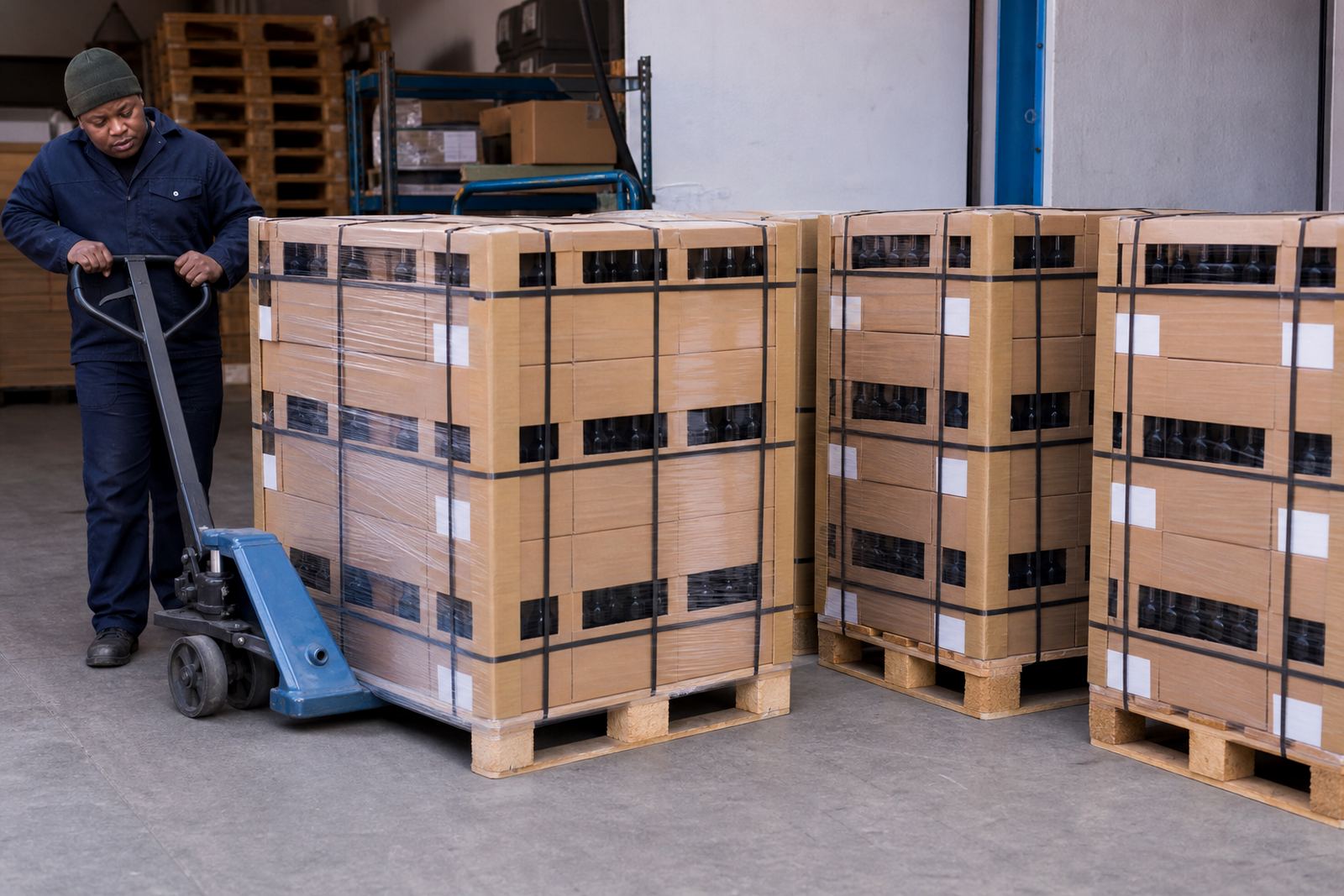
Before packing starts, the run sheet should match the final proof and the delivery note should match the cartons. That means the bottle count, item sizes, decoration method and destination all sit in one place, not across separate notes that can drift apart.
For wineries, distilleries and event teams in Paarl, Stellenbosch, Franschhoek, Cape Town, Johannesburg or Durban, the address needs a proper receiving contact, a street name, and any site rules for offloading. If the bottles are going to a cellar, hotel, venue or corporate office, make sure the receiving point is clear and the cartons are marked for the right floor or store area.
- Confirm the pack count against the approved proof.
- Check whether the order is for wine bottles, gin bottles, water bottles or drinkware.
- Mark the destination with suburb, town and contact name.
- Note any venue access limits, security checks or loading bay rules.
Protective Materials That Suit Glass And Drinkware
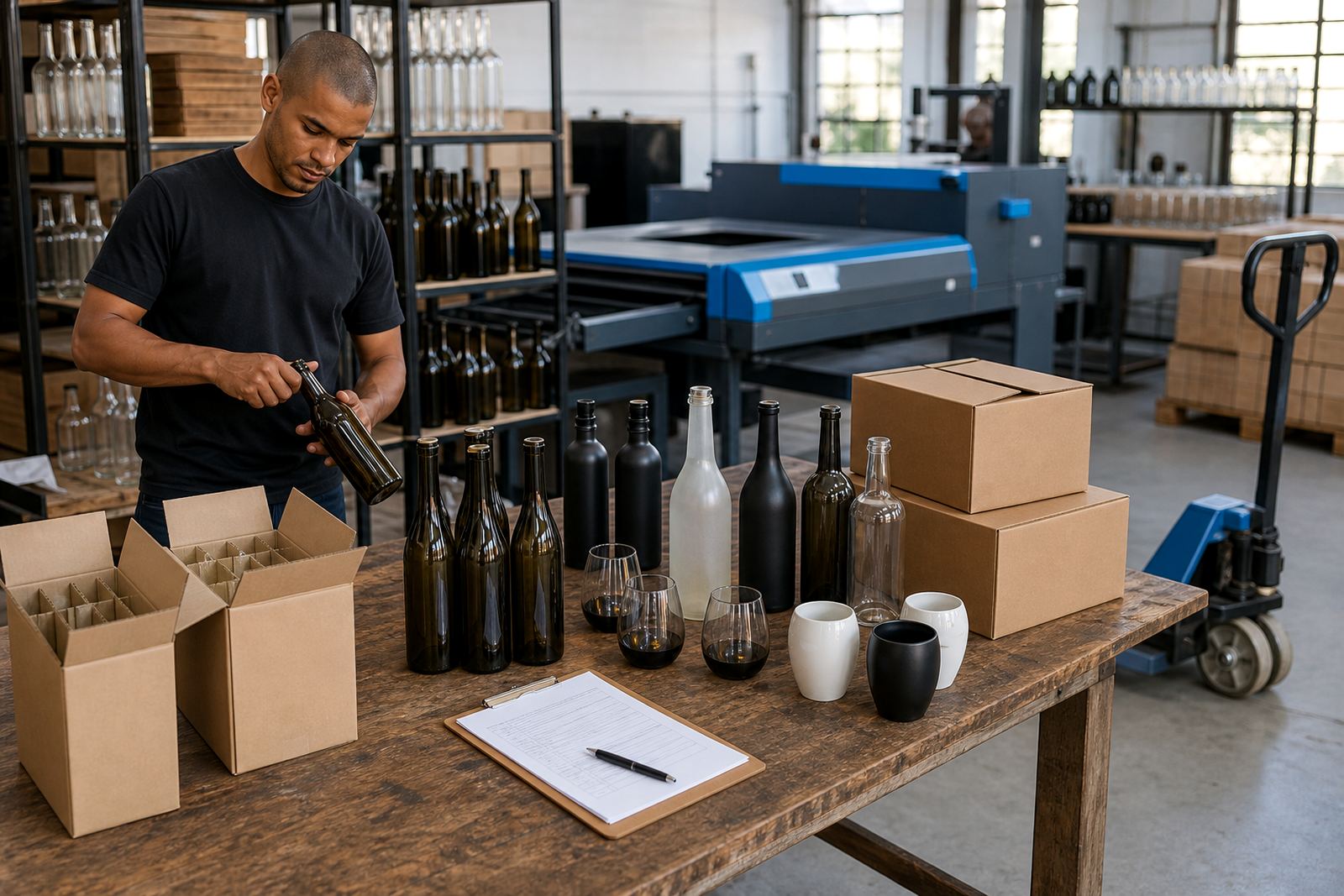
Glass needs proper separation in transit, especially when the order includes different shapes or mixed decoration methods. A short run of 750 ml wine bottles, slim gin bottles and tumblers does not all pack the same way, so the cushioning inside the carton should match the item profile instead of being forced into one generic wrap.
Labels need a clean face and dry adhesive surface, while UV direct print and screen printed bottles need protection from scuffing on the decorated area. Ceramic enamel finishes need careful spacing too, because contact points can leave marks if the cartons are overfilled. For coasters, glasses and mugs, pack inserts should stop movement without pressing hard against the print zone.
- Use dividers between bottles where necks or shoulders touch.
- Keep label faces clean and free from dust before packing.
- Separate ceramic enamel pieces from loose glass items.
- Check that outer cartons close without bulging.
Proof Approval Before Anything Is Packed
No cartons should move until the artwork proof is signed off. A proof checks logo placement, font size, white ink layers, label trim, bottle curvature and the chosen print area. On curved glass, even a neat artwork file can shift visually if the print zone is not mapped correctly.
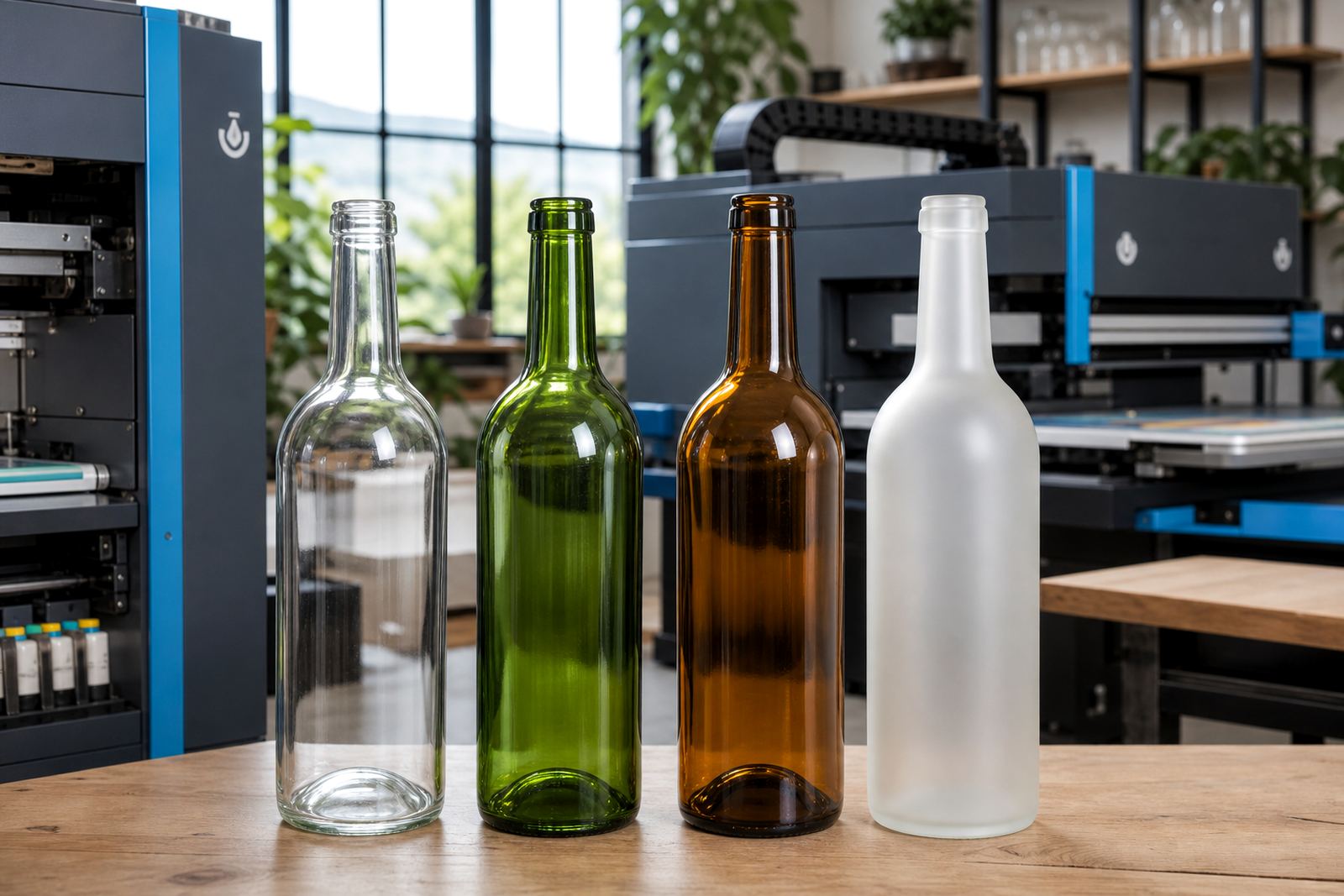
Artwork help is part of the job here, especially when the brief includes mixed bottle types or different decoration methods in one order. A label on a clear bottle can need a different setup from UV direct print on frosted glass, and a ceramic enamel run on drinkware can need its own colour handling. That is why the proof has to show the final look on the actual shape, not a flat guess.
- Check spelling, dates and any batch notes before sign-off.
- Confirm colour guidance for dark glass, clear glass or coloured drinkware.
- Review white ink coverage where the substrate needs a base.
- Approve the mock-up visual before print prep begins.
Minimum Runs And Mixed Orders Need Clear Sorting
Short runs can be efficient, but only when the packing plan fits the run size. If the order includes one bottle style for retail gifting and another for an event pour, the counts and carton labels need to separate those groups clearly. Mixed cartons create confusion at handover, and that usually turns into delays on site.
Minimum run advice matters here too, because some methods suit smaller quantities better than others. Labels can work well for flexible quantities, while screen printing and ceramic enamel may need different setup decisions. UV direct print is often chosen where the order needs a cleaner direct finish, but the packout still has to reflect the final run structure. Keep each group counted, stacked and marked before loading.
- Separate retail, gifting and event cartons.
- Keep one decoration method per carton group where possible.
- Mark special pieces such as samples or approved references.
- Leave room for padding rather than forcing extra units into a carton.
Destination Timing And Site Handover
Timing matters because bottle deliveries are usually tied to a tasting, launch, corporate function or seasonal pack-out. The receiving site may only have a narrow handover window, and the order needs to arrive in a condition that lets staff place it straight into storage or display. If the venue is coastal, such as Durban, or exposed to humid air in the Cape, cartons should stay sealed until handover to limit moisture handling.
For long-distance deliveries to Johannesburg or local runs across the Cape Winelands, the final check is always the same: are the cartons secured, are the labels facing the same way, and is the paperwork easy to match with the physical count. A clean handover saves rechecking on the pavement or in a busy receiving bay, which nobody wants when there are other deliveries moving through the same space.
- Match the delivery note to the carton count.
- Keep cartons upright where the print finish allows it.
- Note any fragile or temperature-sensitive items for the receiving team.
- Confirm the destination can receive the full pack at once.
Packing Briefs For Wineries, Distilleries And Events
A strong packing brief keeps the delivery team, production team and receiving site working from the same list. For wineries, that can mean branded wine bottles packed by vintage or function. For distilleries, it may mean gin bottles packed for launch tables or gift sets. Event organisers often need a smaller, cleaner count split across several drop points, which needs the cartons labelled in a way that makes sense on site.
Use plain labels on the outer boxes, then add any handling notes that matter for the site. If a carton contains glass drinkware, mark it separately from bottle stock. If a run includes label artwork setup, UV print prep or screen print prep, keep those notes with the job file so the next movement is clear. The point is not just to get the parcel there, but to get it there ready for use.
When a brief is complete, the pack count, protection method and destination timing all sit together. That is what keeps short-run bottle delivery tidy from Paarl to the rest of South Africa.