Cellar-door labels that hold their place on the shelf
Wineries often need a small batch for a release, a private label pour, or a seasonal gift pack, not a full production line run. That changes the planning. Neck labels, front labels and direct print all behave differently on still wine bottles, sparkling formats and smaller tasting bottles, so the artwork has to fit the container before the press work starts.
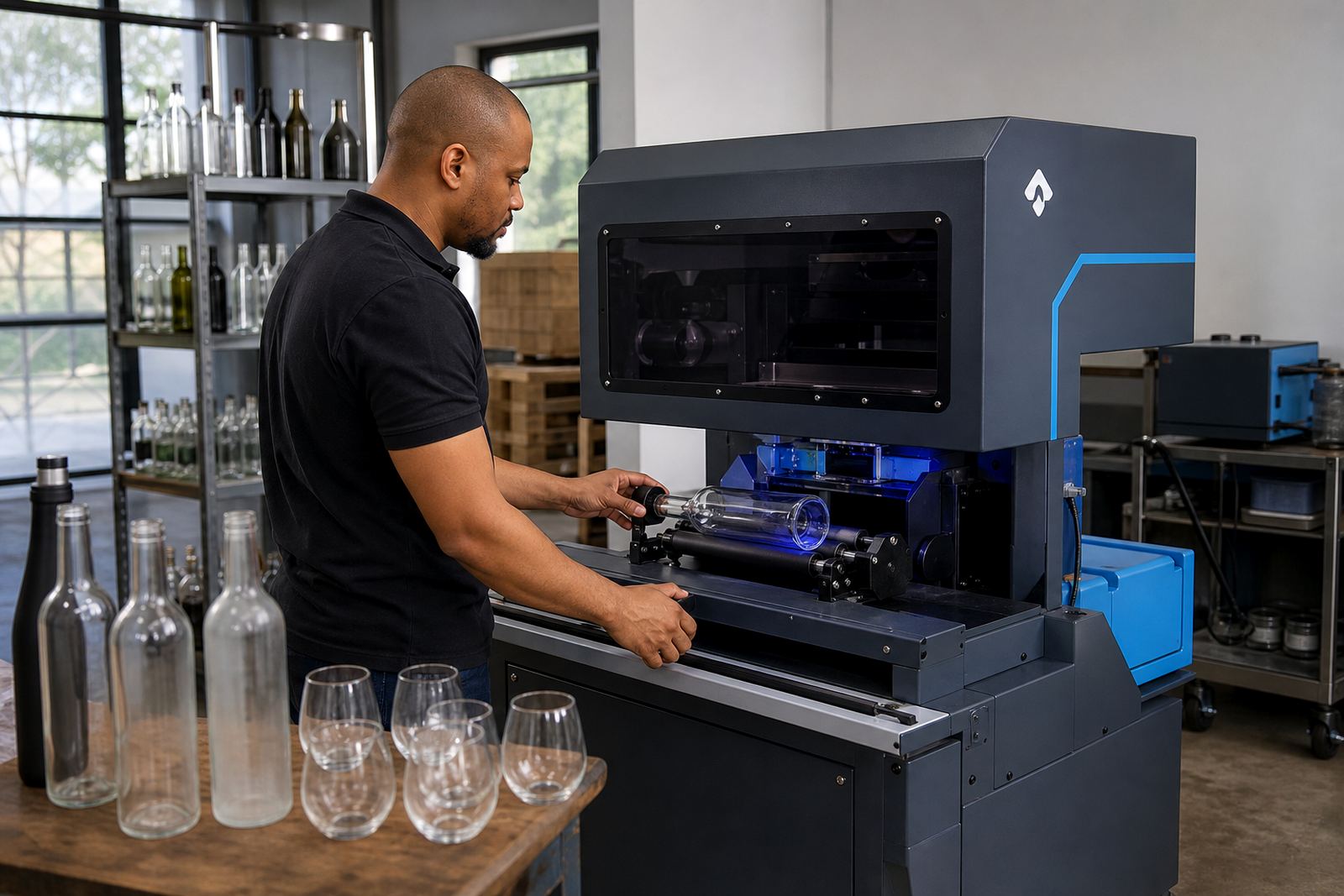
For glass bottles, decoration usually starts with a choice between UV direct print, screen printing, ceramic enamel or printed labels. UV direct print suits shorter runs and detailed artwork. Screen printing gives a solid finish on straight-sided glass. Ceramic enamel is the tougher route for bottles that need a fired finish, while labels are useful for mixed bottle shapes, variable wines and fast release changes. A proof should show placement, colour balance and the printable area, not just the artwork file on its own.
Bottle shapes and drinkware that usually cross the worktable
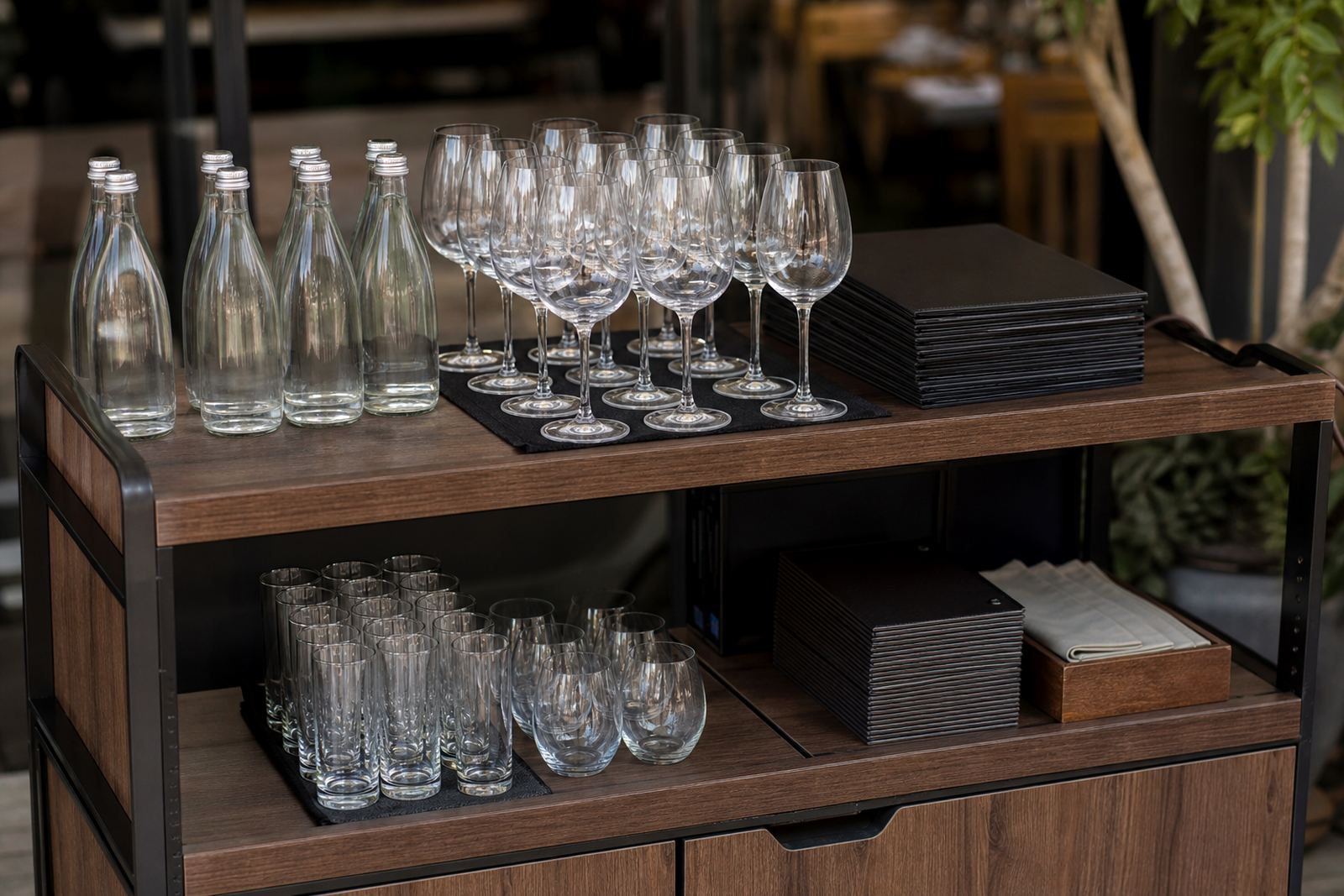
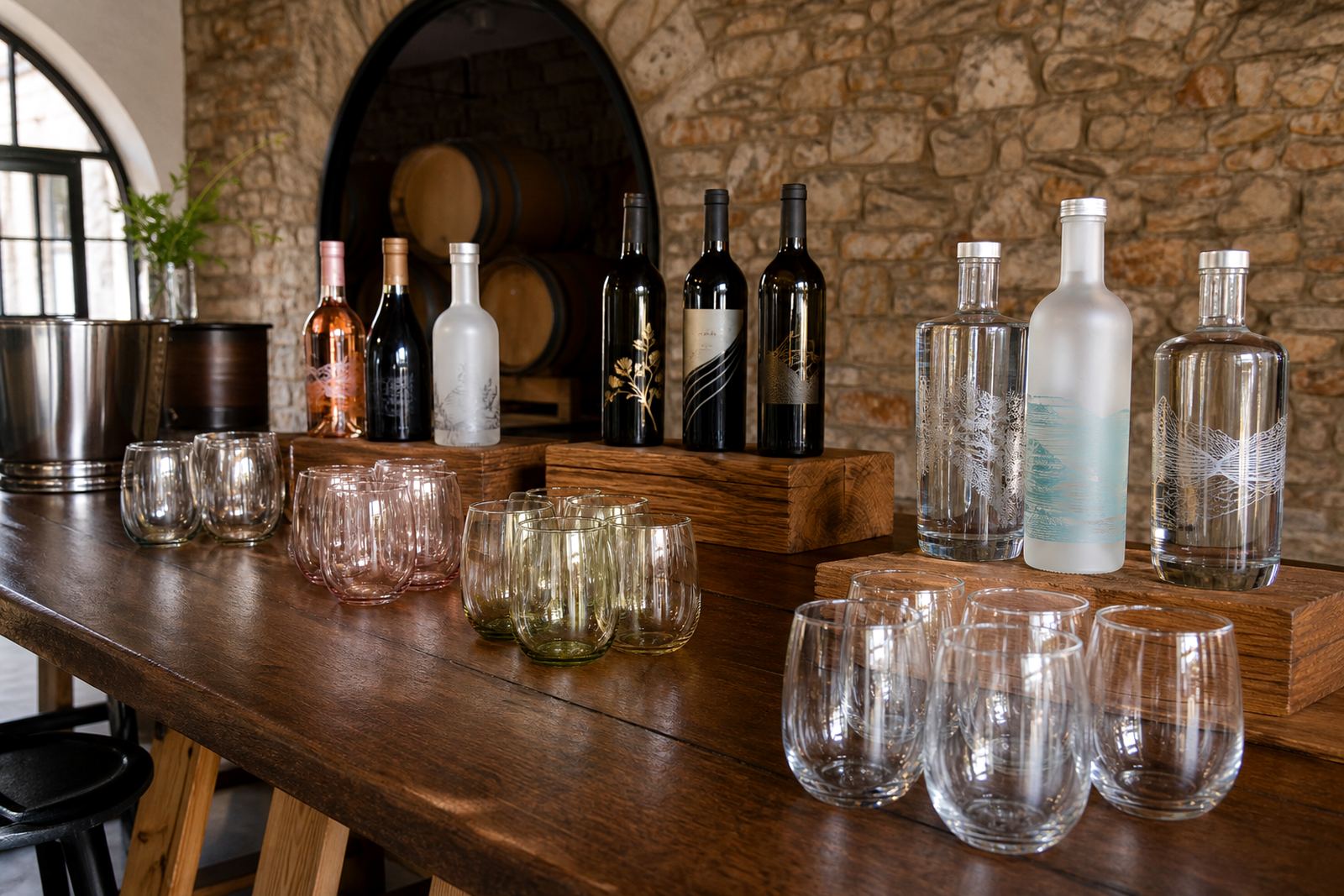
Wine bottles are not the only items that land on the list. Wineries also order branded gin bottles, still water bottles for events, stemless glasses, tumblers and tasting room drinkware. Straight-sided glass gives the cleanest print area. Curved shoulders, embossed panels and heavy bases need extra checking because the printable zone narrows fast and some marks sit awkwardly near the seam or punt.
- 750 ml wine bottles for cellar door sales and gift packs
- 375 ml bottles for tasting room exclusives or small releases
- Gin bottles for private label gifting and launch tables
- Water bottles and carafes for tasting rooms and hospitality use
- Glassware for branded pours, event tables and staff bars
Colour choices need more attention than many teams realise. White ink layers help brighter artwork stand out on dark glass, while pale wines and clear bottles may need the art adjusted so it does not disappear once the bottle is filled. That is where a print-area plan saves trouble later.
Artwork checks before glass meets the press
Wine labels and bottle decoration fail most often at the artwork stage, not on the machine. Thin lettering can vanish on curved glass. Fine lines can break at small sizes. Metallic tones may flatten once they move into a print process. For a winery release, that means checking the bottle size, the panel shape and the final viewing angle before any run is approved.
Our artwork support usually covers file cleanup, label artwork setup, mock-up visuals, white ink layers and proof approvals. That proof is the point where the placement, spelling, bottle size and colour balance are checked against the actual job. For short runs, proofing is especially useful because there is less room to hide a mistake across a large quantity.
- Confirm the bottle or glass size before layout begins
- Leave space for necks, shoulders and curved panels
- Allow for white ink under darker colours on glass
- Keep fine type large enough to read after filling
- Review the proof on the exact shape, not a flat sheet only
Short-run planning for releases, gifting and events
Wineries usually need a practical run size rather than a shelf-filling one. Short-run bottle decoration works well for launch events, private labels, member packs and tasting room exclusives where the artwork may change between seasons. Minimum runs depend on the method, the bottle type and how many print positions are needed, so the most efficient option is not always the fanciest one.
As a general guide, labels can suit smaller quantities and mixed formats. UV direct print often sits in the middle range for short runs with sharp detail. Screen printing and ceramic enamel usually need a more considered minimum because the setup is more involved. If you are planning multiple bottle sizes in one release, the layout should be grouped by print method so the run does not become awkward or wasteful.
Layout and packing need the same attention. A release pack with wine bottles, a small gin bottle and two glasses should be packed with bottle protection that matches the finish, especially where heavier glass can rub or chip against another piece. For wine estates near the coast, humidity can affect label handling and storage, so packing notes matter just as much as the print choice.
Where budgets usually sit for winery bottle work
Budget depends on bottle count, decoration method, the size of the artwork and whether the job needs labels, direct print or a fired finish. A small label-only run for tasting room bottles may sit in the lower thousands of Rand. UV direct print on a short batch of glass usually moves higher once setup and proofing are included. Screen printing and ceramic enamel are priced differently again because the preparation and curing steps are more involved.
For planning purposes, many winery briefs sit somewhere between R3,500 and R18,000 for a small to mid-size mix of bottles or drinkware, although larger seasonal packs can move beyond that when more artwork positions or bottle types are included. The cleaner the layout, the fewer surprises in the quote. If the brief includes multiple bottle shapes, coloured glass and drinkware in one order, the print method and packing brief should be set early.
Common problems that spoil a good release
A lot of bottle work goes sideways when the artwork is lifted from a label concept and pushed straight onto glass. What looks fine on a flat proof can wrap badly on a curved bottle. Another common issue is choosing tiny type for legal or tasting notes, then discovering that it disappears once the bottle is filled or chilled. Crooked placement is another one, especially on bottles with a seam or a strong shoulder line.
- Artwork scaled for a label but not for the bottle curve
- Too little contrast between ink and glass colour
- Fine text set below readable size
- Ignoring how the bottle sits in a crate or gift pack
- No proof sign-off before the run starts
For wineries, the safest approach is to match the decoration method to the bottle shape first, then decide where the label, print or enamel should sit. This cuts down on reruns and keeps the final look even across the full release. Wineries come to us when they need artwork checks, proof approval and packing notes lined up for a run that will actually fit the job.