When the tasting room needs a tighter finish
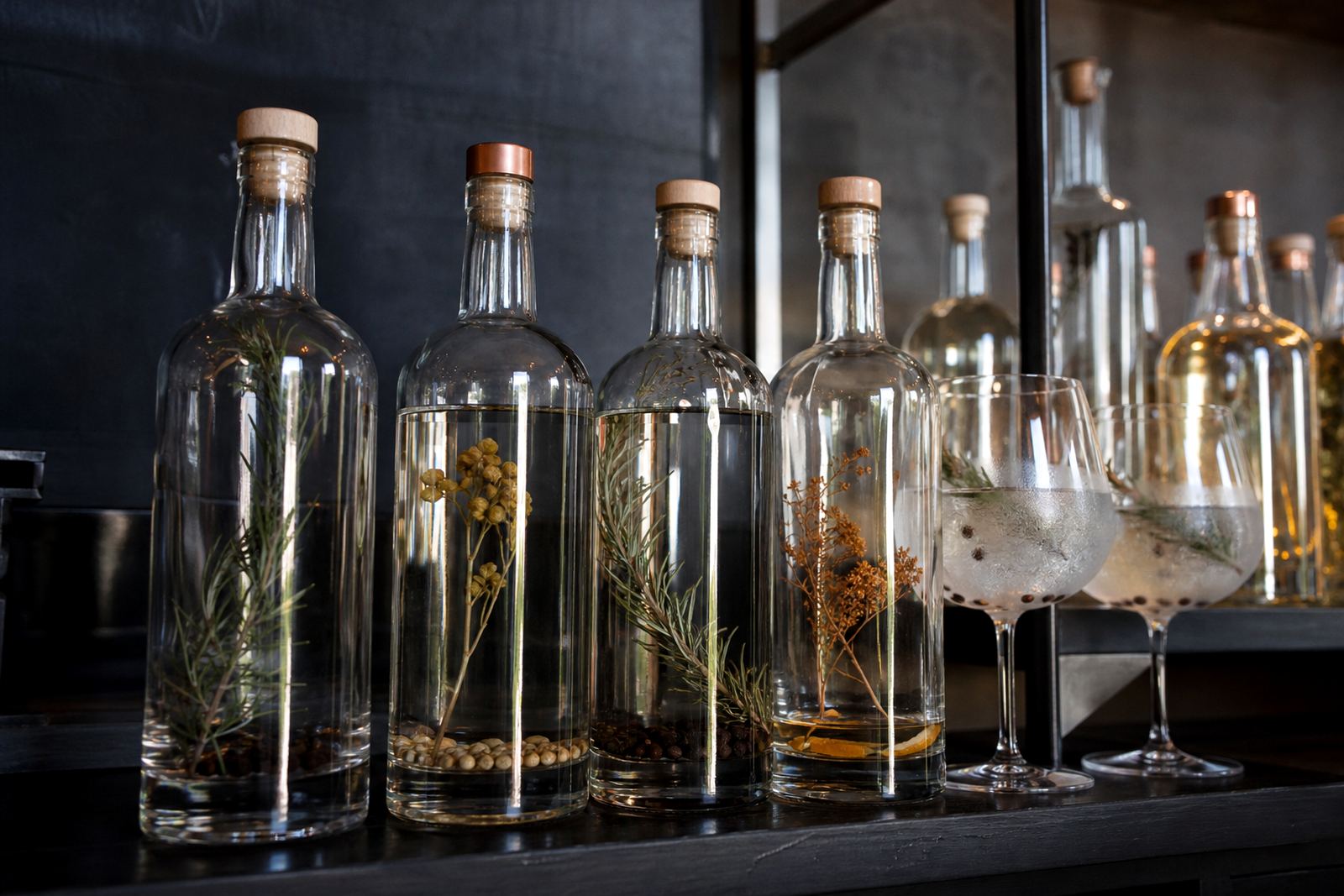
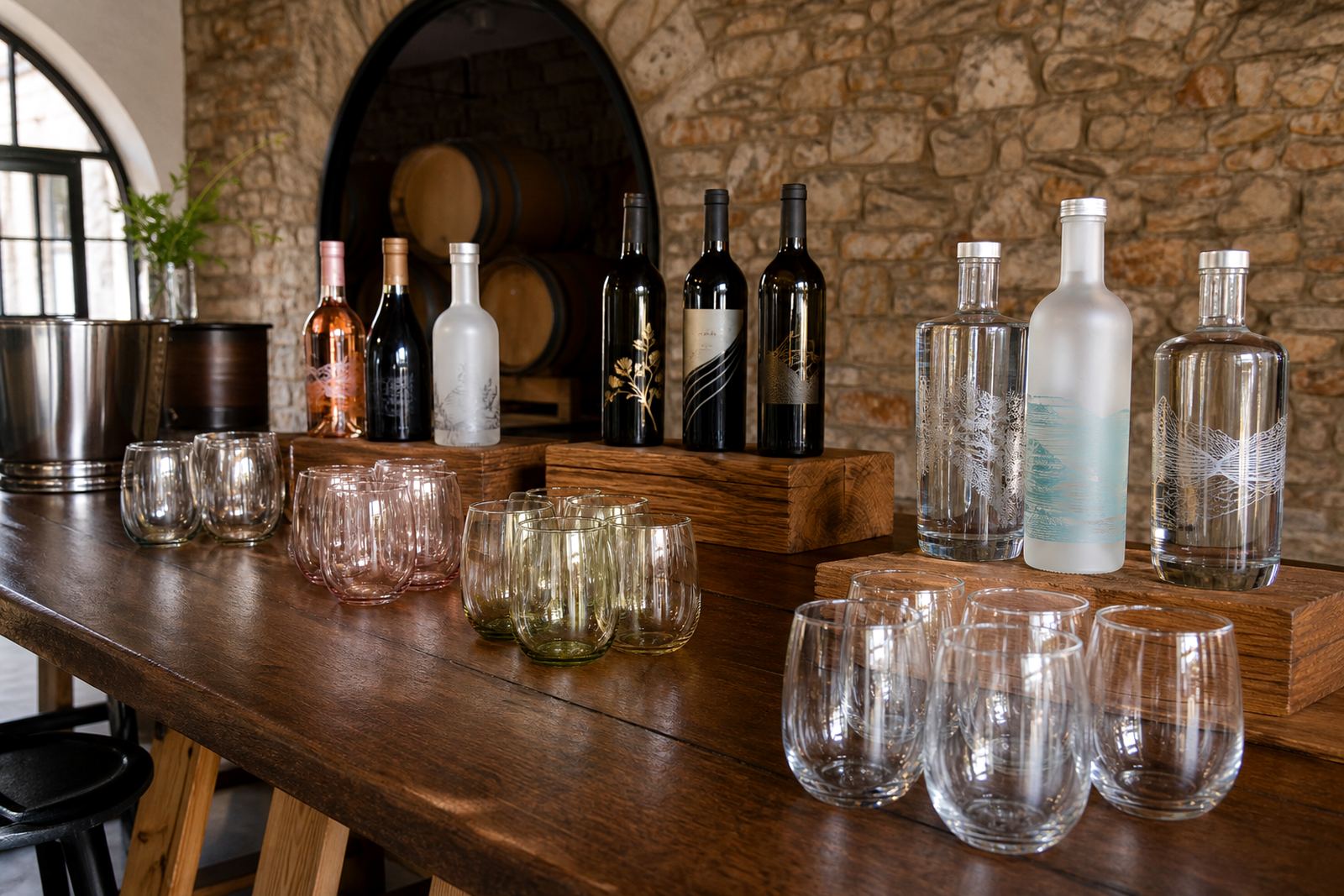
A tasting room works best when the bottle, glass and label all speak the same visual language. That matters on busy weekends in Paarl, Stellenbosch, Franschhoek, Cape Town and further afield where visitors notice the bottle before they read the story card.
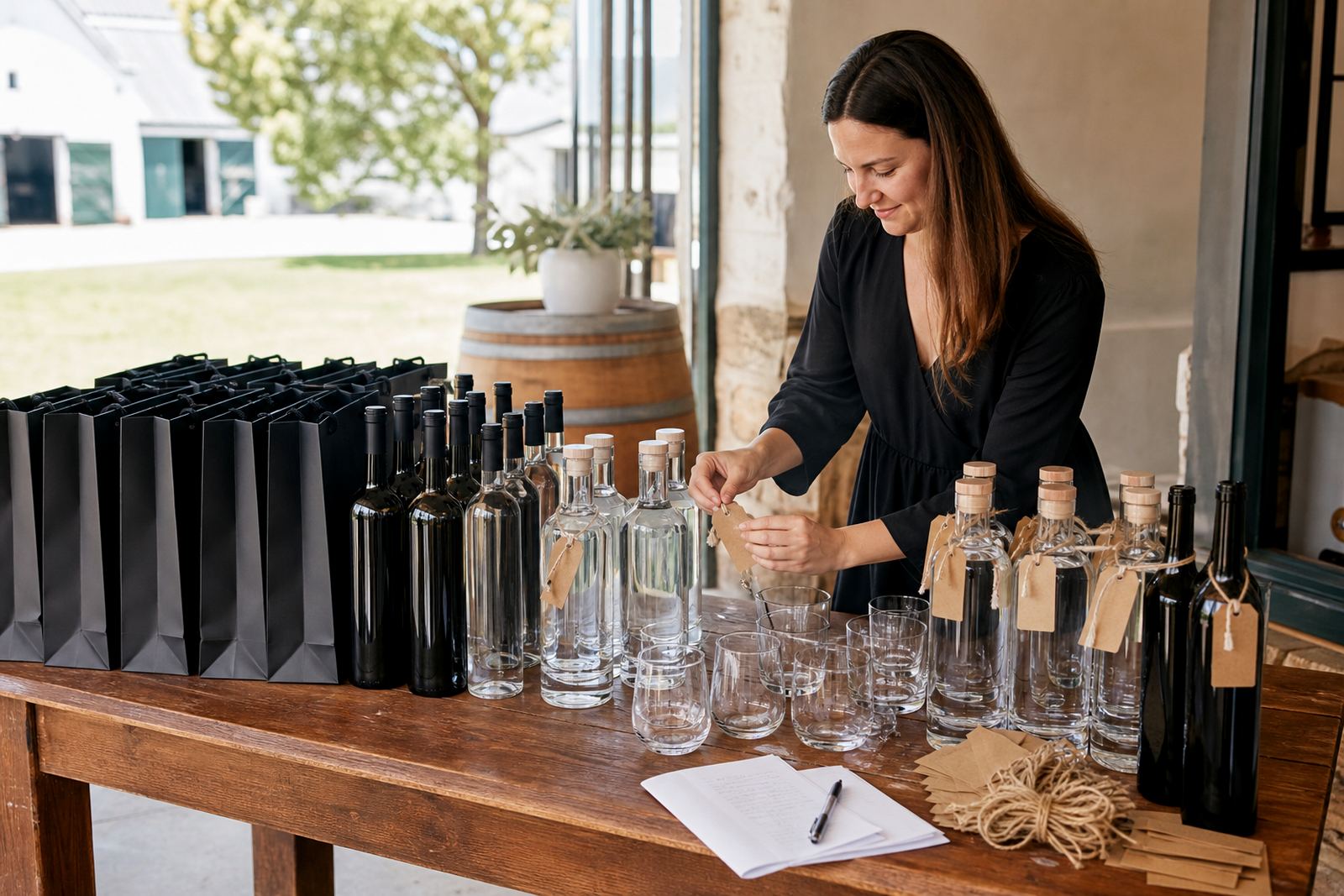
Short runs suit seasonal pours, small release wines, gin tastings, water bottles on the counter and corporate functions that want a neat branded look without large stock. We prepare print areas for glass, coated bottles and selected drinkware, then check the artwork so text, logos and neck space sit where they should. The aim is a clean result that holds up under handling, chiller moisture and repeated serving.
- Short-run bottles for special pours and events
- Matching glasses for tastings and flight service
- Labels for smaller quantities or mixed bottle styles
- Artwork checks before the run starts
Typical items used across counter and table
The usual set changes from one tasting room to another, but the print methods stay fairly familiar. UV direct print works well for crisp colour on glass and some bottle surfaces, screen printing suits solid branding and repeat runs, ceramic enamel is used where a fired finish is needed, and labels give flexibility when the bottle range changes or artwork needs a softer finish.
Glassware often includes stemmed wine glasses, stemless glasses, tasting glasses, water tumblers and branded event cups. Bottle decoration can be applied to wine bottles, gin bottles, water bottles and other drinkware in the display area. We keep the method in step with the shape, the fill level and the way the bottle will be handled behind the counter.
- Wine bottles in standard tasting room sizes
- Gin bottles for display, gifting and function service
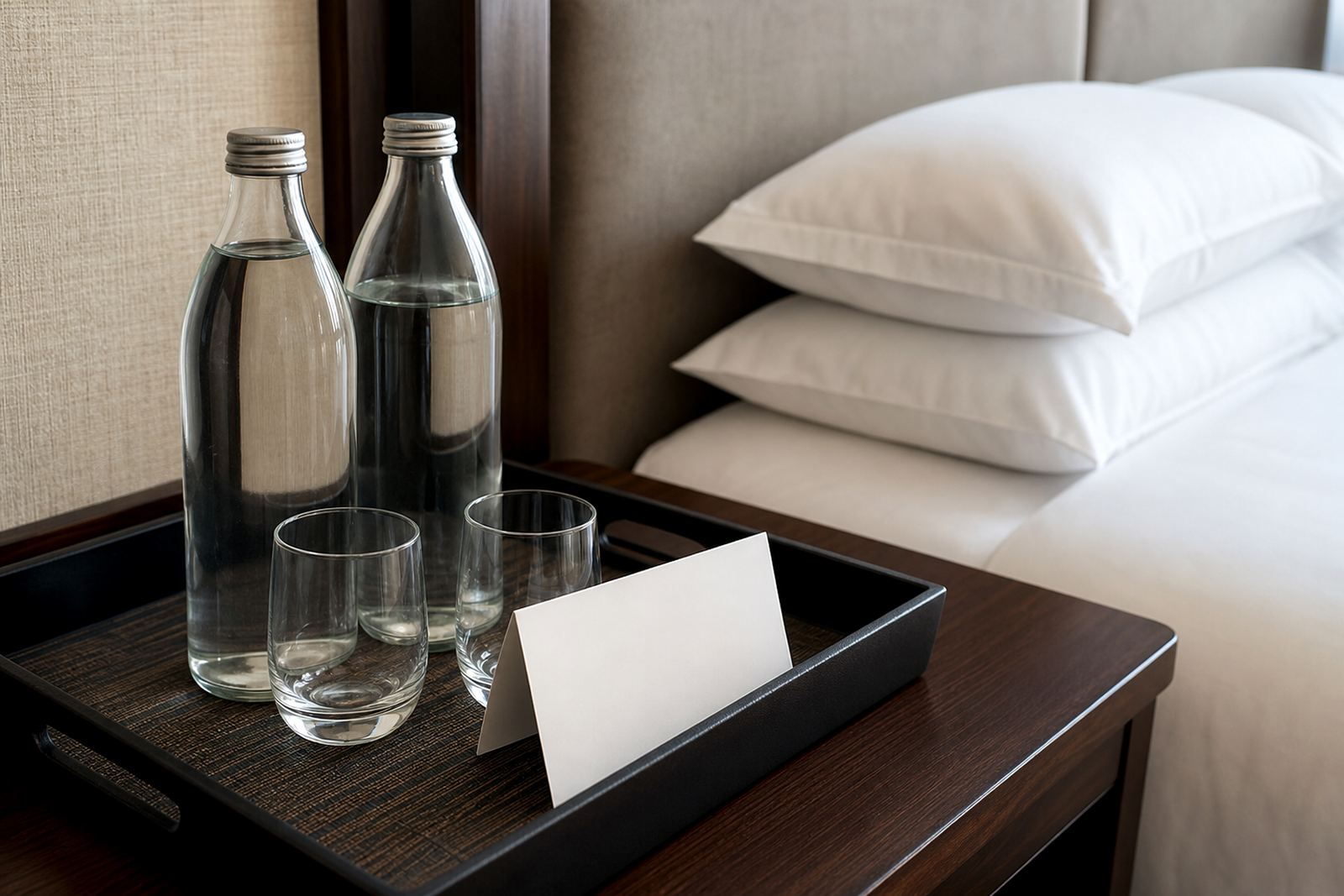
- Water bottles for counter use and welcome packs
- Glasses for tastings, events and corporate pours
Setting out the print area before the first proof
Good planning starts with the view from the table. A logo that looks neat on a tall bottle can crowd the shoulder on a shorter shape, while a glass may need a smaller mark to avoid touching the curve or the rim zone. We map the print area first, then place the artwork to suit the shape and the drinking line.
Proofs are useful here because tasting room work often involves several item types in one order. A bottle might need front and back placement, while glasses may only need one small position. White ink layers can help on dark glass or coloured bottles, and colour guidance matters where the artwork includes fine type or pale tones that disappear on clear glass. Small slip ups in layout get expensive if they are only spotted after printing, so the proof stage is worth the time.
- Check the logo size against the bottle curve
- Allow for neck labels and shoulder space
- Keep fine type away from highly curved sections
- Confirm whether white ink is needed under colour
Common mistakes in tasting room orders
The most common problem is trying to use one artwork file for every surface. A label that works on a bottle does not always work on a glass, and a bright logo can disappear on dark or tinted drinkware if the underprint is not planned. Another issue is mixing too many item types without a clear order of priorities, which makes the run harder to pack and check.
In busy hospitality spaces, handling marks and washing are part of normal use. For that reason the print method should match the way the items will be cleaned and stored. Ceramic enamel is suited to a more fixed finish, while labels may be better for short campaigns, but neither should be chosen only on looks. The bottle shape, washing routine and event schedule all matter.
Budgeting also gets messy when the minimum run is not discussed early. Small quantities are possible, though the unit price and set-up work change with the method. The artwork file should be ready enough for a proper proof, otherwise the time goes into fixing the basics before printing can begin.
Budget bands that fit tasting room work
Tasting room budgets vary with method, item count and how many artwork versions are involved. A small label job for a limited weekend promotion can sit in a lower band, while direct print on bottles and glasses with several proofs and colour checks sits higher. For many tasting room projects, it helps to think in bands rather than fixed figures, because shape and quantity affect the final amount more than people expect.
As a practical guide, smaller label or mixed-item runs often start in the low thousands of Rand, mid-range bottle and glass decoration jobs usually move into several thousand Rand, and more involved short runs with multiple artwork positions, special ink layers or packing requirements can run higher again. The right band depends on what is being printed, how many pieces are needed and how much artwork adjustment is required before approval.
- Labels are usually the most flexible for mixed ranges
- UV direct print suits crisp branding on glass
- Screen printing suits simpler artwork on repeated items
- Ceramic enamel suits a more durable applied finish
Packing, delivery and display-ready finishing
Once the proof is approved, packing needs to protect the print and keep the order easy to use at the tasting room or event site. Glass and bottle items are checked for print position, quantity and basic presentation before dispatch. Where the order includes different shapes, it helps to group them by use, such as counter stock, tasting flights and gifting stock.
From Paarl, delivery can be arranged across the Cape Winelands and to Cape Town, Stellenbosch, Franschhoek, Johannesburg and Durban. Some tasting rooms only need a small seasonal batch, while others order for a launch weekend, a harvest function or a corporate group. The same project may include bottle decoration, matching glasses and label artwork setup, so the packing brief should reflect how the items will be used on site.
Clear instructions for breakables, orientation and counts reduce mix ups, especially where several venues are involved. A careful pack is not a bonus, it is part of the job when the order has to land on a counter and start serving straight away.