Ink cured on the bottle, not added later
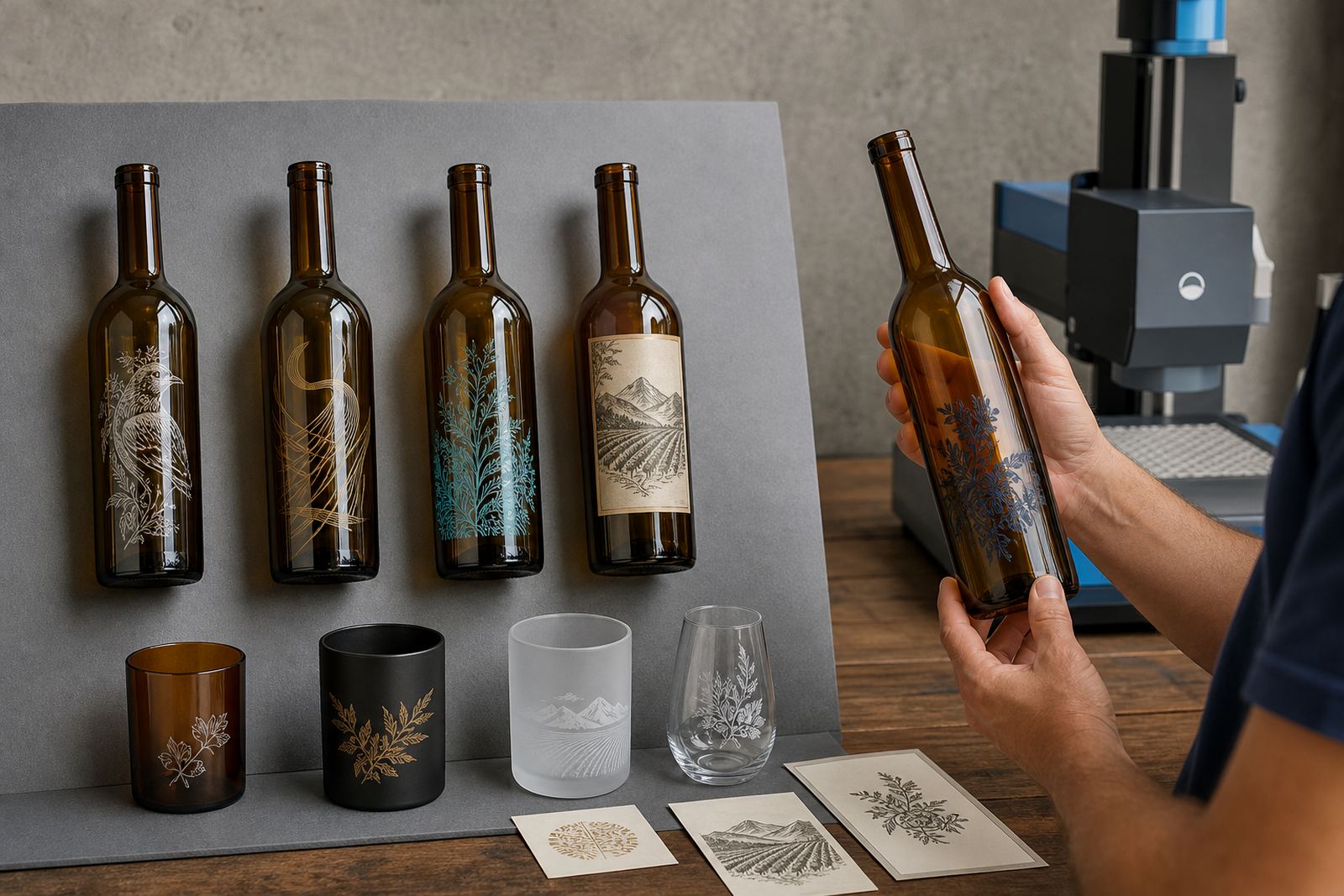
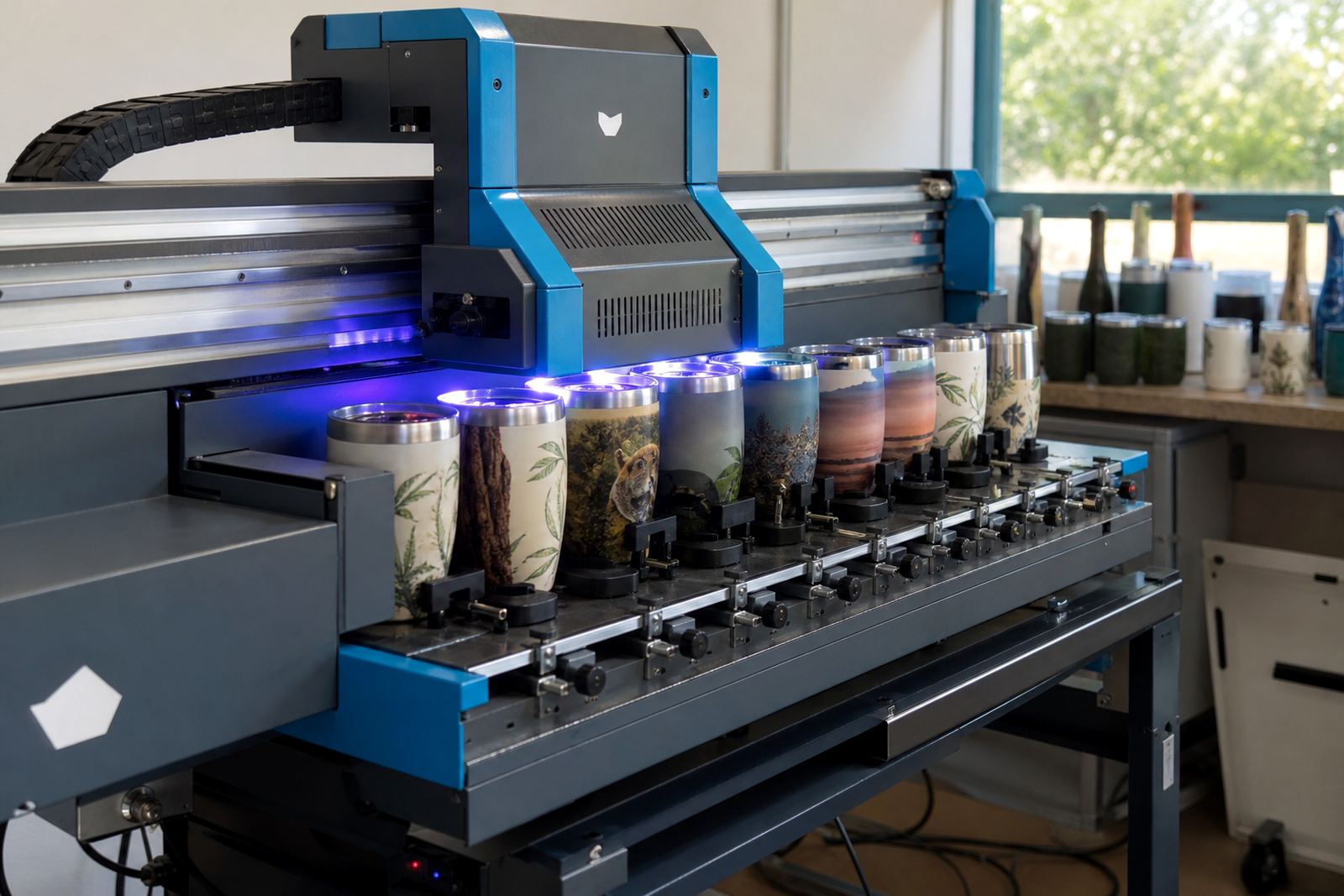
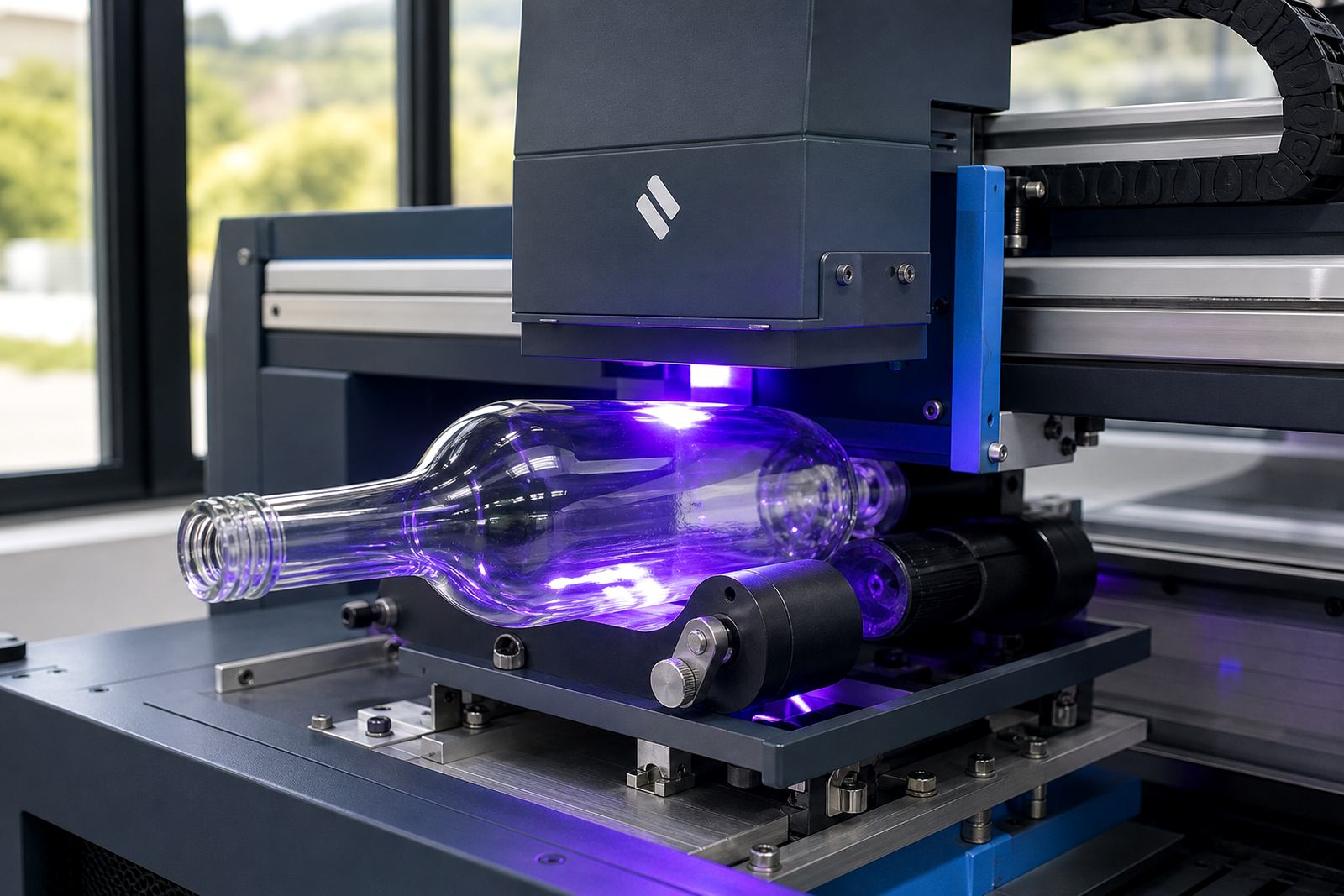
UV direct print transfers the artwork straight onto the glass surface and cures the ink with ultraviolet light. That gives a sharp look with tight text, solid blocks of colour and fine detail that holds its shape on smooth bottles.
For short runs, it is often the most practical route when you want the bottle itself to carry the design rather than a separate label. It suits clear, frosted and some tinted glass, provided the artwork is prepared for the exact print area and the bottle surface is suitable for ink adhesion.
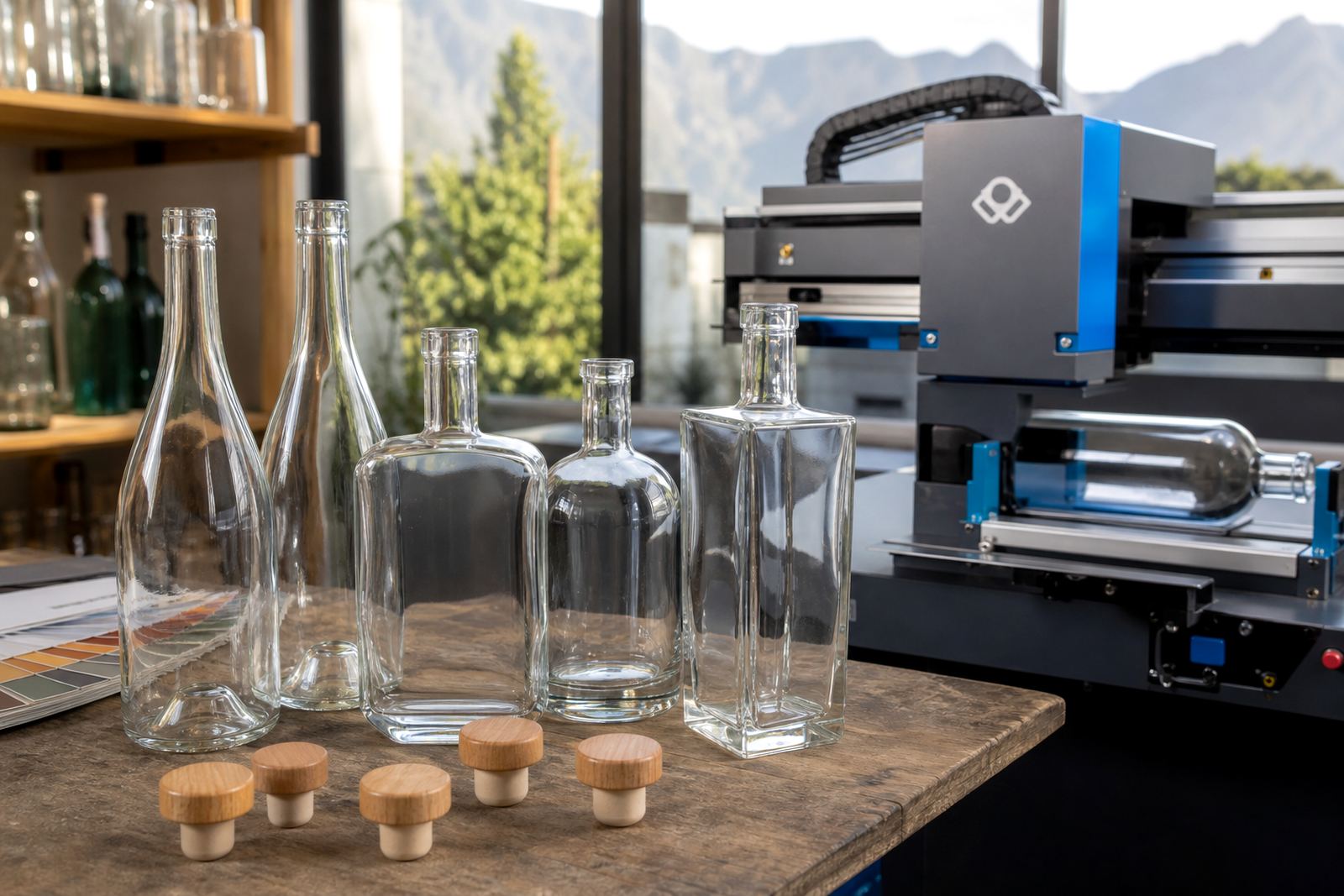
Bottles and drinkware that suit this method
UV direct print is used on a range of glass items, from standard wine bottles to gin bottles, still water bottles and selected drinkware. Straight-sided shapes are usually easier to work with, though curved surfaces can also be handled when the artwork wraps within the usable print window.
- Glass wine bottles with a clear front panel
- Gin bottles with room for a front label area
- Water bottles for hospitality or conference use
- Glass tumblers and branded drinkware with a flat print zone
The finish needs enough open space around the artwork. Dense curves, embossed shoulders and very narrow panels can restrict the layout, so the print area should be checked before the design is locked in.
Artwork that prints cleanly at small scale
Short runs do not leave much room for guesswork. The artwork needs the right file setup, clear line weights and sensible colour use so the finished bottle looks tidy under normal room light and in photographs. White ink layers can help when the design sits on dark glass or when colour needs extra hold.
- Vector logos keep edges cleaner on text and line art
- Small type needs enough stroke weight to remain readable
- White underprint helps bright colours show on tinted glass
- Colour guidance matters when matching corporate shades
A proof is checked before every run so the artwork, placement and overall balance can be approved before production starts. That step helps avoid surprises with height, width, wrap position or the spacing around the neck and base.
What changes between wine, gin and water bottles
Different bottle types call for different handling. Wine bottles often have more usable shoulder and body space, while gin bottles may have thicker glass, bolder shapes or more pronounced curves. Water bottles tend to favour a clear, direct message that stays readable from a distance in venues and meeting spaces.
For events, the design often needs to read well on tables, bar counters and packed gift boxes. For wineries and distilleries, the print may need a more restrained layout that sits neatly beside other packaging details. The method can handle both, as long as the artwork is set out for the actual bottle and not a generic template.
A Paarl run for a bottled gift set
In the Cape Winelands, a short run can be the right answer for a small batch of client gifts, tasting room stock or a launch pack for an event organiser. A Paarl team might work on printed wine bottles for a functions order, then set up a second layout for gin bottles with a different message and a matching look.
That kind of job calls for clean coordination between artwork, print planning and packing. A label that looks good on screen can shift once it is fitted to the bottle profile, so the proof stage matters. If the order is heading to Cape Town, Stellenbosch, Franschhoek, Johannesburg or Durban, the packing brief must also suit transport and handling.
Minimum runs, packing and the job handover
UV direct print is well suited to shorter production quantities, especially where the artwork changes often or the event date is fixed. Minimum runs depend on the bottle type, print area and the level of setup involved, so the order needs to be costed against the actual item rather than a broad assumption.
- Confirm the bottle shape before artwork finalisation
- Allow for white ink where colour needs support
- Check how the finish will sit with caps, closures or gift boxes
- Use packing notes when bottles travel between towns
A well printed bottle still needs dividers and snug cartons to arrive unscuffed. Glass needs suitable spacing, layered protection and a brief that matches the route, whether the bottles are staying in Paarl or moving to a venue elsewhere in South Africa.
Where this method fits best
UV direct print is a solid fit when the brief asks for a crisp graphic finish on a short run and the bottle surface can take direct decoration cleanly. It suits brands and event teams that want the artwork printed onto the glass itself, not applied as a removable label.
UV direct print is especially useful when the design needs sharp detail, a controlled colour count and a finish that feels built into the bottle. For glass wine bottles, gin bottles and selected drinkware, that can be a neat way to keep the presentation direct and practical.