The brief from Gqeberha
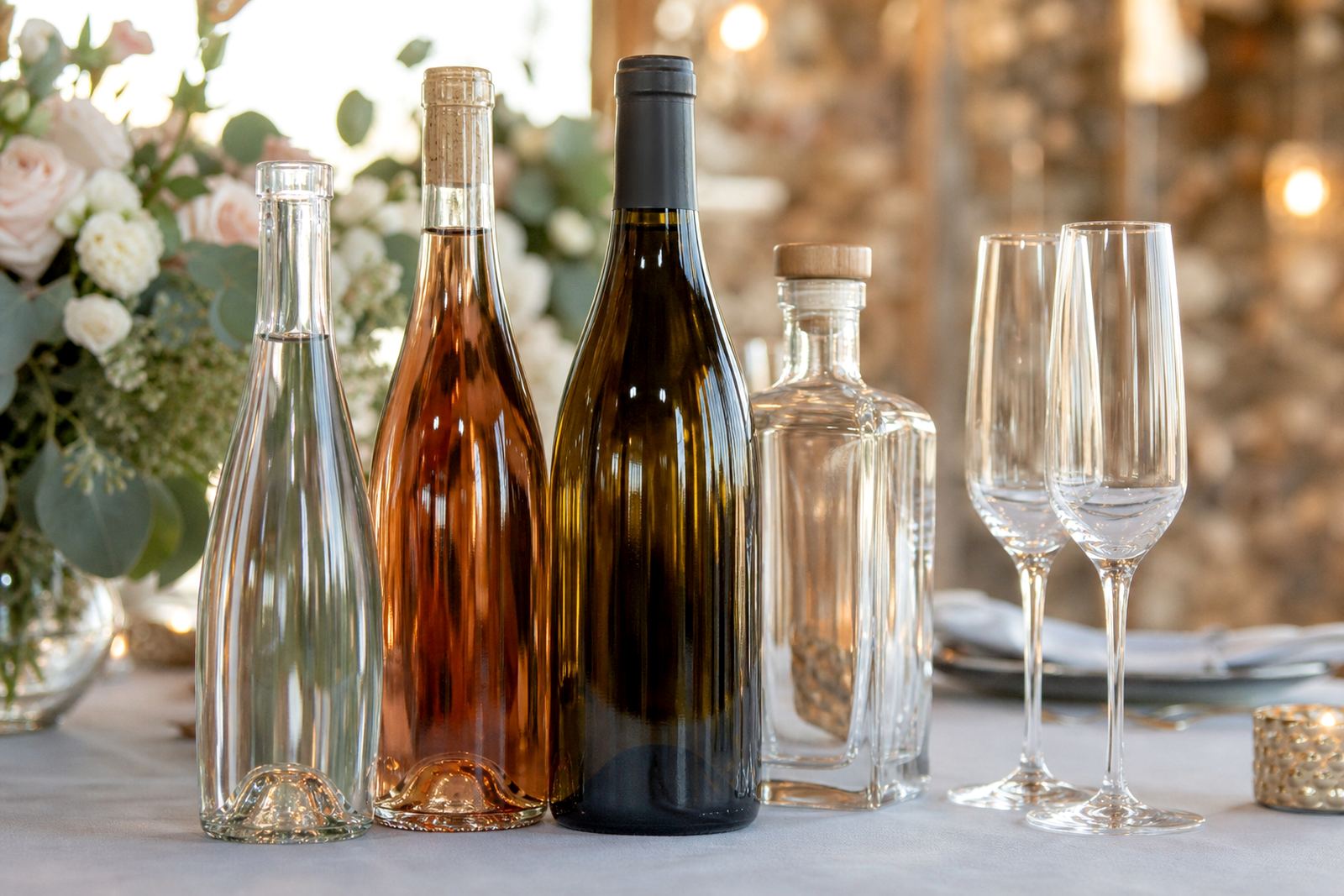
The order came from an event team in Gqeberha planning a formal coastal function with branded bottles on tables and in gift boxes. They wanted a tidy look across wine bottles, gin bottles and water bottles, with each item carrying the same event identity but adjusted to suit the shape and finish of the container.
The brief was practical from the start. The bottles had to travel from Paarl to the Eastern Cape, then unpack with no scuffing on the print area and no loose labels shifting in transit. The client also needed artwork support for a mixed set of bottle sizes, because the print space on a tall wine bottle is very different from a narrow gin bottle or a straight-sided water bottle.
Bottle types and decoration methods used
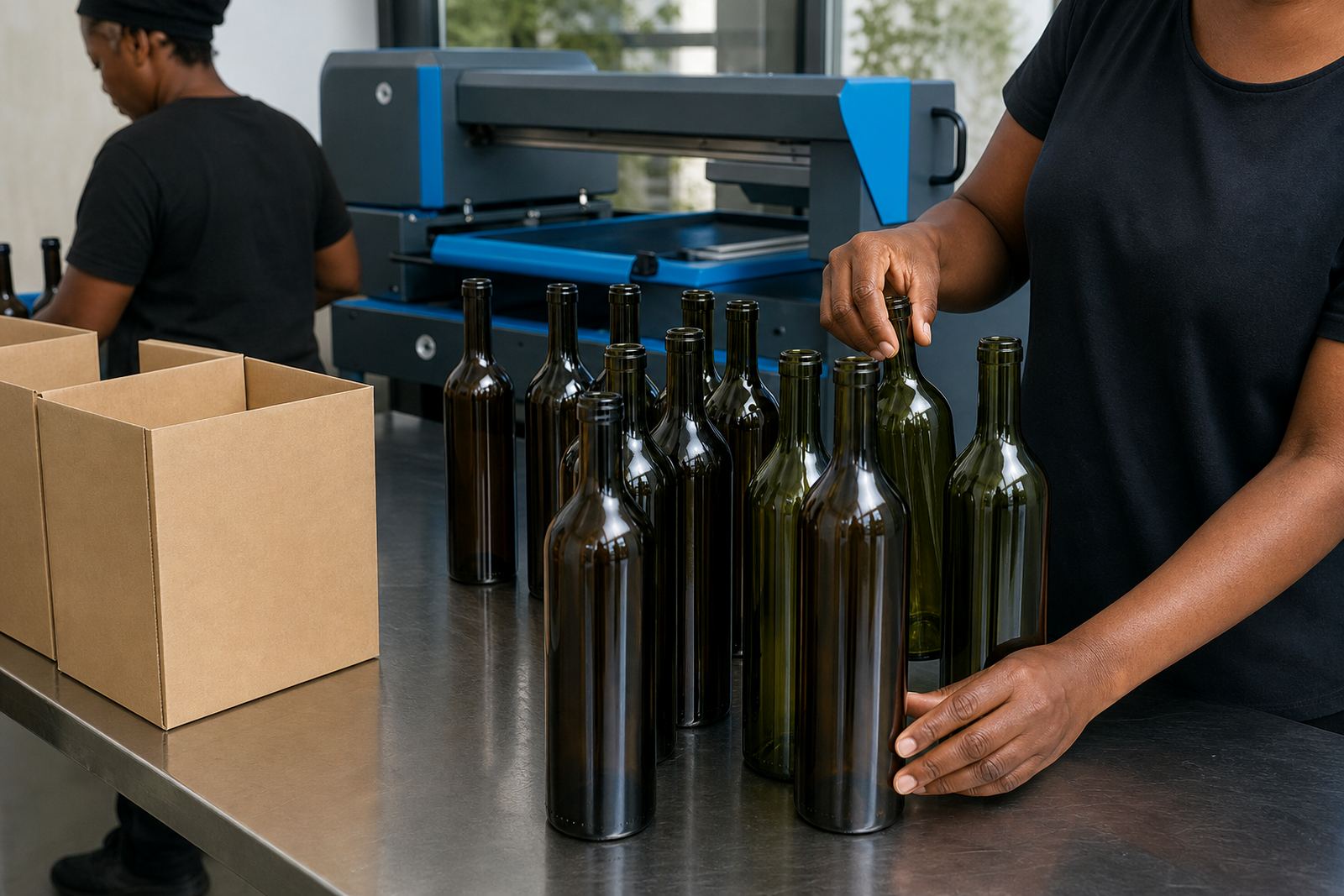
We worked on glass wine bottles, glass gin bottles and refill-style water bottles, then matched the decoration method to the surface and the artwork. UV direct print was the best fit for sharp event graphics on glass, while screen printing suited areas where solid colour blocks and repeatable coverage mattered more. For a few pieces, labels were the cleaner option where the artwork needed a flexible print area or a changed bottle shape.
Where the design called for a bright base on darker glass, we added white ink layers to keep the artwork readable. Ceramic enamel was discussed for a more durable finish on select glassware, especially where handling would be repeated during service. The mix gave the client one visual language across different bottle forms without forcing every item into the same method.
- UV direct print for fine detail and short runs on glass
- Screen printing for solid colour and cleaner repeat work
- Ceramic enamel for a harder wearing decorative finish
- Labels where the layout needed a larger printable panel
Artwork checks before anything went to press
Before production, we reviewed the supplied artwork and adjusted it for the print areas on each bottle type. That meant checking logo size, spacing, line thickness and how the design sat on curved glass. Small changes at this stage save trouble later, especially on short runs where each bottle has to look consistent and present well under event lighting.
We also prepared mock-up visuals so the client could see where the print would sit on the bottle neck, shoulder and body. Proofs were supplied for sign-off before the run started, including colour guidance for areas that needed a stronger match on glass. One part of the artwork used a pale tone and needed a firmer white underlayer, otherwise it would have lost impact on the bottle surface.
- Artwork resized to suit each bottle profile
- Proofs checked for placement and colour balance
- Print areas planned for shoulder, body and label zone
- White ink layers added where the base needed lift
Packing for the road to the coast
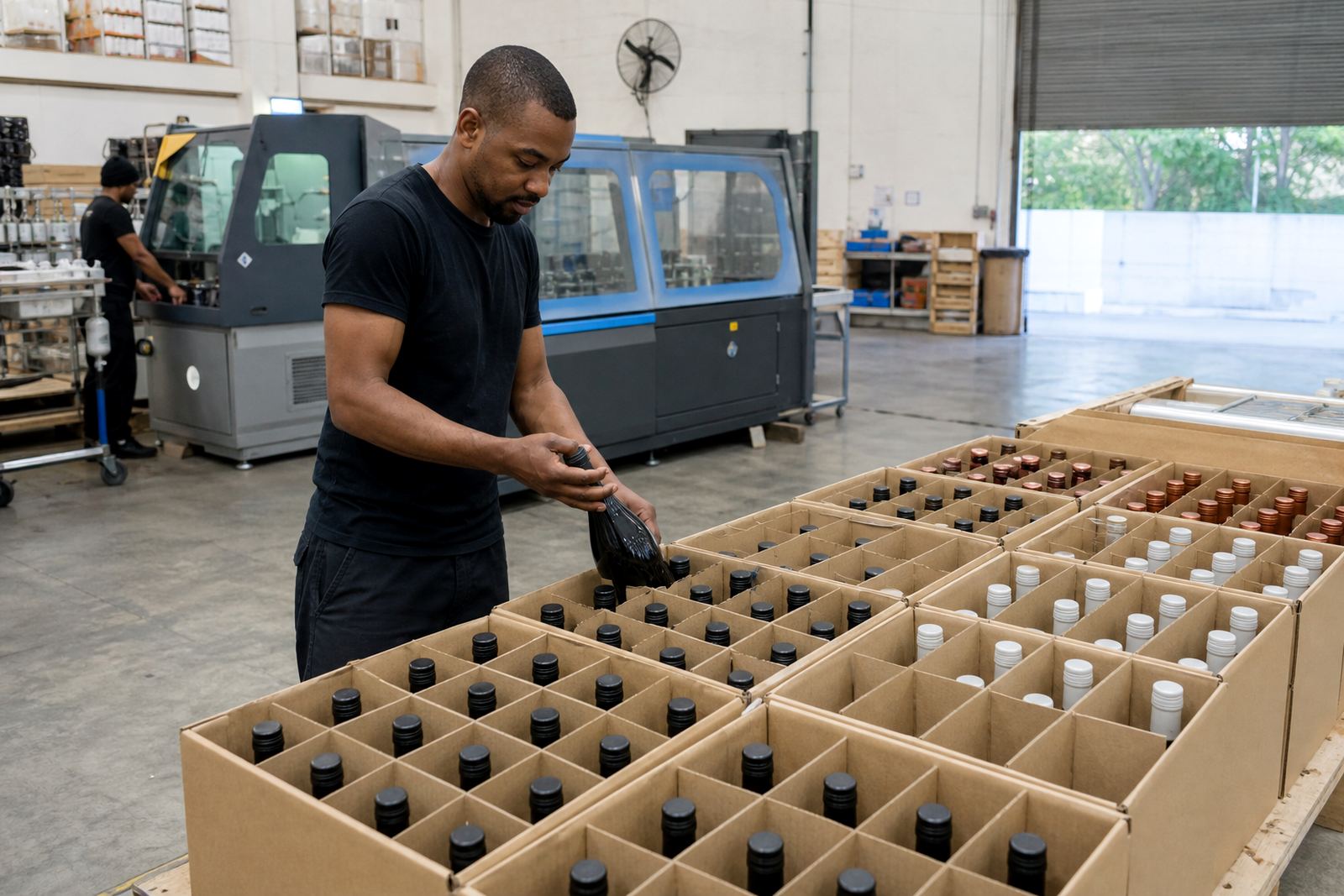
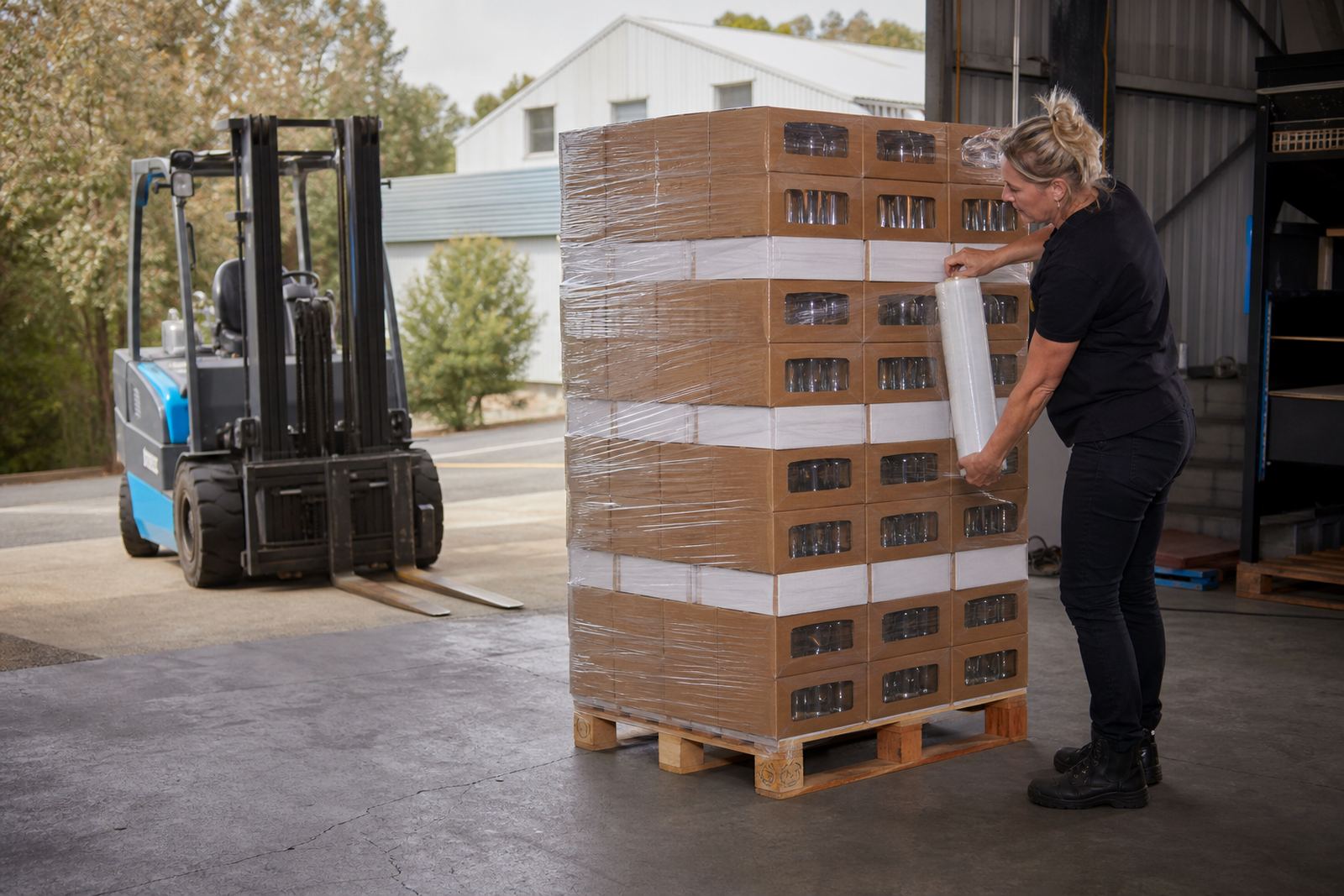
Because the bottles were travelling a long distance to Gqeberha, packing mattered just as much as print finish. Each pack was grouped by bottle type and labelled clearly, so the event team could separate wine, gin and water items without opening every carton. We used snug carton fill and steady internal packing to keep movement down during transport.
The route to the coast means heat, vibration and handling all need to be considered. Glass bottles can chip if they knock together in transit, and printed surfaces can mark if the wrap is too loose. Our packing brief focused on separation, stacking stability and easy handling on delivery at the venue or storage point.
- Separated cartons for each bottle type
- Internal packing to reduce movement during transit
- Clear carton labels for faster sorting on arrival
- Protected print faces to limit scuffing in handling
Run size and timing in weeks
This was a short run rather than a full retail batch, which suited the event format and kept the order focused on the exact quantity required. Short runs are useful where a function needs a fixed number of bottles and the artwork is specific to a date, venue or programme. We planned the print stages around proof approval, bottle prep and final packing before transport.
From initial brief to dispatch, the order took just over three weeks to complete. That allowed time for artwork checks, a proof round and production on the selected bottle mix without rushing the finish. For an order headed to a coastal event, that extra planning helps avoid the kind of pressure that comes from trying to pack and ship at the last moment.
- Short run suited to a fixed event quantity
- Three weeks from brief to dispatch
- Production planned around proofs and packing
- Final cartons prepared for long-distance transport
Result on the event table
The finished bottles gave the event a unified look without forcing every vessel into the same decoration method. The print held cleanly across the different bottle shapes, and the packing arrived in a condition that suited immediate use. The client wanted bottles that felt planned rather than patched together, and the final set did that job without overcomplicating the order.
For us, the useful part of this project was the mix of method, bottle type and transport planning. A good short run is not only about print quality, it is also about getting the right artwork onto the right surface and keeping it protected until it reaches the table or gift pack. That is the part we would handle the same way on a similar coastal event order.
Gqeberha orders travel a long way by road, so the proof stage stays tight, each bottle gets its own decoration method and the cartons are packed for the trip.
Project summary for organisers and venue teams
This order suited a team that needed branded bottles for a single event, with a neat finish across different bottle shapes and a packing plan suited to delivery beyond the Western Cape. The mix of UV print, screen print, labels and selective white ink layers gave the artwork enough flexibility to work across glass and drinkware items.
If a function calls for short-run bottle decoration with proof approval and transport planning, the same process can be shaped around the bottle profile, artwork and destination. Coastal humidity, event handling and travel distance all matter, and they were all part of this run.
Key facts
| Project | Gqeberha Event Run |
|---|---|
| Base | Paarl, Cape Winelands |
| Destination | Gqeberha, Eastern Cape |
| Bottle types | Wine bottles, gin bottles and water bottles |
| Decoration methods | UV direct print, screen printing, ceramic enamel and labels |
| Timeline | 3 weeks from brief to dispatch |