Rose Bottle Forms That Carry Front Labels Cleanly
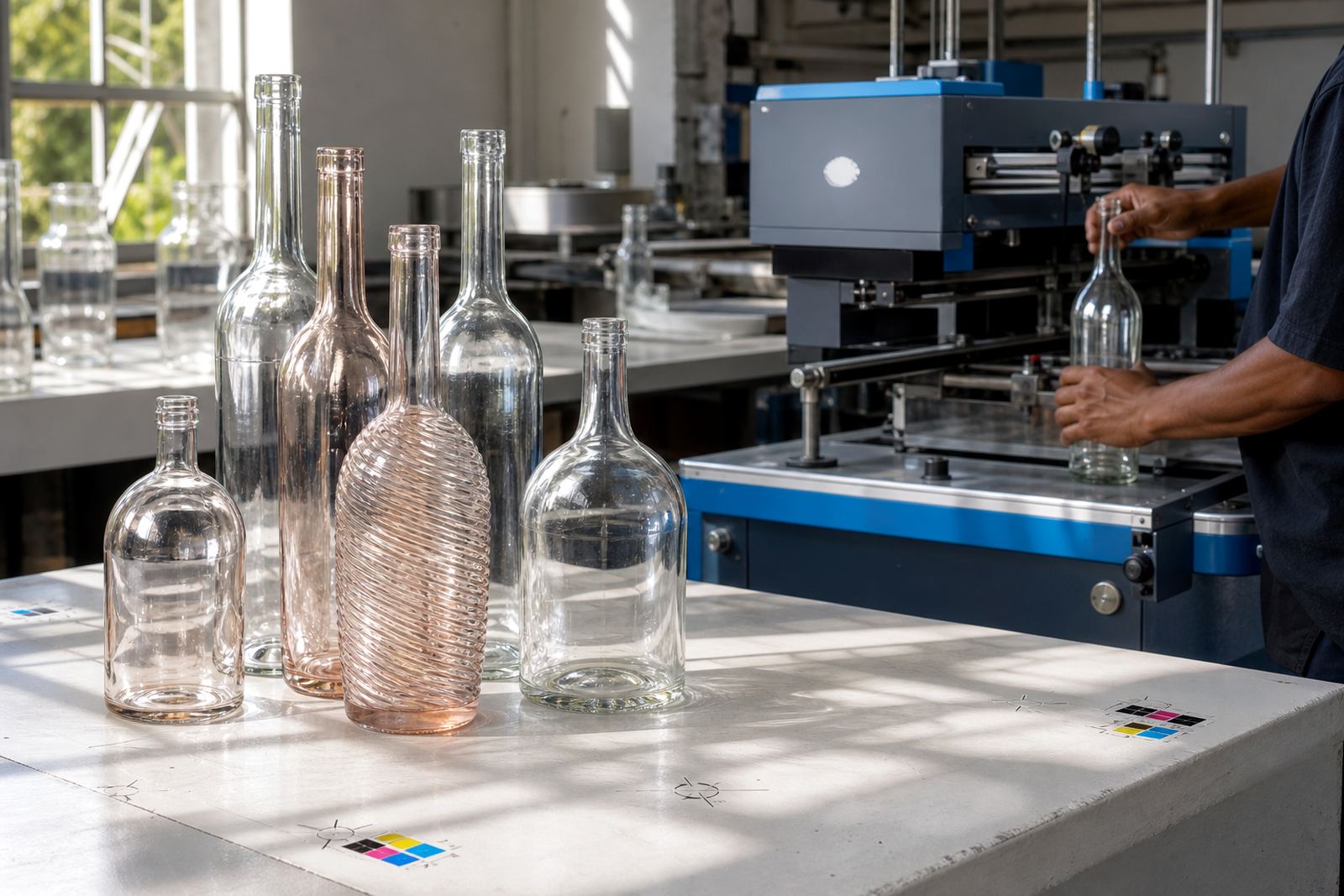
Rose bottles are often chosen for still wine, flavoured water and presentation packs where the colour of the glass already does part of the work. The most useful formats are the slim 375 ml, the familiar 750 ml wine bottle and selected 250 ml to 500 ml drinkware pieces for tastings or hospitality use. On this kind of bottle, the decoration has to sit square to the viewer, with enough breathing space around the mark so the curve does not pull the layout out of shape.
We work with clear, frosted, green and lightly tinted glass, plus bottles used for gin, rosé wine, sparkling water and table service. The front panel usually carries the main mark, while the rear panel can take small batch details, a tasting note or a secondary logo if the bottle shape allows it. For short runs, the artwork has to be planned with the real print area in mind, not just the flat label artwork on screen.
- Common rose bottle sizes: 250 ml, 330 ml, 375 ml and 750 ml.
- Typical materials: glass, thick-walled glass and selected drinkware surfaces.
- Best suited to front-facing branding, tasting sets and gifting packs.
Decoration Methods Used On Rose Bottles
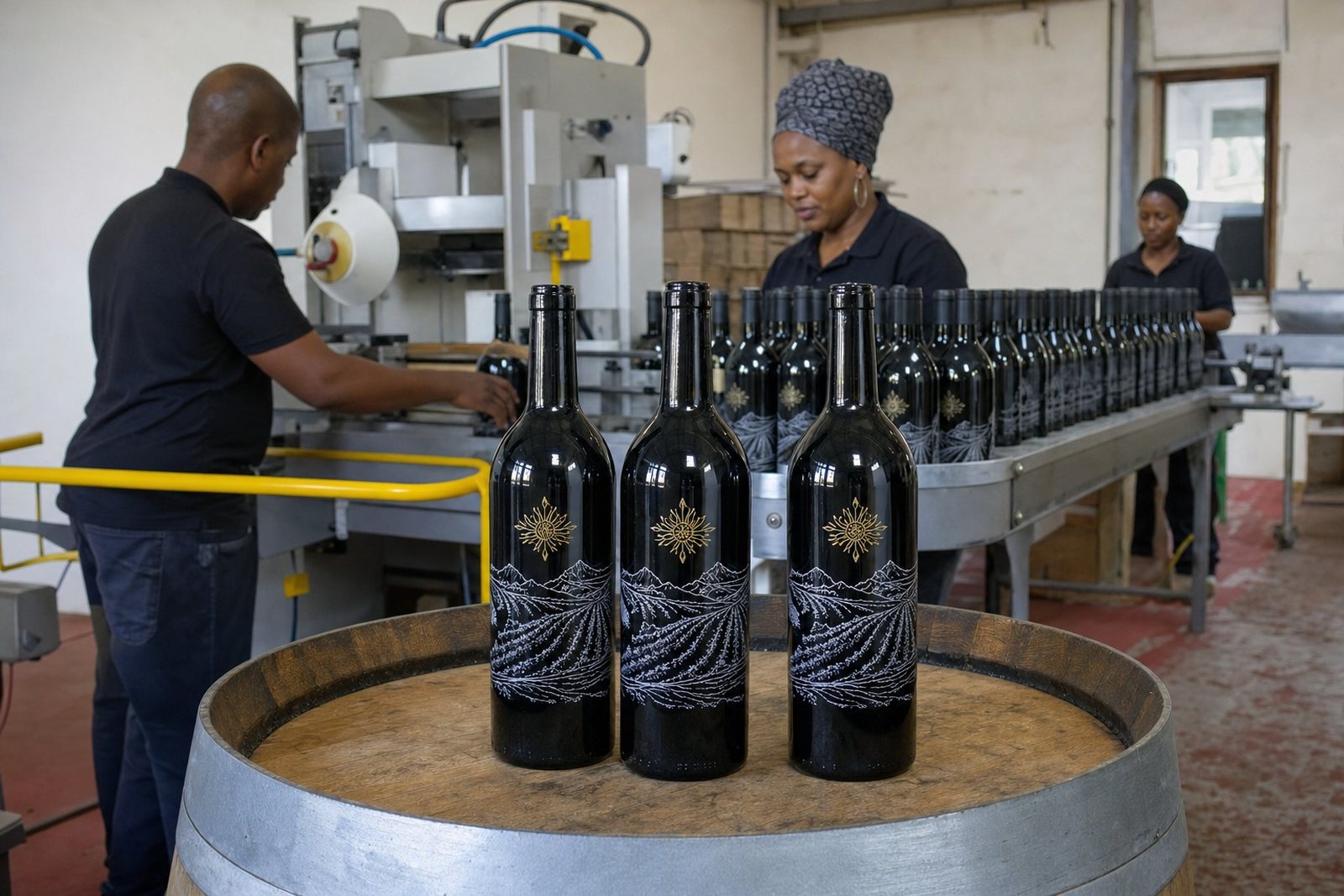
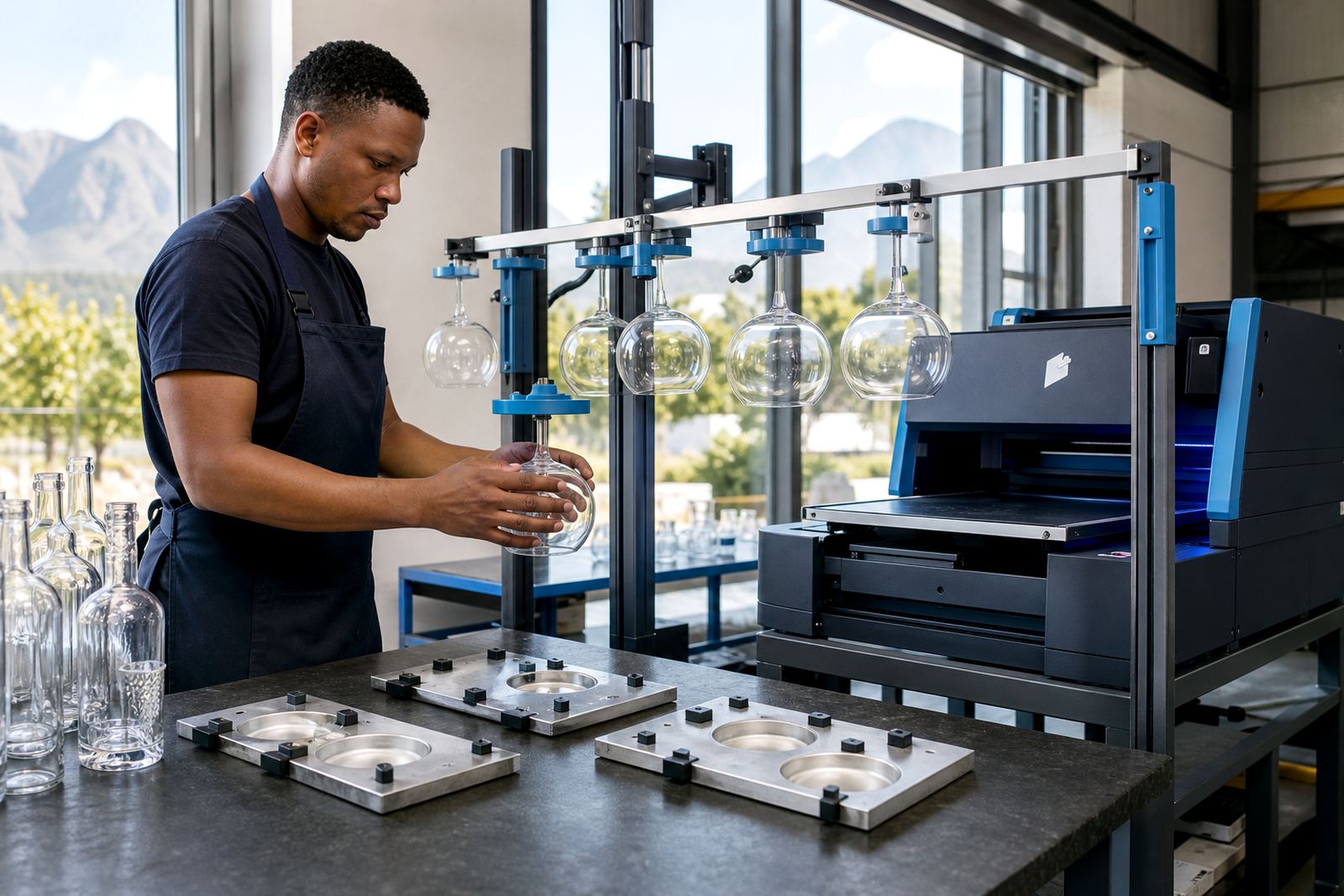
Different bottle finishes need different methods. UV direct print is useful where crisp colour and sharp text are needed on glass, especially for shorter runs and mixed artwork. Screen printing is often preferred for solid colour logos, bold marks and repeat decoration where a strong opaque finish is wanted. Ceramic enamel works well on bottles that will face regular handling and washing, with the ink cured for a harder finish. Labels are still a practical route when artwork has fine detail, variable information or a design that wraps further around the bottle.
The method is matched to the bottle surface, the colour of the glass and the amount of handling the pack will see. White ink layers are often needed on dark or tinted glass to keep colours readable. On clear rose bottles, a lighter layout may be enough, while frosted glass usually benefits from a stronger contrast. We also check the edge distance near the shoulder and base so the print sits properly and does not crowd the glass.
- UV direct print for detailed artwork and short production runs.
- Screen printing for bold logos and solid spot colours.
- Ceramic enamel for a tougher fired finish on suitable bottles.
- Labels for wrap styles, variable text and flexible artwork setups.
Artwork Placement That Works On The Bottle
Rose bottle artwork is rarely about filling every spare millimetre. A cleaner result usually comes from a centred logo, a clear type line and a controlled print area that respects the bottle curve. If the neck tapers sharply or the shoulder drops quickly, the visible panel can be smaller than expected, so the artwork needs to be checked against the actual bottle drawing before print approval.
We prepare proofs that show the artwork position, the edge margins and any white ink layer or label border needed for the job. For metallic, pale or transparent artwork, a proof helps confirm how much contrast will carry on glass. If the design includes a crest, tasting notes or a seasonal message, those parts are arranged so they do not crowd the main mark or disappear into the curve of the bottle. A neat label line or direct print block often works better than a busy wrap on this format.
- Proofs show placement, sizing and the final print area.
- White ink layers are mapped where glass colour needs extra contrast.
- Label artwork is set with bleed, trim and safe margins.
Best settings for rose bottles
Rose bottles suit winery ranges, distillery releases, corporate gifting, seasonal launches and event pour service where presentation matters. In Paarl and the wider Cape Winelands, they are often used for tasting room sales, gift packs and small-batch bottlings. In Cape Town, Stellenbosch and Franschhoek they work well for hospitality sets and promotional gifting. Johannesburg and Durban orders usually lean toward corporate hampers, private labels and event stock that needs a polished shelf presence.
For event organisers, rose bottles can be printed to match table settings, launches or end-of-year packs, with a single colour or a fuller branded finish depending on the run. Drinkware pieces in the same visual family can be matched to the bottle artwork for a cleaner set. Because the format is visible at arm’s length, the decoration needs to stay legible in softer light, strong daylight and busy service spaces.
- Good for winery retail, distillery gifting and event packs.
- Useful for tasting rooms, hampers and presentation sets.
- Works across South African delivery routes, including coastal and inland orders.
Packing, Handling And Care After Print
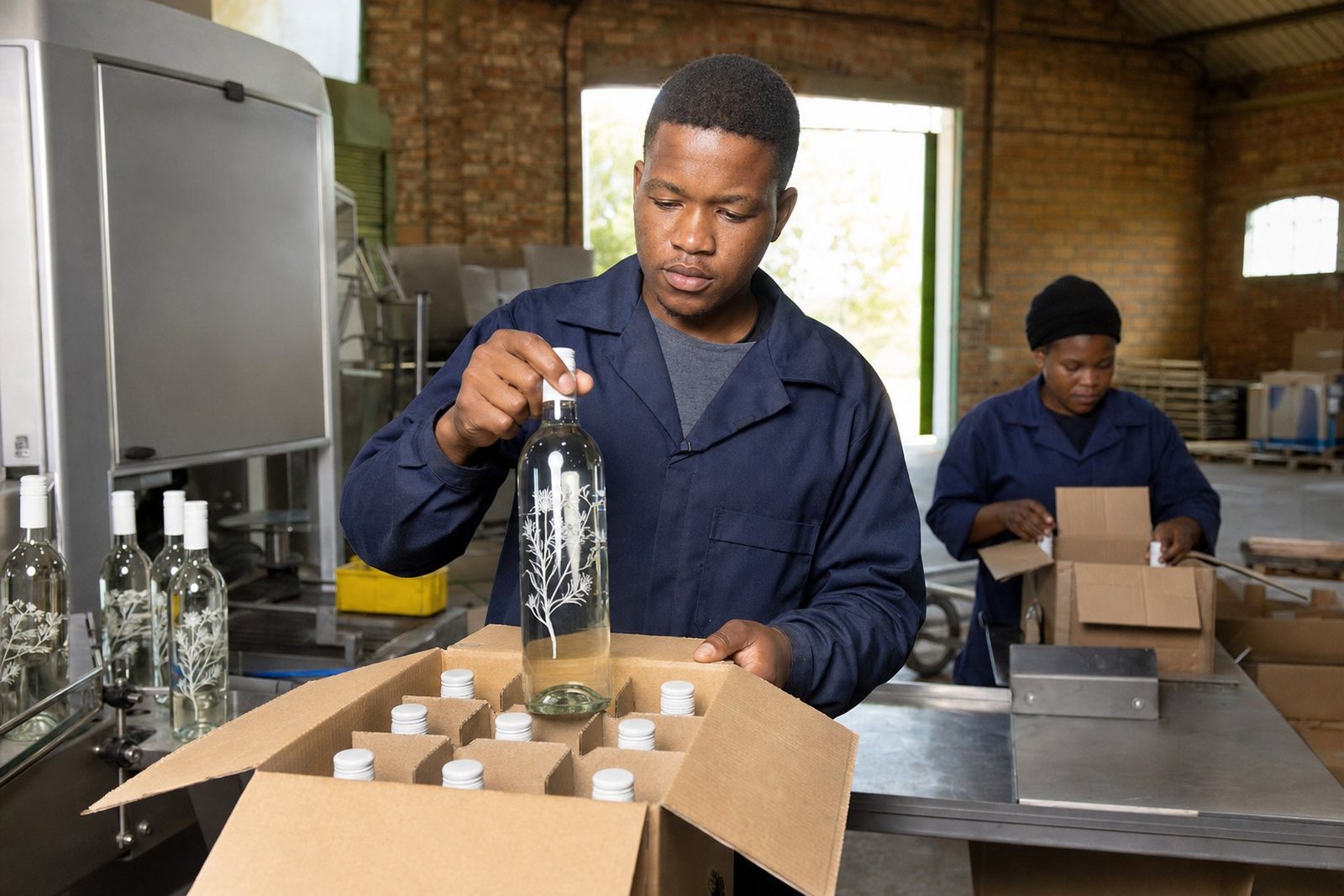
After printing, rose bottles need careful packing so the finish stays neat through transport and stacking. Labels should be allowed to settle properly before heavy handling, and printed glass must be protected from sharp contact points inside cartons. For ceramic enamel or cured decoration, the bottle still needs sensible handling during filling and packing, especially where the glass has a slimmer shoulder or a narrow base.
For care, plain water and a soft cloth are the safest starting point for decorated glass. Harsh scouring pads can mark labels and dull some printed finishes, so they are best avoided. If the bottle will be washed and reused, the decoration method has to be chosen with that use in mind. Direct print, screen print and ceramic enamel each behave differently under washing, so the final decision depends on the intended use and the surface the bottle carries.
- Use carton inserts or separators for transport and storage.
- Keep decorated surfaces away from abrasive scrubbing.
- Plan washing and reuse around the print method selected.
Order Information to Confirm Before Production Starts
To set up rose bottle printing properly, the bottle size, neck style, glass colour and finish all need to be checked first. The print method, artwork position and any secondary label area should be confirmed before production starts, especially where the bottle has a curved shoulder or a narrow front panel. Minimum runs vary by method and bottle type, and the right quantity depends on whether the job is for a tasting release, a gifting run or a full event allocation.
It also helps to confirm whether the bottle will carry one decoration area or more than one, plus whether the design needs white ink, a metallic detail or a specific colour match. If the order includes mixed bottle types, each one should be listed clearly so the print area can be set correctly. Our team handles artwork checks, print area planning, colour guidance, proof approvals, mock-up visuals, label artwork setup and packing briefs from Paarl for delivery across South Africa.
- Bottle size, glass colour and shoulder shape.
- Decoration method and print positions.
- Artwork file type, wording and any white ink need.
- Run quantity, pack style and delivery destination.
Key facts
| Product | Rose bottles with branded decoration |
|---|---|
| Typical sizes | 250 ml, 330 ml, 375 ml, 750 ml |
| Materials | Glass, frosted glass and selected drinkware surfaces |
| Decoration options | UV direct print, screen printing, ceramic enamel, labels |
| Artwork support | Proofs, mock-up visuals, print area planning, colour guidance |
| Delivery areas | Across Constantia, Somerset West, Durban, Johannesburg, Franschhoek, Stellenbosch, Cape Town and Paarl |