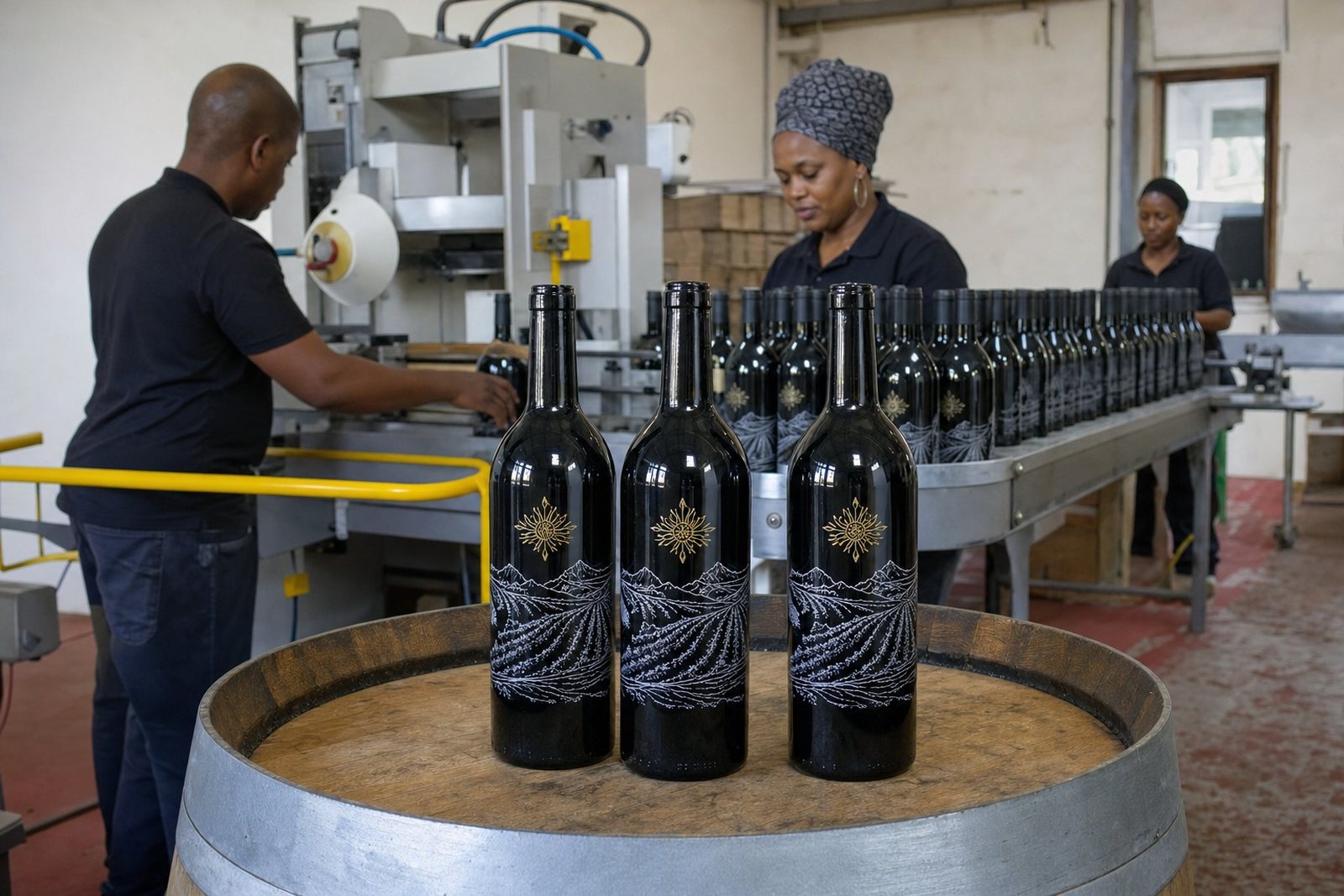
750ml bottles that suit cellar doors, launches and gifting
The 750ml format is the standard bottle size most South African wine buyers recognise at a glance, which makes it a practical choice for short runs, seasonal releases and mixed gift packs. We work with clear and coloured glass bottle styles for still wine, sparkling-style presentation bottles and presentation pieces that need printed branding or applied labels.
These bottles are usually specified for launch stock, tasting room retail, club packs, corporate gifting and event bars where the bottle itself carries part of the presentation. The finish can be kept understated with a single-colour mark, or taken further with label sets, white ink underlayers and full-wrap decoration where the artwork allows it.
- Standard 750ml wine bottle format for still wine presentation
- Clear or coloured glass options, depending on the look required
- Suitable for short runs, pilot batches and seasonal bottling
- Works with direct print, labels and mixed decoration packs
For cellar-door use, the bottle needs to carry legible branding from a short distance and still hold up under cooler storage, handling and transport. In many cases the bottle finish is chosen to match the closure, carton and label set so the full pack reads as one piece.
Decoration methods used on glass and drinkware
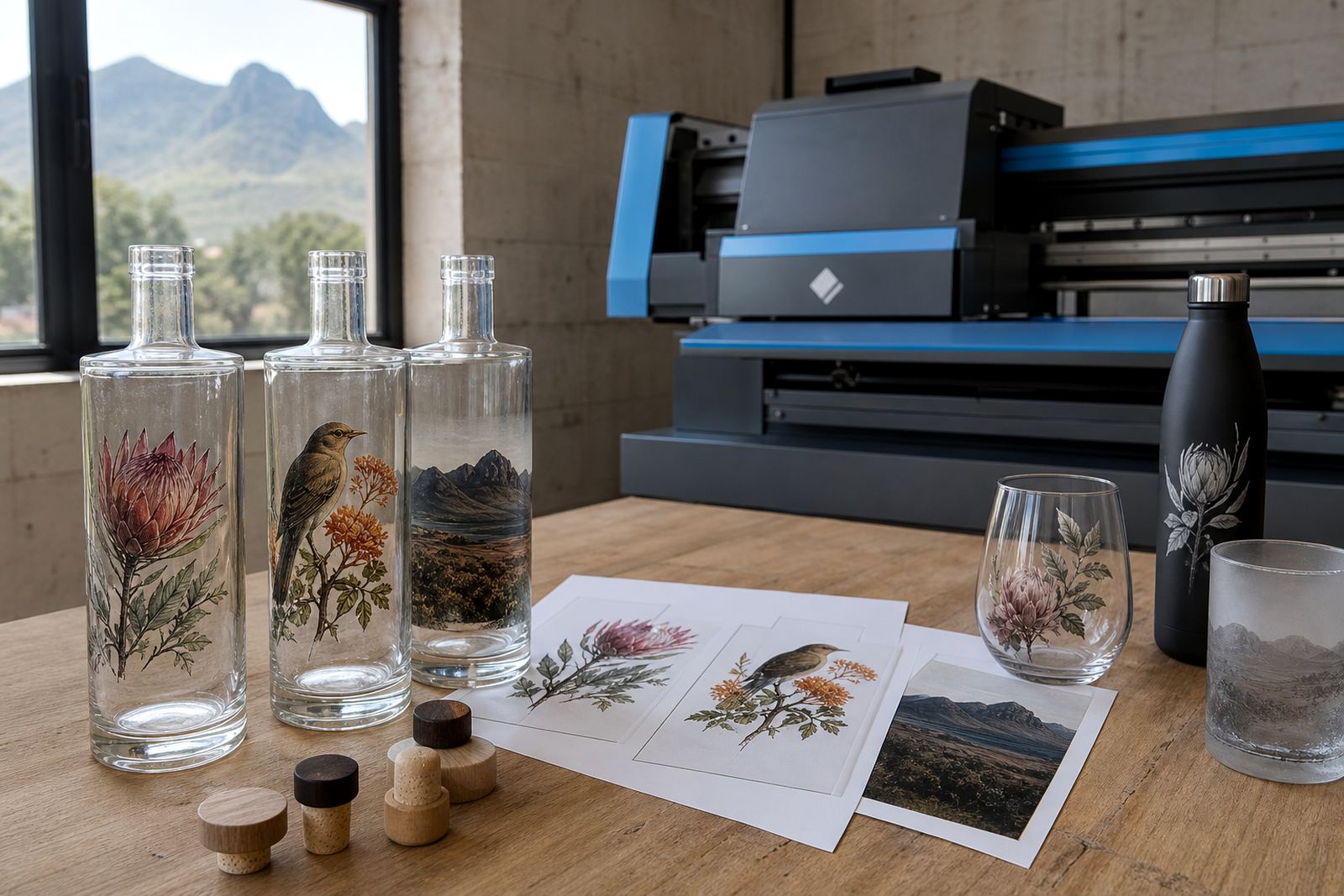
Different bottle surfaces call for different print methods. UV direct print is used where a clean graphic image or block colour needs to sit on the glass with tight registration. Screen printing is useful for solid logos, simple marks and repeats on a consistent bottle shape. Ceramic enamel is chosen where a fired finish is required for a more permanent result on suitable glass. Labels remain the most flexible option when artwork changes often, when multiple versions are needed, or when the bottle surface and embossing leave limited print space.
White ink layers are often added under colour on darker glass, tinted glass or transparent bottle areas where the artwork needs lift. That matters on green and amber bottle styles, and also on clear bottles used for water or spirit gifting where the branding needs to read properly against the liquid and background.
- UV direct print for fine detail and compact branding
- Screen printing for bold marks and repeatable colour blocks
- Ceramic enamel for a hard-wearing, fired finish on suitable glass
- Labels for flexible artwork, variable sets and larger visual areas
Not every bottle shape suits every method. Shoulder curves, embossing, punt depth and neck length all affect how much print space is available and where the artwork can sit without distortion. That is why print area planning forms part of the job before production starts.
Artwork, proofs and print area planning
Every short run needs its artwork checked against the actual bottle dimensions, not just the graphic file on a screen. We review bleed, clear space, text size, bottle curvature and the way colours will sit on glass or label stock. Where a design needs white ink, the underbase is drawn into the artwork file at proof stage.
Proofs are prepared before a run begins so the placement, scale and colour relationships can be checked against the bottle type. That includes label outline, direct print position, repeat placement and any notes for mixed packs where a still wine bottle may need to sit beside a companion bottle or glass item.
- Artwork checks for font size, registration and bottle curvature
- Mock-up visuals for position and overall pack balance
- Proof approvals before production starts
- Label artwork setup for cut lines, panel spacing and wrap layout
For wineries and distilleries in the Cape Winelands, proofing also helps keep branding consistent across tasting-room stock, gifting cartons and event pieces. A label that reads well on a flat screen can shift once it wraps a bottle, so the proof stage matters more than many people expect.
When 750ml wine bottles make sense
This format is used widely for cellar-door sales, tastings, launch stock and hospitality gifting. It is also common in corporate packs where a bottle needs to carry a branded look without becoming oversized or awkward in presentation boxes. The 750ml shape is familiar to buyers, easy to stack and straightforward to pack for local and national delivery.
For launches and event gifting, the bottle often needs to work with a card sleeve, box insert or branded wrap. That is where packing briefs are useful, because the print placement has to work with the rest of the pack, not sit against it.
- Cellar doors and tasting-room retail
- Product launches and seasonal releases
- Corporate gifting and premium event packs
- Brand extension for mixed gift sets and mail packs
We also supply for regions beyond Paarl, including Cape Town, Stellenbosch, Franschhoek, Johannesburg and Durban. Coastal humidity can affect stored labels and finished packs, so stock planning and packing notes should match the route and storage conditions rather than assume every delivery will be handled the same way.
Packing, fitting and handling details
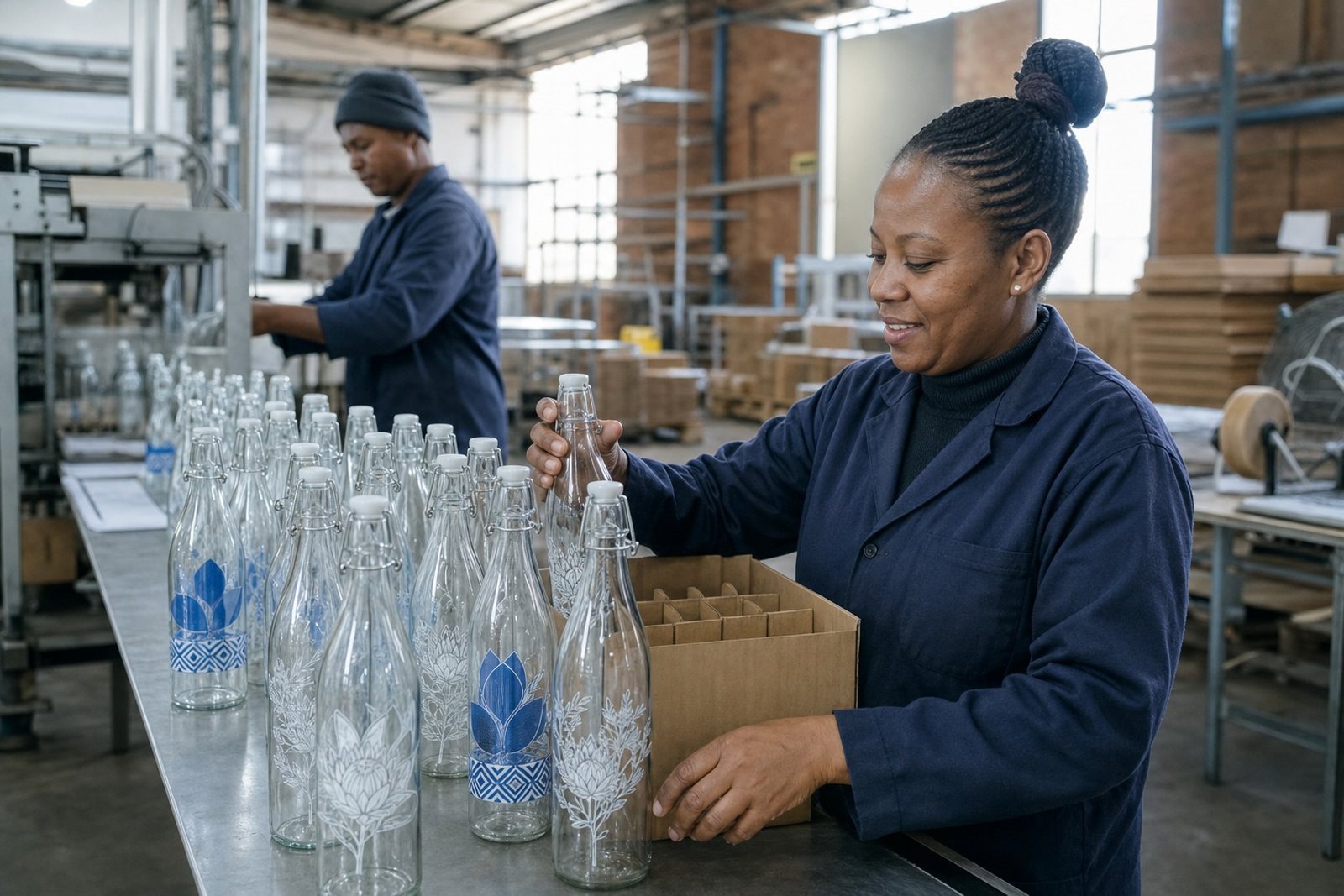
Most 750ml bottle jobs are completed off the bottle line and then packed for delivery as finished stock or as labelled sets. If a closure, capsule, carton insert or neck tag is part of the presentation, those items need to be noted before production so the artwork and pack sequence can be planned around them.
For printed glass, the bottle surface must be clean and properly cured before handling and carton loading. Some finishes need extra drying or curing time depending on the print method and the inks used. That is especially relevant where bottles are boxed in tight groups or moved between venues and storage points.
- Confirm closure type, carton size and pack sequence
- State whether bottles are for display, gifting or retail sale
- Note any embossing, tint or unusual shoulder shape
- Include pack labels, neck cards or sleeve requirements early
Where the bottle is part of a larger gift unit, the overall fit matters as much as the print. A bottle that looks right on its own can feel cramped once it shares a box with stemware, tasting notes or a second pack item, so measurements help avoid unnecessary rework.
Care, storage and order notes for branded stock
Printed wine bottles and labelled stock should be stored upright, away from direct heat and in conditions that keep the surface dry. Labels can lift if they are stored in damp rooms or packed against warm cartons too soon after production. Printed glass should be handled with clean hands and placed carefully into cartons to avoid scuffing around the print area.
For later bottle runs, it helps to keep the same vessel specification, artwork version and decoration method on file. A small shift in bottle weight, neck finish or glass colour can change how the print reads. If the next job needs a revised vintage line, different batch code or alternate pack note, that should be noted in the brief so the proof matches the final stock.
When sending details for a quote or production check, include the bottle style, intended decoration method, quantity, size of the print area, whether you want labels or direct print, and where the stock will travel. Send those notes with the artwork and any pack instructions on the contact form.
Key facts
| Product format | 750ml wine bottles for short-run branded decoration |
|---|---|
| Bottle types | Clear, green and amber glass options, subject to the required look |
| Decoration methods | UV direct print, screen printing, ceramic enamel and labels |
| Artwork support | Artwork checks, mock-up visuals, label setup and proof approvals |
| Typical use | Cellar doors, launches, gifting, events and retail packs |
| Delivery areas | Based in Paarl, we supply heavy-base bottles in Durban, Johannesburg, Franschhoek, Stellenbosch and Cape Town. |