Red wine bottles built for branding that needs space
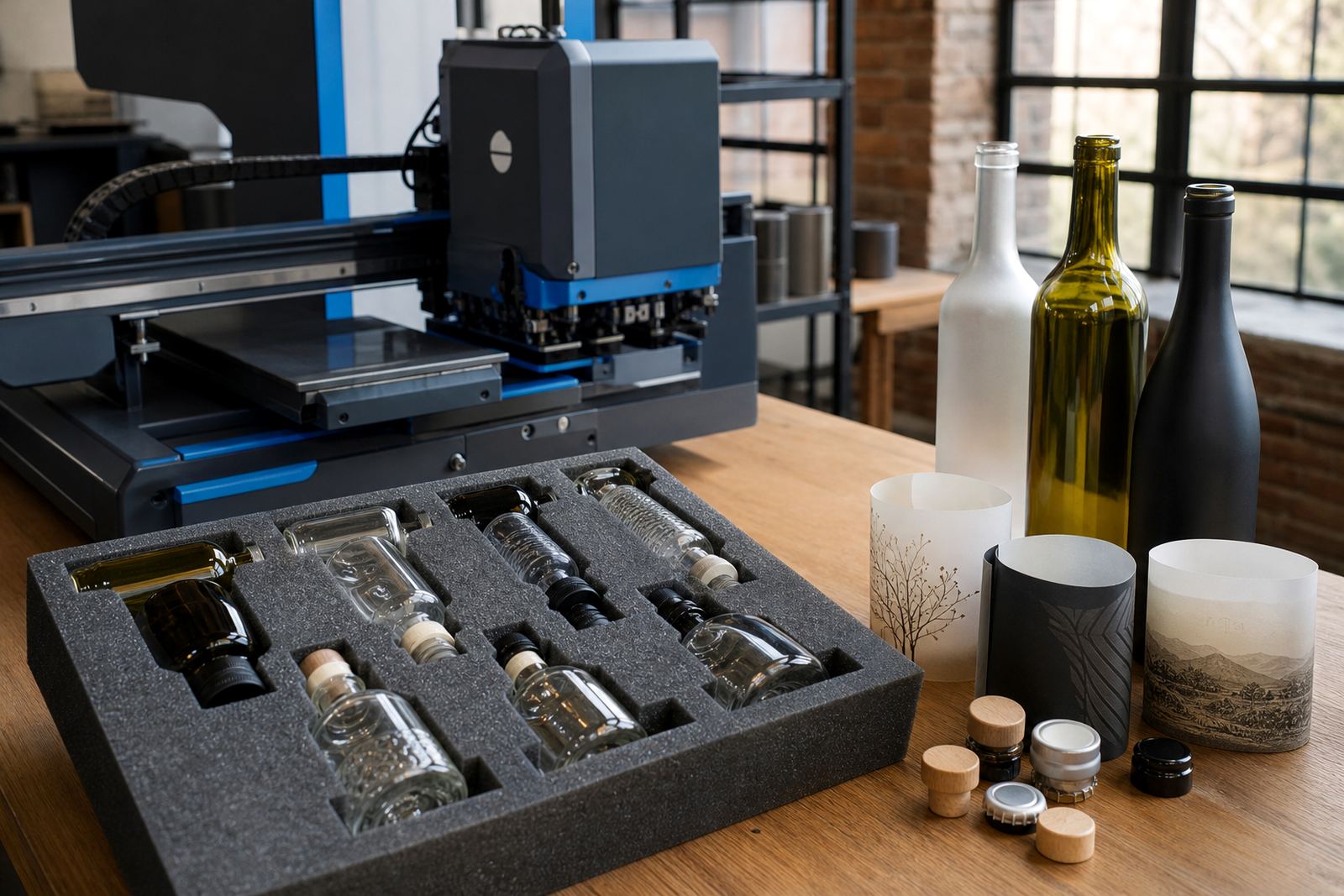
Red wine bottles are the familiar 750 ml format used for still reds, gift packs and event pours, with a shoulder, body and base that leave enough room for a label or direct print panel. Dark glass helps protect the contents from light, while the broad front face gives decent room for a varietal name, estate mark, tasting note or corporate message. For branded runs, the bottle shape matters as much as the decoration method because curved glass, shoulder height and punt depth all change where artwork sits.
We work with common red wine bottle styles used across the Cape Winelands and wider South Africa, including Bordeaux-style forms, heavier premium bottles and slimmer presentation bottles for gifting. Some bottles suit a large front label, others suit direct print on a flat section, and a few carry decoration best on one side only. If the bottle is for a boxed gift, mixed pack or a table setting, the label proportions and neck area should be set early so the pack looks balanced.
- Typical size: 750 ml
- Common glass colours: amber, olive and dark green
- Usual decoration zones: body, shoulder, neck and back panel
- Best for: varietal branding, commemorative releases and gift packs
Decoration methods that suit glass and short runs
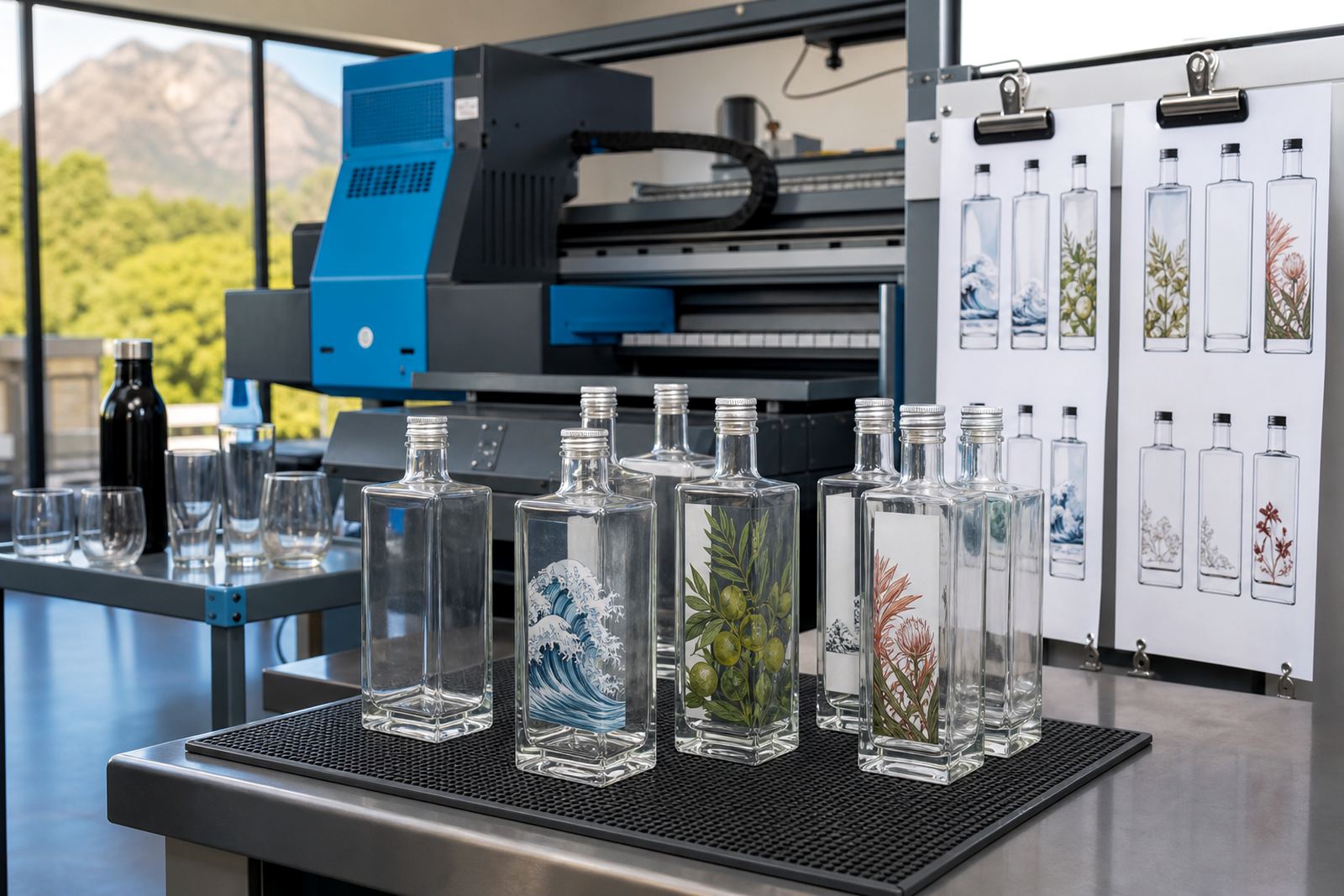
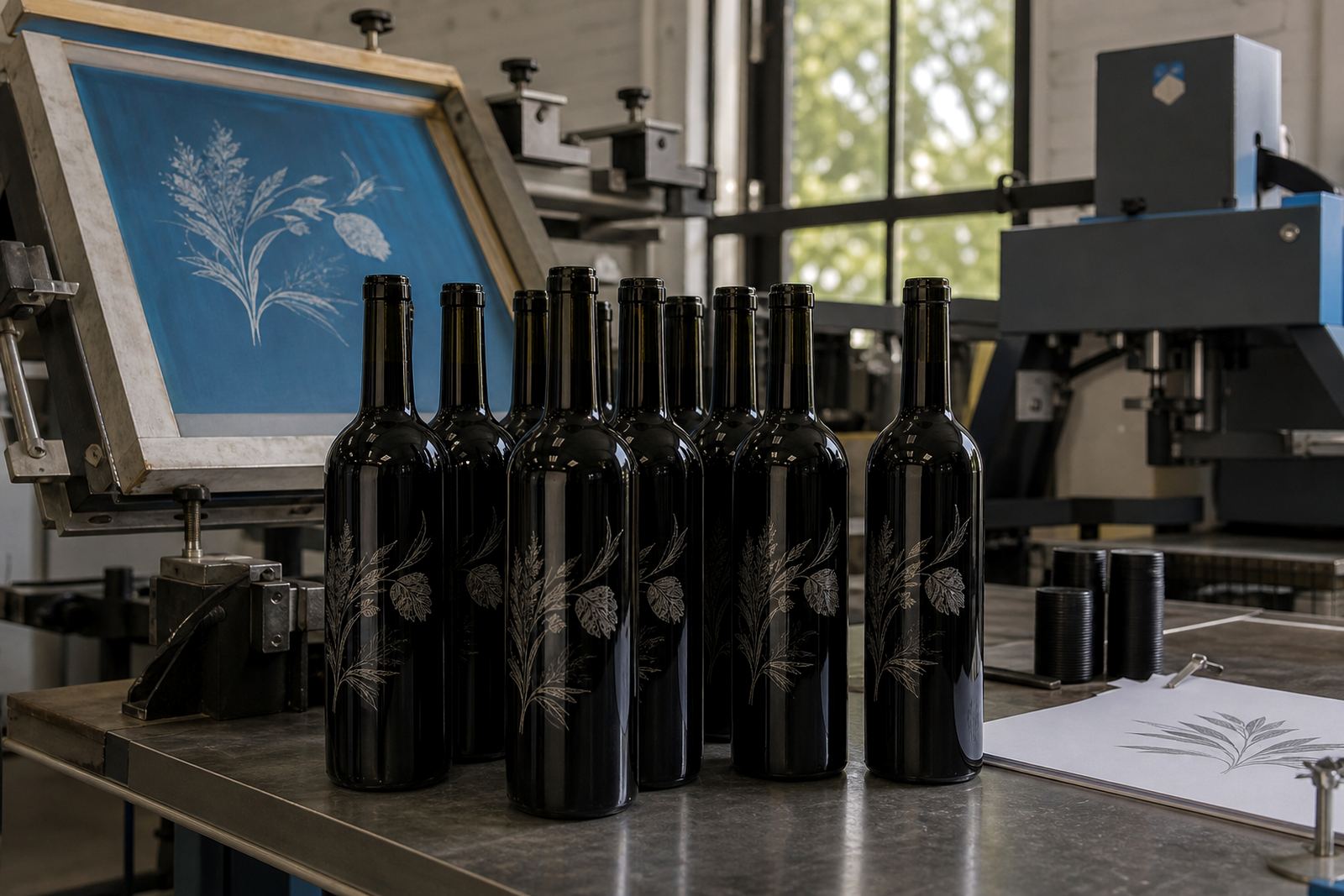
Different decoration methods suit different bottle surfaces. UV direct print works well when you want crisp artwork, blocks of colour and a fixed panel position on glass. Screen printing suits stronger ink coverage and can give a firmer, flatter finish on selected bottle shapes. Ceramic enamel is used where a fired or hardened decoration is required on suitable glass, while labels remain the most flexible option for very small runs, variable information or mixed bottle sizes.
Short runs need careful setup because a slight shift in bottle profile can throw off the print area. We check the neck length, shoulder radius, body diameter and label wrap before anything is approved. White ink layers may be needed on dark glass so colours hold their strength. Metallic effects, solid blacks and fine type all need a proper proof on the chosen bottle, not just on a flat artwork file.
- UV direct print: sharp detail and controlled placement
- Screen printing: strong coverage on suited glass surfaces
- Ceramic enamel: durable finish for selected bottle types
- Labels: useful for short, varied or information-heavy runs
What red wine bottles do well
These bottles are well suited to winery releases, cellar door gifts, corporate hampers, private function tables and event packs. In Paarl and across the Cape Winelands, they often go into seasonal gifting, tasting room retail and smaller release runs where the look must carry as much weight as the contents. The same format also suits distilleries that need a wine bottle shape for a still product, provided the label and decoration follow the right pack details.
For corporate gifting, the bottle often has to sit beside a box insert, ribbon, swing tag or personalised note card, so print placement should leave space for those extras. Event organisers also use red wine bottles for branded dinners, launches and awards evenings where the bottle stays on table display for the whole night. If the pack will travel to Johannesburg, Durban, Cape Town, Stellenbosch or Franschhoek, the finish should be planned with transit in mind, especially where boxes, dividers or chill storage are part of the brief.
- Cellar door retail and seasonal gifting
- Corporate hampers and hospitality packs
- Private events, awards and launches
- Short release runs for promotions or commemorative use
Artwork, proofs and the fit around the bottle
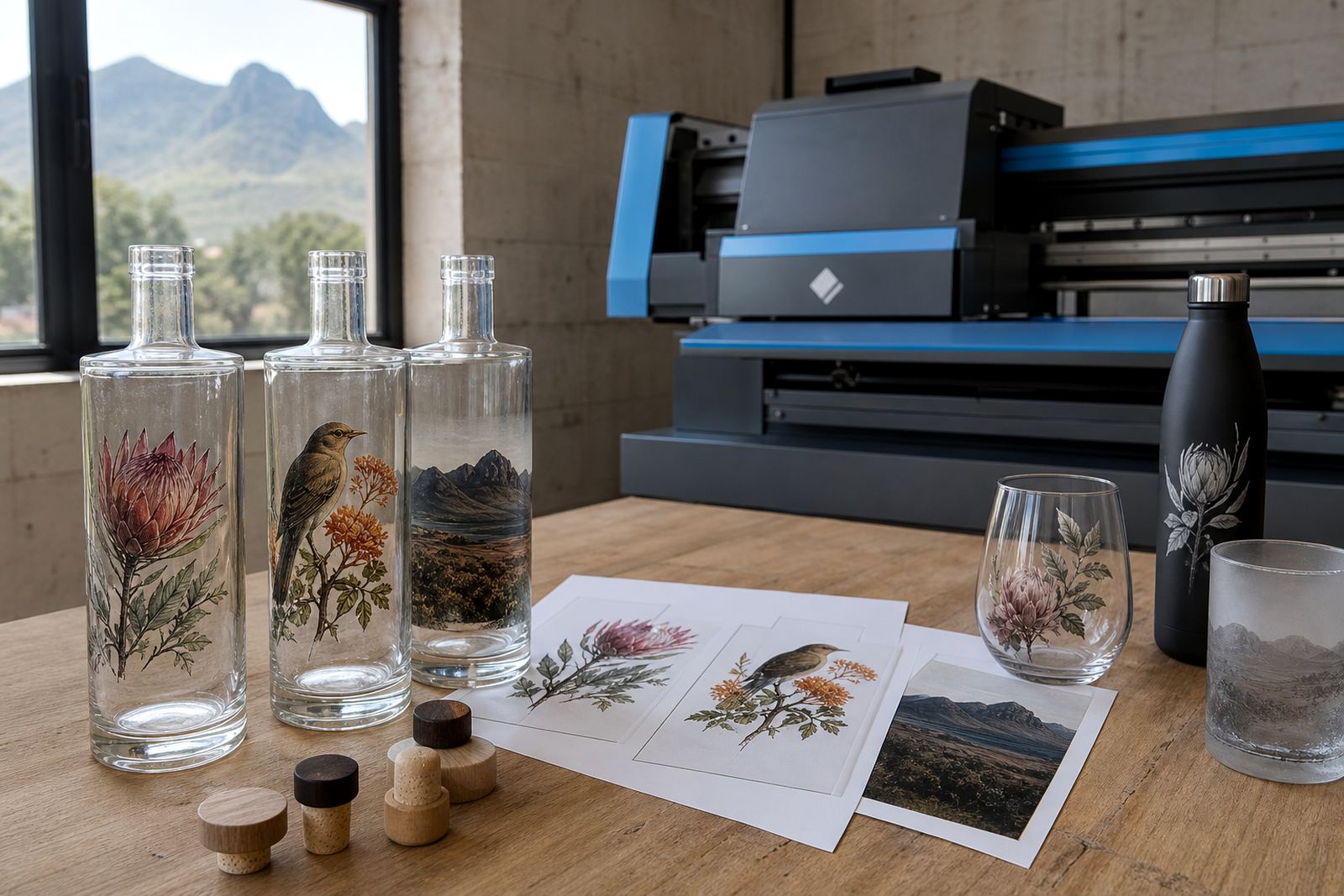
Artwork preparation starts with the actual bottle type, because the same design can read differently on a tall shoulder or a heavy base bottle. We check print area, safe margins and the amount of curvature before the file is approved for production. Proofs are prepared to show placement, colour balance and any white underprint that may be needed on darker glass. For label work, the bleed, trim, adhesive zone and wrap width all need to be right so the label sits square and does not crowd the shoulder.
If the run uses several bottle types, each one needs its own print or label setup. That includes bottle neck height, body diameter and the spot where the artwork must stop. A good proof saves time on the line and avoids problems with logos sitting too high, text dropping into the curve or a coloured area wrapping too far around the bottle.
- Artwork checks for print area and safe margins
- Proofs for colour, placement and scale
- Label artwork setup for wrap and trim
- White ink guidance for dark glass
Minimum runs, packing and the small details that matter
Short runs are common for red wine bottles, especially where a launch, wedding, estate release or hospitality event needs a modest quantity rather than a full production batch. Minimum runs depend on the decoration method and the bottle choice, with labels often offering the lowest entry point and direct print methods needing a firmer setup. For larger mixed packs, it helps to separate bottle types by decoration method so packing stays neat and the finished bottles keep consistent orientation.
Care matters after decoration as well. Printed glass should be handled with clean, dry hands and stored upright in cartons with enough separator protection to stop scuffing. Labels should be applied and packed once the surface is clean and dry, and decorated bottles should not be stored where heat, damp or direct sun can affect the finish. For deliveries across South Africa, especially coastal routes like Durban and the Cape coast, carton strength and packing material should suit the journey.
- Minimum run depends on method and bottle type
- Separator packing helps prevent surface scuffing
- Upright storage is best for finished bottles
- Carton strength matters for longer transport routes
Ordering details to pin down before production
Before a red wine bottle run is approved, the main points to settle are bottle size, glass colour, decoration method and whether the artwork is going on a label or directly on the glass. It also helps to confirm whether the bottle will be filled locally, stored for gifting, packed into cartons or used for an event set-up. If the brief includes a back label, neck label or batch variation, those details need to be folded into the proof so the set reads properly from every side.
We also need the intended quantity split if the run covers more than one size or artwork version. A bottle for a corporate gift set may need different packing from a bottle for cellar retail, and a bottle for a tasting event may need a simpler label than one meant for long shelf display. Bottle Printing Co. handles artwork checks, print area planning, colour guidance, proof approvals, mock-up visuals, label artwork setup, UV print prep, screen print prep, ceramic enamel prep, minimum run advice and packing briefs for red wine bottle work from Paarl, with delivery across South Africa.
- Bottle size and glass colour
- Decoration method and artwork position
- Label or direct print choice
- Quantity split, packing style and destination
Key facts
| Format | 750 ml red wine bottles for branding, gifting and events |
|---|---|
| Glass options | Dark green, olive and amber glass commonly used |
| Decoration methods | UV direct print, screen printing, ceramic enamel and labels |
| Artwork support | Checks, proofs, mock-up visuals and colour guidance |
| Minimum runs | Method and bottle dependent, with short runs supported |
| Delivery areas | Based in Paarl, we supply heavy-base bottles in Durban, Johannesburg, Franschhoek, Stellenbosch and Cape Town. |