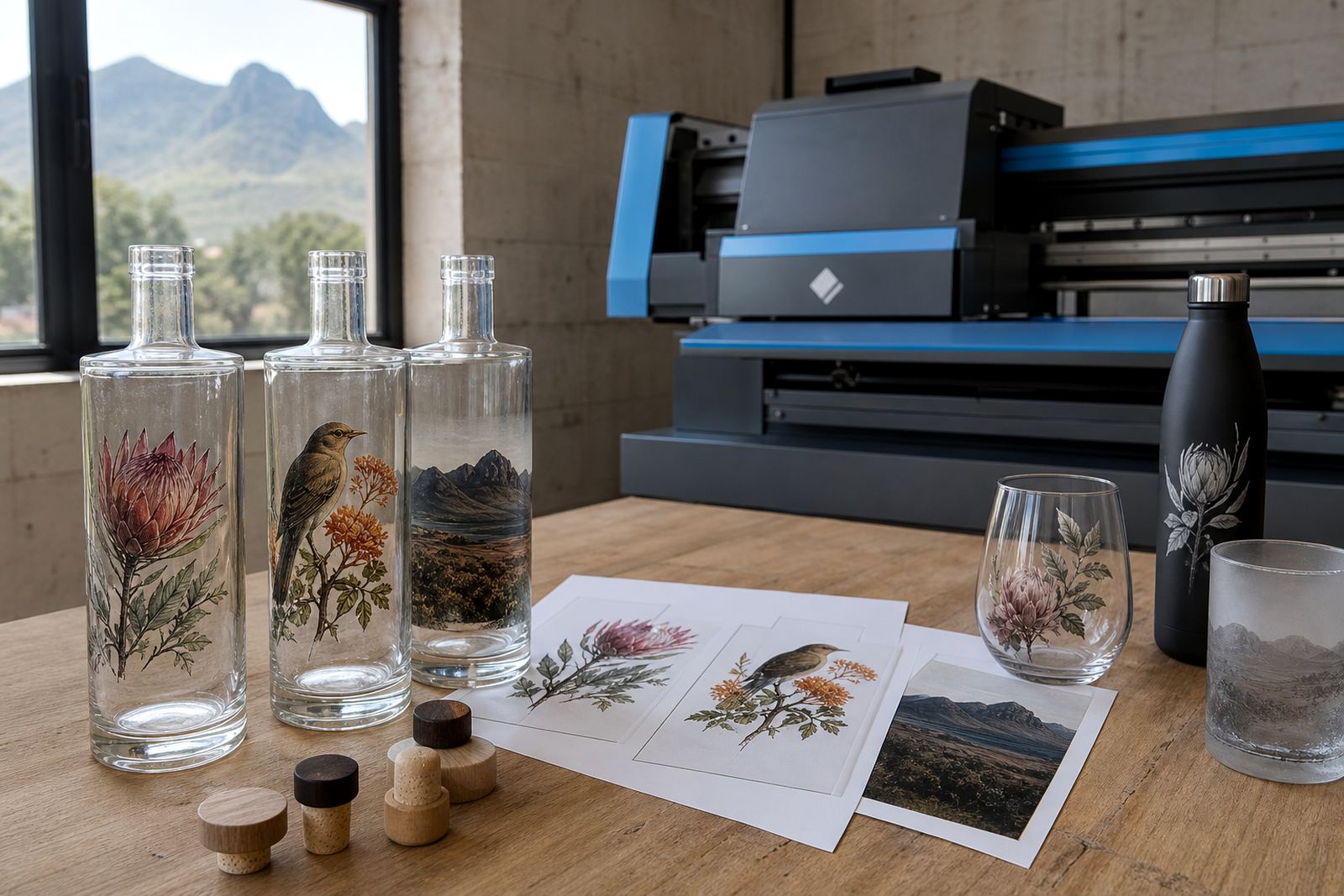
What round gin bottles suit best
Round gin bottles are used where the glass shape needs to carry a clean label, a direct print or a printed neck detail without fighting too many angles. The body is usually straight enough for front-and-back branding, while the shoulder and base help set the look of the pack on shelf or on a bar counter.
For short runs, the round format works well on clear glass, flint glass, amber glass and frosted glass. It also suits bottles with longer necks, heavier bases and smooth shoulder transitions. That matters when the artwork must stay readable on the curve and still sit neatly against the fill line, closure and capsule.
These bottles are used for gin launches, tasting room sales, distillery hampers and event gifting. They also work for corporate presents where the bottle carries a logo, event name or message without needing a full wrap of artwork.
Sizes, glass types and closure pairings
The most common round gin bottle formats sit in the 250 ml to 750 ml range, with 50 ml sample bottles sometimes used for sets or tasting packs. A 700 ml bottle is often chosen for retail-style presentation, while smaller bottles work for gifting, sampler trays and mixed packs. Taller necks can give a more premium feel, although the label area must still be measured properly.
Glass choice changes the final look. Clear glass shows the spirit colour and works well with white ink or opaque artwork. Frosted glass softens the branding and gives labels a clean edge. Amber or coloured glass is used less often for gin, but can suit special releases or products that need a darker visual tone.
Closures are usually cork-look stoppers, aluminium caps or shrink-seal finishes, depending on the bottle mouth and the look you want. The closure and neck finish must be matched to the bottle before print or label planning starts, because the top section affects both layout and handling.
- Common sizes: 250 ml, 500 ml, 700 ml, 750 ml and 50 ml samples
- Glass options: clear, frosted, amber and other tinted finishes
- Closure styles: stopper, cap, shrink-seal or decorative neck finish
- Body shape: round profile with a smooth print area or label panel
Decoration methods that work on curved glass
Different decoration methods suit different artwork, budget and run size. UV direct print is useful where a sharp logo, solid colour block or fine text must land directly on the glass. It can be used for short runs and gives strong detail on clear or frosted bottles, especially where the front panel is wide enough for a controlled print area.
Screen printing is better where the design has bold shapes, fewer colours and a fixed placement on the bottle. It suits repeat branding on a standard bottle shape and can hold up well when the artwork is simple. Ceramic enamel is chosen for a more permanent finish and is often used where the bottle needs a premium, fired-on look for retail or special release packs.
Labels remain useful when the bottle shape, run size or artwork changes often. They allow more room for text, legal wording and multi-colour artwork, and they can be applied to clear, frosted or coloured glass. We also prepare white ink layers where needed so logos stay visible on darker or tinted bottles.
- UV direct print for detailed logos and short runs
- Screen printing for bold repeat artwork and flat colour work
- Ceramic enamel for a durable fired finish
- Labels for flexible artwork, ingredient text and changing batches
Artwork, proofs and print area planning
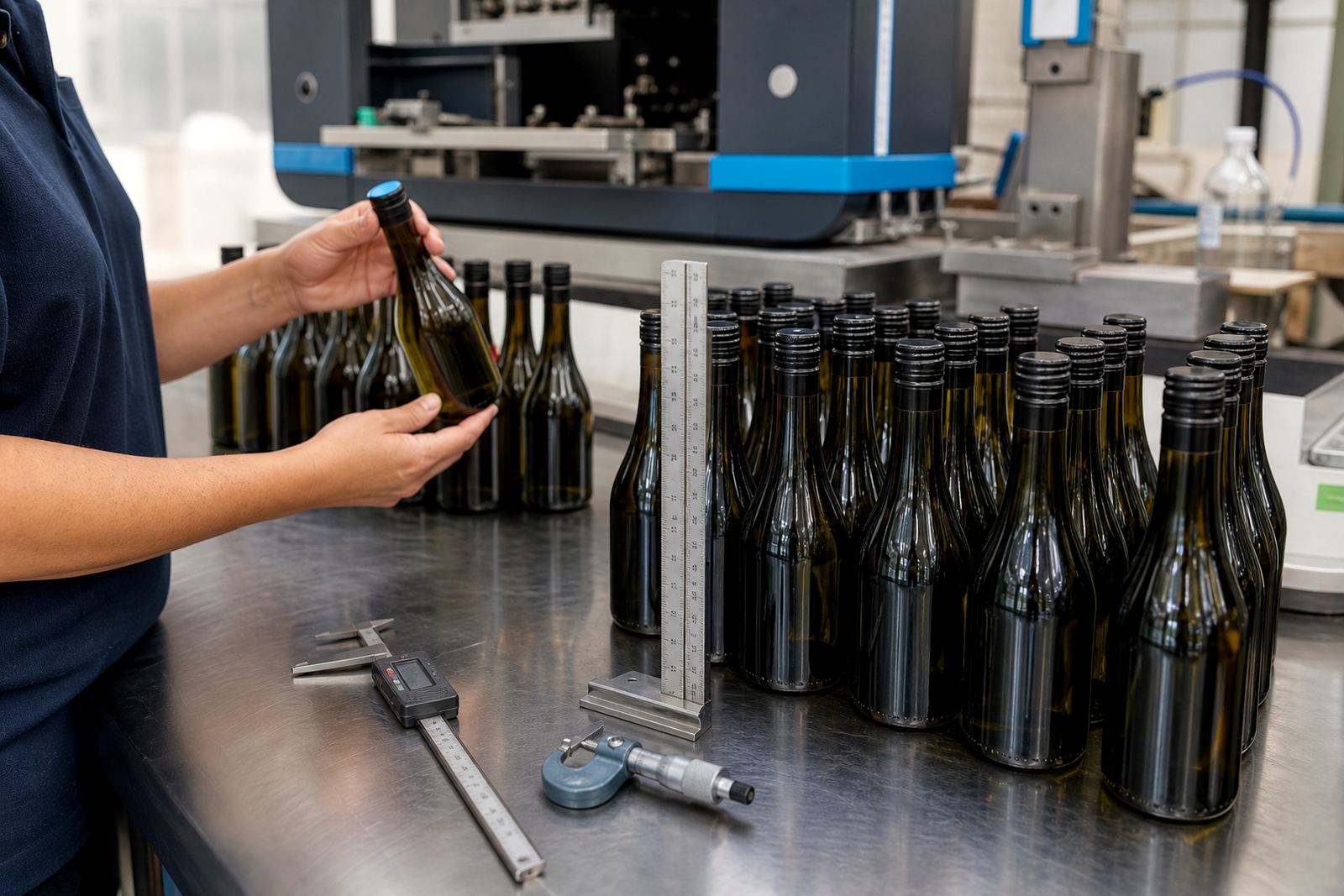
Round bottles need careful measuring before print setup begins. The curve of the glass changes how far artwork can travel around the body, so print area planning must take bottle diameter, shoulder height and label height into account. A logo that looks balanced on a flat mock-up can shift once it wraps onto the bottle, so we prepare artwork checks and proof visuals before production.
Colour guidance matters when a design needs to sit on clear glass, frosted glass or a dark printed base. Pantone references, supplied artwork files and sample artwork are checked against the chosen method. White ink layers are often needed under translucent inks or on darker bottles, and this is sorted before the print run is approved.
For label jobs, we set up the artwork to suit the actual label panel and finish. That means checking bleed, safe zones, text size and the way the label will sit near seams, base curves and neck details. If a bottle has a strong curve or a narrow panel, the artwork may need a simpler layout so the finished bottle still reads cleanly from the front.
Where these bottles fit in a real order
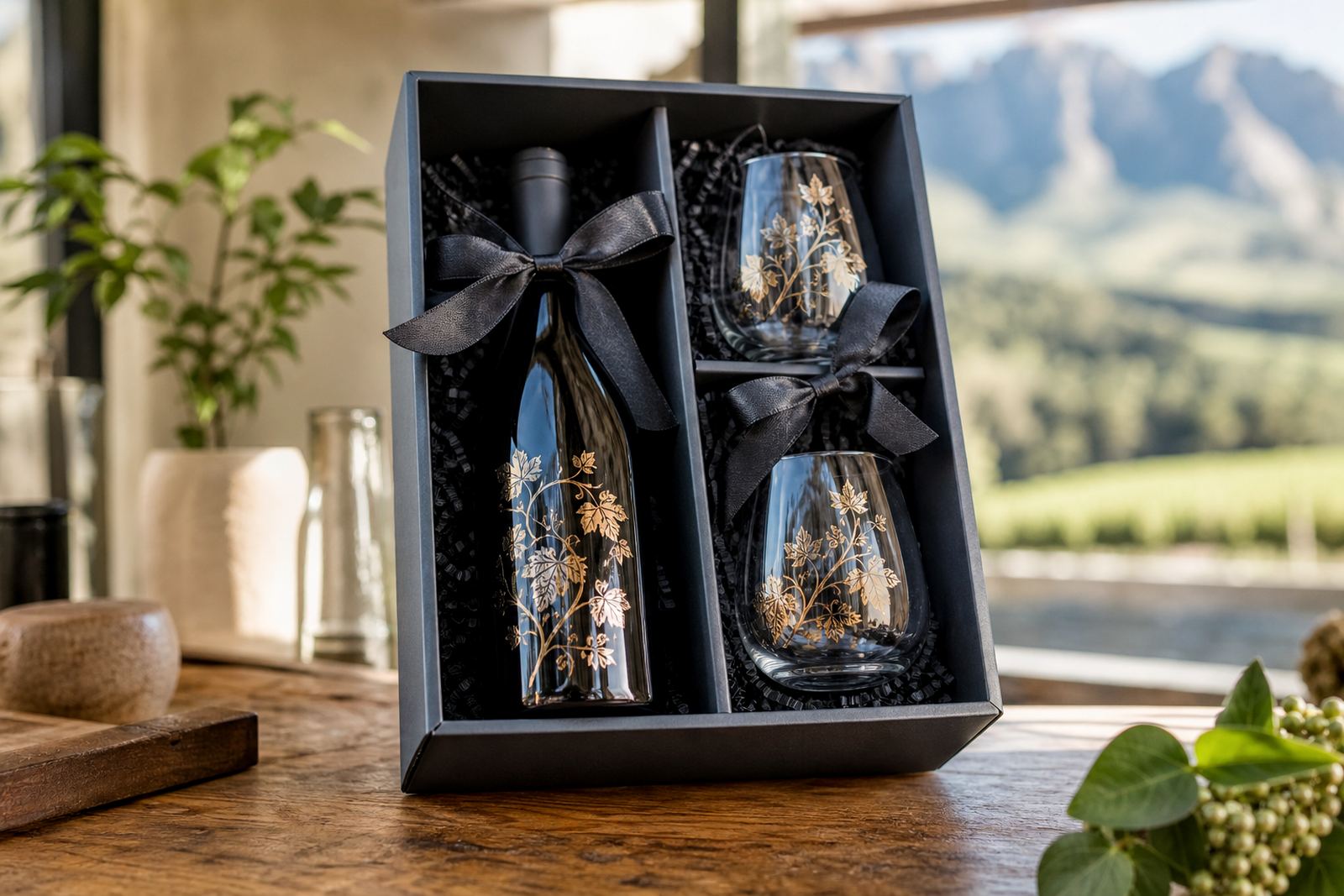
Round gin bottles suit wineries, distilleries, corporate gifting teams and event organisers who need short runs with a tidy front face. They are often used for product launches, seasonal gifting, tasting room stock, conference gifts and private-label batches. In the Cape Winelands, the round form is also popular for premium hampers where the bottle must look neat beside glassware or boxed goods.
We deliver throughout South Africa, with regular consignments to Johannesburg, Durban, Cape Town, Stellenbosch and Franschhoek. We also handle orders for Paarl, Somerset West and Constantia, with packing briefs set to suit glass handling and transport. When the order includes mixed bottle sizes, the carton plan needs to protect each neck and shoulder so the printed surface stays clean.
- Short-run bottle branding for gifting and retail packs
- Event bottles that need a neat front panel
- Samples, minis and full-size presentation bottles
- Mixed orders with drinkware or matching labels
Care, handling and order details to confirm
Printed or labelled round gin bottles should be handled by the body, not the decorated face, especially where fresh ink or adhesive is part of the finish. For printed glass, curing and packing must be complete before the bottles are moved into final cartons. For labels, the adhesive bond needs to sit before chilling, washing or display handling begins.
Care also depends on the finish. Ceramic enamel and some screened bottles can handle normal shelf use very well, but abrasive scrubbing, harsh chemicals and rough crate contact can mark the surface. Labels need clean storage and careful carton packing so the edges do not lift or crease before use.
Before ordering, it helps to confirm the bottle size, glass colour, closure type, label or print position, artwork file format and the minimum run you need. It also helps to note whether the bottles will be filled by a packing line or supplied as finished empty bottles. That makes the proofing stage and pack planning easier, and keeps the run aligned with the way the bottles will be used on site.
- Bottle capacity and neck finish
- Glass colour and surface finish
- Decoration method: UV print, screen print, ceramic enamel or label
- Artwork file, logo placement and copy text
- Minimum run and carton packing notes
Key facts
| Product type | Round gin bottles for branding, gifting and retail packs |
|---|---|
| Common capacities | 50 ml, 250 ml, 500 ml, 700 ml and 750 ml |
| Glass options | Clear, frosted, amber and other tinted glass |
| Decoration methods | UV direct print, screen printing, ceramic enamel and labels |
| Artwork support | Artwork checks, colour guidance, print area planning and proof approvals |
| Distribution | Paarl base with delivery to Cape Town, Stellenbosch, Franschhoek, Johannesburg and Durban |