Glass That Lets The Product Show Through
Clear glass is the practical choice when the drink itself forms part of the presentation. It works well for white wine, rosé, gin, sparkling water and premium still water, especially where colour, clarity and closure style need to be visible from the first glance.
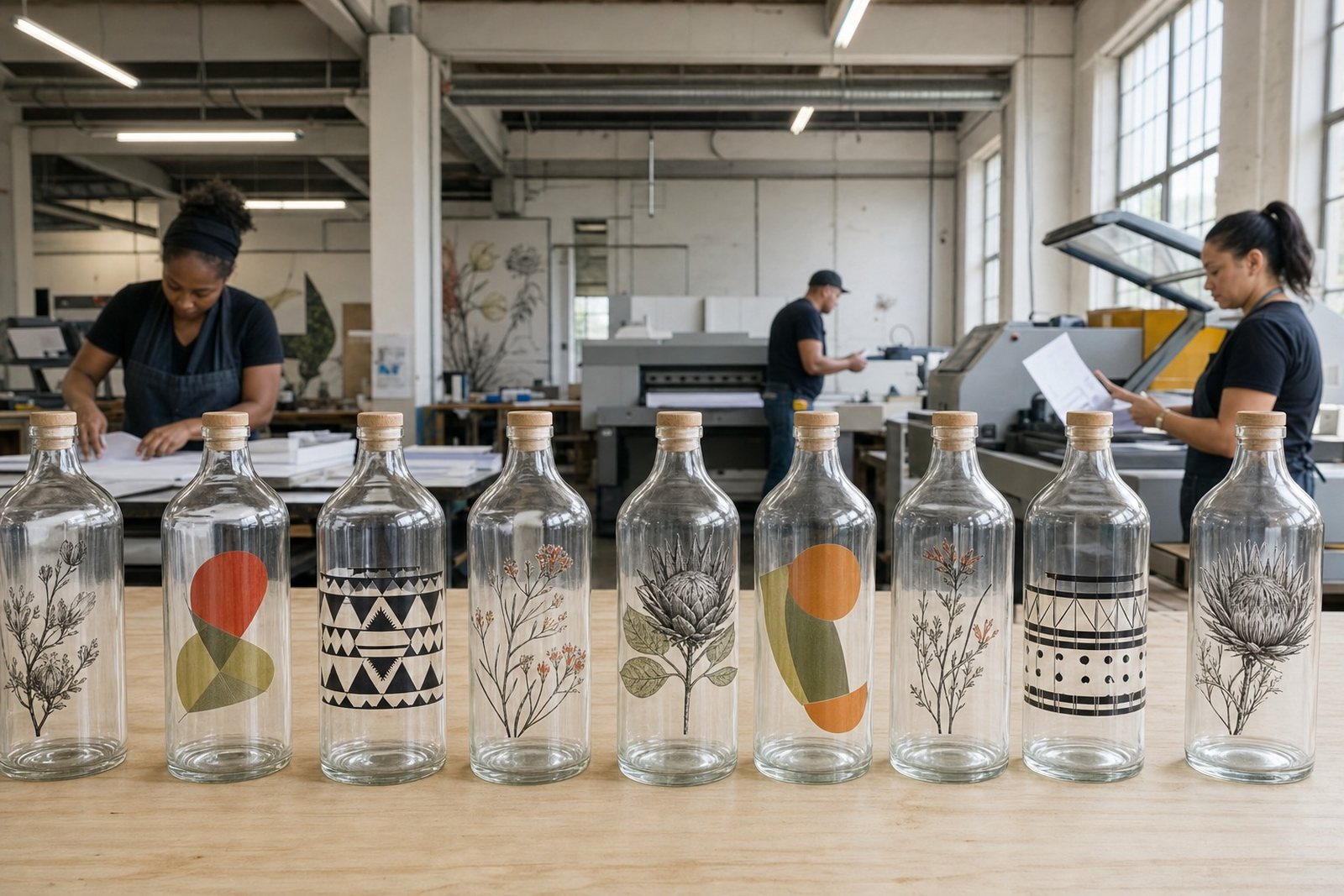
For short runs, clear bottles are useful because the same base bottle can carry a plain label, a full colour wrap, or direct print with a white underlayer. In a tasting room or at an event, the bottle stays easy to read and the liquid remains the main feature. On shelf, clear glass also pairs neatly with metallic inks, fine line artwork and simple brand marks.
We handle bottles for gifting packs, cellar door sales and event service where the presentation needs to stay tidy in transit. Pairing the right bottle shape with the right decoration method matters, especially on curved shoulders and narrow necks where artwork can shift if the layout is rushed.
Bottle Shapes, Neck Sizes And Common Capacities
Clear glass bottles are supplied in several shapes, from long neck wine forms to slimmer gin bottles and straight-sided water bottles. Capacity affects the label size, the print area and how the bottle sits in a carton or gift box, so the bottle size needs to be set before artwork is finalised.
- Wine bottles: 375 ml, 750 ml and magnum formats are common for short production runs.
- Gin bottles: 500 ml and 700 ml styles suit gift sets and tasting-room use.
- Water bottles: 250 ml, 300 ml, 500 ml and 750 ml options are used for hospitality and events.
- Drinkware: clear glass tumblers, stemless glasses and handled mugs can be branded to match the bottle set.
The neck finish, shoulder curve and base thickness all affect decoration placement. A label that fits a straight sided bottle may need a different panel width on a tapered shape, and direct print needs enough flat or stable surface to hold line work cleanly.
Decoration Methods That Work On Clear Glass
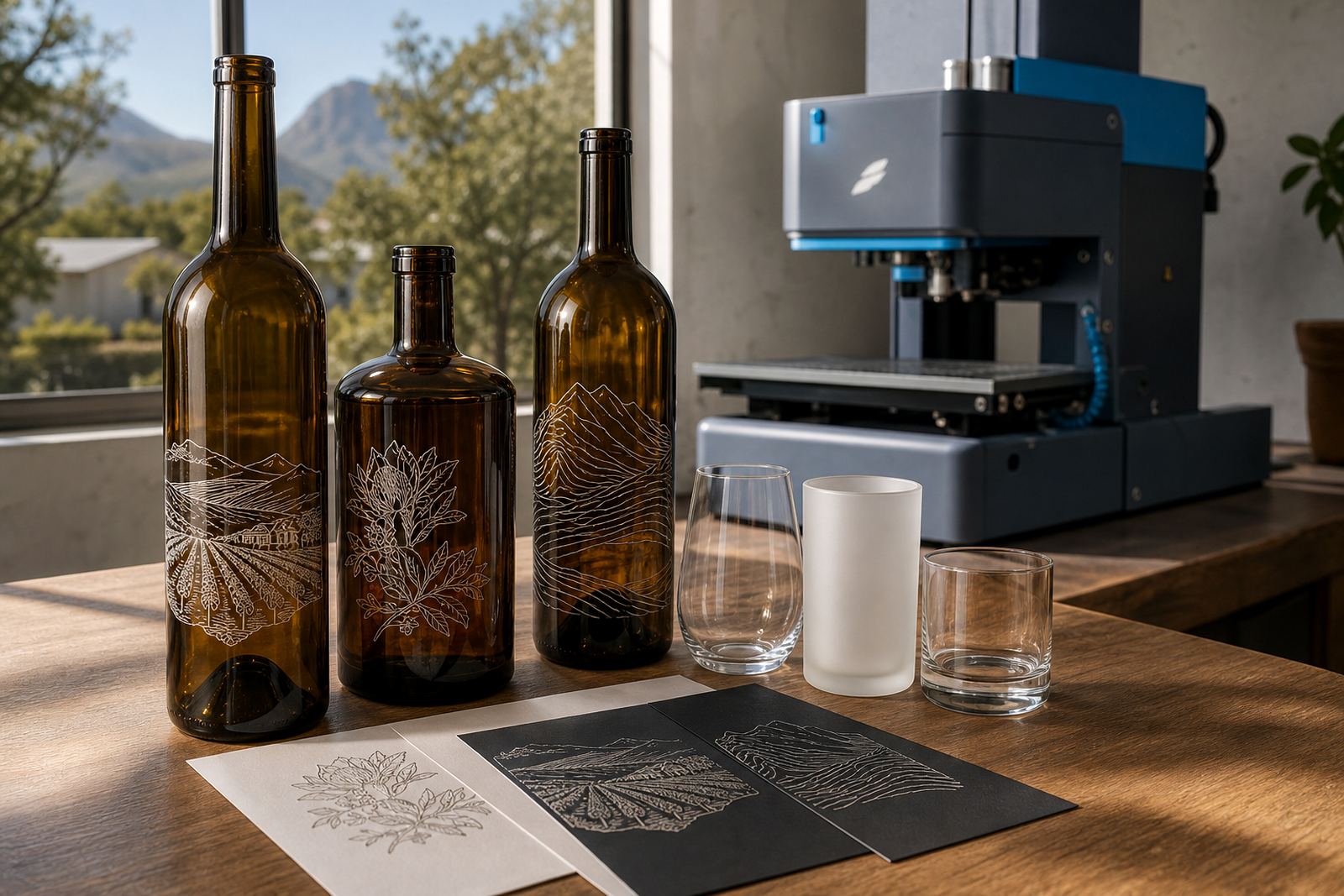
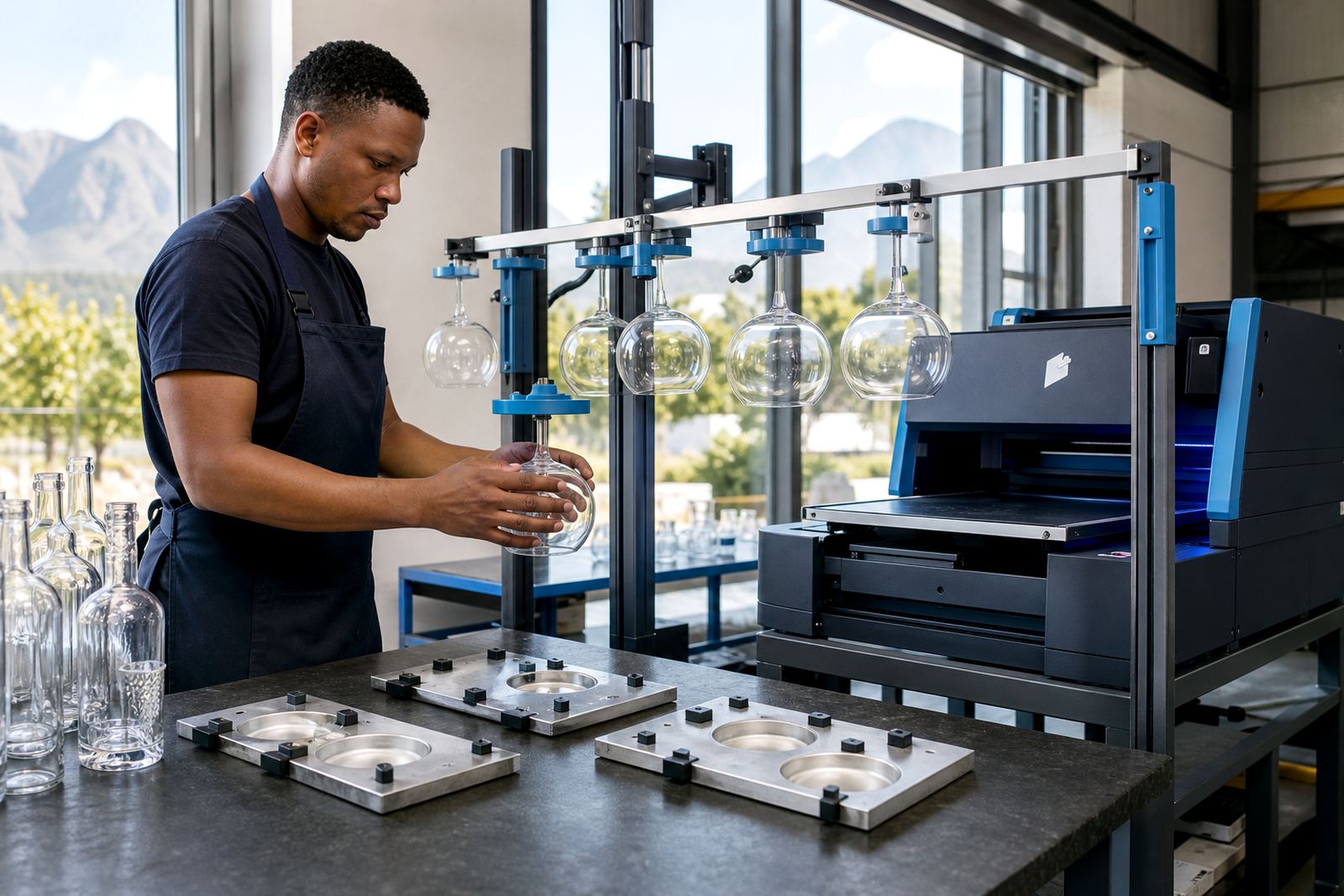
Clear glass takes several decoration methods well, but each method suits a different look and budget. UV direct print is often used for colour logos, text and line art where a clean digital finish is needed. It can include white ink layers under colour so the artwork stays readable against the transparent glass.
Screen printing is suited to single colour marks, strong brand blocks and repeat runs where the ink needs to sit neatly on the bottle. Ceramic enamel gives a more durable fired finish for applications that need a permanent, high quality result on suitable glassware. Labels remain useful when the artwork carries detailed wording, ingredient notes or multiple language panels.
- UV direct print: good for short runs, detailed artwork and mixed colour designs.
- Screen printing: suitable for bold branding and consistent repeat placement.
- Ceramic enamel: used where a fired finish is required on compatible bottles or drinkware.
- Labels: useful for flexible layouts, compliance text and variable content.
White ink layers matter on clear glass because transparent bottles do not give the same background support as amber or frosted glass. Without a white base, pale colours can lose strength and fine text may fade into the bottle.
Artwork Setup Before The Run Starts
Artwork on clear glass needs careful sizing. The visible panel on the bottle may look generous, but the usable area can shrink once curves, closures, base lines and label overlap are measured properly. That is where print area planning and mock-up visuals help, because the layout can be checked before production starts.
Proof approvals are part of the normal process on this kind of work. A proof shows placement, colour intent and the way the artwork sits on the selected bottle shape. If the bottle is for a gift set, event pack or retail shelf, the proof also helps confirm how the bottle reads next to the carton, cap or closure.
- Send final logo files, wording and any legal text for the label.
- Confirm bottle capacity, shape and closure style.
- Note whether the finish should be clear, white backed or full colour.
- Check if the artwork must wrap around the bottle or stay on one panel.
Short runs often need tighter artwork control because there is less room for correction after printing starts. A neat proof saves time and avoids a mismatch between the drawing and the bottle on the tray.
Occasions that suit clear Bottles
Clear bottles suit winery sales, distillery gifting and event service where the drink itself is part of the display. They are also a good fit for corporate packs, tasting room counter sales and venue gifting where a clean bottle finish carries the branding without hiding the contents.
For water, clear glass works especially well in hospitality and event settings where presentation matters at table level. For gin and wine, the bottle can carry a subtle mark or a stronger full colour label depending on how prominent the brand needs to be. In Cape Town, Stellenbosch, Franschhoek, Johannesburg and Durban, clear glass is often chosen for launches, gifts and smaller mixed batches where the pack has to look measured and tidy.
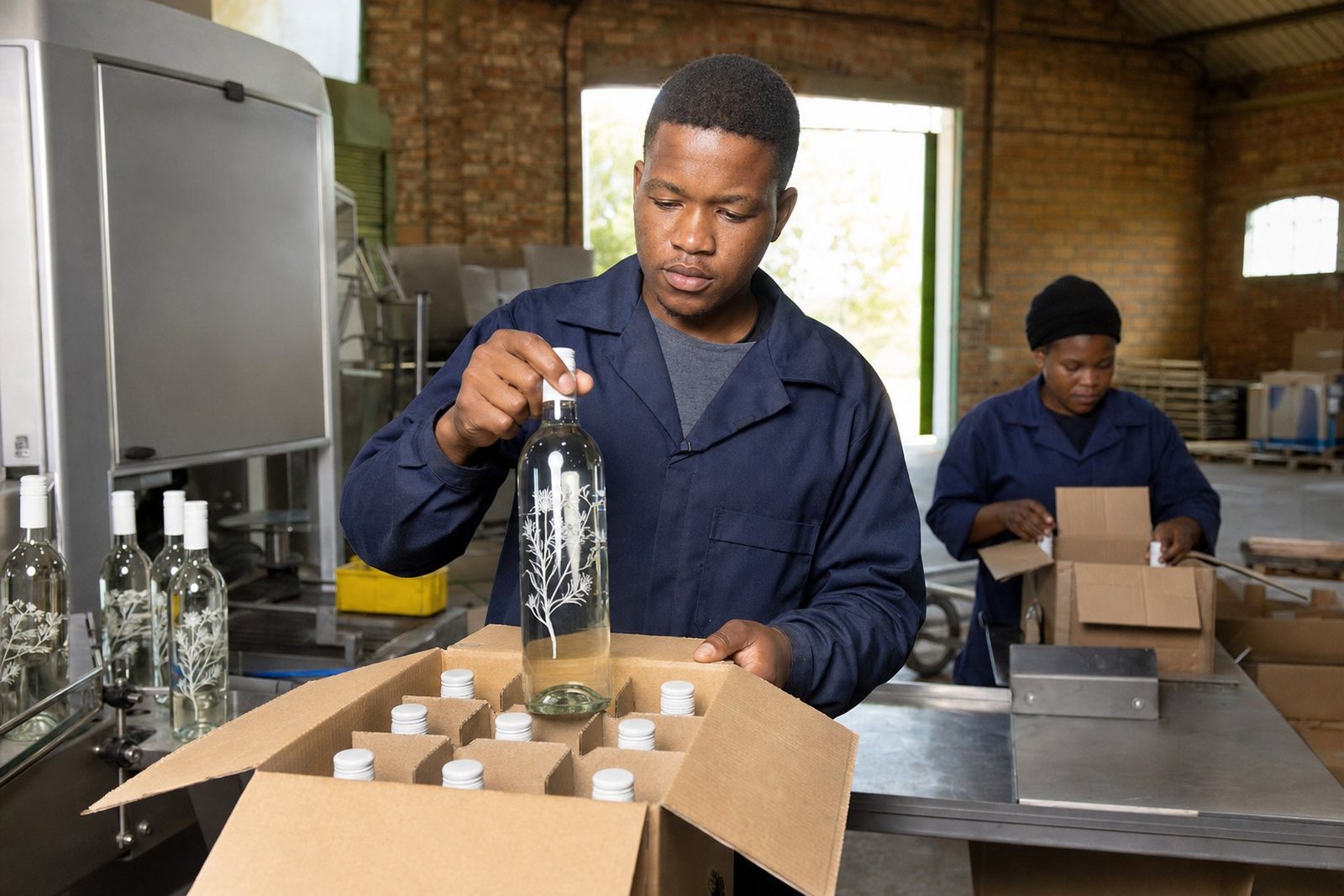
On a production line, clear bottles are easier to inspect for dust, glue marks or print irregularities because the transparency shows the surface clearly. That helps when the finish needs to stay clean through packing, delivery and shelf handling.
Care, Packing And Ordering Details
Clear glass needs careful handling because fingerprints, scuffs and carton rub can show more easily than on coloured glass. Bottles should be stored upright in clean, dry cartons and kept away from loose grit during packing. If the order includes labels, the surface must be prepared to accept consistent adhesion, especially in coastal humidity where handling can affect the finish.
For fitting and packing, confirm whether the bottles will be supplied empty or pre-filled elsewhere, how they will be capped or sealed, and whether cartons must suit retail display or transport only. If a gift box, crate or insert is part of the order, the bottle height and shoulder shape need to line up with that pack from the start.
- Confirm the capacity and exact bottle shape.
- State whether the run needs direct print, screen print, enamel or labels.
- Share closure details, carton sizes and any pack inserts.
- Note if the bottle is for wine, gin or still water use.
- Include the print area and whether a white ink layer is needed.
From Paarl, Bottle Printing Co. handles short run clear glass bottle work for delivery across South Africa, including Cape Town, Stellenbosch, Franschhoek, Johannesburg and Durban. Send the bottle spec, artwork files and packing brief through the form on our website.
Key facts
| Material | Clear glass |
|---|---|
| Common capacities | 250 ml, 300 ml, 375 ml, 500 ml, 700 ml, 750 ml and magnum formats |
| Decoration methods | UV direct print, screen printing, ceramic enamel and labels |
| Typical uses | Wine, gin, still water, gifting and event service |
| Artwork support | Artwork checks, mock-up visuals, white ink layers and proof approvals |
| Base location | Paarl, Cape Winelands |