Amber glass and the look it brings to shelf and table
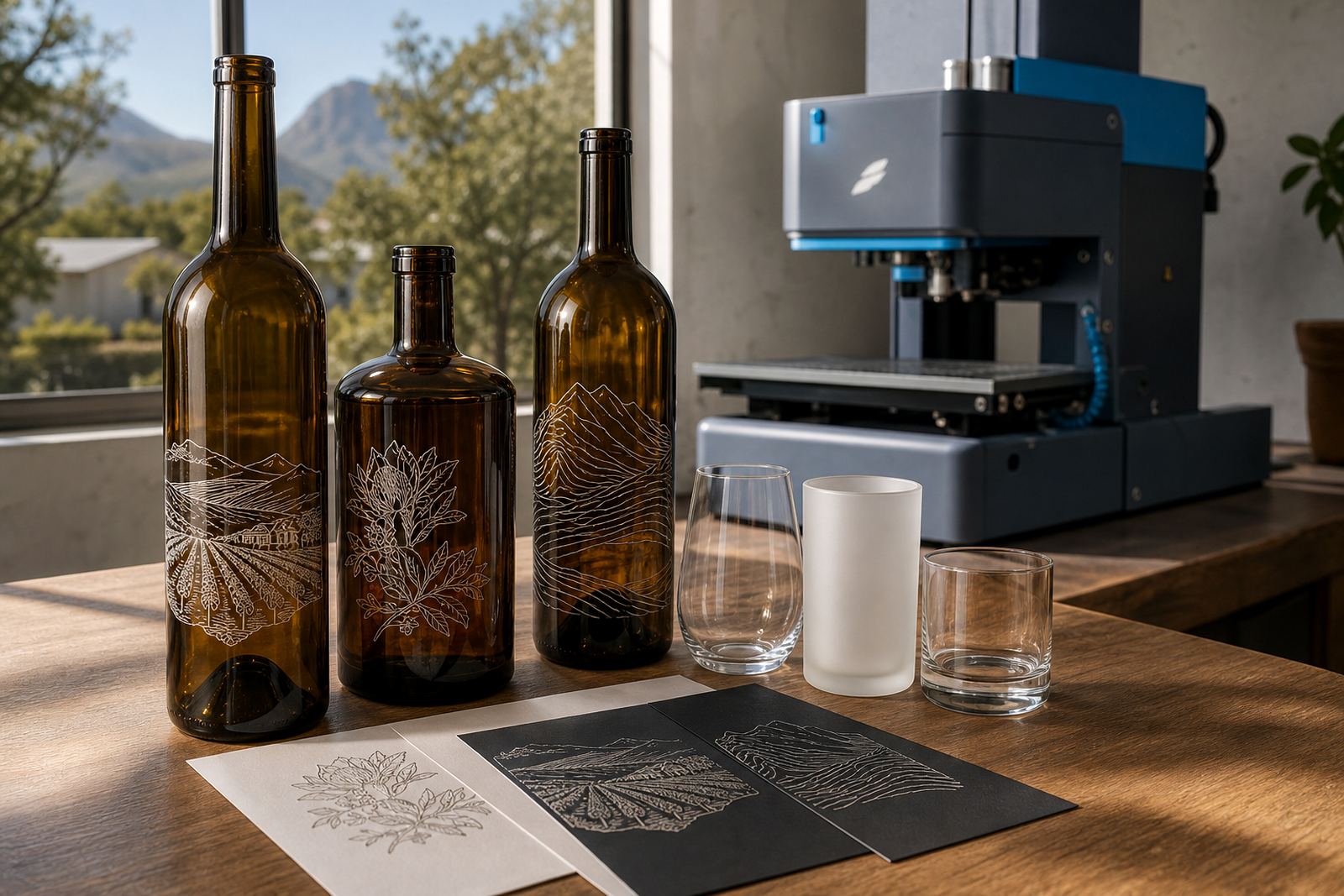
Amber bottles are used where the drink or the brand needs a deeper, more restrained finish. The glass shifts the light, so dark inks can sit quietly while lighter inks, white ink layers and labels carry the message. That makes amber a practical choice for wine bottlings, gin releases, water bottles for functions, and drinkware that has to hold its own in a packed tasting room or on a banquet table.
For decoration work, the bottle shape matters as much as the colour of the glass. A straight-sided bottle gives a clean panel for print or label placement. Curved shoulders, heavy bases and narrow necks need careful artwork placement so logos do not sit too high, too low or too close to a seam. On amber glass, contrast is the point, not just decoration.
Sizes, neck shapes and the bottles most often ordered
Amber glass comes in a few common formats, and the right size depends on the drink, the label area and the way the bottles will be packed or poured. Short runs often use standard shapes that are easy to print and easy to box. Where the bottle is part of a gift set or event bar, the profile and weight also matter because the finished pack has to travel well.
- Small bottle formats for tasting pours, mini gifting and event service
- Standard wine bottle sizes for 750 ml still or sparkling-style presentation
- Gin and spirit-style bottles with taller shoulders and wider label panels
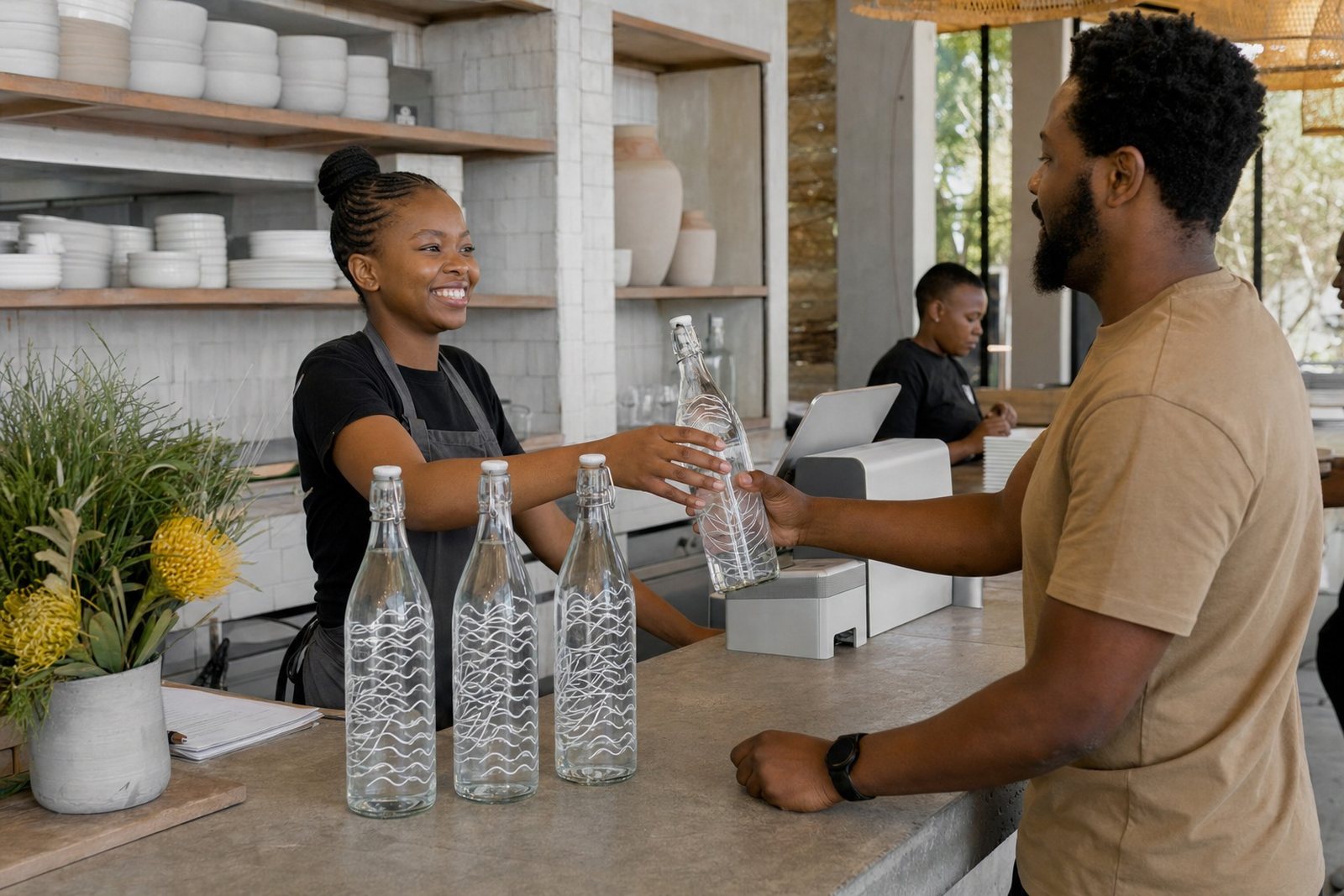
- Water bottles for hospitality, launches and corporate gifting
- Glass drinkware such as tumblers, sample glasses and branded serving pieces
Glass thickness, neck finish and base style can affect the decoration method. A bottle with a narrow print area may suit a label better than direct print, while a broad panel can take UV print or screen print more comfortably.
Decoration methods that suit amber glass
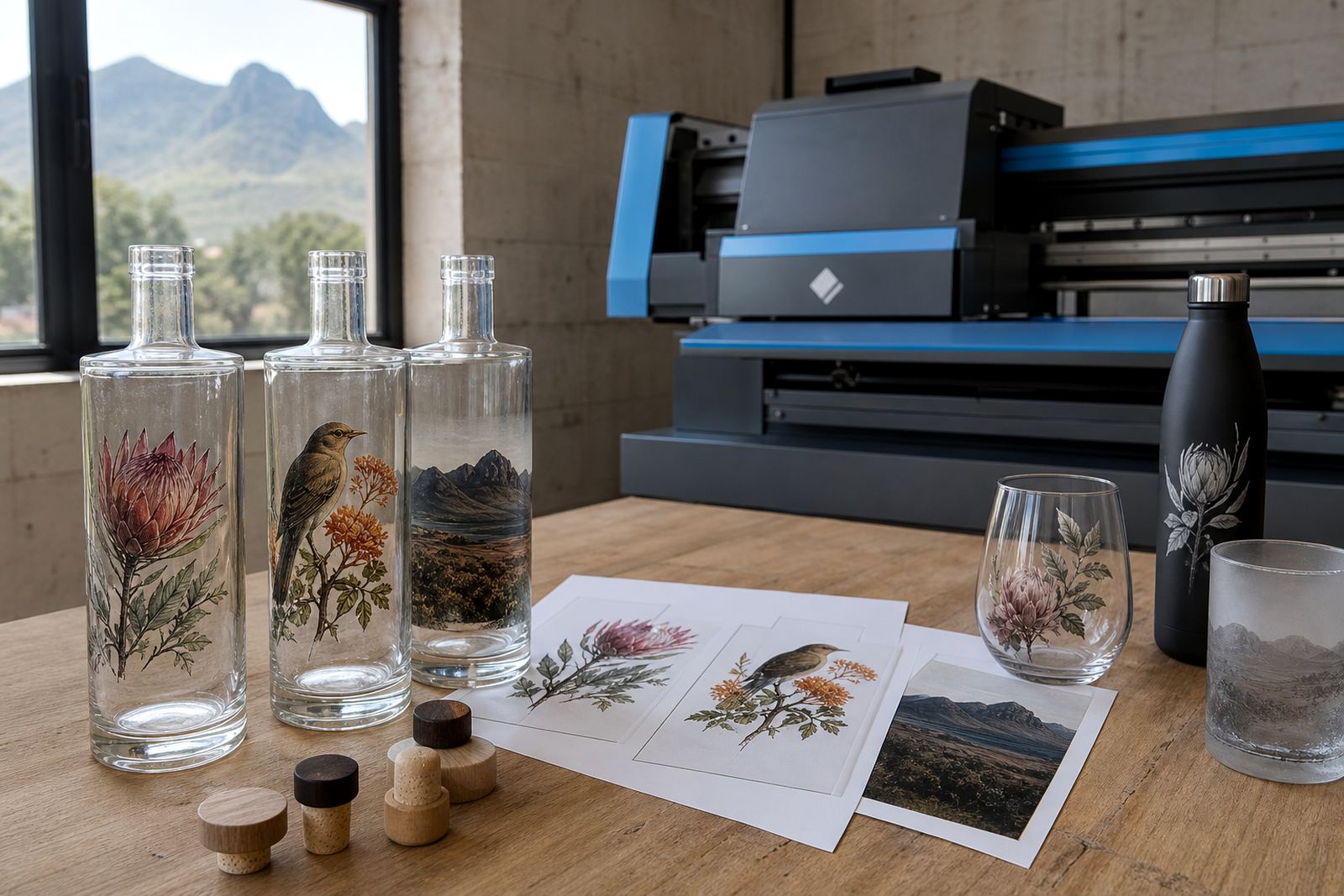
Amber glass works well with several decoration methods, but each one has its own limits and strengths. UV direct print is useful when the artwork needs sharp lines, small text and controlled colour placement on the bottle surface. Screen printing suits solid blocks, bold marks and repeat runs where the design stays consistent. Ceramic enamel gives a fired finish that can feel more permanent and is often used where the bottle will be washed or handled often. Labels are the most flexible route when the design changes often or when the artwork needs fine detail, foil or varnish effects.
- UV direct print for clean graphics and detailed logo work
- Screen printing for bold one or two colour decoration
- Ceramic enamel for a durable fired finish on suitable glass
- Paper, textured or synthetic labels for varied shapes and short runs
Amber glass can darken some colours, so the artwork may need a white underlayer or a stronger colour shift. That is where print area planning and colour guidance matter, especially when the same label has to sit on both amber and clear glass in a mixed range.
Artwork proofs before glass goes to print
Before any run starts, the artwork needs checking against the actual bottle outline and the chosen decoration method. Proofs show the print area, the curve of the bottle, the label size, the white ink placement and any safe margins around necks or shoulders. On amber bottles, that step matters because a colour that looks crisp on screen can sink into the glass once it is printed.
Artwork checks also help when the same bottle is used for more than one purpose. A winery may need a front label, a neck tag and a tasting room version. A distillery may want a retail bottle and a gift bottle that share the same branding but use different sizes or label shapes. Proof approvals keep those details in view before production starts.
Typical jobs for amber bottles
Amber glass suits wineries, distilleries, event organisers and corporate gifting teams that want a richer finish than clear glass gives. It is common for products that need a more grounded look, especially where the drink will be displayed in strong sunlight or under warm indoor lighting. In the Cape Winelands, the tone of the glass often works well with natural corks, darker foils and understated labels. In Johannesburg and Durban, it also holds its own in gift packs and conference bars where bottles are handled, moved and unpacked several times.
For chilled drinks and bottled water, the bottle format needs to work with the cap or closure, the label placement and the carton size. For gin and wine, the neck finish must suit the closure style chosen by the bottler. Those fitting details matter as much as the artwork because a good print job still needs to pour, seal and pack properly.
Care, packing and details to confirm before ordering
Amber bottles should be packed so the glass does not rub against itself during transport. Surface marks, dust and moisture can affect print adhesion or label finish, so the bottles need to be clean and dry before decoration. After printing, they should be handled with care while inks or enamel cure and before cartons are closed for dispatch.
It helps to confirm the points below before a run is signed off:
- Bottle size, neck finish and overall shape
- Decoration method, print colours and whether white ink is needed
- Label size, material and any finish such as matte or gloss
- Quantity per size, including minimum run advice for the chosen method
- Pack format, carton count and whether mixed sizes are included
- Use case, such as retail, tasting room, gifting or event service
That level of detail keeps the run practical and avoids surprises once the bottles are on the press or in the packing area.
Short-run production from Paarl to the rest of the country
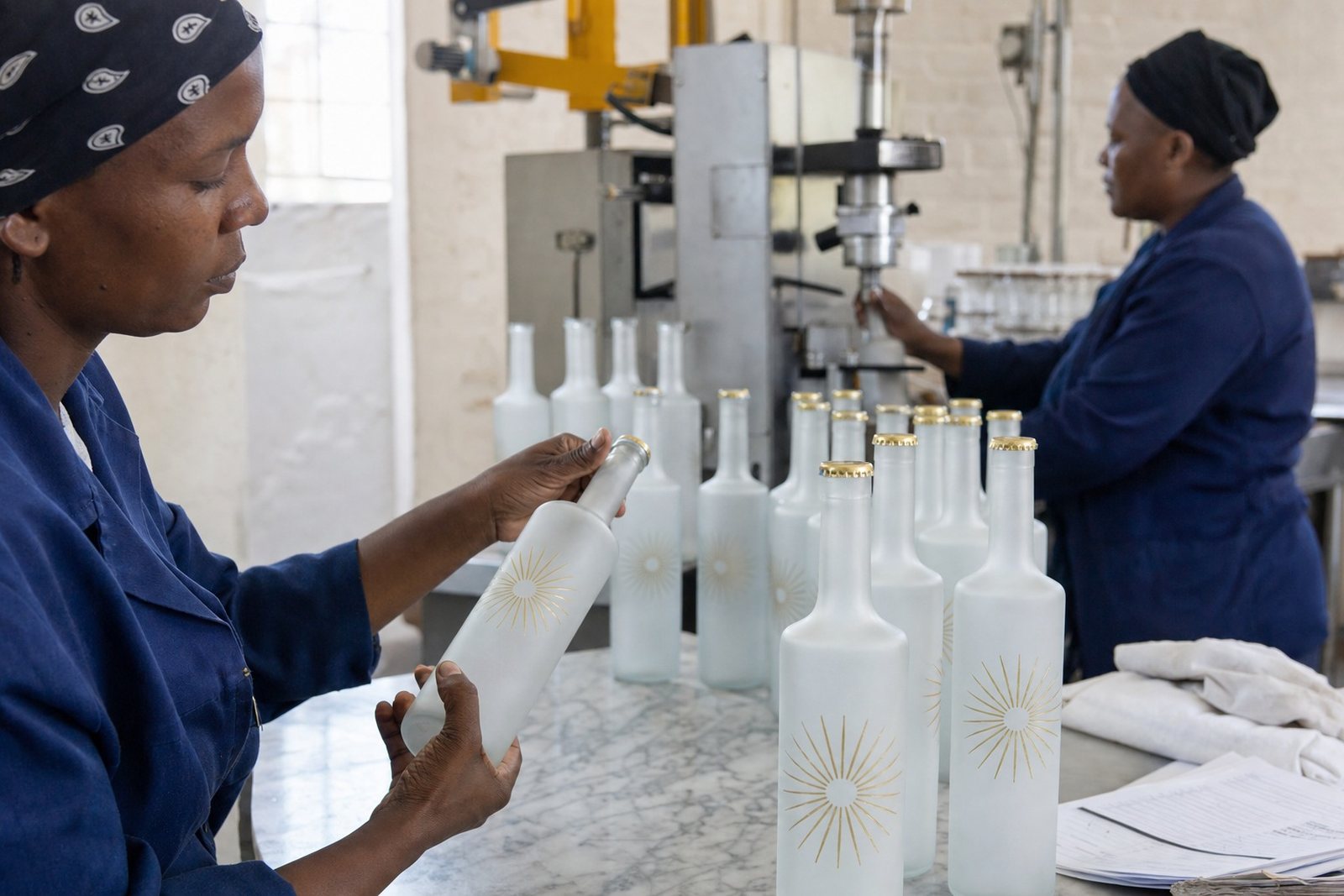
From our base in Paarl, amber bottle work is set up for short runs that need careful artwork handling and sensible production planning. Delivery goes to Cape Town, Stellenbosch, Franschhoek, Johannesburg, Durban, Somerset West and Constantia, with packaging arranged to suit the bottle type and decoration method. Because amber glass can vary in shape and finish, the production note has to match the actual bottle, not just the size on paper.
For wineries, distilleries and event organisers, that means the bottle, the label and the carton are treated as one job. The print area, the closure, the proof and the packing brief all need to line up before the first bottle is decorated. That is the point where a good-looking amber bottle becomes a finished piece ready for shelf, service or gifting.
Key facts
| Material | Amber glass |
|---|---|
| Common sizes | Mini bottles, 750 ml wine bottles, gin bottles, water bottles, drinkware |
| Decoration methods | UV direct print, screen printing, ceramic enamel, labels |
| Artwork support | Artwork checks, proof approvals, mock-up visuals, colour guidance |
| Finish options | Matte or gloss label finishes, white ink layers where needed |
| Use cases | Wine, gin, bottled water, gifting, tasting rooms, events |