Where white ink helps the print hold its ground
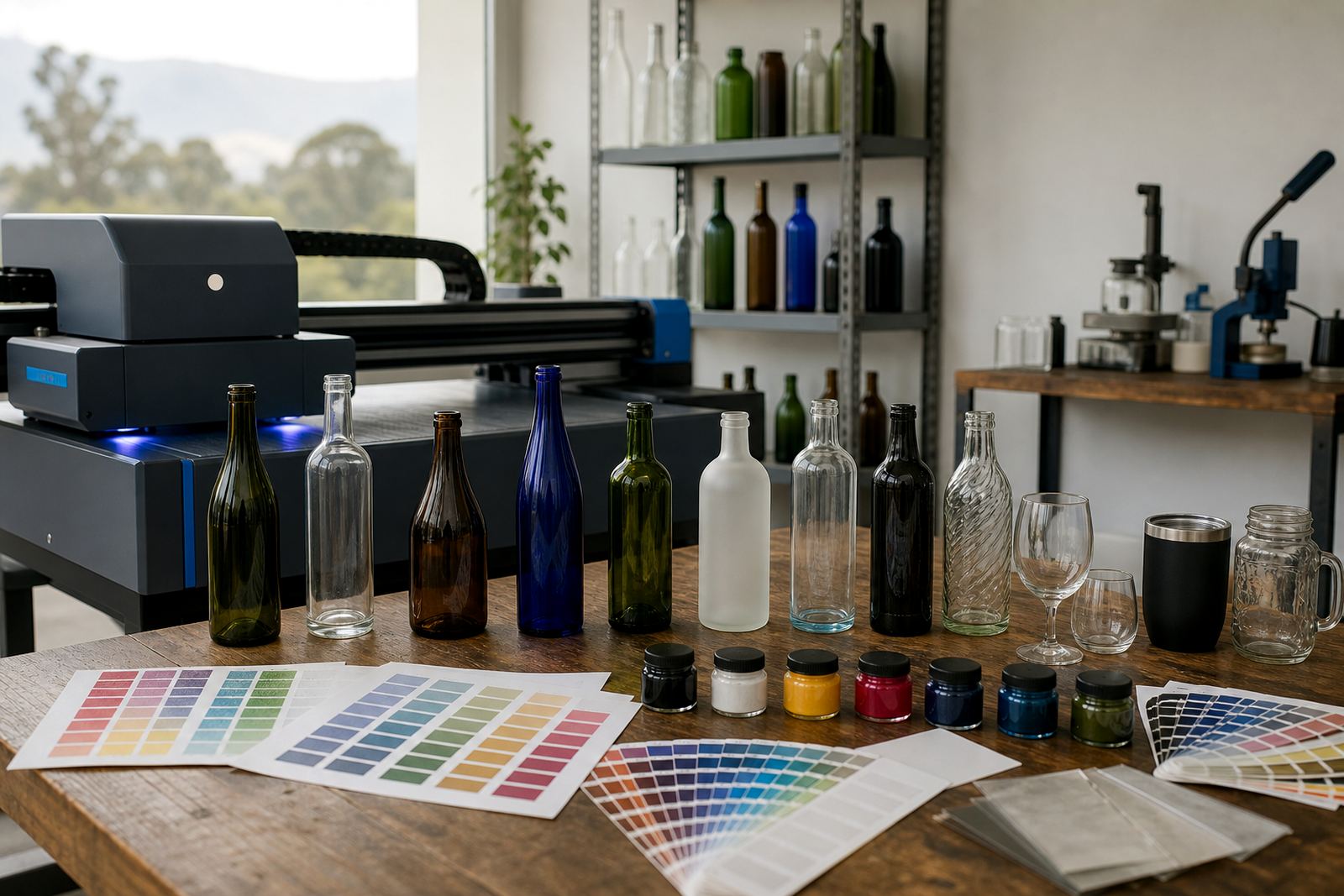
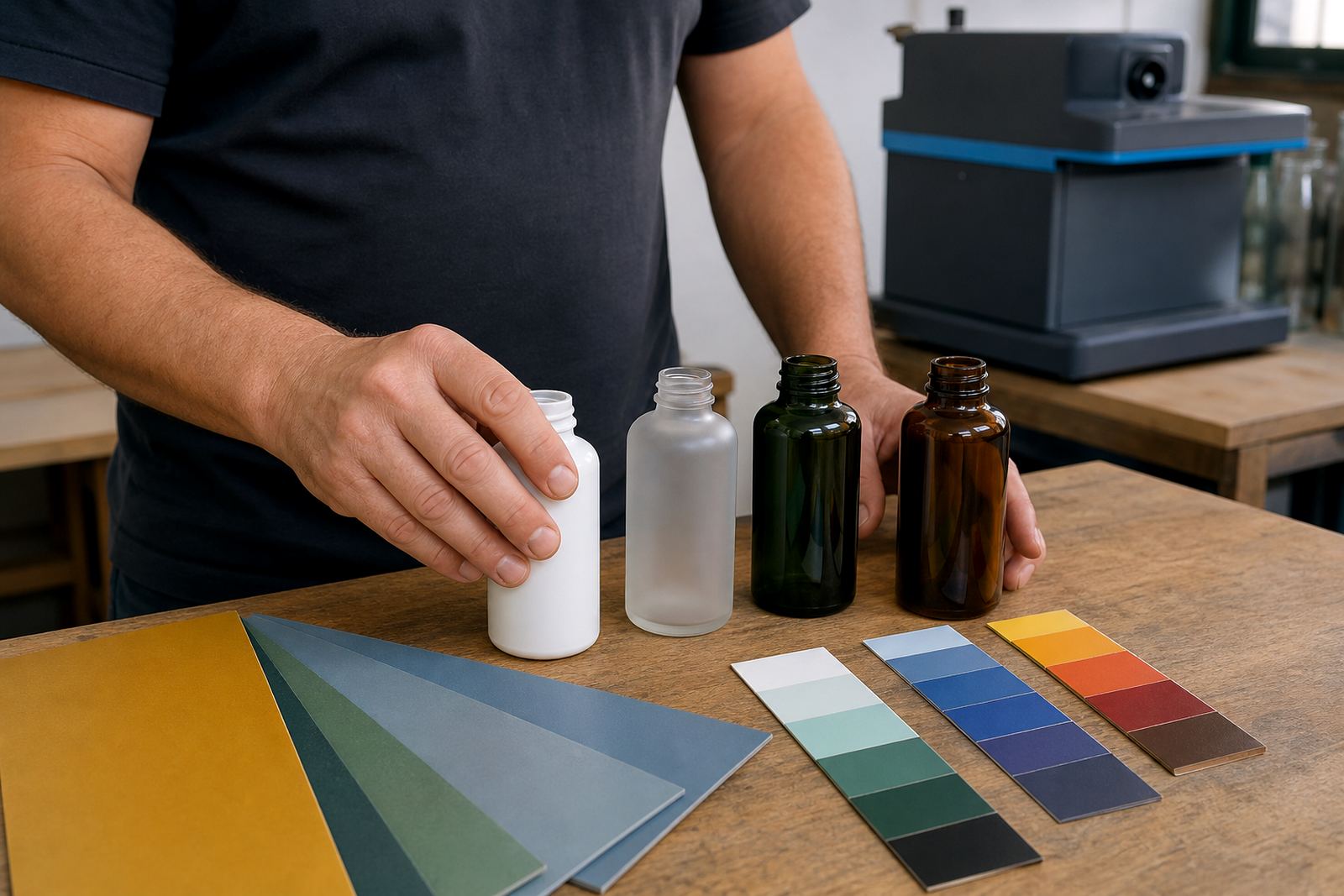
White underlayers are often planned for amber, green, smoked and frosted bottles, plus coated tumblers and other drinkware with an uneven finish. The layer sits beneath the colour print so logos, small type and fine bottle marks do not sink into the glass tone.
On darker surfaces, a good white base can sharpen the artwork without making the finished item look heavy. On clear or lightly tinted pieces, a partial white laydown may be enough. The right choice depends on bottle shape, print area, artwork line weight and the final visual target.
- Suited to tinted wine bottles, gin bottles and water bottles
- Also used on glassware with texture, frost or light decoration
- Can support UV direct print, screen print and label artwork planning
What the white layer planning covers
Each job starts with the artwork file and the item sample or specification. The team checks whether the print area sits on a flat shoulder, a curved neck or a panel that moves through the press in a tight arc. White coverage is then set for the artwork rather than guessed.
That planning stage includes line thickness, small text, knockouts, overprint risks and how much opacity the surface needs. For some runs, a full white flood is right. For others, a spot white under selected parts keeps the print lighter and more controlled.
- Artwork checks for tiny type, fine lines and solid fills
- Print area planning for round bottles, tapering necks and glass curves
- Colour guidance where white needs to sit under brand colours
How the proofing step is handled
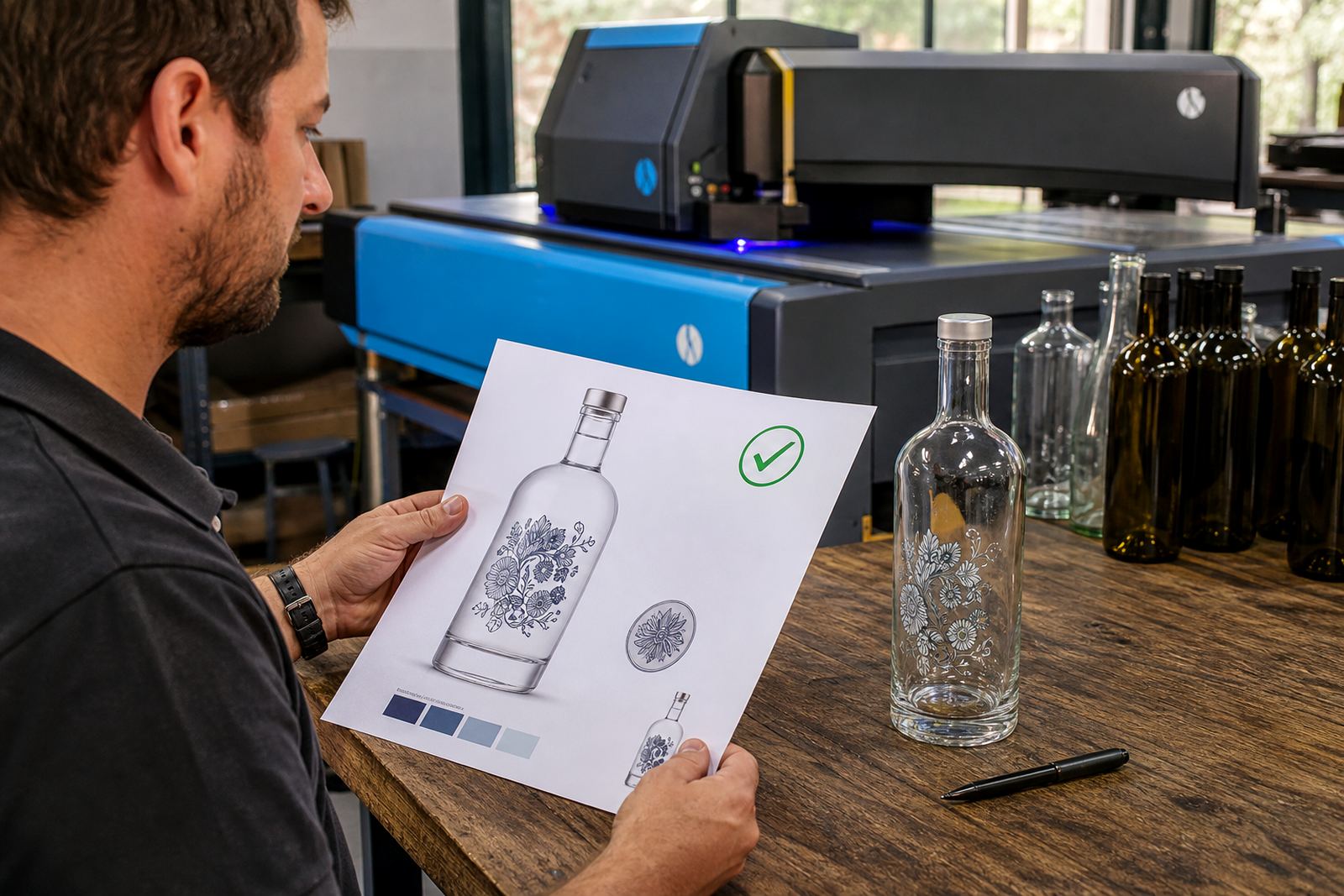
A proof is prepared before production, showing where white will sit and how the colour stack is expected to behave on the chosen bottle or glass. This keeps the layout clear before print setup begins. If the artwork needs cleaning up, that is handled in the proof stage rather than on the machine floor.
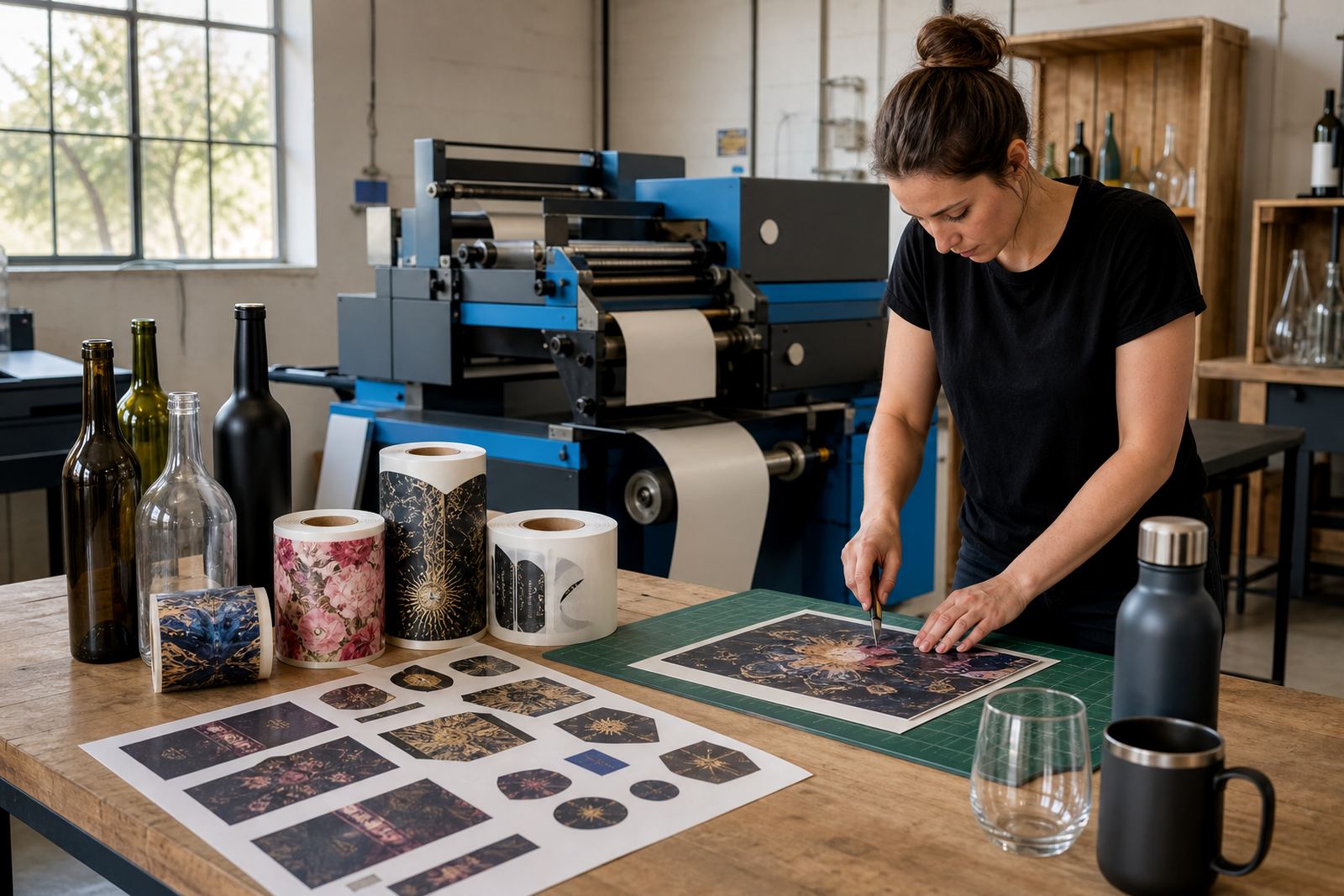
Proofs may show registration marks, the white layer boundary and the live print zone. For label work, the proof can also show cut lines and label placement on curved bottle bodies. That matters on short runs where every unit carries a lot of weight for the client.
- Visual proof for the white underlayer and final colour position
- Mock-up visuals for approval on the actual bottle shape
- Label artwork setup where the print and adhesive finish need to align
Print methods that can carry a white base
White ink layers can be prepared for several decoration methods. UV direct print is often used when a crisp mark is needed on glass or coated drinkware. Screen printing suits stronger colour blocks and repeat runs, while ceramic enamel is chosen when a fired finish is required. Labels can also use white as part of the artwork build, especially where the bottle colour would weaken the printed tone.
The method depends on the surface, quantity and the wear expected in use. A matte bottle may need a different white density from a polished bottle. A straight-sided tumbler behaves differently from a curved wine bottle, so the setup changes with the item.
- UV print prep for direct decoration on glass and drinkware
- Screen print prep for solid areas and repeated branding
- Ceramic enamel prep for fired decoration on suitable glass items
Minimum runs and the price structure
Short runs are common on promotional bottles and event drinkware, but the minimum depends on the item and the decoration route. White ink adds a setup step, so the quotation is built around artwork time, proofing, print preparation and the number of pieces in the run. Pricing stays fair because it reflects the work each order actually requires.
Quotes are shaped by bottle type, glass finish, quantity, number of colours and whether the white is full coverage or a local underlayer. Packing needs, delivery town and label assembly can also affect the total. There is no fixed shelf price for a job like this because a frosted gin bottle and a clear water bottle do not behave the same way.
- Pricing follows the item, artwork complexity and total quantity
- Short runs can still be set up with proper proof control
- Delivery planning is included for Paarl, Cape Town, Stellenbosch, Franschhoek, Johannesburg and Durban
Packing, handling and aftercare for printed bottles
Once printing is done, bottles and drinkware are checked for alignment, coverage and finish before packing. The team also briefs clients on handling the printed surface, especially where ink, enamel or label adhesive needs time to settle properly. For glass that will be washed and reused, a careful first use helps preserve the finish.
Aftercare guidance covers hand washing where appropriate, avoiding abrasive pads and keeping bottles clear of hard knocks in transit or display. If a run is headed for gifting, service counters or event tables, the packing brief can be adjusted so the finished items travel in a practical way.
- Finish checks before packing and dispatch
- Handling guidance for printed glass and coated drinkware
- Packing briefs suited to corporate gifting and event supply
Working files, bottle types and useful specs
White ink layers are easier to control when the artwork arrives in a clean format with the final text locked and image quality set properly. Bottle Printing Co. works with branded wine bottles, gin bottles, water bottles, tumblers and related drinkware, with artwork support where the file needs adjustment for print. The base colour, surface texture and curve all matter.
For teams planning a batch, the useful details are the bottle shape, target print area, surface finish, quantity and decoration method. Clear brief notes save time during proofing and help the underlayer sit where it should. On textured or tinted glass, a small shift in white coverage can change the whole result.
- Common substrate types: tinted glass, clear glass, frosted glass and coated drinkware
- Artwork formats: vector files, editable layouts and clean image assets
- Key setup factors: print area, curve radius, white coverage and final use
Key facts
| Service | White ink layer planning for bottles and drinkware |
|---|---|
| Print methods | UV direct print, screen printing, ceramic enamel, labels |
| Typical items | Wine bottles, gin bottles, water bottles, tumblers |
| Surface types | Tinted glass, clear glass, frosted glass, coated drinkware |
| Artwork support | Artwork checks, mock-up visuals, proof approvals |
| Coverage style | Full white flood, spot white, partial underlayer |
| Base | Paarl, Cape Winelands |
| Delivery areas | Cape Town, Stellenbosch, Franschhoek, Johannesburg, Durban |