What the proof shows before a run starts
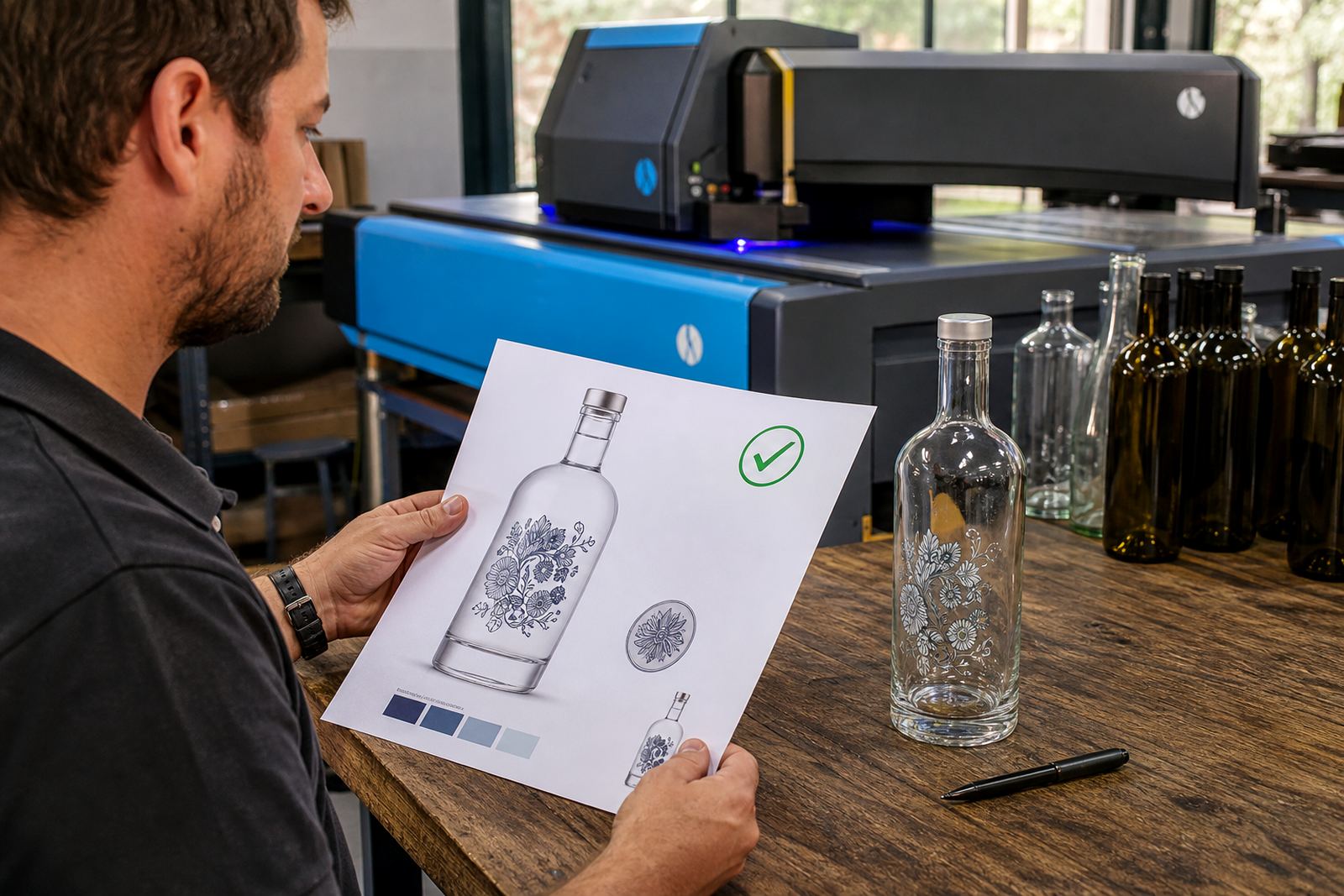
A proof is the last checked version before production begins. It shows the artwork positioned on the chosen bottle or drinkware, the print area size, the order of colours and any white underlay needed on dark glass or tinted surfaces.
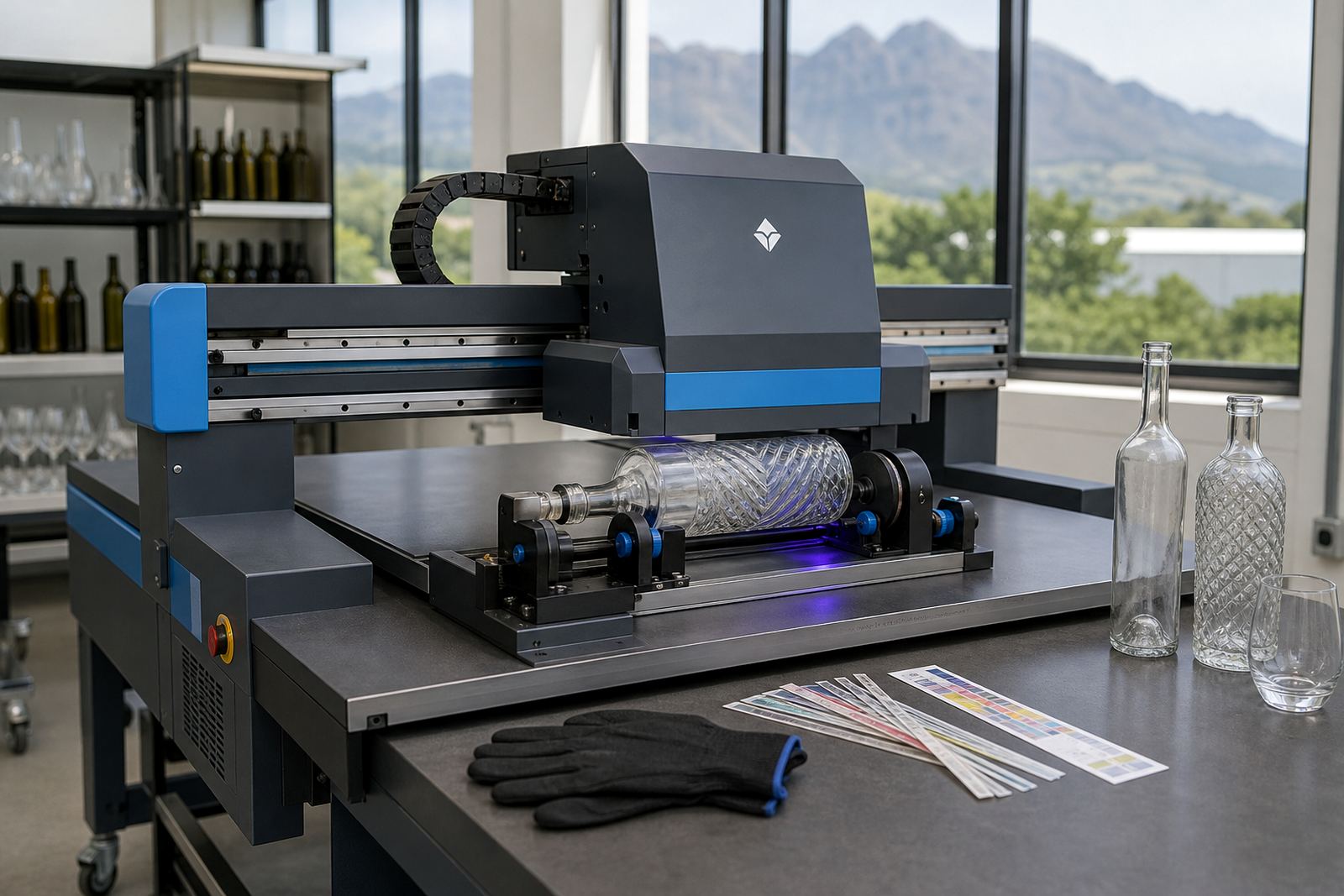
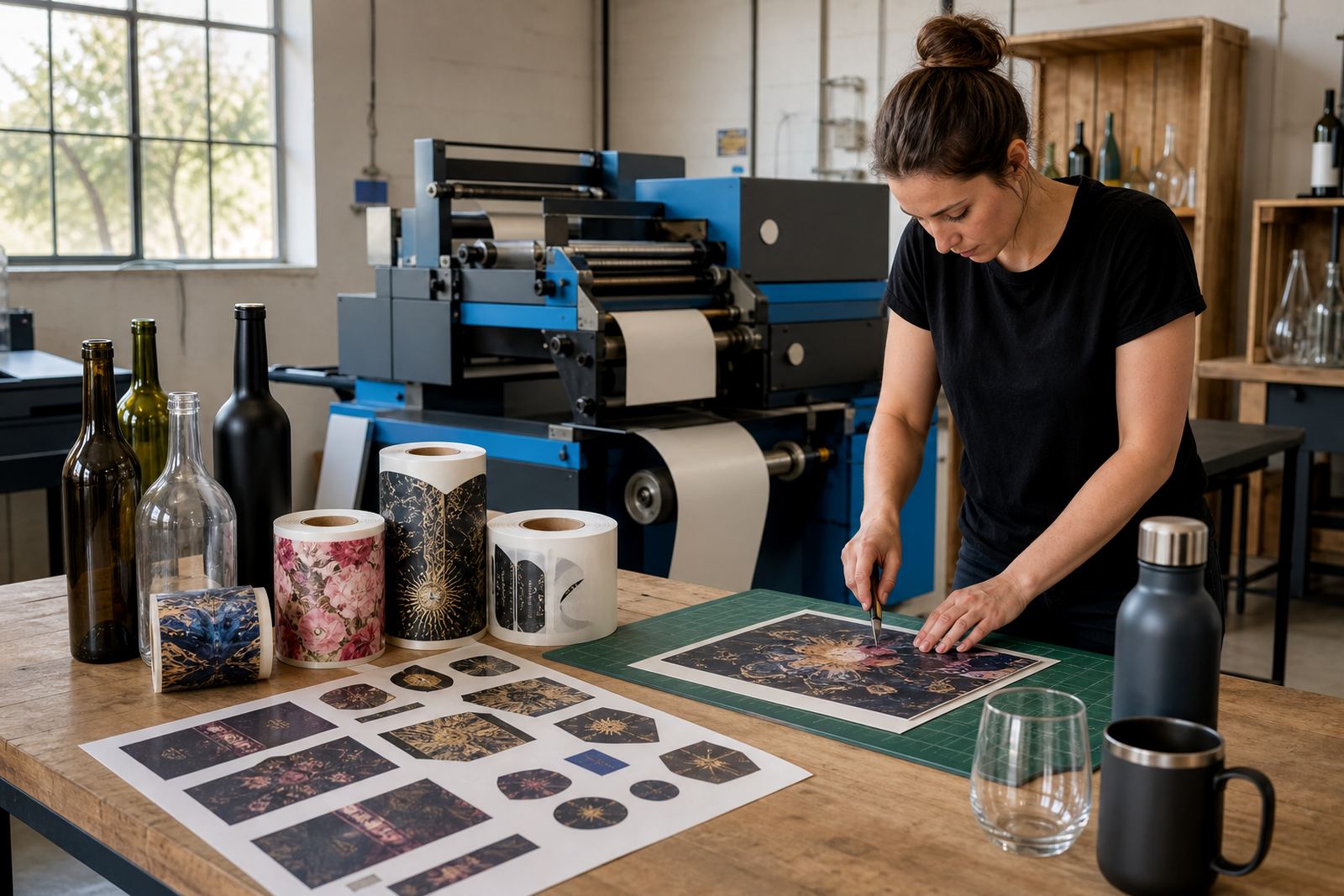
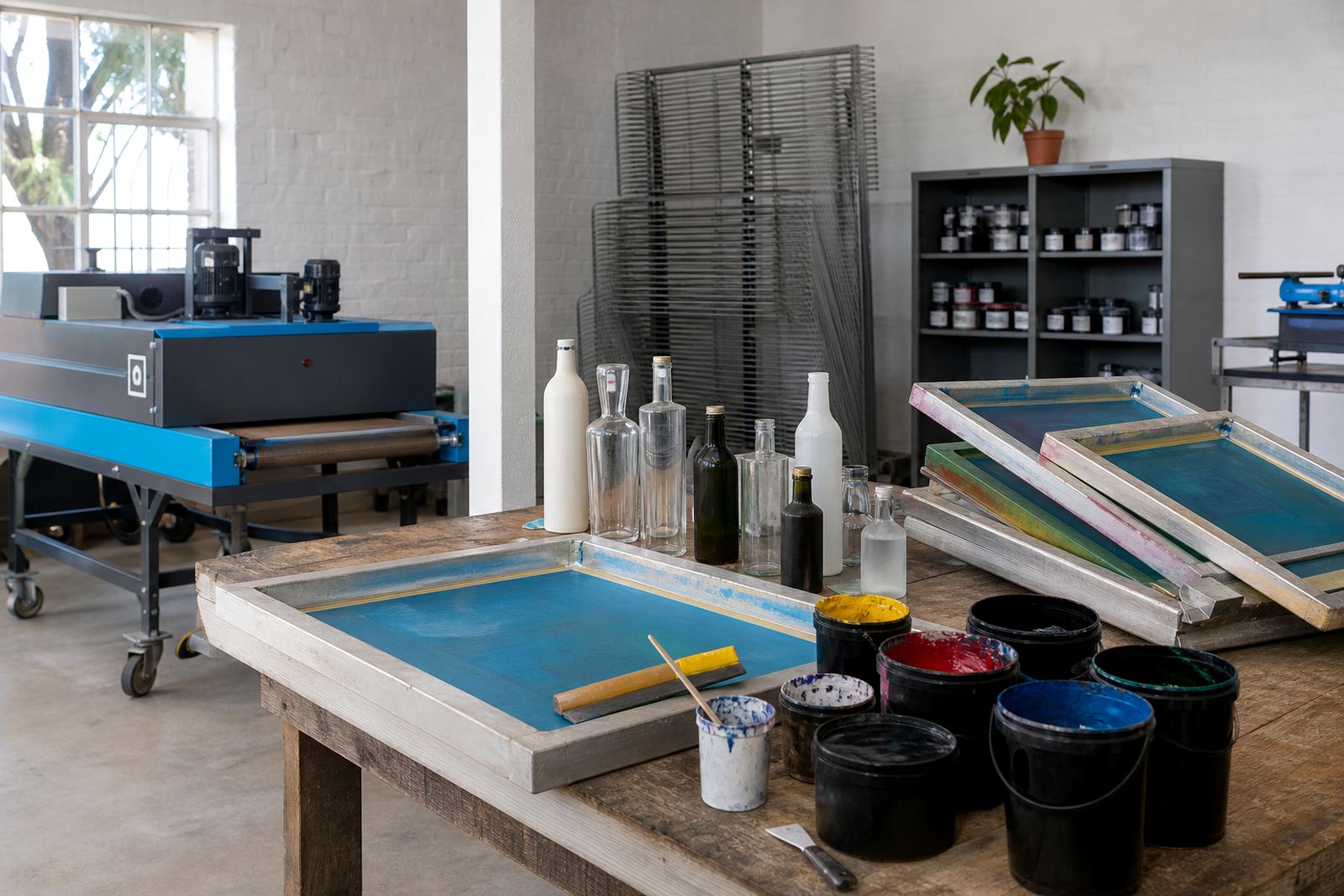
For wine bottles, gin bottles, water bottles, tumblers and stemware, the proof sets out how the decoration method will land on the shape. That can mean a UV direct print on glass, a screen print with a solid ink build, a ceramic enamel finish for fired ware, or a label layout with bleed, trim and wrap points marked clearly.
- Final layout and scale on the selected item
- Placement of logos, text and fine detail
- White ink layers where needed for opacity
- Print method notes for the job file
Artwork checks that keep the run steady
The artwork stage is where small faults are easier to catch. Low resolution images, thin strokes, missing bleed, overpacked text and colour shifts can all change the result once the artwork hits glass or curved drinkware.
Our team checks the supplied files against the item size and print method. If the job is going to be printed on a slim wine bottle or a rounded gin bottle, the artwork needs to suit the curve and the usable print band. On label work, the same check covers cutter size, safe zones and panel spacing so the final label sits straight and clean.
- Font sizes and line weights for short runs
- Bleed and safe area on labels
- Colour guidance for coated and clear surfaces
- White ink use on dark glass or coloured drinkware
How the proof approval flow works
The process starts with the chosen bottle or drinkware type, the print method and the artwork supplied for the job. From there, the layout is adjusted to suit the actual item dimensions, then prepared as a proof for sign-off.
Once the proof is checked, any changes are marked and the file is updated before production. For short runs, that control matters because a small placement shift on a 330 ml water bottle or a 750 ml wine bottle can change the whole look. The approval step closes the gap between the artwork screen and the printed result.
- Step 1: Confirm the item, size and decoration method
- Step 2: Prepare the artwork and print layout
- Step 3: Review the proof and note changes
- Step 4: Approve final sign-off for production
Typical production specs for proofed jobs
Proofs are set up around the actual decoration method, so the checks differ from one job to the next. UV direct print suits fine detail and short runs on glass or coated drinkware. Screen printing is better where a bold solid colour is needed. Ceramic enamel is used where a fired finish is required on suitable glass or ceramics. Labels are prepared with the correct trim, panel size and wrap allowance.
Minimum runs depend on the item and print method, and short-run advice is part of the service. The proof shows where the artwork sits within the usable area, and it also flags whether a white base, spot colour build or label overlap is needed. That keeps the job practical when the order is moving between wine, gin and water bottle formats.
- Glass bottles, coated drinkware and selected ceramics
- UV direct print, screen print, ceramic enamel and labels
- Short-run layout checks for curved and flat surfaces
- Minimum run guidance tied to method and item type
Pricing approach for proof approvals
Pricing depends on the number of items, the complexity of the artwork and the print method involved. A single simple label proof does not carry the same setup as a multi-colour bottle print with white ink layers and separate placement checks.
Short runs can need more file handling per unit, especially where the artwork needs resizing for different bottle shapes or where the client wants a mock-up visual before the run. The quote follows the actual work in front of the team, not a one-size rate. That keeps the numbers tied to the artwork setup, print prep and the number of proof rounds needed.
- Item type and print surface
- Number of colours and artwork layers
- Need for mock-up visuals or label setup
- Quantity and decoration method selected
Aftercare once the proof is approved
After sign-off, the production file is kept aligned with the approved version so the printed output matches the agreed layout. If a client is reordering the same bottle or drinkware later, the saved artwork notes help keep the placement and colour handling consistent.
Aftercare also covers packing notes, carton marking and handling guidance for printed glass and drinkware. For bottles going to Cape Town, Stellenbosch, Franschhoek, Johannesburg, Durban, Somerset West or Constantia, the pack format matters just as much as the print itself. Proper packing reduces scuffing, edge knocks and handling marks in transit.
- Approved artwork held against the production file
- Packing notes for glass, ceramic and drinkware items
- Delivery planning for South African destinations
- Label and print records kept for repeat runs
Key facts
| Service area | Paarl, Cape Winelands with delivery across South Africa |
|---|---|
| Decoration methods | UV direct print, screen printing, ceramic enamel and labels |
| Item types | Wine bottles, gin bottles, water bottles, tumblers and selected drinkware |
| Artwork support | Artwork checks, mock-up visuals and label artwork setup |
| Approval stage | Final layout, placement and artwork intent signed off before production |
| Run size | Short runs with minimum run advice per method and item |