Reading the bottle, not only the artwork
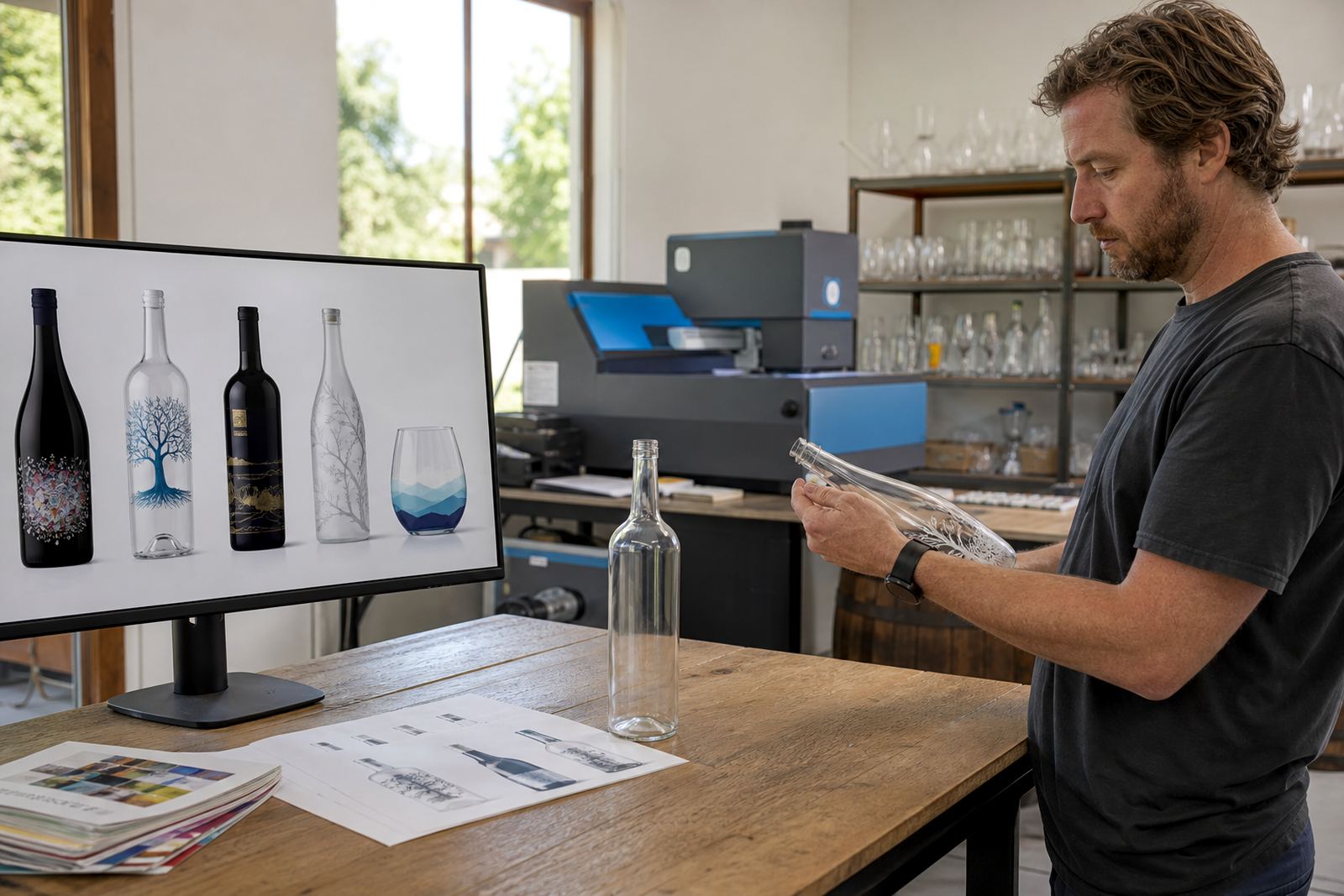
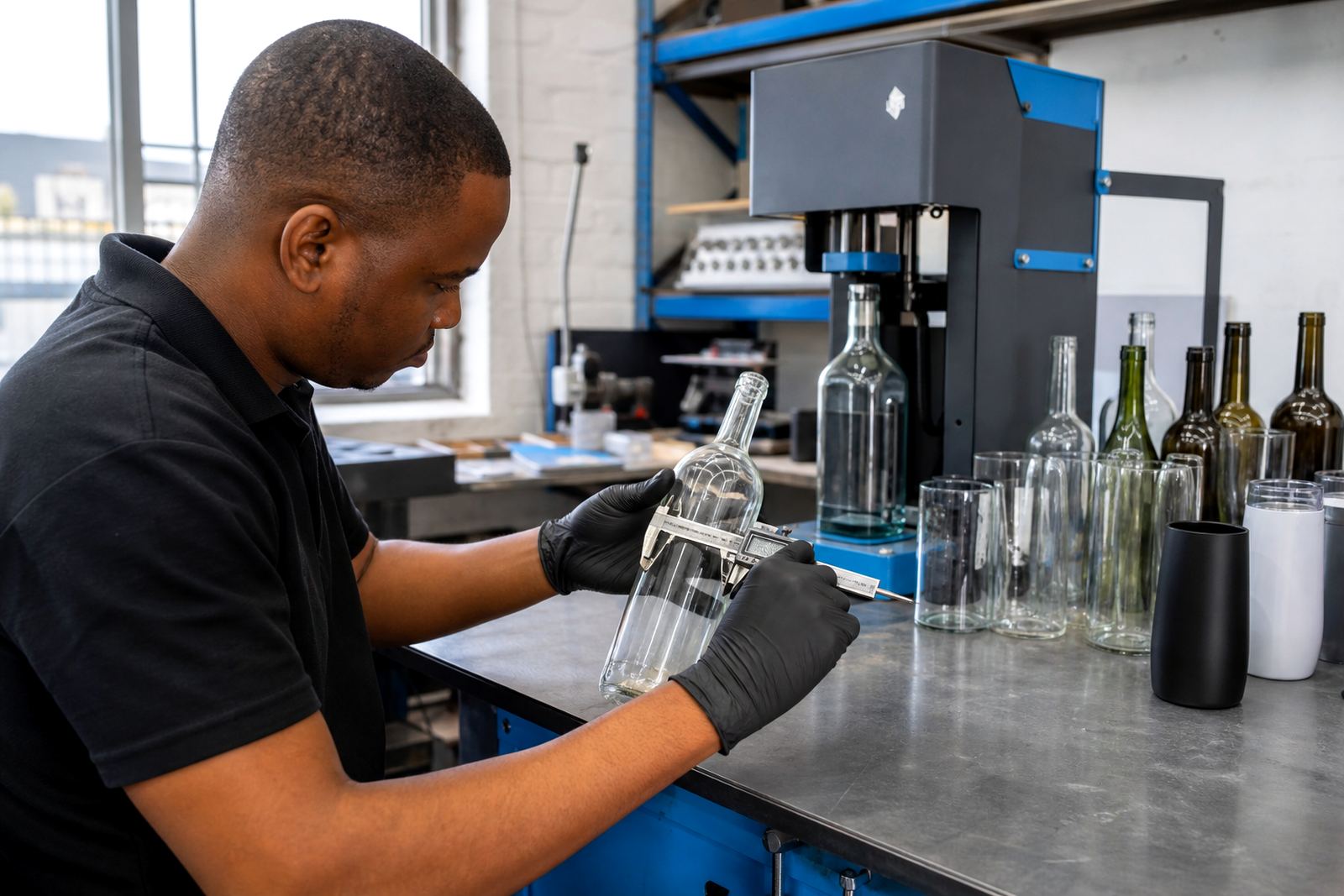
We begin print area planning with the bottle or glass in front of us. A straight glass wall gives one type of space, while a tapered bottle or a stemmed glass gives another. We check the usable band, the neck transition, the shoulder sweep and any mould line or seam that could cut through a logo or text block.
That check matters on wine bottles, gin bottles, still and sparkling water bottles, stainless steel tumblers and glassware. The print area changes with diameter, height and the decoration method, so the same artwork may need different placement on each item. On short runs, that planning saves wasted stock and awkward layouts.
What gets checked before layout starts
Our team looks at the physical bottle or drinkware shape and marks the decoration zone that can carry the design cleanly. If the artwork wraps around the item, we allow for the seam break, the visual centreline and any area that should stay free for barcodes, legal text or fill level markings.
- Usable print height and wrap width
- Seams, mould lines and surface curves
- Shoulder taper and neck clearance
- Label panel size for front or wrap labels
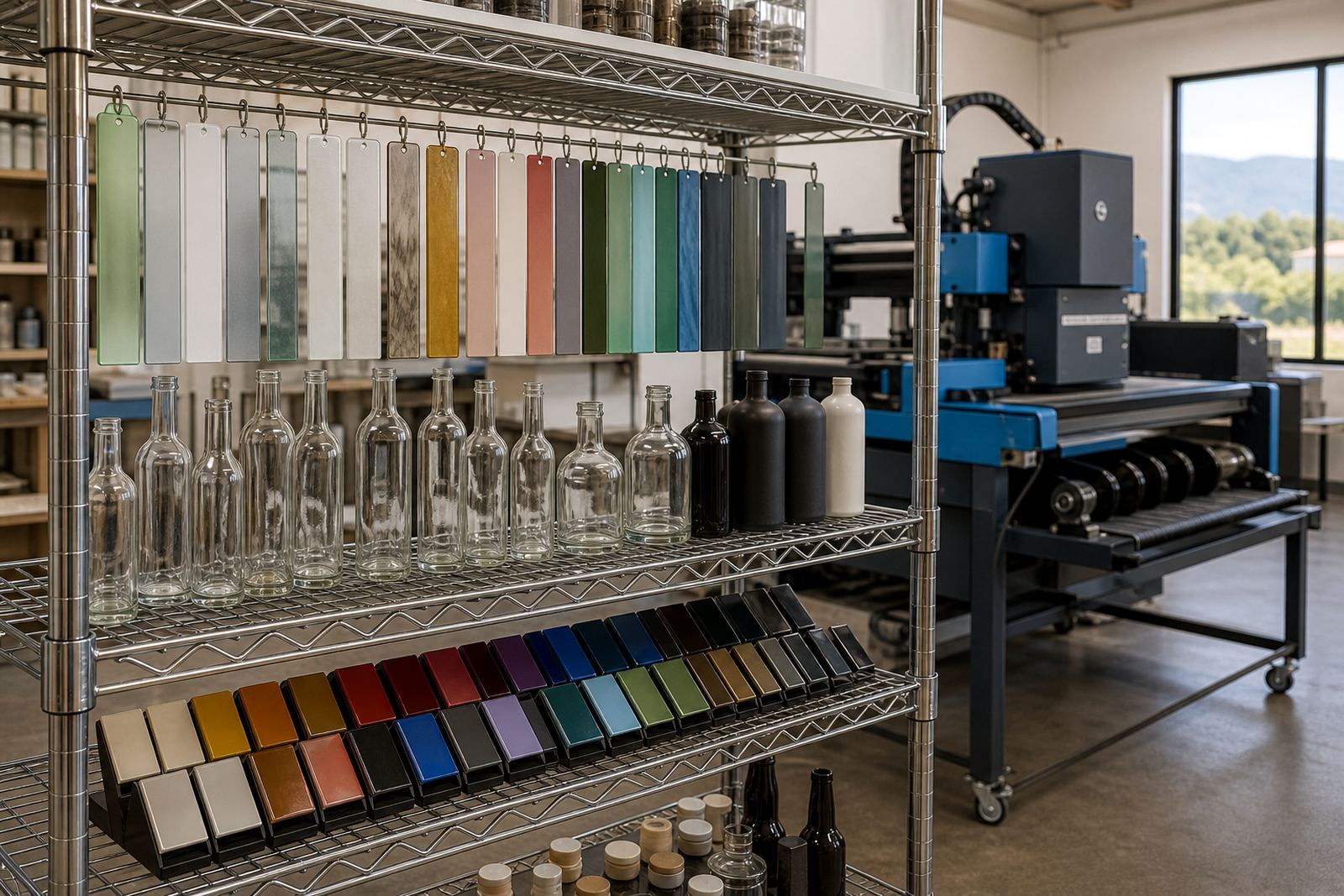
- Ink hold on glass, ceramic or coated metal
- White ink needs on dark or tinted surfaces
Method fit for UV, screen, enamel and labels
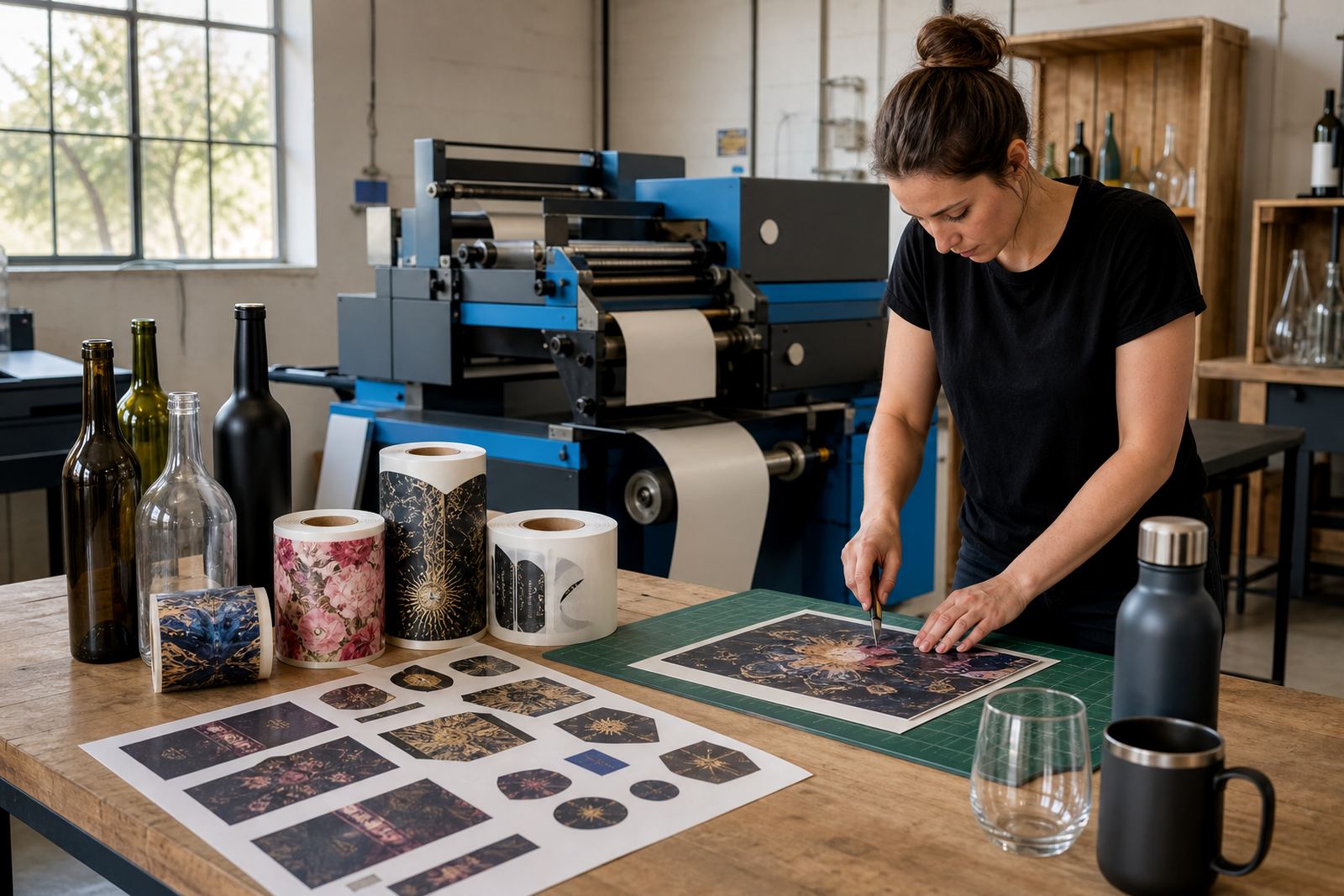
Different decoration methods need different print area decisions. UV direct print is suited to crisp artwork on many bottle and drinkware surfaces, but the artwork must stay inside the flat or gently curved zone that the print head can reach. Screen printing is often used for solid colour blocks and cleaner spot colours, while ceramic enamel decoration needs room for curing and accurate registration. Labels can travel further around a curve, but they still need a panel that stays legible and true once applied.
We check the artwork against the method before production starts, then adjust the layout where needed. That may mean shifting a logo lower on a shoulder bottle, narrowing a wrap, or creating a label shape that avoids a lip or curve. It keeps the final piece practical for the surface, not only attractive on screen.
- UV direct print for detailed marks on glass and coated drinkware
- Screen printing for strong spot colour and repeat runs
- Ceramic enamel for fired decoration on suitable glassware
- Pressure-sensitive labels for flexible placement and short runs
Artwork proofing and usable measurements
Once the print area is confirmed, the artwork is set to that size and shape. We prepare proofs that show the placement on the item, the margins, the safe zone and any overlap or wrap point. That proof step is where small adjustments are made before the run is approved.
Good artwork for bottles is not only about resolution. It also needs the right line thickness, clear type size and enough breathing room around the edge. Fine lines can vanish on curved glass, and small copy can break up on textured or tinted surfaces. We flag those risks early so the final result reads well on the actual bottle.
Short-run production without wasted stock
Print area planning is especially useful on shorter quantities where every bottle matters. The run may be for a launch dinner, a wedding, a tasting room release or corporate gifting, and the bottle size may change from one brief to the next. We set the artwork for the stated run, not a generic template, so the decoration lands in the right place on each item.
Minimum run advice forms part of the process too. Some methods suit lower quantities better than others, and the available print area can affect what is practical on the line. When needed, we talk through the surface size, artwork complexity and packing method so the brief matches the decoration route.
Turnaround, pricing and what affects the quote
Turnaround is shaped by three things: the decoration method, the quantity and the level of artwork setup needed. A label job with a straightforward shape is handled differently from a multi-colour direct print on curved glass, and ceramic enamel brings its own curing and set-up steps. Packing requirements also affect the schedule, especially when bottles are going to different delivery points across South Africa.
Pricing follows the actual decoration work, not just the number of pieces. Surface complexity, number of colours, white ink layers, proof changes and separate item sizes all influence the quote. If the brief includes mixed bottle shapes or both bottles and drinkware, we plan each line item on its own merits so the cost structure stays clear.
- Quantity and number of print colours
- Method selected for the surface
- Artwork setup and proof changes
- White underlay or special ink layers
- Label shape, finishing and application needs
Aftercare for decorated bottles and drinkware
Once the run is packed, the decorated pieces still need sensible handling. Printed glass and drinkware should be packed to avoid scuffing, and labelled items need care if they are chilled, moved through condensation or stored in humid coastal conditions. That is especially relevant for delivery into places like Cape Town, Durban and other humid or warm districts.
We share handling notes for the decoration method used. Some prints are fine for regular service, while others need gentler washing or avoidance of abrasive pads. Ceramic enamel and certain screen printed finishes can perform differently from labels, so the care notes match the material rather than a generic instruction sheet.
Paarl coordination for South African delivery
From Paarl in the Cape Winelands, the service is set up for local wine and spirits packaging work as well as corporate and event briefs. Deliveries move across South Africa, including Cape Town, Stellenbosch, Franschhoek, Johannesburg and Durban, with branch area coordination for Somerset West and Constantia where needed. That spread matters when a brief includes different bottle shapes for different venues or activation points.
Once the details arrive, the job is assessed for print area, method fit and packing needs. The team then works through the layout, proof and production steps in sequence so the bottles or drinkware are ready for the run that was planned.
Key facts
| Primary methods | UV direct print, screen printing, ceramic enamel and labels |
|---|---|
| Typical items | Wine bottles, gin bottles, water bottles, glassware and drinkware |
| Print area checks | Curves, shoulders, seams, wrap width and safe zones |
| Artwork support | Placement guidance, proof setup and mock-up visuals |
| Minimum runs | Method dependent, with advice matched to surface and quantity |
| Base | Paarl, Cape Winelands, with delivery across South Africa |