White glass shapes and where print lands
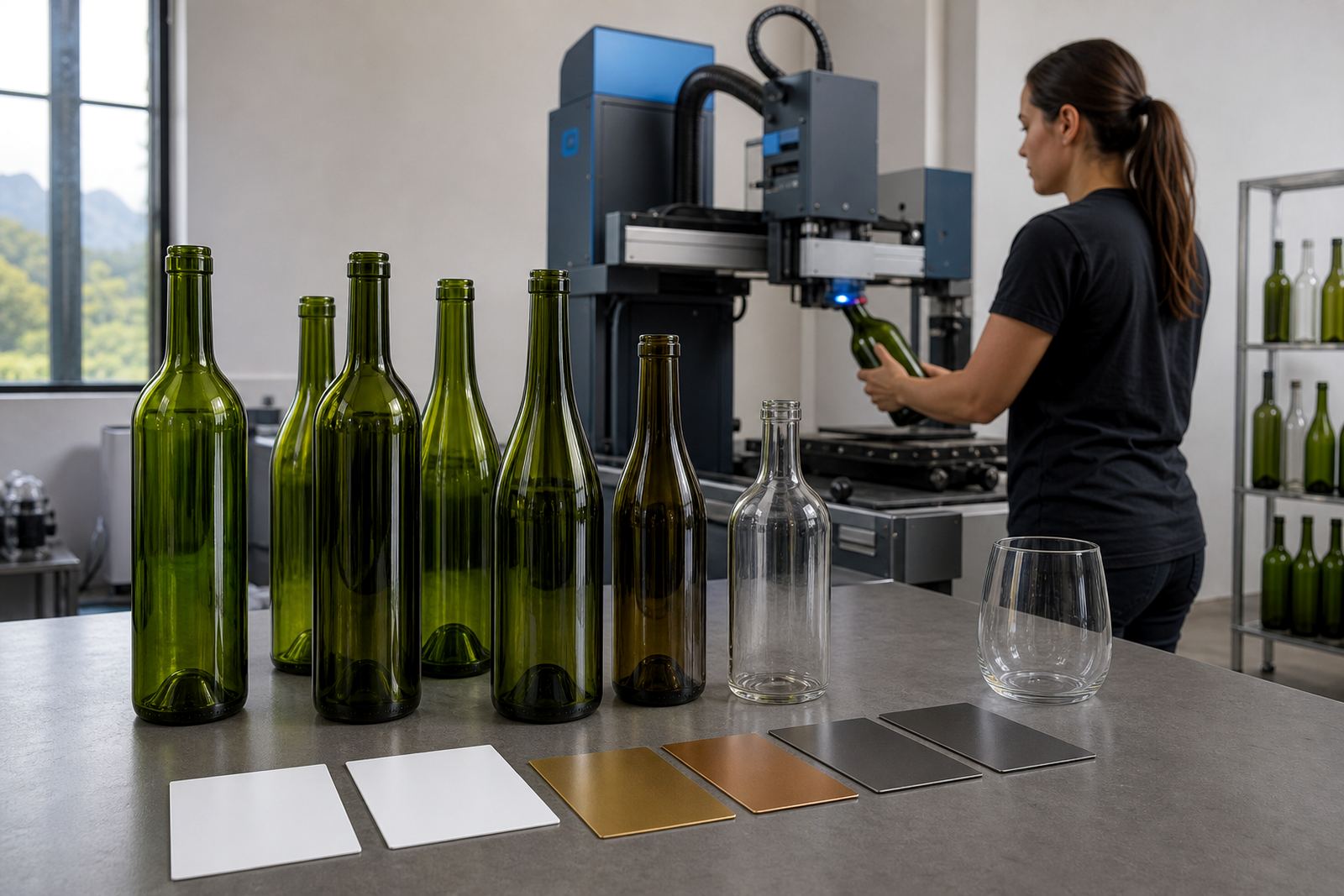
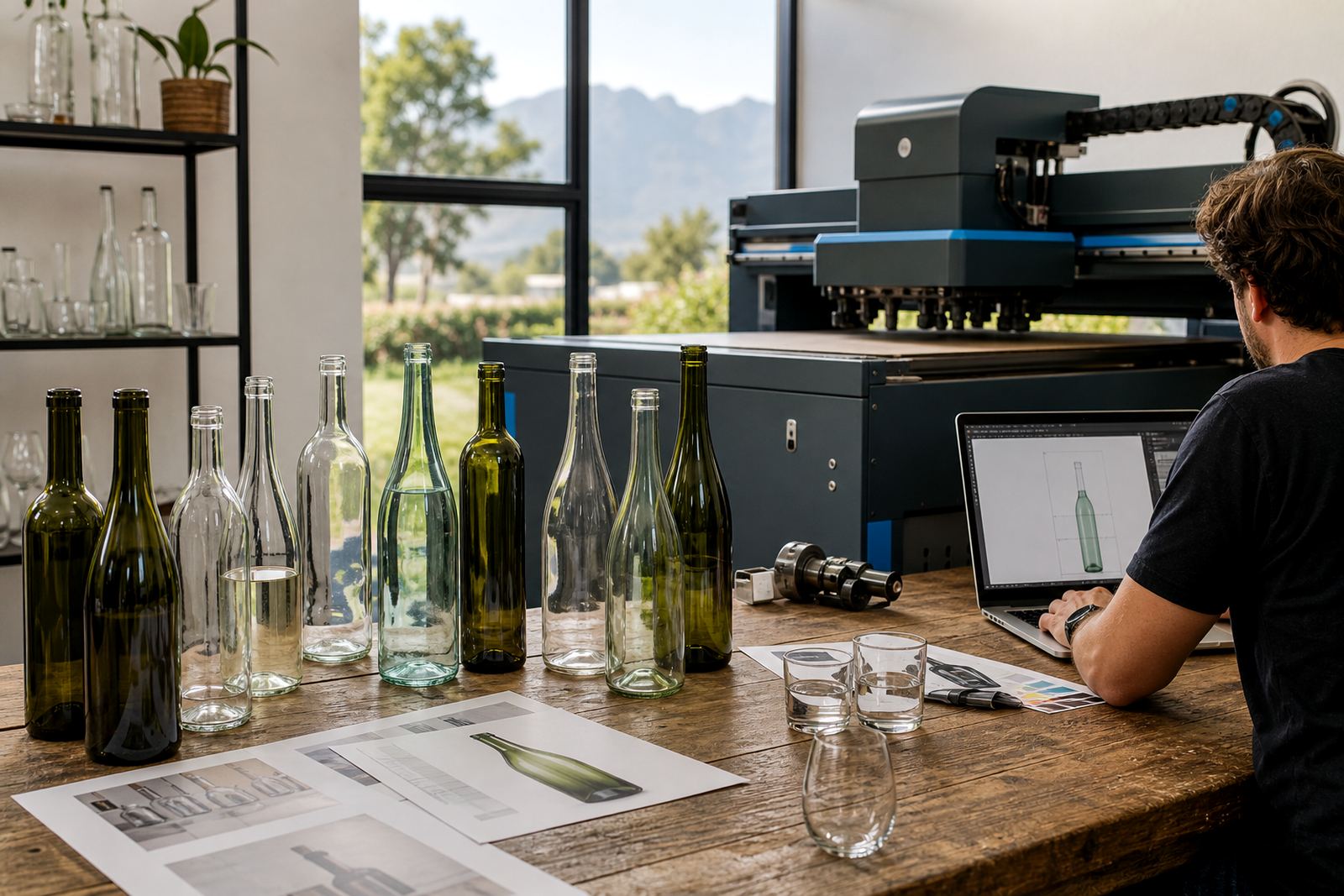
White wine bottles are usually tall, narrow and cool-toned in appearance, with a slimmer body than many red wine formats. Common options include Bordeaux style, Burgundy style, flute shapes and lighter sparkling formats, each with its own shoulder line and label panel. That profile matters because a curved shoulder can narrow the print zone, while a straight-sided body gives more room for a label or direct print.
For branded bottles, we look at the cleanest area on the glass first. Some bottles suit a front label and a neck label, while others carry a full colour design lower down the body. On short runs, the bottle finish, shoulder drop and glass tint all affect the final result, so the artwork is set to the actual bottle shape before print setup.
- Bottle heights often range from about 280 mm to 330 mm
- Typical volumes are 375 ml, 500 ml and 750 ml
- Finish types may include cork, screw cap or sparkling closures
- Print zones change with shoulder profile and label panel width
Decoration methods for white wine bottles
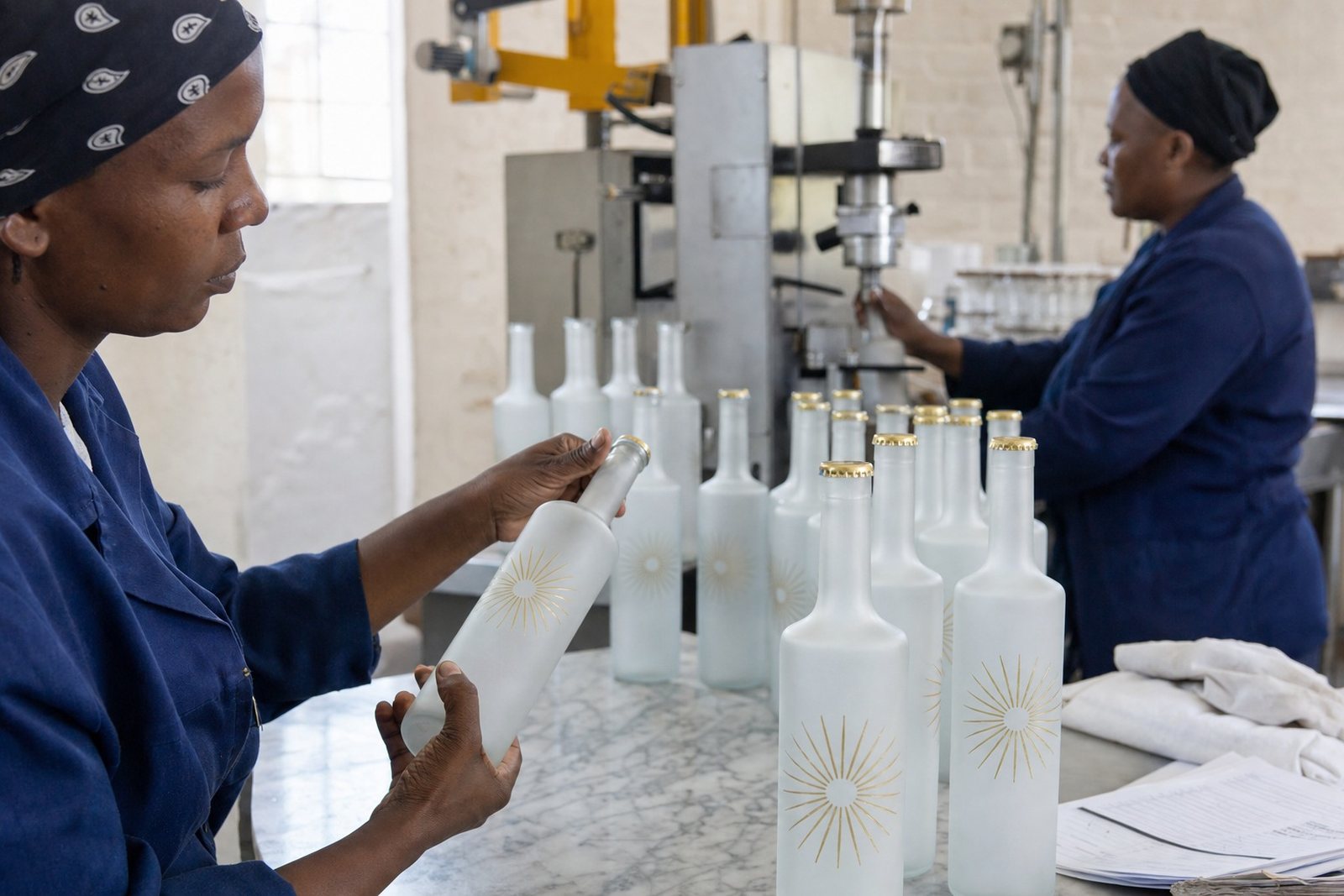
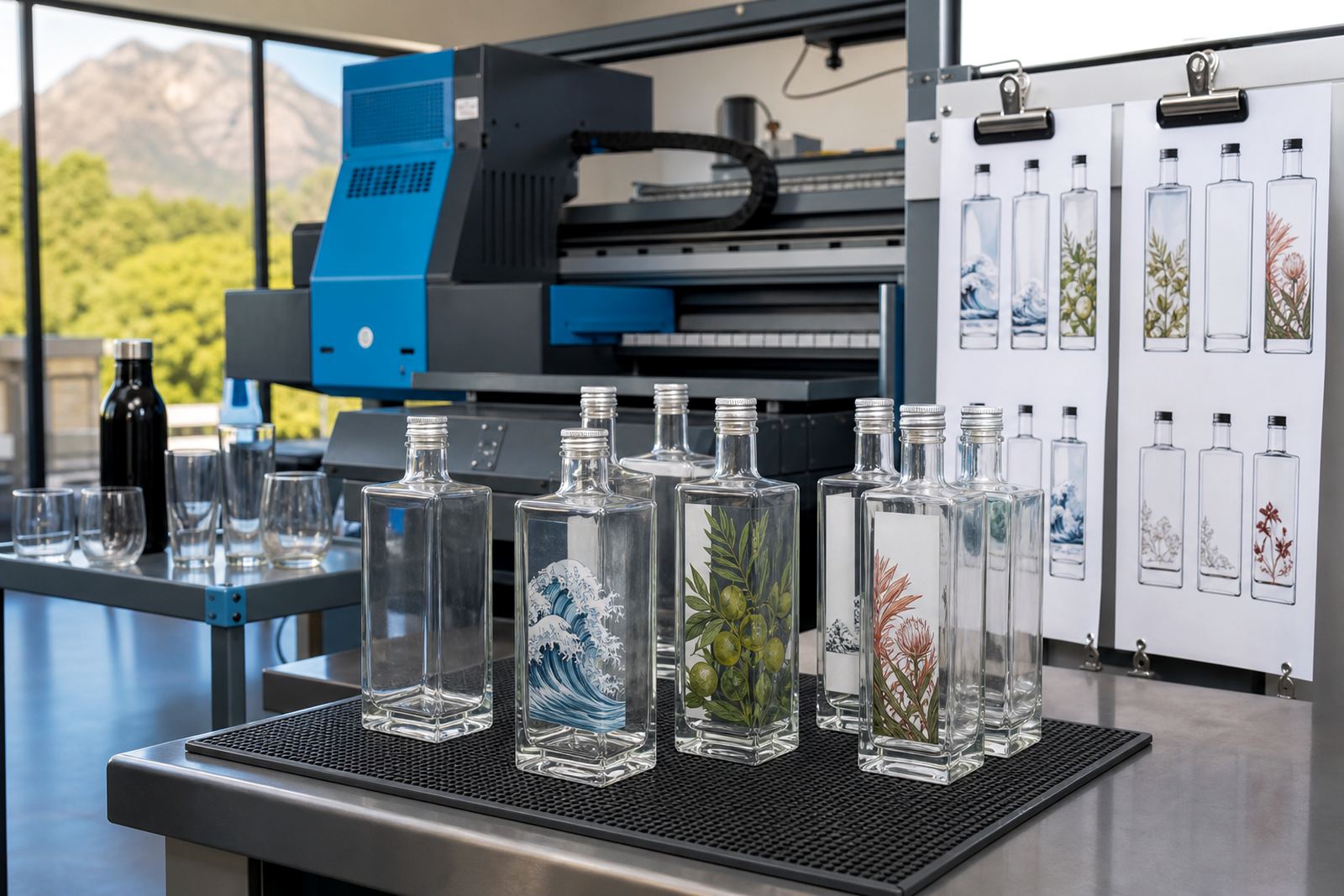
White wine bottles can be decorated with UV direct print, screen printing, ceramic enamel or labels, depending on the finish you want and the quantity in the run. UV direct print works well for sharp text, logos and colour blocks on clean glass surfaces. Screen printing suits bold graphics and repeat runs where a solid ink layer is needed. Ceramic enamel is used where a fired glass finish is required and the job calls for stronger permanence. Labels are still useful where artwork changes often or where the bottle shape leaves less print area.
For white wine bottles, white ink layers are often part of the setup because glass can be clear, green-tinted or lightly frosted. That underprint helps lighter colours stand out and keeps small lettering readable on a transparent surface. Artwork checks are important here, because a pale label on a light bottle can disappear if the background is not planned properly.
- UV direct print for short branded runs and full colour detail
- Screen printing for bold logos and clean spot colour work
- Ceramic enamel for a more permanent glass finish
- Paper, textured or clear labels for flexible artwork layouts
Where these bottles fit in trade use
White wine bottles are used for Sauvignon Blanc, Chenin Blanc, Chardonnay and other chilled styles, but the same bottle format also appears in tasting packs, event bottles and corporate gifting. Many clients use them for launch boxes, cellar door specials and premium hampers where the bottle itself carries part of the presentation. A consistent print area helps keep the batch looking matched when the run is short and each bottle is handled by hand.
They also work for related drink categories where the bottle shape suits a lighter presentation. Gin, still water and other beverage projects can use the same family of bottle sizes if the neck, shoulder and closure line up with the intended pack. In all cases, the label field and decoration zone need to be checked against the glass shape before the run starts.
- Wine releases for tasting room and retail use
- Event bottles for launches, functions and hospitality packs
- Corporate gifting with printed neck and body detail
- Short runs where artwork changes by batch or occasion
Artwork, proofs and run planning
White wine bottle artwork has to follow the bottle, not only the flat artwork file. We check image placement, text size, bleed, white ink use and the print wrap before approval. If the bottle has a tapered shoulder or a narrow front panel, the artwork is adjusted so the logo sits straight and the label edge does not fight the glass line.
Proofs are issued before production so the layout can be checked against the actual bottle size and decoration method. That step is useful for short runs where a small shift in the print position becomes very visible on the shelf. Minimum run advice is part of the planning too, because some methods suit smaller quantities while others need a larger batch to make setup practical.
- Vector logos are preferred for crisp edges and clean scaling
- Fonts need enough weight for small print areas
- White ink layers may be needed on clear or tinted glass
- Run counts should match the bottle method and artwork complexity
Packing, handling and care after printing
Printed white wine bottles need careful packing because glass edges, shoulder curves and printed panels can pick up marks if they are stacked too tightly. We prepare packing briefs for bottle cartons, gift packs and mixed drinkware orders so the print area stays protected in transit. For glass that has been screen printed or decorated with ceramic enamel, handling needs to stay gentle until the bottles are packed and distributed.
Once the bottles are in the trade channel, basic care is straightforward. Keep printed surfaces away from hard rubbing, abrasive cloths and strong alkaline cleaners. For labels, dry storage helps avoid curl, softening or lifting at the edges. Where bottles will move through tasting rooms or event tables, the label placement should leave enough clear grip space around the neck and base.
- Store upright where possible and keep cartons dry
- Wipe printed areas with a soft cloth
- Avoid scouring pads and harsh solvent cleaners
- Check that labels do not bridge a deep shoulder curve
Key checks before we lock in the run
White wine bottle work moves better when the bottle, closure and artwork are aligned from the start. The glass colour, exact bottle volume and decoration method all affect the final layout. We need to know if the run is for wine, gin, water or gifting, because that changes how we set the text and where the print should stop near the shoulder or base.
For smooth production, confirm the bottle type, the quantity required, the decoration method, the label size if labels are being used, and any extra marking such as neck print or a back panel. If you are sending artwork, the file should match the size of the chosen bottle and leave enough room for trim and safe text. That avoids guesswork around a narrow shoulder or a curved front panel, which is where white wine bottles often need the most care.
- Bottle volume and exact shape
- Glass colour and finish, including clear or tinted options
- Decoration method, such as UV print or labels
- Artwork size, text count and any wrap requirements
Key facts
| Bottle types | White wine, sparkling style, gin and still water formats |
|---|---|
| Common sizes | 375 ml, 500 ml and 750 ml |
| Decoration options | UV direct print, screen printing, ceramic enamel, labels |
| Artwork support | Artwork checks, white ink layers, print area planning and proof approvals |
| Typical fit notes | Shoulder profile, neck length, label panel and closure type |
| Service area | Based in Paarl, we supply heavy-base bottles in Durban, Johannesburg, Franschhoek, Stellenbosch and Cape Town. |