
Stemless glass options for tasting rooms and gift packs
Stemless glasses are a practical fit for wine service, table gifting and branded hospitality. The shape sits lower on a table than a tall stemmed glass, and that makes it easier to pack, store and hand out at functions. For wineries, distilleries and corporate gifting, they work well as a gift that feels useful without taking up much shelf space.
We handle a range of plain glass drinkware for decoration, including clear stemless wine glasses, fuller bowl tasting glasses and thicker wall options for event use. Depending on the look and the decoration method, the glass can be supplied with a smooth print zone, a slightly curved body or a heavier base for handling. For etched-style looks or colour branding, the shape and wall thickness need to be checked against the print area before the run is approved.
- Common capacities include 250 ml, 300 ml and 350 ml.
- Shorter bowls suit casual tasting and gift sets.
- Heavier bases are useful for hospitality and event handling.
- Clear glass gives the cleanest print read for logos and wording.
Decoration methods that suit glass and drinkware
Different branding methods suit different stemless glasses. UV direct print is often used for crisp logos, line art and full-colour marks on smoother glass surfaces. Screen printing works well where a strong single colour or a limited colour set is needed. Ceramic enamel is the right route for a more durable fired finish on compatible glassware, while labels suit runs where variable artwork, product naming or event details need to be added without printing directly onto the glass.
The print method changes the finish, the feel in hand and the layout rules. A label allows more text, but the edges and wrap area must be planned carefully. Direct print keeps the branding on the glass itself and needs clean artwork, correct sizing and a stable print zone. For runs with white ink layers, the underbase has to be built properly so colour holds its strength on clear glass.
- UV direct print for short runs and detailed artwork.
- Screen printing for bold logos and single colour branding.
- Ceramic enamel for fired decoration on suitable glassware.
- Labels for flexible layouts, event names and mixed artwork.
Sizes, print areas and layout control
Stemless glasses vary quite a bit in bowl width, wall thickness and usable print space. A 250 ml tasting glass will not carry the same decoration area as a 350 ml wine glass, and the artwork needs to sit clear of the curve near the base. That is where print area planning matters. A logo that looks fine on screen can shift once it meets the curve of the glass, so the artwork has to be checked against the real shape before production moves ahead.
We look at artwork size, safe margins and the position of text or marks around the glass. Where a wrap print is needed, the seam point and visual balance need to be set out early. For multi-glass sets, the same artwork may need separate setup if the glass profile changes from one item to the next. Minor adjustments to line weight or colour fill can make a clear difference on the finished piece, especially on lighter glasses.
- Check the glass capacity and rim height first.
- Allow for curve, seam point and handle-free grip space.
- Keep logos bold enough for small viewing distances.
- Set text sizes so names and event details stay legible.
Smart uses for stemless glasses
These glasses suit tasting rooms, lunch functions, launch tables and corporate packs where the drinkware must look neat and travel well. They also suit wine farms that want a more relaxed serving style for tastings or outdoor events. For distilleries and water brands, the same shape can be used for premium gifting, hospitality tables or boxed sets where the branding needs a clean surface and a simple finish.
In the Cape Winelands, stemless glasses are often ordered for controlled event quantities rather than large retail ranges. That makes short runs useful when the artwork changes from one event to the next, or when a venue wants a small batch for a seasonal function. The same glass can be decorated for guest packs, tasting counters and corporate hampers, as long as the decoration method and pack format are confirmed together.
- Wine tastings and cellar-door service.
- Corporate gifting and client hampers.
- Private events, launches and wedding tables.
- Hospitality sets for lodges and venue bars.
Artwork proofing and print prep before the run
Every glass order needs artwork set up for the chosen method. That means checking logo clarity, font sizes, colour breaks and the exact size of the print area on the glass. If a white layer is needed under colour, it must be built into the file so the print reads properly on clear glass. If a label is used, the wrap width, height and finish need to be set before print production starts.
Proofs help confirm what the final item should look like. For stemless glasses, we check the placement, size and relationship between the mark and the bowl shape. If there are several artwork versions for one order, each version needs its own proof. That keeps the print layout consistent across the batch and avoids avoidable surprises on a short run.
- Logo position and visible print area.
- Colour version, white underbase and line thickness.
- Label size, wrap length and bleed where relevant.
- Any naming, event date or batch-specific wording.
Packing, handling and care after branding
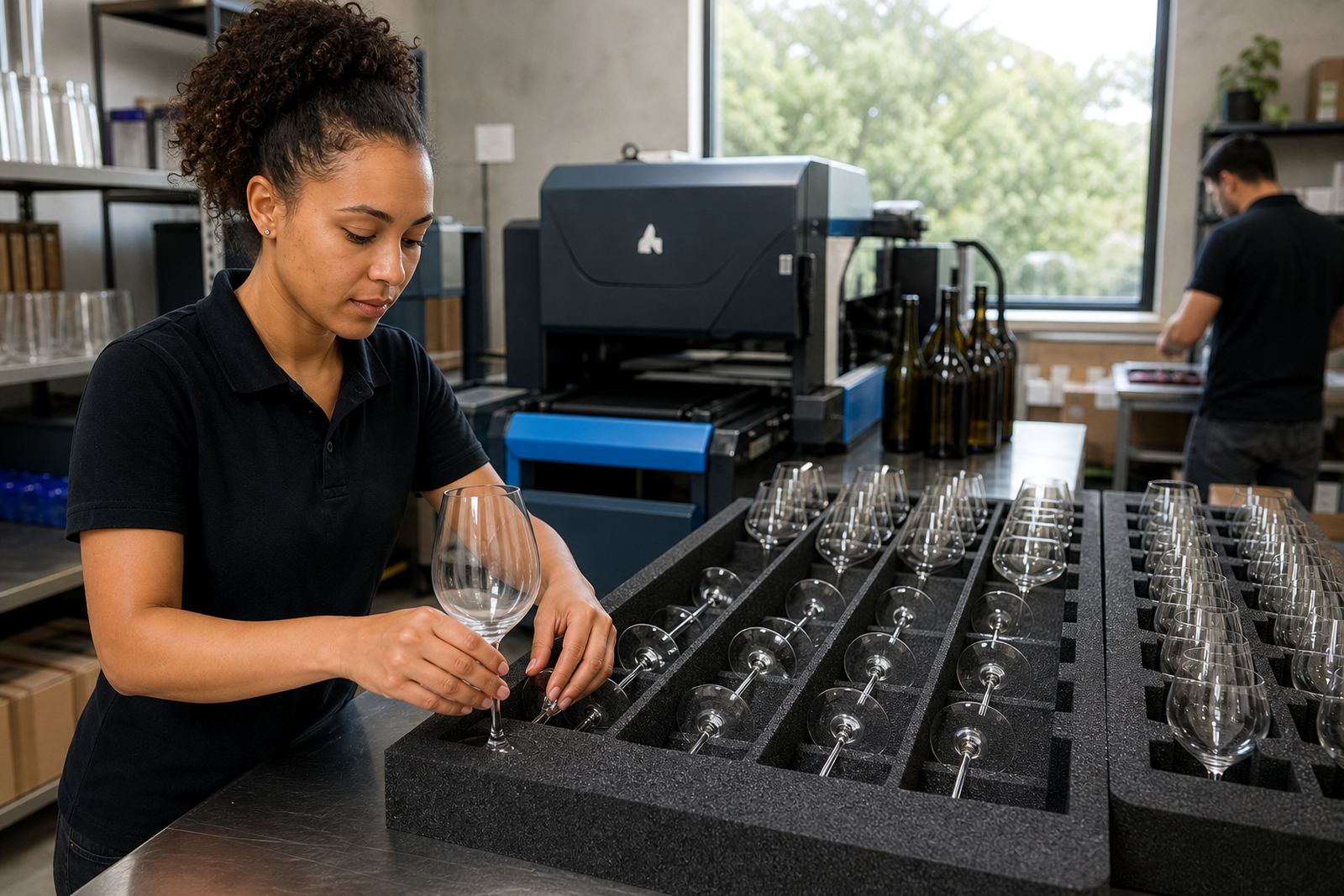
Printed stemless glasses need sensible packing, especially when the order is moving between Paarl, Cape Town, Stellenbosch, Franschhoek, Johannesburg or Durban. The glass should be packed so the printed area does not rub against other items in transit. For gift packs or event cartons, separators and inner wraps help protect the finish and keep the glasses clean on arrival. If the order is going into hampers, the packing brief should match the box size and the presentation style.
For care, gentle washing is the safer approach unless the chosen decoration method has been specified for stronger wash resistance. A soft cloth, mild soap and careful stacking help preserve the print for longer. Abrasive pads, harsh chemicals and repeated scraping near the printed area can mark the finish. Where the glasses are used for regular service, it helps to decide early whether they are for display, occasional event use or active hospitality turnover.
- Pack with separators for transport and gifting.
- Keep printed faces from rubbing against each other.
- Use mild wash methods and soft drying cloths.
- Store in a dry space with room between stacks.