Bottle shapes that suit cork closures
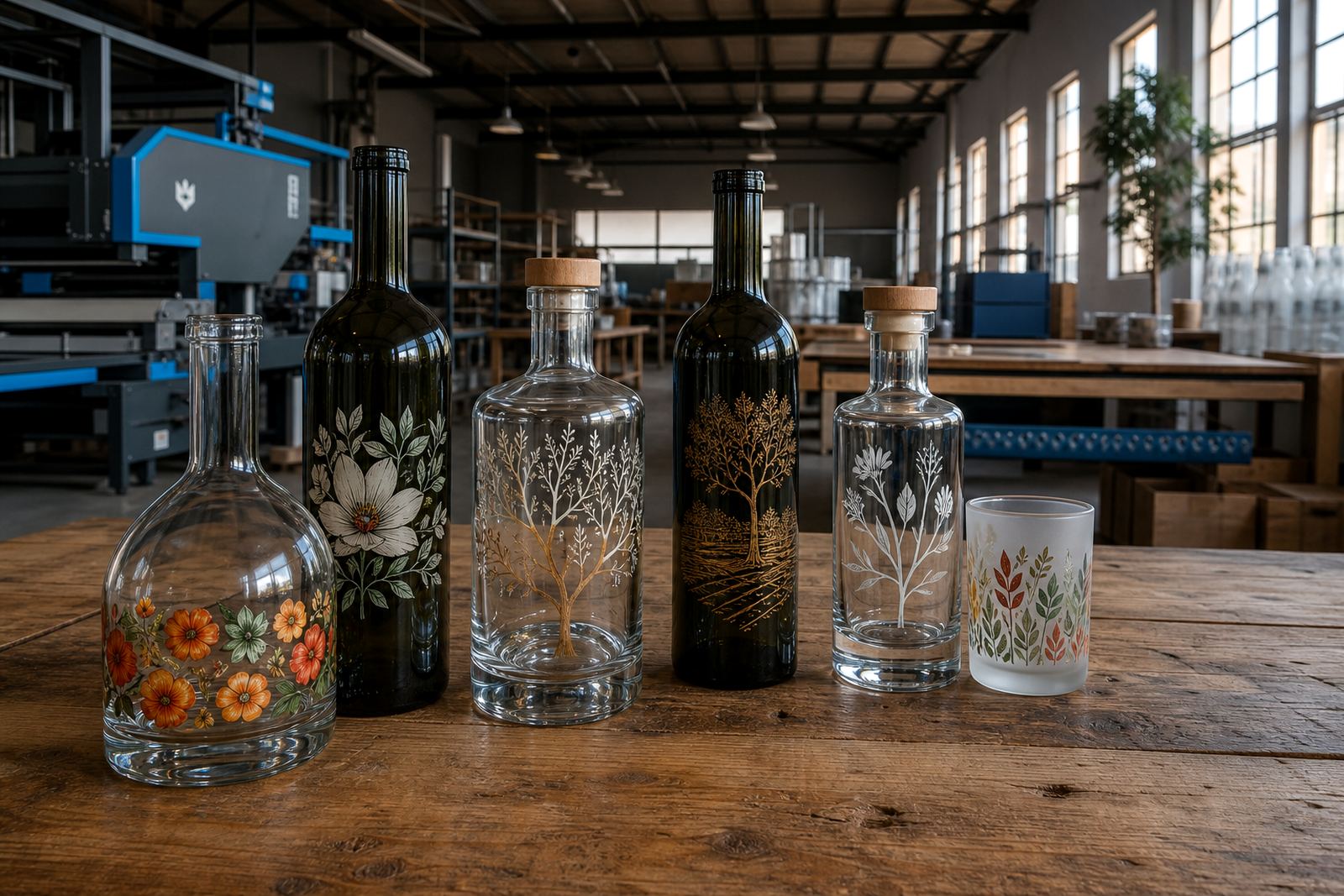
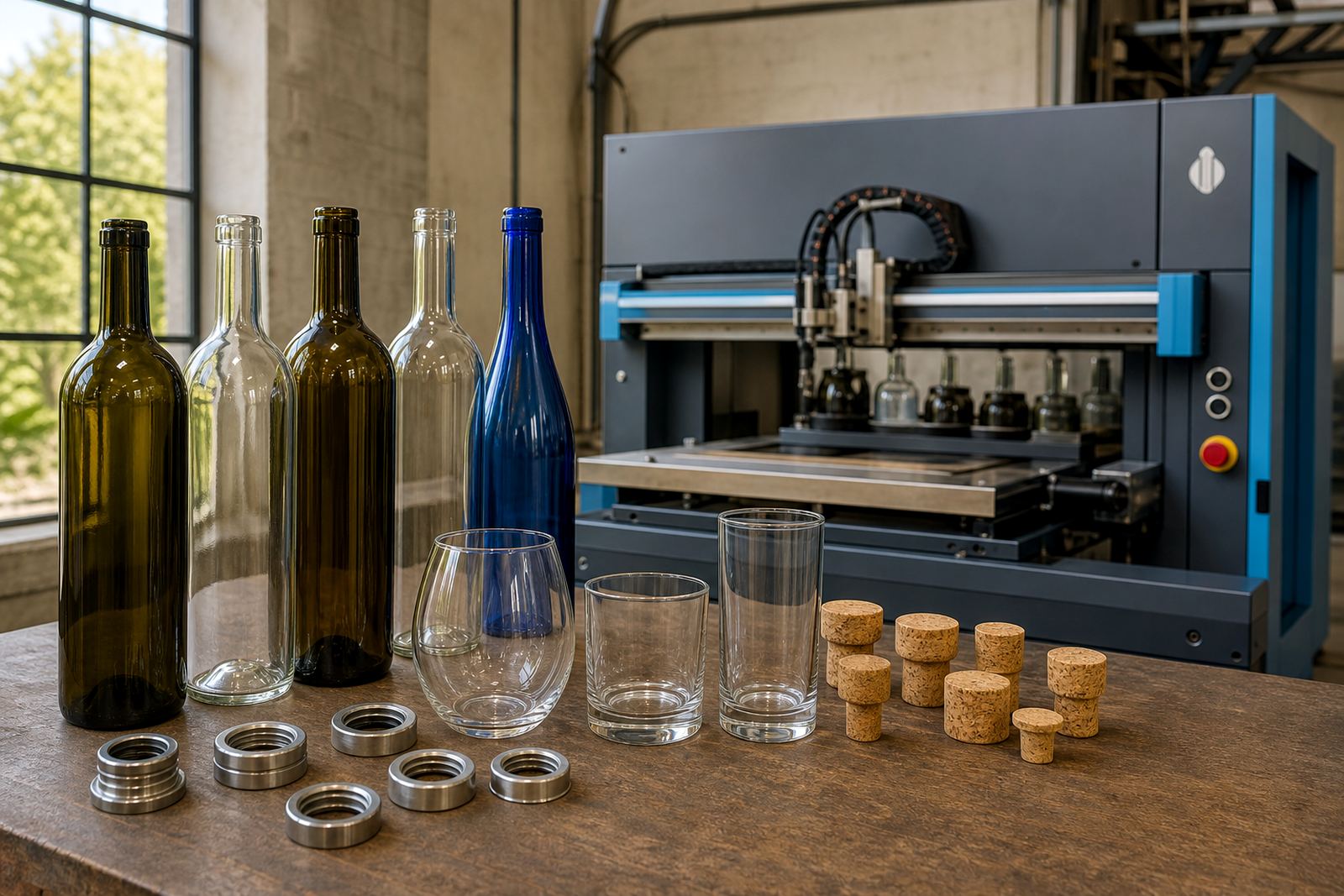
Cork-finish bottles are usually chosen for still wine, craft gin, botanical spirits and premium water presentations where the neck and closure need a classic look. The bottle itself may be clear, flint, amber or green glass, with straight shoulders, light curves or a heavier base depending on the drink and the label layout. We work with bottles that accept natural cork, agglomerated cork or synthetic closures, with neck finishes matched to the cap or stopper style before print work starts.
Short runs are common for tastings, launch gifts, cellar door sales and corporate packs. A smaller bottle can carry a clean front label and neck mark, while a larger bottle gives more room for back copy, batch details or a wrap label. Glass thickness matters too because heavier bottles can carry more weight in hand, and they need packaging that keeps the base stable during transport.
- Typical sizes include 250 ml, 375 ml, 500 ml, 750 ml and 1 litre.
- Body shapes can be tall and narrow, broad shouldered or squat base-heavy styles.
- Closure options include cork, stopper and cork-look presentation tops.
- Glass colour affects how labels read and how print tones sit on the bottle.
Decoration methods for short runs
Different bottle finishes suit different decoration methods. UV direct print works well for crisp logos, fine lettering and strong colour blocks on glass and some drinkware. Screen printing suits larger solid areas and repeated artwork where the design must sit firmly on the bottle wall. Ceramic enamel is used where a fired finish is needed, especially for glass pieces that need a more permanent decorated surface. Labels remain the most flexible option when artwork changes often or when a design needs more detail than direct print can carry.
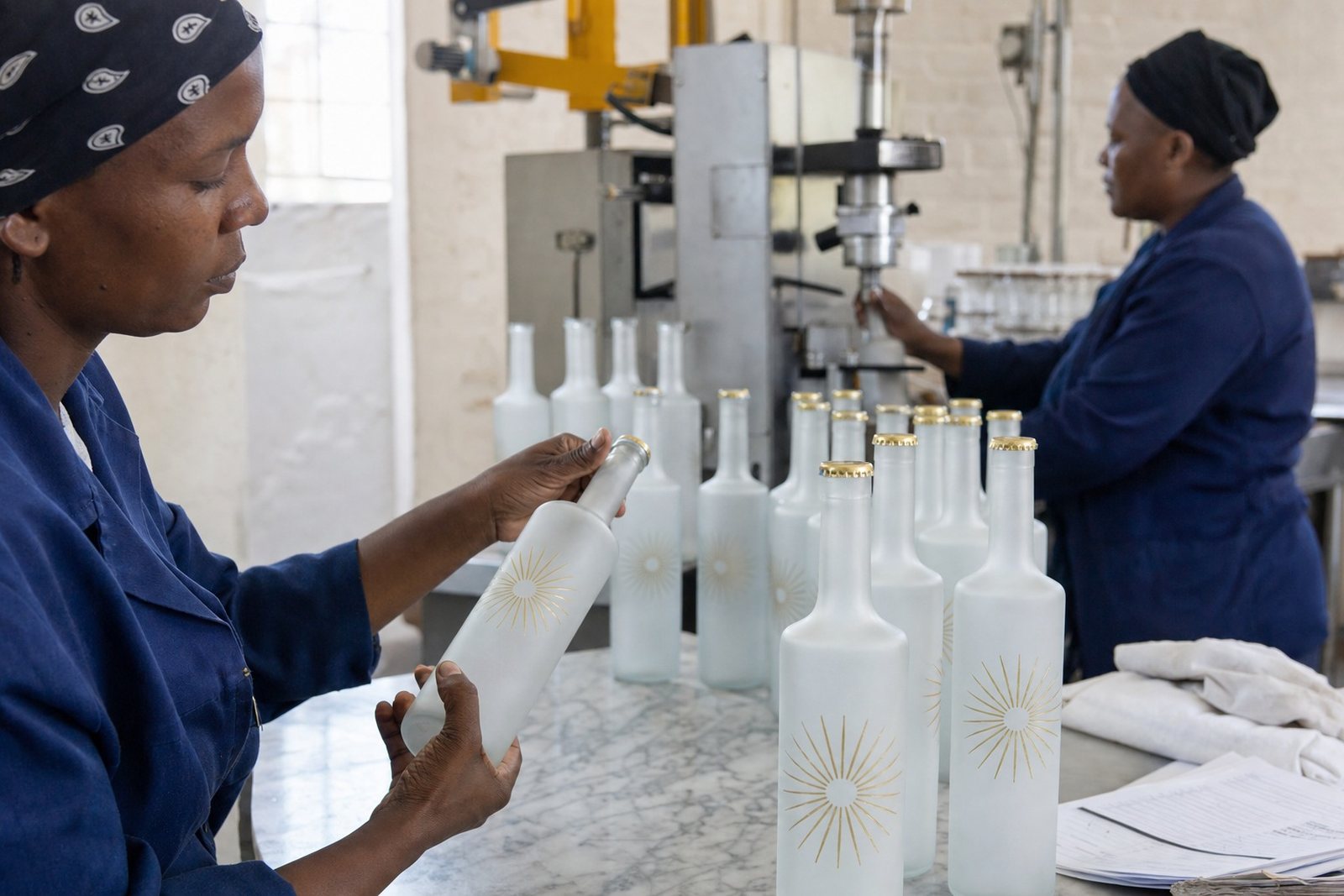
Artwork is checked before every run so the logo, text size and print area fit the bottle curve. White ink layers are often needed on dark glass or coloured artwork, and a mock-up visual helps show where the neck, shoulder and body will break the design. On bottles with a cork finish, the top section is often kept clear or lightly marked so the closure and neck collar stay visible.
- UV direct print suits short branded runs and mixed artwork sets.
- Screen printing is useful for bold one or two colour bottle decoration.
- Ceramic enamel supports a durable fired look on selected glass pieces.
- Labels allow more copy, barcodes and changing batch details.
Where cork-finish bottles work hardest
These bottles suit winery ranges, distillery releases and event packs where presentation matters just as much as the contents. In the Cape Winelands, they often go into cellar door stock, tasting room displays and gift packs for weddings or corporate functions. In Johannesburg and Durban, they are common for launches, seasonal gifting and hospitality packs where a neat closure and branded bottle help the product feel complete.
For water bottles, the cork-finish look is usually chosen for premium tables, conferences and private dining where a glass bottle must feel more formal than a standard screw-cap item. For spirits, the shape and closure need to be checked against the fill level and the way the bottle will be boxed, because a tall neck or wide shoulder can change the label placement and the packing layout.
- Good for wine, gin, botanical spirits and premium table water.
- Common in tasting rooms, retail packs and corporate gifting sets.
- Works with small event volumes and repeat runs in the same format.
- Often paired with neck tags, front labels or printed carton inserts.
Fitting the closure and handling the neck
The closure method needs to match the bottle neck finish, neck diameter and fill type. A cork-finish bottle may need natural cork insertion, a synthetic stopper, a wire cage on certain styles or a decorative top that sits with the collar. For branded gifting, we choose the closure colour and exposed neck length to suit the full presentation of the bottle, while still matching the technical requirements.
For decorated bottles, the closure should be fitted after print curing, label application or pack-out checks are complete. That keeps the neck clean and avoids marks on the printed area. If the bottle is going into a gift box or crate, the full assembled height must be checked so the top does not bind or scrape when the pack is closed.
- Confirm neck finish and stopper type before production starts.
- Check whether the closure will be inserted by hand or by machine.
- Allow enough height for collars, seals or decorative tops.
- Keep the printed area clear of clamp points and closure marks.
Care, packing and movement through the supply chain
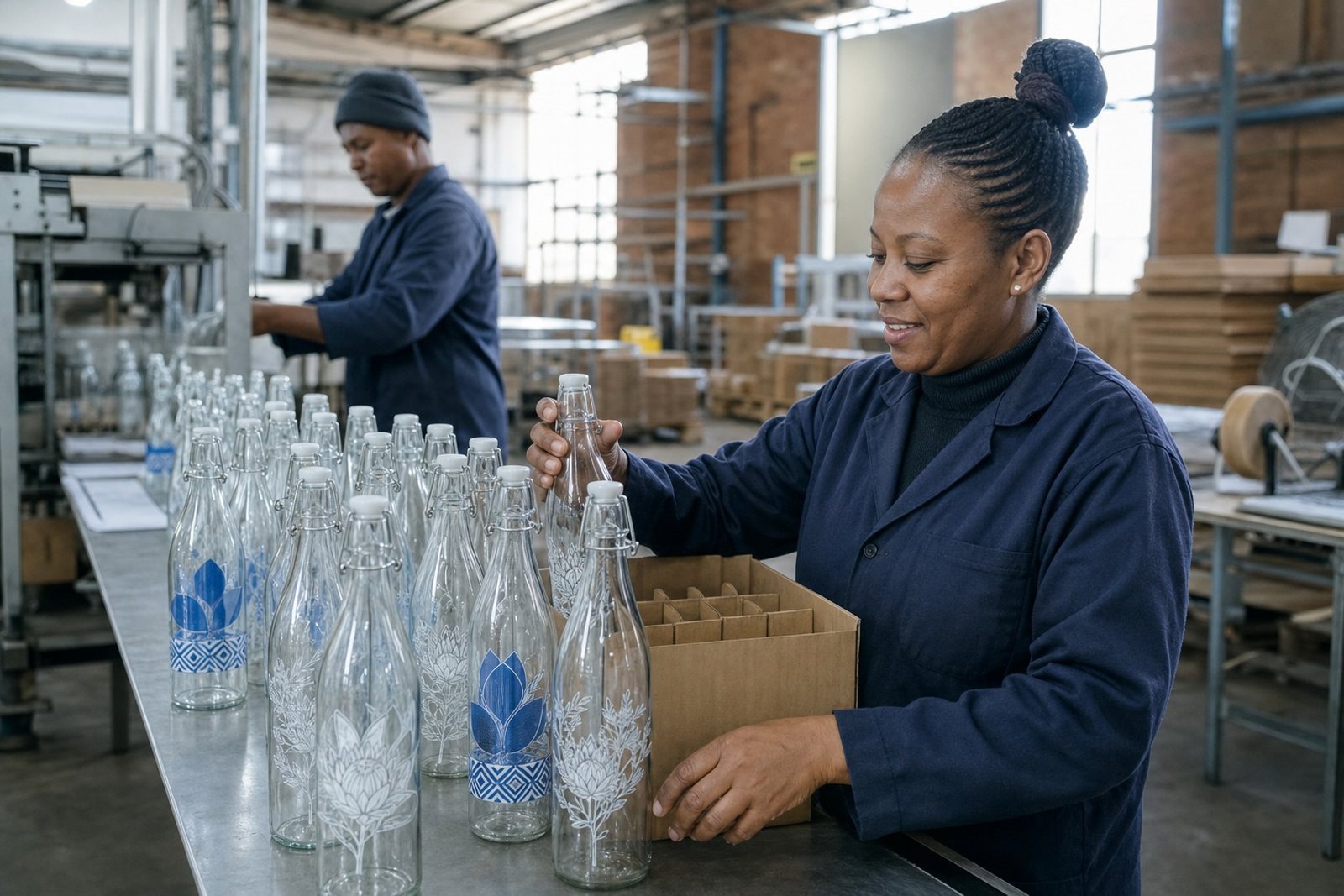
Glass bottles need careful handling from print stage to final delivery. The surface should stay dry and clean, with cartons stacked so the necks are not taking the full load. Cork-finish bottles can move through cellar packing, event storage and retail dispatch, but the closure and printed surface both need protection from scuffing. For coastal deliveries into places like Cape Town and Durban, cartons should stay sealed so humidity does not affect label edges or carton strength.
Printed bottles are best kept upright where possible, especially when labels or direct print sit close to the shoulder. If the bottles are going into long storage, the closure type should be suitable for the expected hold period and the carton should keep out dust and grit. We also check packing brief details for bottle counts per carton, divider style and whether a tray or sleeve is needed for presentation sets.
- Store upright unless the closure style and fill call for another layout.
- Keep cartons dry, closed and away from sharp pressure points.
- Use dividers or inserts when necks and shoulders need extra protection.
- Check carton size against the final assembled bottle height.
Order details that keep the run clean
To prepare a cork-finish bottle run, the useful details are the bottle shape, glass colour, closure type, fill volume, print method and the artwork file or layout notes. It also helps to confirm whether the decoration must cover one panel, wrap around the body or stay within a labelled front and back format. If the job needs white underprint, spot colour matching or a numbered batch, those points should be set before proof approval.
Minimum runs depend on the bottle type and the decoration method. Some jobs suit a short label run, while others need a larger quantity to make screen printing or ceramic enamel worthwhile. Artwork setup can include print area planning, colour guidance, mock-up visuals and packing brief notes so the bottle, closure and carton all work together. Clients from Paarl, Stellenbosch, Franschhoek, Somerset West, Cape Town, Johannesburg and Durban use the same process when the bottle is going into wine, gin or premium gift packs.
- Bottle volume and neck finish.
- Glass colour, bottle height and shoulder shape.
- Closure style, collar details and final assembled height.
- Artwork size, print position and chosen decoration method.
- Quantity needed and whether each bottle carries the same design.
Key facts
| Product type | Cork-finish glass bottles for wine, gin, selected spirits and premium water |
|---|---|
| Common volumes | 250 ml, 375 ml, 500 ml, 750 ml and 1 litre |
| Glass options | Clear, flint, amber and green glass |
| Decoration methods | UV direct print, screen printing, ceramic enamel, labels |
| Artwork support | Artwork checks, print area planning, colour guidance, mock-up visuals and proof approvals |
| Typical use | Wineries, distilleries, corporate gifting, tasting rooms and events |